Research Article
Thymosin Alpha 1 vs LL-37: Immune Peptide Guide
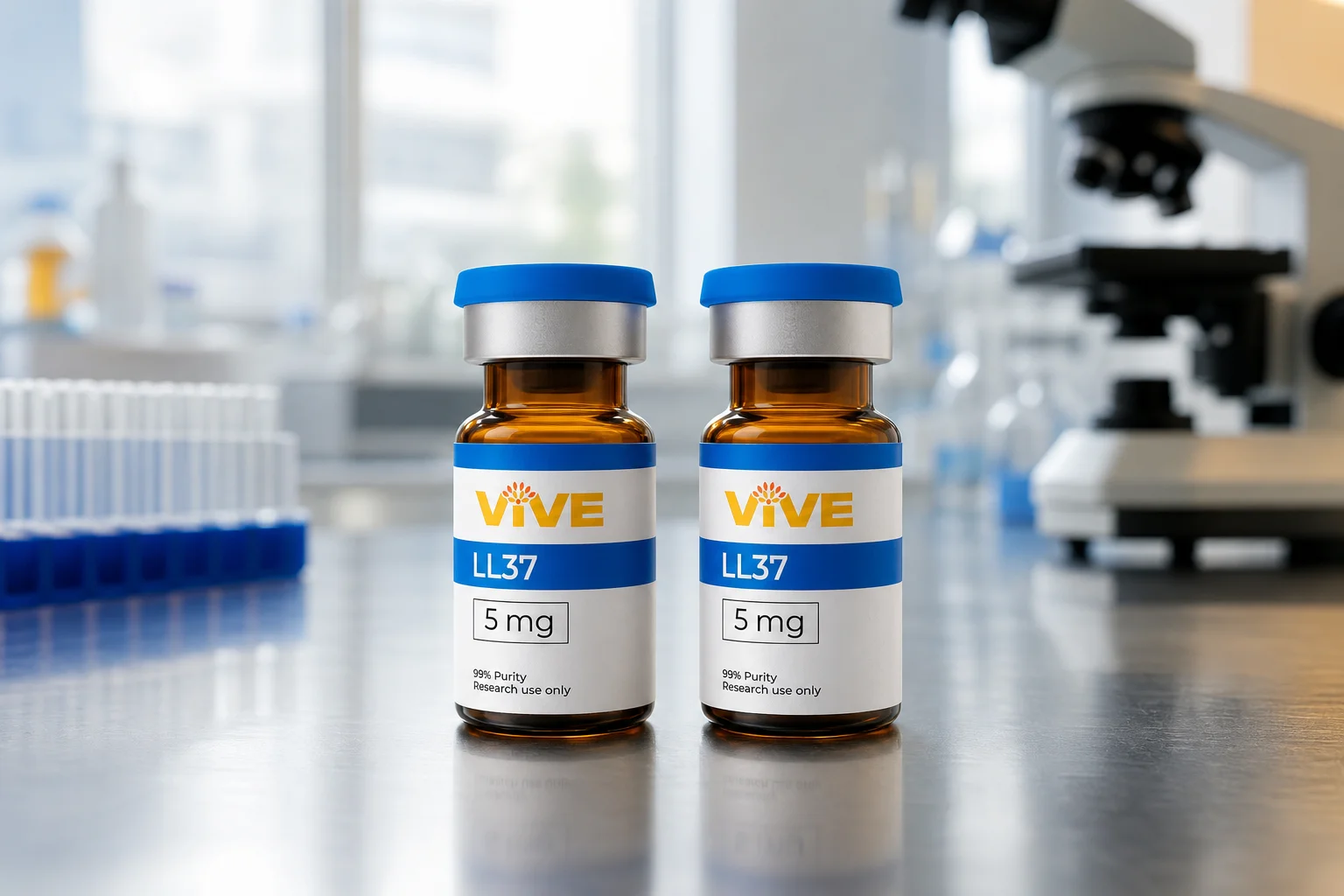
Thymosin alpha 1 vs ll-37 is a common question among researchers comparing immune-modulating peptides: one drives adaptive immune response through dendritic cell activation, the other is a human cathelicidin known for direct antimicrobial activity and wound healing. This guide compares research-grade Thymosin Alpha 1 with LL-37 across mechanism, applications, and handling.
By Vive Team
Two Immune-Modulating Peptides With Different Jobs
Thymosin Alpha 1 and LL-37 both influence the immune system, but researchers study them for very different reasons. Thymosin Alpha 1 is a thymic peptide associated with adaptive immunity, helping to coordinate how T-cells and dendritic cells respond to challenges. LL-37, by contrast, is the only human cathelicidin identified in humans, and it is studied primarily for its direct antimicrobial activity and its role in tissue repair. Understanding thymosin alpha 1 vs ll-37 starts with recognizing that one peptide shapes long-term immune responses while the other acts locally and quickly.
Both compounds are sold strictly for laboratory and research use, and nothing in this article should be read as a treatment claim, dosing instruction, or safety guarantee for human or animal use.
Because the two peptides act on different points along the immune system's response chain, researchers often frame thymosin alpha 1 vs ll-37 comparisons around timeline and target rather than potency. A peptide that recruits and matures dendritic cells is doing something categorically different from one that binds microbial membranes on contact, even though both outcomes ultimately support host defense.
Thymosin Alpha 1's Mechanism: Priming the Adaptive Immune Response
In preclinical and clinical research, thymosin alpha-1 (often written Talpha1) is best known for promoting dendritic cell maturation and supporting T-cell differentiation, which in turn shapes downstream immune response patterns. Because dendritic cells act as messengers between the innate and adaptive branches of immunity, compounds that influence dendritic cell maturation are of particular interest to researchers studying immune modulation and immune function. Thymosin Alpha 1 has also been examined in the context of peptide therapy protocols aimed at supporting immunity during periods of physiological stress.
Where Thymosin Alpha 1 Research Is Headed
Much of the published interest in thymosin alpha-1 traces back to its investigation as an adjunct in immunocompromised and oncology-adjacent research models, where restoring dendritic cell function and T-cell competence was the primary endpoint. More recent research programs have broadened that scope to include general immune support during periods of physiological stress, chronic low-grade inflammation, and aging-related decline in immune function. Across these research threads, the throughline is the same: thymosin alpha-1 is studied as a modulator of the immune system's coordination, not as a direct antimicrobial agent.
For a deeper mechanism breakdown, read our guide to what is thymosin alpha 1? immune peptide research guide.
LL-37's Mechanism: Direct Antimicrobial and Tissue Repair Activity
LL-37 is the human cathelicidin most studied for direct antimicrobial activity against a broad range of pathogens, including bacteria, fungi, and some viruses. Unlike thymosin alpha-1's role in shaping systemic immunity, LL-37 tends to act locally: research models point to its involvement in wound healing, tissue repair, and recruitment of immune cells to damaged tissue. Some studies also associate LL-37 with immune modulation beyond its antimicrobial activity, suggesting overlapping but distinct roles compared with thymosin alpha 1 vs ll-37 discussions in the literature.
LL-37 in Dermatology and Recovery-Focused Research
Because LL-37 concentrates at skin and mucosal barriers in vivo, a large share of published research examines it in dermatology and wound-model contexts, particularly wound healing kinetics and antimicrobial peptide activity at the wound margin. Some research also explores LL-37's dual role: beyond direct antimicrobial activity, it appears to help recruit and activate additional immune cells, including cells with dendritic cell characteristics, at the injury site, linking innate antimicrobial defense to the broader immune response. This dual mechanism is part of why LL-37 is frequently discussed alongside recovery and tissue repair research.
Researchers exploring research-grade LL-37 reconstitution should review our guide to what is ll-37? the antimicrobial peptide research guide for handling specifics.
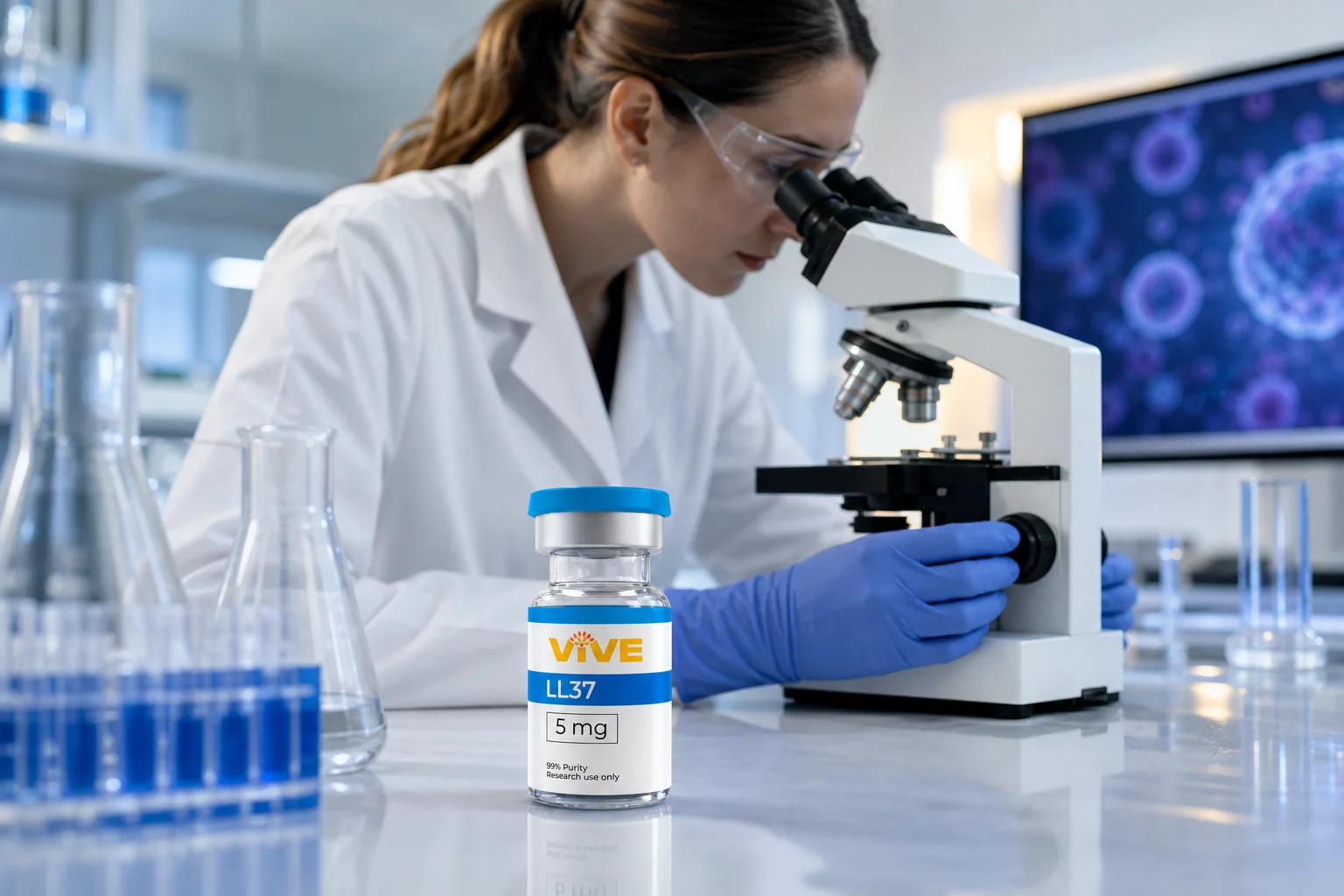
Thymosin Alpha 1 vs LL-37: Comparing Mechanism, Applications, and Research Use
Comparing thymosin alpha 1 vs ll-37 side by side highlights how differently they engage the immune system. Thymosin Alpha 1 research centers on modulating adaptive immunity over days to weeks, largely through dendritic cell and T-cell signaling. LL-37 research, on the other hand, focuses on rapid, localized responses: direct antimicrobial activity, wound closure, and short-term immune support at a site of tissue disruption. Some research teams pair the two lines of inquiry, since a peptide that supports long-range immune function and one that supports fast local defense are not mutually exclusive areas of study.
Pathogens and immune triggers rarely announce which response they require, which is one reason research programs increasingly examine both a modulator of long-range immunity and a direct antimicrobial peptide within the same study design. Thymosin Alpha 1 vs LL-37 framing, in other words, is less about picking a winner and more about mapping where each peptide's research utility sits along the immune timeline.
For context on where these compounds fit within broader immune-focused research, see our guide to best peptides immune system research.
Reconstitution, Handling, and Side Effects in Research Protocols
Both peptides are supplied as lyophilized powder and require careful reconstitution before use in a research setting. Improper handling, incorrect diluent, temperature excursions, or contamination, is the most common source of reported side effects in peptide research, rather than the peptide itself. Standard practice calls for sterile bacteriostatic water and refrigeration after reconstitution, along with sterile technique at every step. Because thymosin alpha-1 and LL-37 differ in stability profiles, researchers should follow each product's specific reconstitution notes rather than treating peptide therapy protocols as interchangeable across compounds. Documentation of storage conditions, reconstitution date, and observed side effects supports data quality across a research program.
Storage and Stability Notes
Lyophilized Thymosin Alpha 1 and LL-37 are generally stored frozen prior to reconstitution and refrigerated afterward, with most research protocols recommending use within a limited window once mixed with bacteriostatic water. Repeated freeze-thaw cycles, exposure to light, and room-temperature storage after reconstitution are commonly cited as contributors to peptide degradation and, by extension, inconsistent research results. Clear labeling of reconstitution date and concentration on each vial helps keep multi-peptide research programs, including parallel Thymosin Alpha 1 and LL-37 protocols, organized and reproducible.
Frequently Asked Questions
What is the main difference between thymosin alpha 1 vs ll-37? The primary difference is scope and speed. Thymosin Alpha 1 research focuses on modulating adaptive immunity over time, largely through dendritic cell and T-cell signaling that shapes broader immune responses. LL-37 research centers on fast, local action: direct antimicrobial activity against pathogens and support for wound healing at the site of tissue disruption. Both are studied for immune modulation, but through distinct mechanisms.
Is LL-37 the same as a cathelicidin? Yes. LL-37 is the active, cleaved form of the only human cathelicidin gene product identified in humans, hCAP-18. In research literature, LL-37 and human cathelicidin are often used interchangeably when discussing antimicrobial peptide activity, though hCAP-18 refers to the precursor protein before cleavage produces the mature LL-37 peptide.
Do thymosin alpha 1 and LL-37 cause side effects? Reported side effects in research settings are typically tied to improper reconstitution, storage, or administration technique rather than the peptides themselves. Because both compounds are studied strictly for research use, no dosing or safety guidance for human or animal application is provided here. Researchers should follow their institution's protocols and current literature for handling considerations.
Can thymosin alpha 1 and LL-37 be studied together? Some research programs examine both peptides in parallel because they engage different arms of the immune system, one supporting longer-range immune function through dendritic cell signaling, the other offering rapid antimicrobial and tissue repair activity. Any combined research protocol should be designed independently based on the specific hypothesis being tested.
Start Your Immune Peptide Research With VivePeptides
Whether your work centers on adaptive immune signaling or direct antimicrobial activity, VivePeptides supplies research-grade compounds with clear documentation. Browse the VivePeptides catalog to compare Thymosin Alpha 1, LL-37, and related research peptides side by side.
Research Use Only
All information in this article is intended for educational and research purposes only. VivePeptides products are not intended for human or veterinary use.