
Research Collection
Mitochondrial Peptides
Mitochondria-targeted research compounds studied for membrane stabilization, biogenesis signaling, and metabolic regulation at the organelle level.
Mitochondrial Peptides are research compounds studied for their direct interaction with mitochondrial architecture and signaling, encompassing cardiolipin-binding membrane stabilizers, mitochondrial-derived signaling peptides, and metabolic cofactors that support electron transport chain function. This category features SS-31, MOTS-c, and NAD+, each investigated for distinct mechanism classes, and is offered strictly for laboratory research use.
Reviewed by the VivePeptides Research DeskLast reviewed
Research Overview
Mitochondria-Targeted Peptides: A Distinct Research Category
This collection brings together peptides for mitochondria and related metabolic cofactors that act directly on mitochondrial structure, signaling, or cofactor pathways, distinguishing it from broader bioenergetic or aging-focused research lines. Mitochondrial dysfunction is implicated in a wide range of cellular stress models, making mitochondria-targeted peptides and cofactor compounds an active area of preclinical investigation. Researchers typically select among these mechanism classes based on the mitochondrial process under investigation rather than a general metabolic outcome.
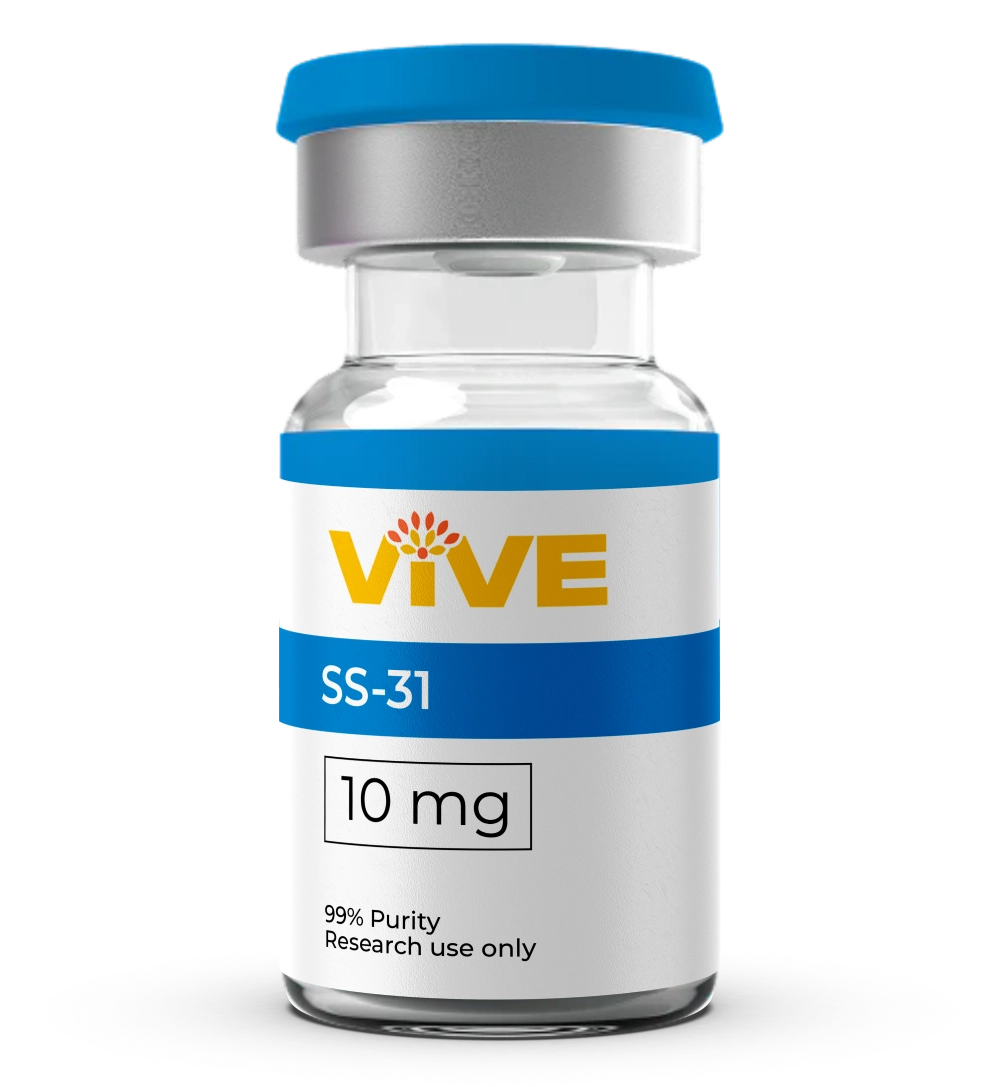
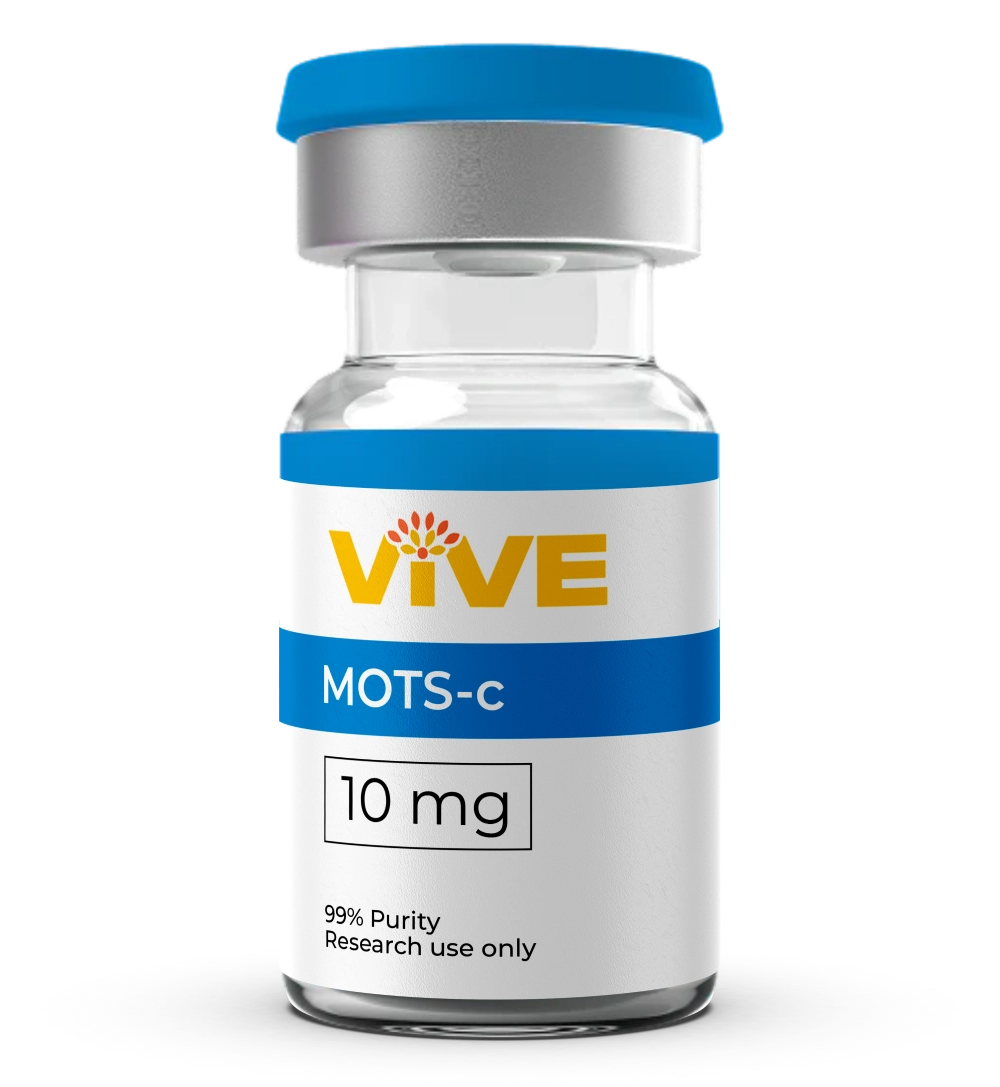
Three mechanism classes are represented here. SS-31 is studied as a cardiolipin-binding peptide that localizes to the inner mitochondrial membrane. MOTS-c is a mitochondrial-derived peptide investigated for retrograde signaling between mitochondria and the nucleus.
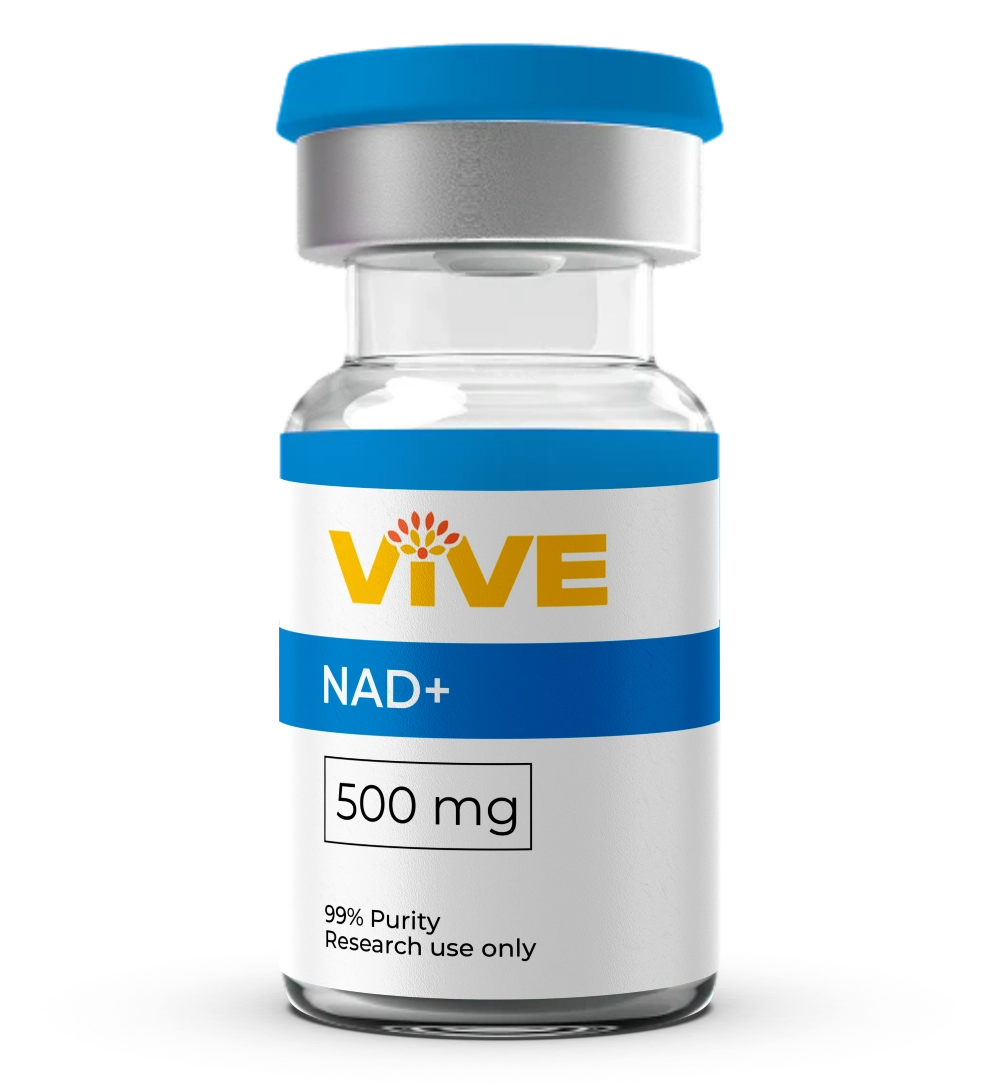
NAD+ is examined as a metabolic cofactor central to electron transport chain function and sirtuin activity. VivePeptides sources each compound with third-party purity documentation and provides certificates of analysis, positioning the catalog as a reference point for researchers comparing mitochondria-targeted mechanism classes side by side.
Three Distinct Mechanism Classes
SS-31, MOTS-c, and NAD+ engage mitochondria through different points of entry: membrane binding, retrograde signaling, and cofactor metabolism. Researchers select among them based on which pathway the study model requires.
Purity and Documentation Standards
Each compound listed here ships with third-party testing documentation and a certificate of analysis. Verifying identity and purity before use is standard practice in mitochondrial research protocols.
Handling and Reconstitution Considerations
Membrane-binding peptides, signaling peptides, and metabolic cofactors have different solubility and stability profiles. Reconstitution and storage protocols should be matched to the specific compound class, not treated uniformly across the collection.
Compound Comparison
How these compounds compare
| Compound | Mechanism Class | Research Focus | Distinguishing Feature |
|---|---|---|---|
| SS-31 | Cardiolipin-binding membrane peptide | Inner membrane structure, cristae integrity | Localizes to inner mitochondrial membrane |
| MOTS-c | Mitochondrial-derived signaling peptide | Retrograde nuclear signaling, AMPK pathway | Encoded within mitochondrial DNA |
| NAD+ | Metabolic cofactor | Electron transport chain, sirtuin/PARP substrate | Required cosubstrate for redox reactions |
Mechanism & Research Context
Mechanism Classes and Study Design Considerations
What distinguishes these mechanism classes is the specific mitochondrial structure or pathway each compound engages, rather than a shared downstream phenotype. SS-31's cardiolipin affinity has been examined in models of inner membrane cristae disruption and cytochrome c mishandling. MOTS-c's translocation behavior under metabolic stress has been studied in the context of AMPK pathway activity and nuclear gene expression changes.
NAD+ depletion and repletion have been examined across models of sirtuin and PARP enzyme activity, both of which depend on NAD+ as a substrate. Researchers selecting between these compounds generally consider whether the model calls for direct membrane interaction, retrograde signaling, or cofactor-level intervention. Study design also requires attention to solubility, reconstitution protocol, and storage stability, since membrane-binding peptides, signaling peptides, and small-molecule cofactors behave differently in solution.
Documentation of compound identity and purity is a baseline requirement across all three mechanism classes in controlled research settings.
Research FAQ
Frequently asked questions
What makes a peptide mitochondria targeted rather than just metabolically active?
How does SS-31 differ from MOTS-c in research applications?
Why is NAD+ included in a mitochondrial peptides collection?
What research models have examined cardiolipin-binding peptides like SS-31?
How should researchers store and reconstitute mitochondrial peptides purchased from VivePeptides?
Is MOTS-c considered a mitochondrial-derived peptide, and what does that mean for research use?
Related Research Collections
Continue exploring
These products are sold strictly for laboratory and research use only and are not approved for human consumption, diagnosis, or therapeutic treatment. Not for human or veterinary use. These statements have not been evaluated by the Food and Drug Administration, and nothing on this page constitutes medical advice or a health claim.