
Research Collection
Peptide Blends
Multi-compound research formulations that combine complementary peptides in a single vial for streamlined study designs.
Peptide Blends are research compounds studied for their fixed-ratio, single-vial formulation of multiple peptides selected for complementary mechanism classes, including tissue-repair-associated signaling peptides, copper-binding extracellular matrix modulators, and growth hormone secretagogue pathway compounds, supplied strictly for laboratory research use to support consistent, reproducible in vitro and preclinical study design.
Reviewed by the VivePeptides Research DeskLast reviewed
Research Catalog
Compounds in this collection
Research Overview
Peptide Blends: A Fixed-Ratio Research Category
Peptide Blends encompass pre-formulated, single-vial combinations of research peptides manufactured at a fixed ratio rather than compounded by the researcher at the bench. This category groups blended peptides by manufacturing method, a validated vial ratio, rather than by a shared biological target. VivePeptides features three blends in this category.
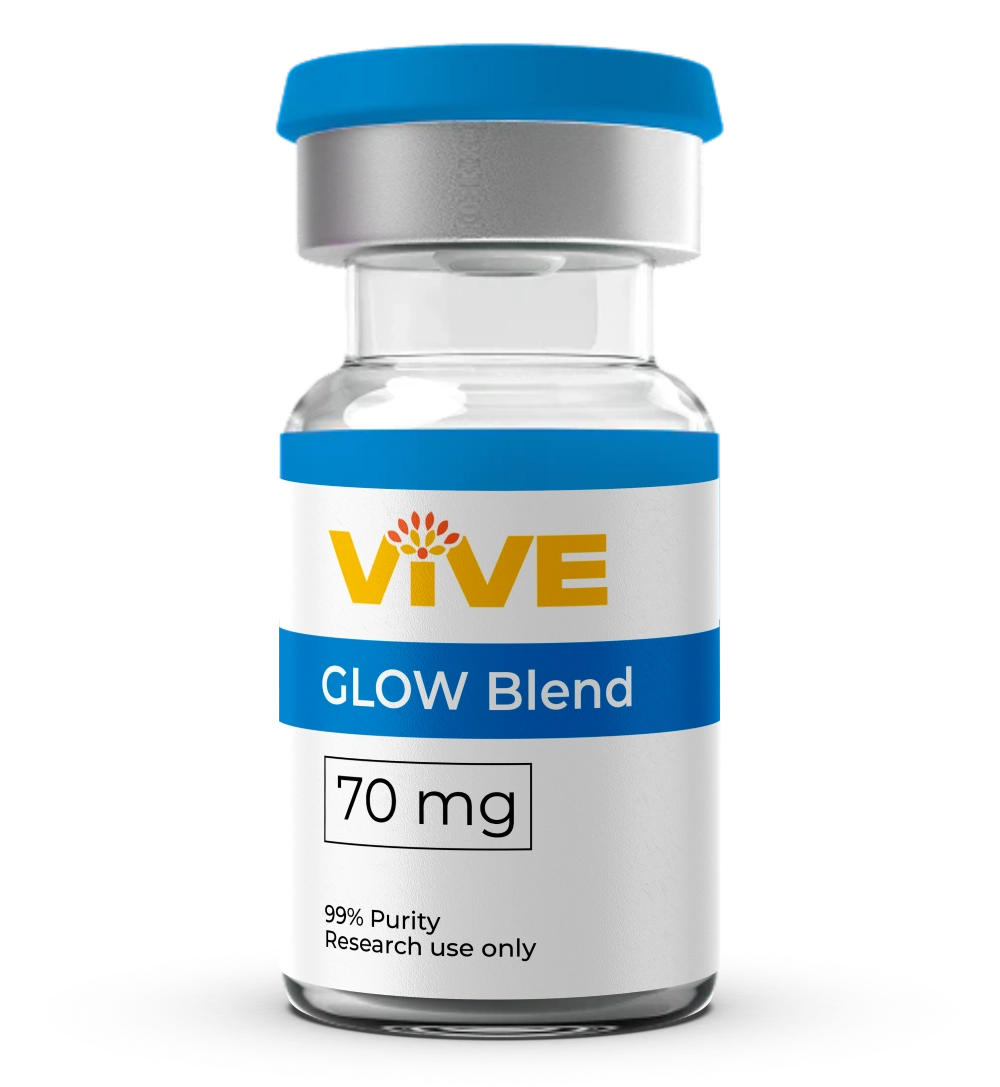
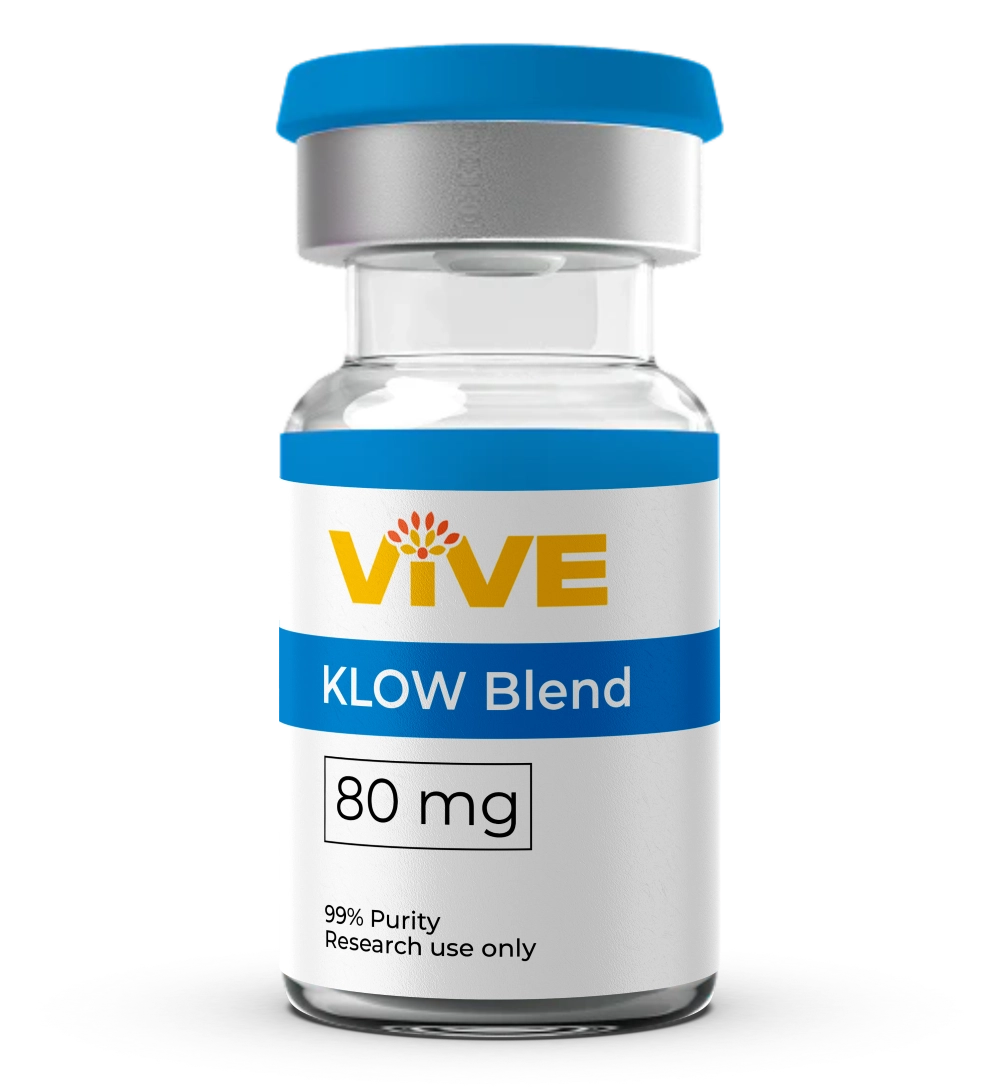
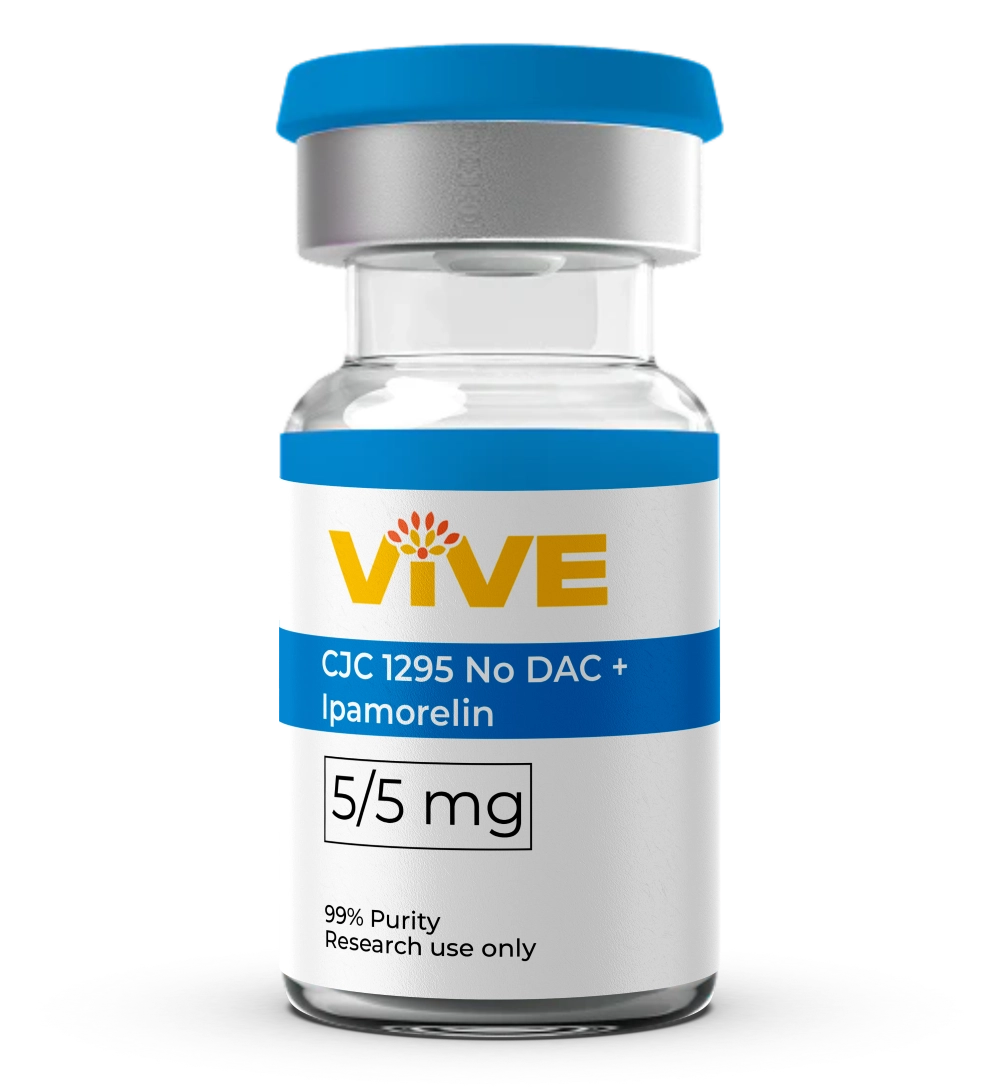
Glow Blend combines BPC-157, TB-500, and GHK-Cu, three peptides studied within tissue-repair-associated signaling and copper-dependent matrix remodeling mechanism classes. KLOW Blend extends this profile with KPV, a melanocortin-receptor-interacting anti-inflammatory tripeptide, alongside the same BPC-157, TB-500, and GHK-Cu components. CJC-1295 No DAC + Ipamorelin Blend pairs a GHRH receptor agonist with a ghrelin receptor-targeting growth hormone secretagogue, representing the growth hormone secretagogue pathway mechanism class.
VivePeptides positions each peptide blend vial with third-party purity verification and documented, lot-consistent ratios, supporting researchers who require formulation reliability across repeated experimental runs.
Fixed-Ratio Formulation Consistency
Each blend is manufactured at a validated ratio rather than combined at the bench, so every peptide blend vial in a lot reflects the same proportional composition. This removes a variability source that manual combination introduces into comparative research.
Distinct Mechanism Class Coverage
The three featured blends span tissue-repair-associated signaling, copper-dependent matrix remodeling, anti-inflammatory tripeptide activity, and growth hormone secretagogue pathway mechanisms. Researchers can select a blend aligned to the mechanism class under investigation rather than sourcing multiple single-peptide vials.
Single-Vial Reconstitution Handling
Because every peptide in a blend is lyophilized together in one vial, reconstitution and storage conditions apply uniformly across all included compounds. Researchers should reference the least stable component when determining handling protocols for the entire formulation.
Compound Comparison
How these compounds compare
| Compound | Mechanism Class | Research Focus | Distinguishing Feature |
|---|---|---|---|
| Glow Blend | Tissue-repair signaling and copper-dependent ECM remodeling | Tissue and extracellular matrix biology research | Three-peptide fixed-ratio single-vial formulation |
| KLOW Blend | Tissue-repair signaling and anti-inflammatory tripeptide activity | Combined repair and inflammation modulation research | Four-peptide formulation adds anti-inflammatory tripeptide |
| CJC-1295 No DAC + Ipamorelin Blend | GHRH and ghrelin receptor agonist pathway | Growth hormone secretagogue pathway research | Dual-receptor secretagogue pathway in one vial |
Mechanism & Research Context
Mechanism Classes and Research Selection Criteria
The mechanism classes represented in this collection diverge sharply: tissue-repair-associated signaling peptides act on growth factor and cytoskeletal pathways, while growth hormone secretagogue pathway compounds act on pituitary receptor signaling. Preclinical literature has examined BPC-157 in relation to nitric oxide signaling and growth factor receptor expression, TB-500 in relation to actin-binding and cell migration assays, GHK-Cu in relation to copper-dependent gene expression and extracellular matrix enzyme activity, and KPV in relation to melanocortin receptor engagement on immune and epithelial cell models.
GHRH receptor agonists and ghrelin receptor agonists have been studied for distinct but convergent effects on growth hormone secretagogue pathway signaling in pituitary cell models. Researchers select among these blends based on the mechanism class under investigation rather than a shared target, since a fixed-ratio formulation only serves a study design when every included peptide is relevant to the research question.
Study design considerations include reconstitution volume, storage stability of each component, and whether isolated single-peptide controls are needed alongside the blend.
Research FAQ
Frequently asked questions
What are peptide blends in peptide research?
What is the difference between a peptide blend and combining individual peptides separately?
What peptides are included in Glow Blend?
How does KLOW Blend differ from Glow Blend?
What mechanism class does the CJC-1295 No DAC + Ipamorelin Blend represent?
How should researchers store and handle a peptide blend?
Related Research Collections
Continue exploring
These products are sold strictly for laboratory and research use only and are not approved for human consumption, diagnosis, or therapeutic treatment. Not for human or veterinary use. These statements have not been evaluated by the Food and Drug Administration, and nothing on this page constitutes medical advice or a health claim.