
Longevity & Cellular
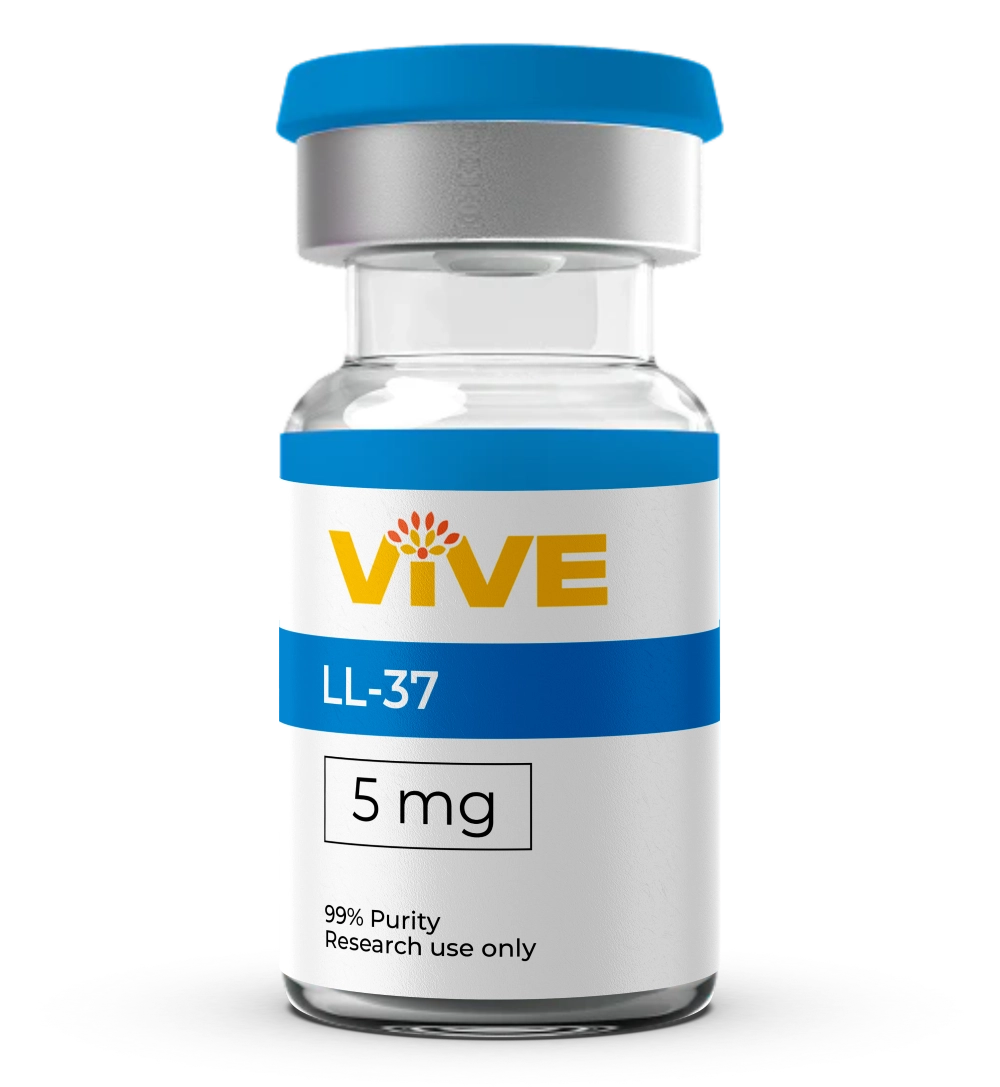
LL-37
Research Use OnlyThese products are sold strictly for laboratory and research use only and are not approved for human consumption, diagnosis, or therapeutic treatment. Not for human or veterinary use. These statements have not been evaluated by the Food and Drug Administration, and nothing on this page constitutes medical advice or a health claim.
- Size
- 5mg
Specifications
LL-37 Technical Profile
OVERVIEW
What Is LL-37 Peptide?
LL 37 is the only human cathelicidin antimicrobial peptide, a 37-amino-acid peptide derived from the C-terminal end of the precursor protein hCAP18 (human cationic antimicrobial protein 18 kDa), which is encoded by the CAMP gene. First characterized in the mid-1990s, LL 37 has become one of the most actively researched components of the human innate immune system, with hundreds of published studies exploring its antimicrobial, immunomodulatory, and tissue repair properties.
As a research peptide, LL 37 is classified as an antimicrobial peptide (AMP) with amphipathic, alpha-helical structure. It is naturally expressed in neutrophils, macrophages, epithelial cells, and various barrier tissues. Unlike conventional antibiotics that target specific bacterial processes, LL 37 research has demonstrated broad-spectrum activity through membrane disruption, biofilm inhibition, and direct immunomodulatory signaling. This multifunctional profile has positioned LL 37 as a central compound in antimicrobial peptide research and innate immunity studies.
- 01
Human Cathelicidin
The only cathelicidin-derived antimicrobial peptide in the human innate immune system
- 02
≥99% HPLC Purity
Every batch verified via high-performance liquid chromatography
- 03
USA Made & Verified
Third-party analytical testing performed in USA laboratories
RESEARCH
LL 37 Mechanism of Action in Research
The LL 37 mechanism of action is notably multifunctional, extending well beyond simple antimicrobial activity. Research has identified at least four distinct functional domains within this peptide, making it one of the most versatile innate immune effectors studied in modern immunology.
Membrane Disruption and Antimicrobial Activity
LL 37's primary antimicrobial mechanism involves direct disruption of microbial cell membranes. The peptide's cationic charge and amphipathic alpha-helical structure allow it to preferentially bind to negatively charged bacterial membranes, forming pores and destabilizing membrane integrity. Research has demonstrated broad-spectrum activity against Gram-negative bacteria, Gram-positive bacteria, and certain fungi. Importantly, studies by Overhage et al. (2008) showed that LL 37 also inhibits bacterial biofilm formation at sub-inhibitory concentrations, a property that distinguishes it from most conventional antibiotics.
Immunomodulatory Signaling
Beyond direct antimicrobial effects, LL 37 functions as a potent immunomodulatory peptide. Research indicates it acts as a chemoattractant for neutrophils, monocytes, and T cells through activation of formyl peptide receptor-like 1 (FPRL-1) and purinergic receptor P2X7. Published studies by Yang et al. (1999) demonstrated LL 37's ability to recruit immune cells to sites of infection and modulate the inflammatory response, bridging innate and adaptive immunity.
Wound Healing and Tissue Repair Pathways
LL 37 research has revealed significant involvement in wound healing processes. Studies indicate the peptide promotes keratinocyte migration and proliferation through activation of the epidermal growth factor receptor (EGFR) and downstream MAP/ERK signaling pathways. Heilborn et al. (2003) published findings demonstrating increased LL 37 expression at wound margins, suggesting a natural role in re-epithelialization and tissue repair.
COMPARISON
LL 37 vs BPC 157: Research Peptide Comparison
LL 37
Both LL 37 and BPC 157 are studied for their protective properties in biological research, but they originate from different systems and operate through distinct mechanisms. LL 37 is an innate immune effector with direct antimicrobial activity, while BPC 157 is a gastric-derived peptide studied primarily for its cytoprotective properties. Understanding these differences helps researchers select the appropriate compound for their specific laboratory protocols.
BPC 157
Both peptides are subjects of active investigation in tissue biology research. LL 37 is the primary compound for antimicrobial and innate immunity studies, while BPC 157 is preferred for cytoprotective and gastrointestinal research. VivePeptides offers both LL 37 and BPC 157 at research-grade purity from our USA-based facility.
| Feature | LL 37 | BPC 157 |
|---|---|---|
| Origin | Human cathelicidin (hCAP18 C-terminus) | Human gastric juice protein fragment |
| Amino Acids | 37 | 15 |
| CAS Number | 154947-66-7 | 137525-51-0 |
| Molecular Weight | 4493.4 Da | 1419.5 Da |
| Primary Research Focus | Antimicrobial activity and innate immunity | Cytoprotective and tissue repair mechanisms |
| Structure | Alpha-helical, amphipathic, cationic | Stable across pH ranges |
| Proposed Mechanism | Membrane disruption, TLR signaling, EGFR | NO system, growth factor pathways |
| Research Volume | 200+ published studies | 100+ published studies |
RESEARCH STUDIES
LL 37 Research Applications & Published Studies
LL 37 research spans over two decades of published literature across microbiology, immunology, dermatology, and oncology. The following areas represent the most actively investigated applications. All references are to research contexts only.
Antimicrobial and Anti-Biofilm Research
LL 37 has been extensively studied for its activity against drug-resistant pathogens. Turner et al. (1998) published early characterizations of LL 37's antimicrobial spectrum, and subsequent studies by Overhage et al. (2008) demonstrated its ability to inhibit and disrupt established bacterial biofilms. Research into LL 37's anti-biofilm properties has gained significant attention as antibiotic resistance continues to present challenges in biomedical research.
Wound Biology and Dermatology Research
Published research has examined LL 37's role in cutaneous wound healing. Heilborn et al. (2003) demonstrated increased cathelicidin expression during wound repair, and Carretero et al. (2008) published findings on LL 37's effects on keratinocyte migration and proliferation. These studies have established LL 37 as a key peptide in skin biology and wound healing research.
Antiviral Research Applications
Recent LL 37 research has expanded into antiviral applications. Wang et al. (2021) published findings demonstrating LL 37's interaction with the SARS-CoV-2 spike protein receptor binding domain and ACE2 receptor. These studies have opened new avenues of investigation into cathelicidin-derived peptides as tools for understanding host-pathogen interactions in viral disease research.
QUALITY ASSURANCE
Quality & Testing Standards
VivePeptides maintains rigorous quality control for every batch of LL 37 peptide. Our commitment to research-grade purity ensures that laboratories receive consistent, reliable compounds for their investigations.
HPLC & Mass Spectrometry
Every batch of LL 37 undergoes high-performance liquid chromatography (HPLC) and mass spectrometry analysis to confirm identity, purity, and molecular weight.
Third-Party Verified
All VivePeptides LL 37 is independently verified through third-party analytical laboratories based in the USA. Testing documentation is available for every lot.
≥99% Purity Standard
Our LL 37 consistently meets or exceeds ≥99% purity as determined by HPLC analysis, ensuring research-grade quality for laboratory applications.
FAQ
Frequently Asked Questions About LL 37
What is LL 37 used for in research?
What purity is VivePeptides LL 37?
How should LL 37 be stored?
What is the difference between LL 37 and other antimicrobial peptides?
Is VivePeptides LL 37 third-party tested?
BPC-157
Thymosin Alpha 1
Gastric pentadecapeptide for cytoprotective and tissue repair research
Thymic immunomodulatory peptide for adaptive immunity research
GHK-Cu
Copper peptide for skin biology and wound healing studies
TB-500
Explore More Research Peptides
Thymosin Beta-4 fragment for cell migration research
Selank · Semax · Tesamorelin · NAD+ · SNAP-8 · All Peptides →
Add To Research Cart
LL-37
99%+ purity · USA lab tested · secure shipping
You May Also Research
Related Compounds
These products are sold strictly for laboratory and research use only and are not approved for human consumption, diagnosis, or therapeutic treatment. Not for human or veterinary use. These statements have not been evaluated by the Food and Drug Administration, and nothing on this page constitutes medical advice or a health claim.