
Research Collection
Growth Hormone Secretagogues
The pharmacological class of compounds studied for stimulating endogenous growth hormone release in preclinical models.
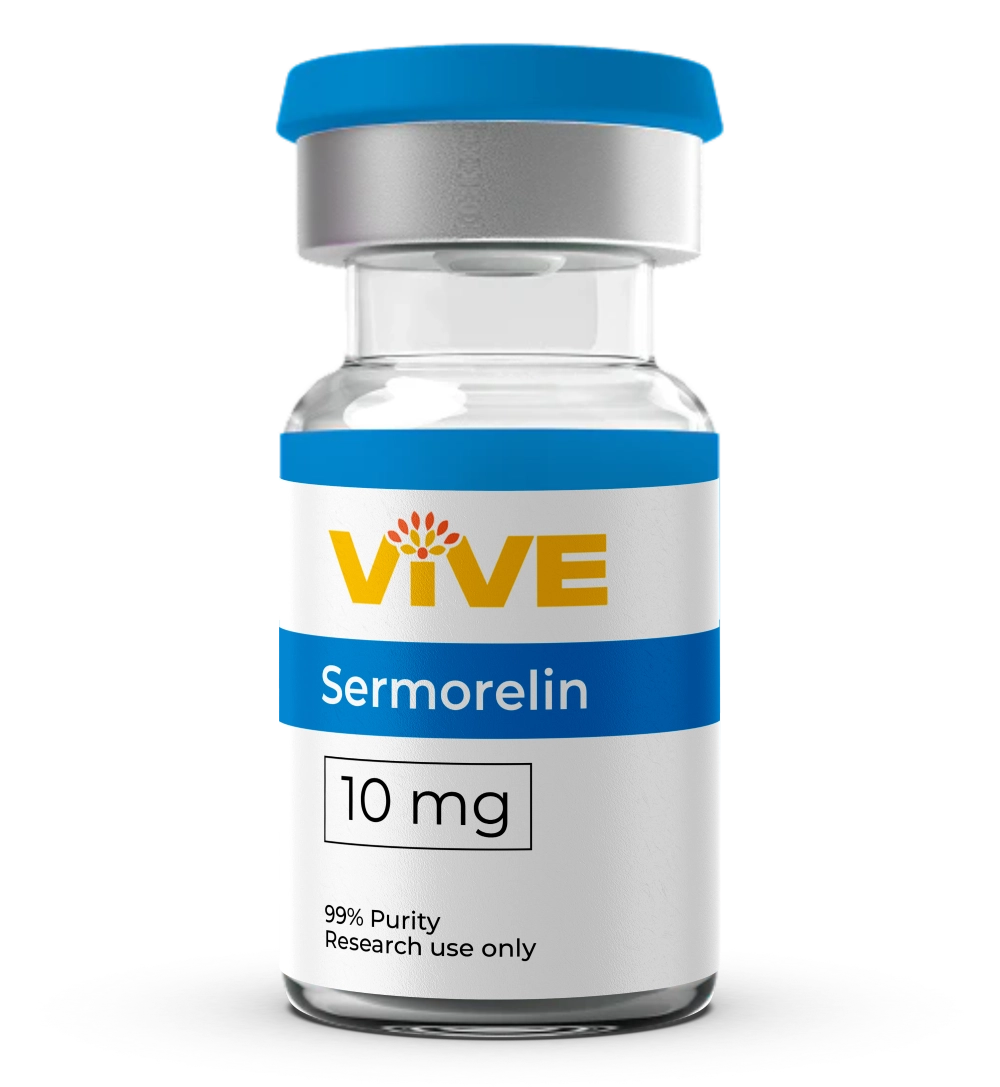
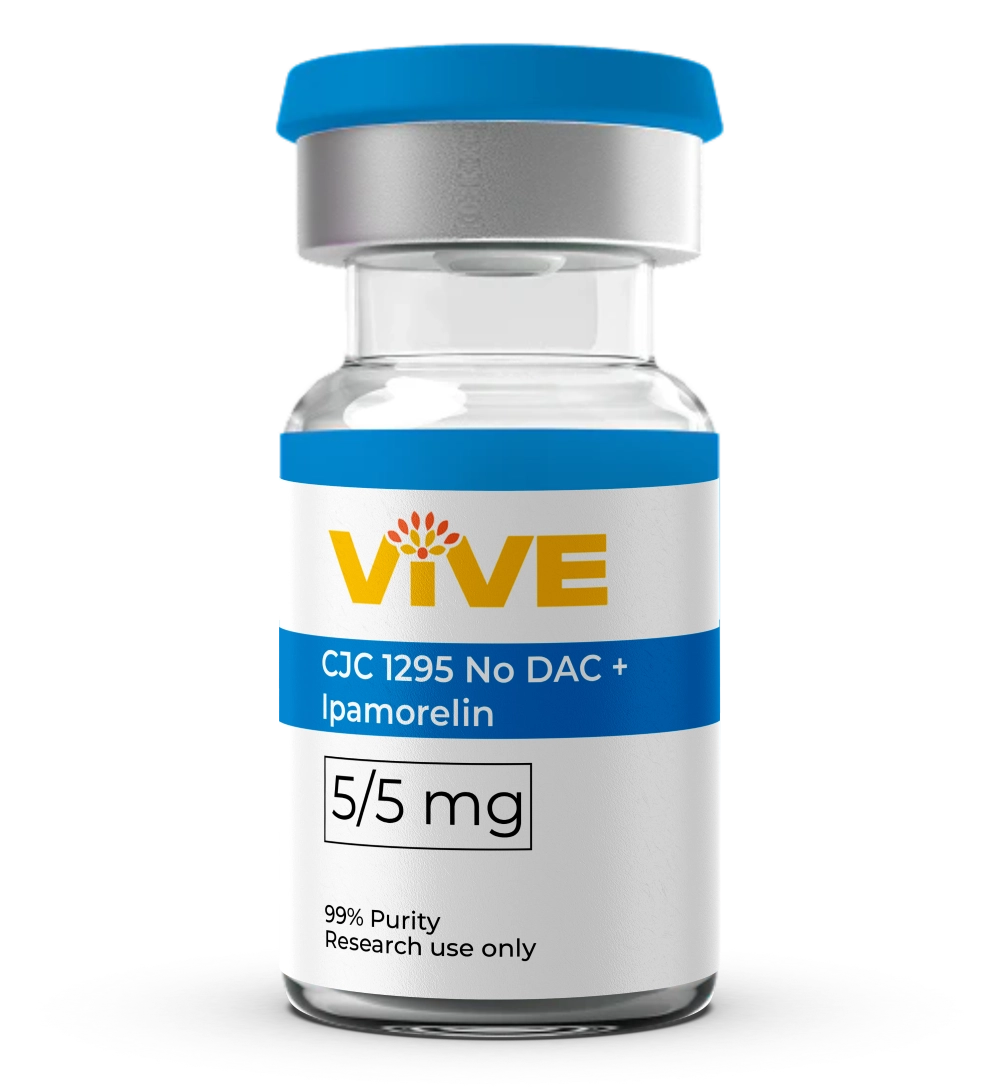
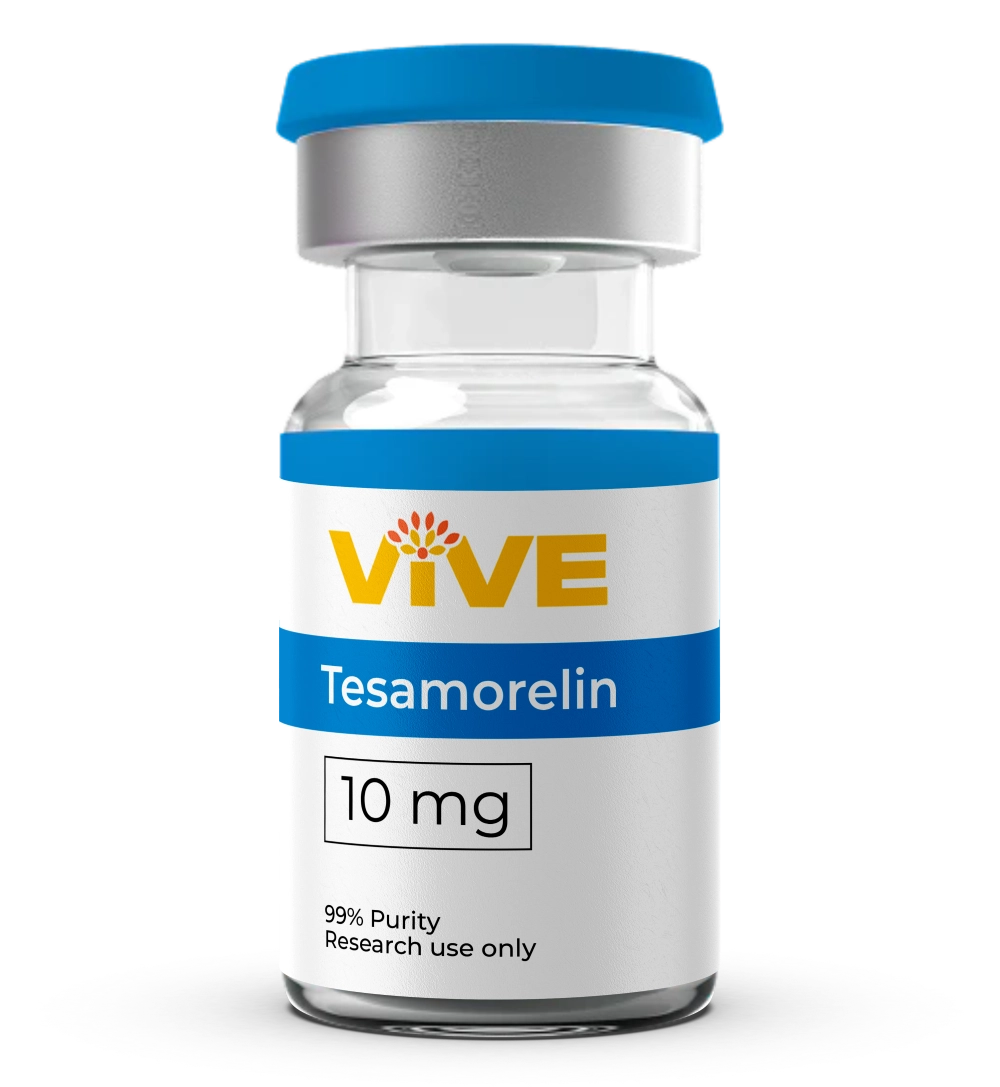
Growth Hormone Secretagogues are research compounds studied for their capacity to stimulate endogenous growth hormone release via two distinct receptor mechanism classes, GHRH receptor analogs and ghrelin receptor mimetics, featuring Sermorelin, the CJC 1295 No DAC plus Ipamorelin blend, and Tesamorelin, intended strictly for laboratory research use.
Reviewed by the VivePeptides Research DeskLast reviewed
Research Catalog
Compounds in this collection
Research Overview
GH Secretagogues as a Distinct Research Category
This research category encompasses peptide compounds that act on distinct receptor pathways to promote endogenous growth hormone pulsatility in experimental models, rather than compounds administered as exogenous hormone. Two mechanism classes dominate current investigation: growth hormone releasing hormone (GHRH) receptor analogs and ghrelin receptor (GHS-R1a) agonists, each triggering pituitary somatotroph activity through separate signaling cascades.
Interest in this category has grown as researchers examine pulsatile secretion, receptor desensitization, and combination dosing strategies in vitro and in animal models. This collection features Sermorelin, a GHRH receptor analog; the CJC 1295 No DAC plus Ipamorelin blend, pairing a GHRH analog with a selective ghrelin receptor agonist; and Tesamorelin, a stabilized GHRH analog studied for its resistance to enzymatic degradation.
VivePeptides sources each compound with third-party purity documentation to support reproducible research protocols across these mechanism classes.
Two Distinct Mechanism Classes
GHRH receptor analogs and ghrelin receptor agonists represent separate signaling pathways within this collection, allowing researchers to isolate or combine mechanisms of action in study design.
Blended Protocol Design
The CJC 1295 No DAC plus Ipamorelin blend pairs a GHRH analog with a ghrelin receptor agonist, a combination frequently referenced in dual-mechanism pulsatility research.
Purity and Reconstitution Standards
Each compound ships with third-party purity documentation, and researchers should account for reconstitution stability and cold-chain storage when designing time-course experiments.
Compound Comparison
How these compounds compare
| Compound | Mechanism Class | Research Focus | Distinguishing Feature |
|---|---|---|---|
| Sermorelin | GHRH receptor analog | Pulsatile GH release kinetics | Short half-life, native GHRH sequence |
| CJC 1295 No DAC + Ipamorelin Blend | GHRH analog plus ghrelin receptor agonist | Dual-pathway, additive GH pulse studies | Combines two complementary secretagogue mechanisms |
| Tesamorelin | Stabilized GHRH receptor analog | Enzymatic resistance and prolonged activity | Modified structure resists peptidase cleavage |
Mechanism & Research Context
Receptor Mechanisms and Study Design Considerations
What distinguishes these mechanism classes is the receptor each compound engages: GHRH analogs bind the GHRH receptor on pituitary somatotrophs, while ghrelin mimetics act on the GHS-R1a receptor to amplify pulsatile release through a separate, synergistic pathway. Preclinical literature has examined how combining a GHRH analog with a ghrelin receptor agonist produces additive effects on growth hormone pulse amplitude compared to either mechanism alone, a rationale underlying blended-compound protocols.
Researchers selecting between compounds often weigh half-life differences: Tesamorelin's stabilized structure resists enzymatic cleavage, while Sermorelin's native-sequence fragment offers a shorter research window better suited to acute pulsatility studies. Study design considerations include reconstitution stability, storage temperature, and the choice of assay used to measure downstream IGF-1 response, all of which affect reproducibility when comparing GHRH-class and ghrelin-class results across experimental protocols.
Research FAQ
Frequently asked questions
What are growth hormone secretagogues?
What is the difference between GHRH analogs and ghrelin mimetics?
Why is Tesamorelin considered a stabilized GHRH analog?
What does the CJC 1295 No DAC plus Ipamorelin blend investigate?
How do researchers choose between GH secretagogue compounds?
How should GH secretagogue peptides be stored for research use?
Related Research Collections
Continue exploring
These products are sold strictly for laboratory and research use only and are not approved for human consumption, diagnosis, or therapeutic treatment. Not for human or veterinary use. These statements have not been evaluated by the Food and Drug Administration, and nothing on this page constitutes medical advice or a health claim.