
Research Collection
GLP-1 Peptides
GLP-1 receptor agonists and multi-incretin research peptides studied for glucose-dependent insulin signaling and satiety pathways.
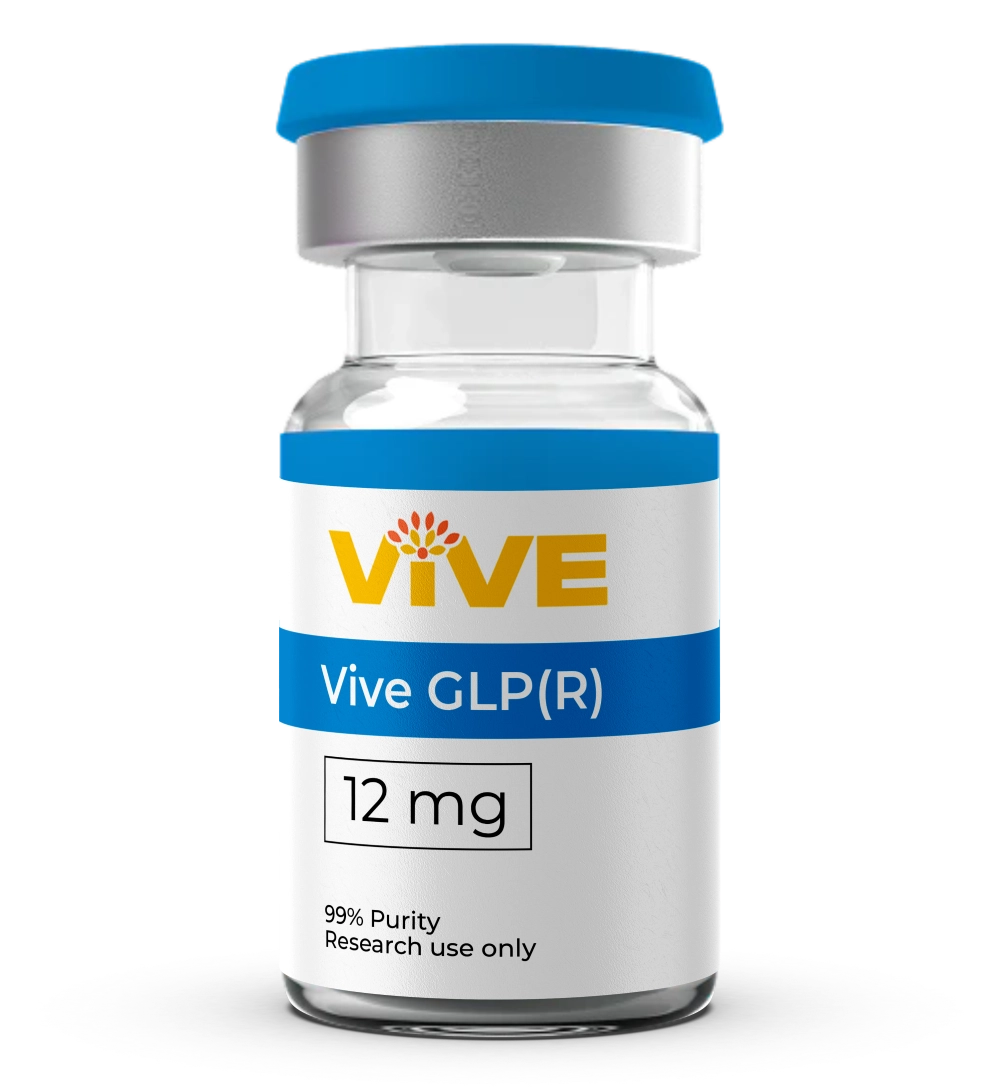
GLP-1 Peptides are research compounds studied for their interaction with incretin signaling pathways, particularly GLP-1 receptor agonism. This collection features Vive GLP(R), a compound investigated in preclinical models of glucose regulation and energy metabolism. All listings are formulated strictly for laboratory research use, not for human or animal administration, diagnostic, or therapeutic application.
Reviewed by the VivePeptides Research DeskLast reviewed
Research Overview
GLP-1 Peptides and the Incretin Research Category
The GLP-1 peptides category encompasses incretin peptides selected for their capacity to engage GLP-1 receptor pathways implicated in appetite signaling, gastric emptying rate, and glucose-dependent insulin secretion in animal and cell-based models. This is an active area of investigation because incretin biology sits at the intersection of metabolic research, endocrinology, and obesity-model science, with laboratories tracking receptor binding affinity, half-life, and downstream signaling cascades across structurally distinct analogs.
The mechanism classes represented here center on GLP-1 receptor agonism, a pathway distinct from insulin-mimetic or amylin-analog approaches used elsewhere in metabolic peptide research. Vive GLP(R) is featured as a GLP-1 receptor agonist compound supplied for in vitro and in vivo research protocols.
VivePeptides positions this collection around third-party purity verification, certificate of analysis documentation, and cold-chain handling standards that laboratories require when comparing incretin peptide research data across suppliers.
Single Mechanism Class Focus
This collection centers on GLP-1 receptor agonism rather than a broad mix of incretin-adjacent pathways, simplifying comparison across study designs. Vive GLP(R) is characterized specifically by its receptor-binding profile within this class.
Purity and Documentation Standards
Each batch ships with a certificate of analysis reporting purity by HPLC and mass spectrometry confirmation. Documentation is provided to support reproducibility in laboratory research records.
Storage and Handling for Stability
Lyophilized GLP-1 research peptides require cold-chain shipping and refrigerated or frozen storage to preserve receptor-binding activity over time. Reconstitution protocol and storage temperature are documented so laboratories can maintain sample integrity across study timelines.
Mechanism & Research Context
GLP-1 Receptor Agonism: Mechanism and Study Design
What distinguishes GLP-1 receptor agonists from other incretin-adjacent research peptides is their selective binding to the GLP-1 receptor, a G-protein-coupled receptor expressed in pancreatic, hypothalamic, and gastrointestinal tissue in model systems. Preclinical literature has examined how GLP-1 receptor activation modulates cyclic AMP signaling, glucose-stimulated insulin release, and gastric emptying rate in rodent and in vitro models, with structural modifications to the native GLP-1 sequence used to extend half-life and alter receptor residence time.
Researchers selecting between incretin peptide research compounds typically weigh receptor binding affinity data, reported half-life, and the specific model system a given study requires, since not every analog performs identically across species or assay type. Study design considerations include reconstitution method, storage temperature, and documented stability windows, all of which affect reproducibility when comparing GLP-1 receptor agonist data across research protocols and published literature.
Research FAQ
Frequently asked questions
What are GLP-1 peptides used for in research?
What is Vive GLP(R) and how does it differ from other incretin peptides?
Are GLP-1 peptides approved for human or animal use?
How is GLP-1 receptor agonism studied in preclinical models?
What purity and quality documentation is available for GLP-1 research peptides?
How should GLP-1 peptides be stored to maintain research integrity?
Related Research Collections
Continue exploring
These products are sold strictly for laboratory and research use only and are not approved for human consumption, diagnosis, or therapeutic treatment. Not for human or veterinary use. These statements have not been evaluated by the Food and Drug Administration, and nothing on this page constitutes medical advice or a health claim.