
Research Collection
Glow Peptides
The research peptides and blends most studied in models of dermal repair, collagen synthesis, and skin signaling.
Glow Peptides are research compounds studied for their combined effects on dermal structure, encompassing named multi-compound formulations such as Glow Blend and KLOW Blend alongside single compounds like GHK-Cu and SNAP-8. The category spans copper-binding, repair-associated, and synthetic signaling mechanism classes. All compounds in this collection are intended strictly for in vitro and preclinical laboratory research, not human or animal use.
Reviewed by the VivePeptides Research DeskLast reviewed
Research Catalog
Compounds in this collection
Research Overview
The Glow Peptide Stack: A Multi-Mechanism Research Category
The Glow Peptides collection encompasses the named multi-compound formulations and supporting compounds behind the "glow stack" trend, in which several peptides are studied together rather than in isolation. This is an active area of investigation because researchers want to understand whether combined mechanism classes produce different research outcomes than single-compound protocols. Four compounds anchor the category.
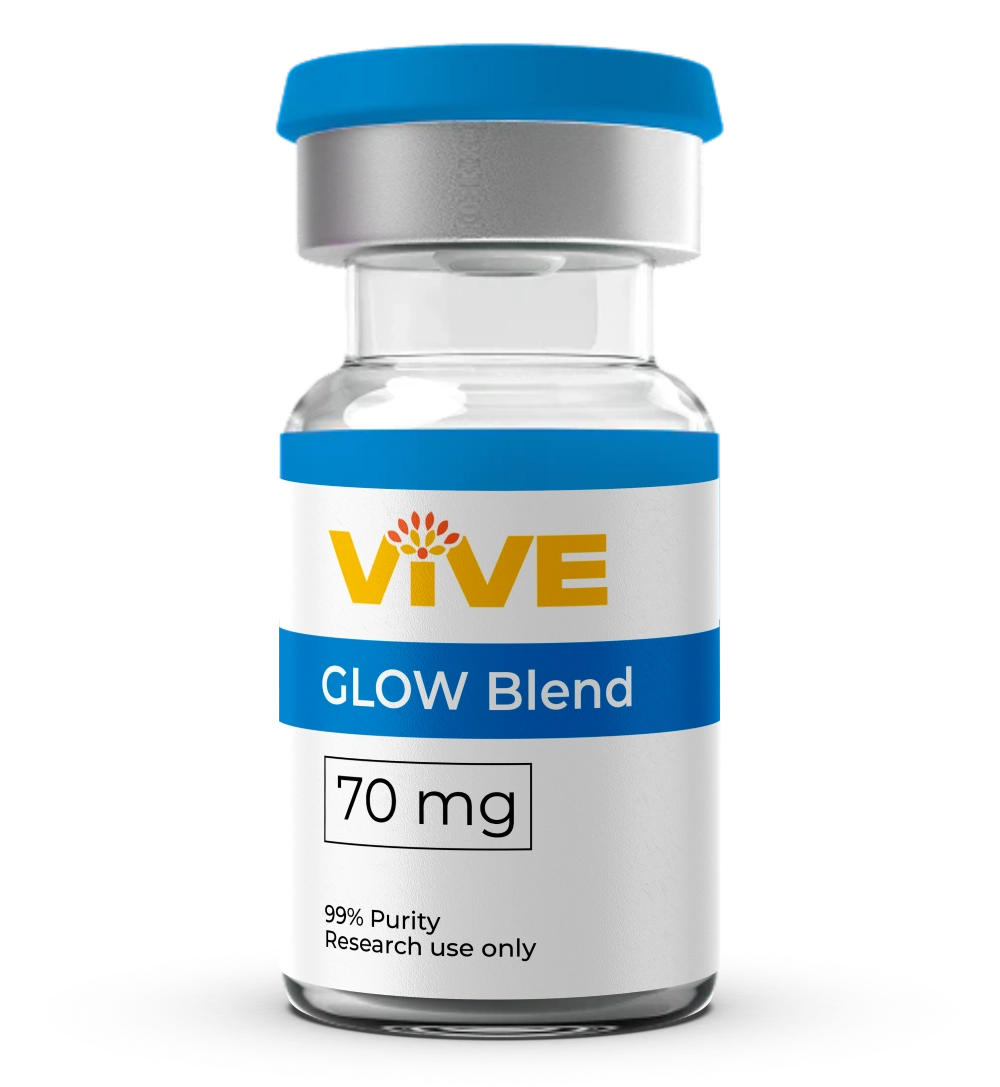
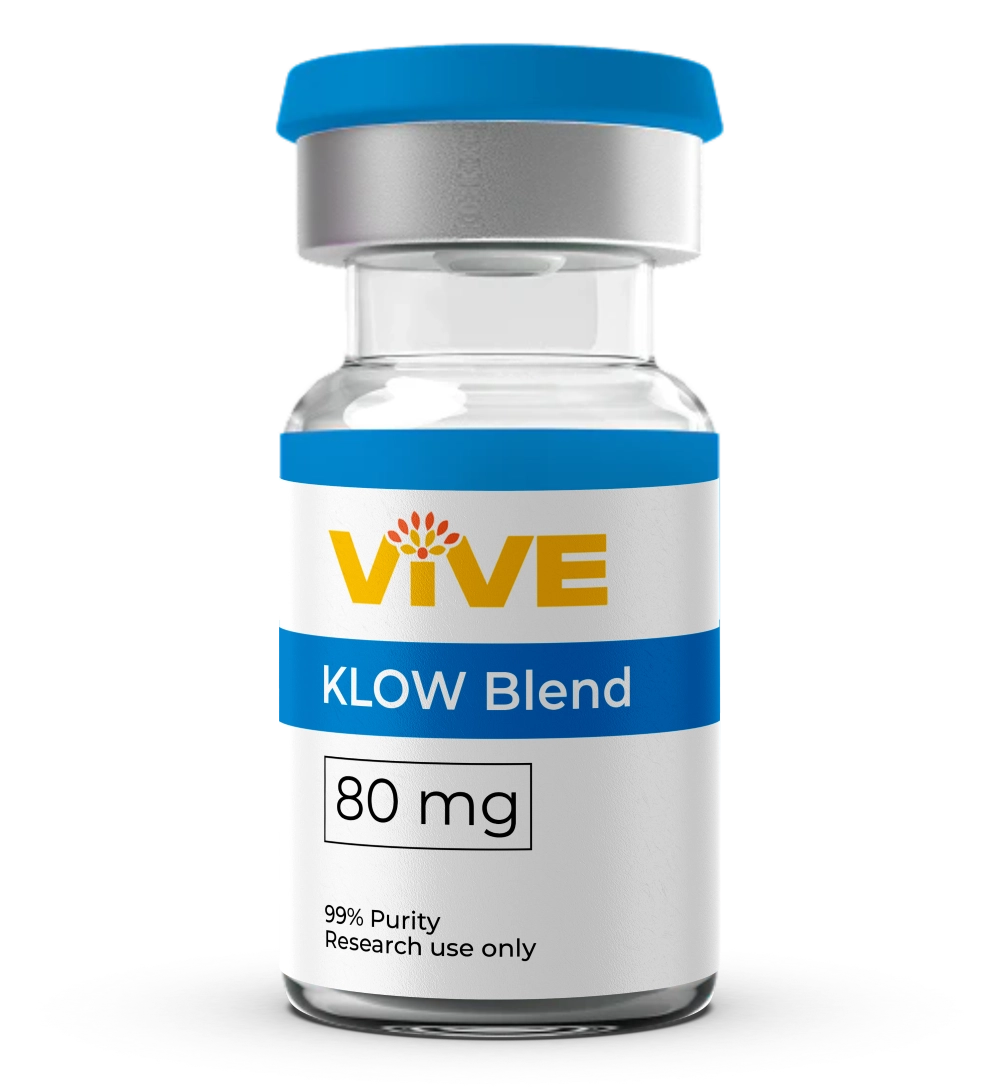
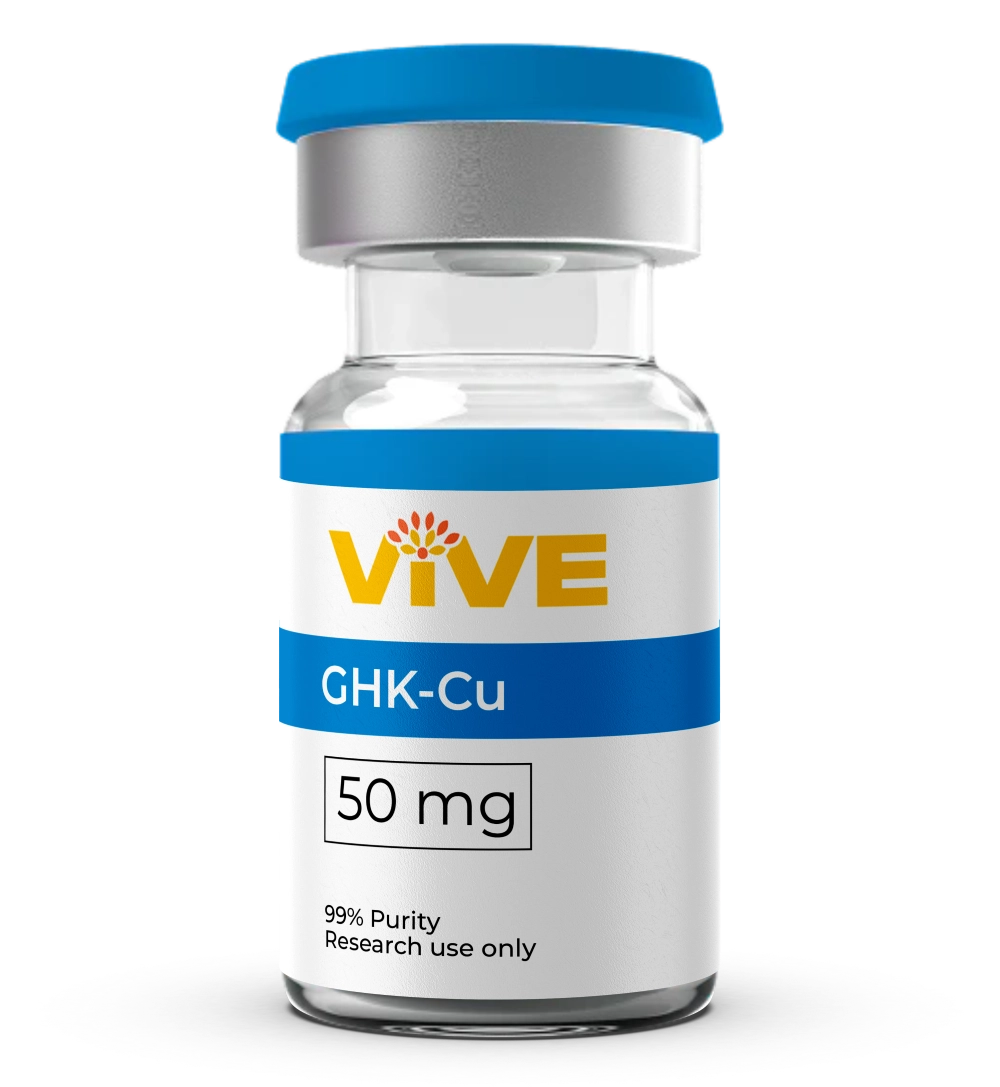
Glow Blend combines three mechanism classes in one formulation: a tissue-repair-associated signaling peptide class, a systemic repair fragment class, and copper peptide chemistry. The KLOW peptide blend represents an alternative multi-peptide formulation built around copper peptide chemistry, offering researchers a comparison point against Glow Blend's broader combination. GHK-Cu, a copper-binding tripeptide, appears both standalone and as a shared component across both blends.
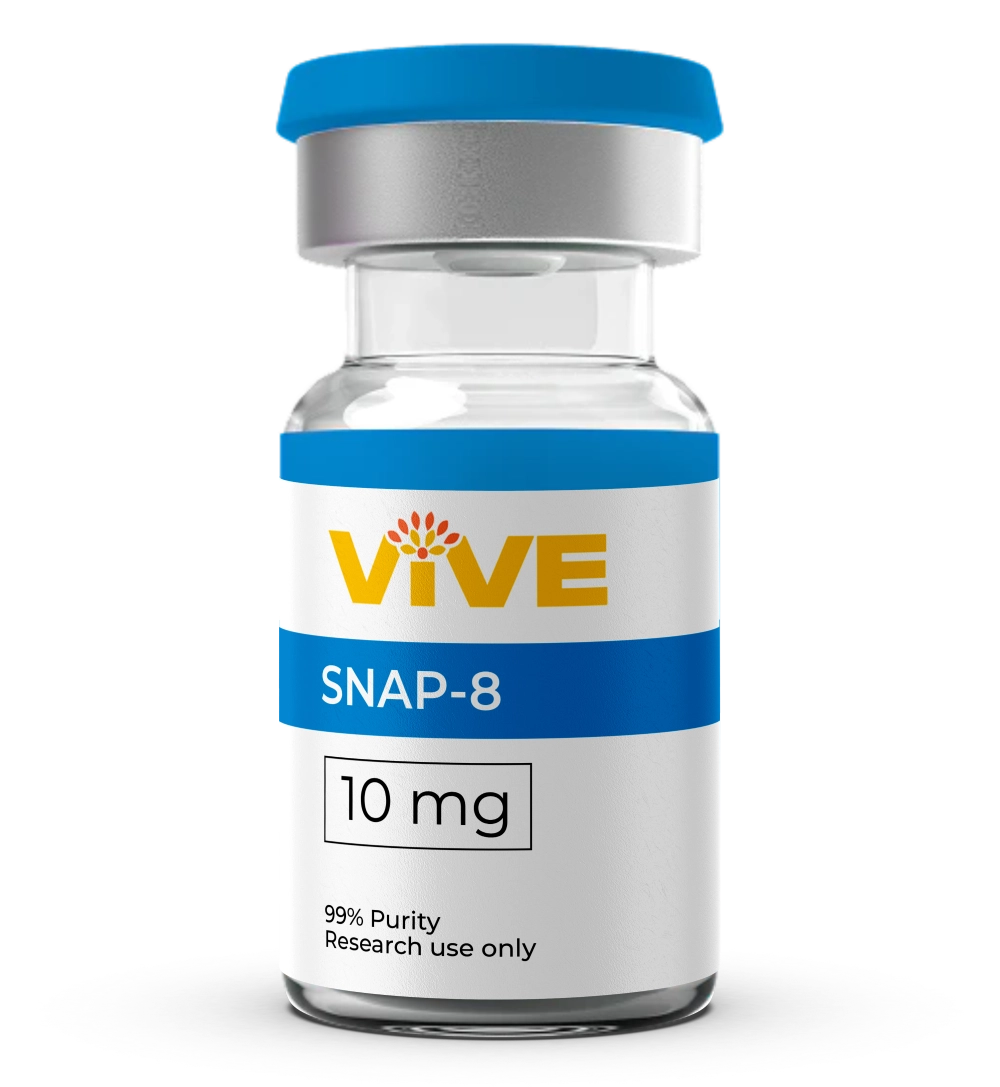
SNAP-8 contributes a synthetic, SNARE-interacting mechanism class distinct from the copper and repair-associated peptides. VivePeptides sources every compound in this collection from suppliers verified by independent third-party testing, giving researchers a consistent basis for comparative protocol design.
Four Distinct Mechanism Classes
Glow Blend, KLOW Blend, GHK-Cu, and SNAP-8 span copper peptide chemistry, repair-associated signaling, and synthetic SNARE-interacting pathways. This range lets researchers select a single mechanism or study several in combination.
Component-Level Purity Documentation
Batch-specific documentation is available for each compound, including the individual peptide components within Glow Blend and KLOW Blend. This allows researchers to confirm identity and ratio before a study begins.
Reconstitution Considerations for Blends
Multi-compound formulations combine compounds with different solubility and stability profiles, which affects reconstitution and storage protocols. Researchers should document handling conditions separately from single-compound studies to preserve comparability.
Compound Comparison
How these compounds compare
| Compound | Mechanism Class | Research Focus | Distinguishing Feature |
|---|---|---|---|
| Glow Blend (BPC/TB/GHK) | Repair-associated and copper peptide blend | Combined dermal and connective tissue models | Three-component formulation, broadest mechanism range |
| KLOW Blend | Copper-peptide-anchored multi-component blend | Comparative dermal matrix research vs Glow Blend | Alternative formulation built around copper peptide chemistry |
| GHK-Cu | Copper-binding tripeptide | Extracellular matrix remodeling, fibroblast signaling | Standalone compound, also shared blend component |
| SNAP-8 | Synthetic SNARE-interacting peptide | Neurotransmitter vesicle docking inhibition models | Only non-copper, non-repair mechanism in category |
Mechanism & Research Context
Mechanism Classes and Research Context Within the Glow Stack
What distinguishes this collection is the deliberate pairing of structurally unrelated mechanism classes within a single research protocol, rather than reliance on one compound family. Copper peptide chemistry, present in GHK-Cu and as a component of both blends, has been examined in preclinical literature for its association with extracellular matrix remodeling and metalloproteinase regulation in cultured dermal fibroblast models.
Repair-associated peptide fragments, represented within Glow Blend, have been studied separately for their signaling activity in tissue culture and animal-model injury research. SNAP-8 operates through a distinct pathway, investigated for its capacity to interact with SNARE-complex-mediated vesicle docking in vitro.
Researchers selecting among these compounds typically weigh whether a study question calls for an isolated mechanism (favoring GHK-Cu or SNAP-8 alone) or a combined-mechanism model (favoring Glow Blend or the KLOW Blend). Study design considerations include reconstitution stability, solvent compatibility across blended peptides, and documenting each component's concentration, since blended formulations complicate isolating individual variable effects.
Research FAQ
Frequently asked questions
What is a glow peptide stack?
What is the difference between Glow Blend and KLOW Blend?
What mechanism class does GHK-Cu belong to?
How does SNAP-8 differ mechanistically from the other peptides in this collection?
Why do researchers study these peptides in combination rather than individually?
What purity and documentation standards apply to blended research peptides?
Related Research Collections
Continue exploring
These products are sold strictly for laboratory and research use only and are not approved for human consumption, diagnosis, or therapeutic treatment. Not for human or veterinary use. These statements have not been evaluated by the Food and Drug Administration, and nothing on this page constitutes medical advice or a health claim.