Research Article
Peptide Solubility Guide: Solvents for Research Compounds
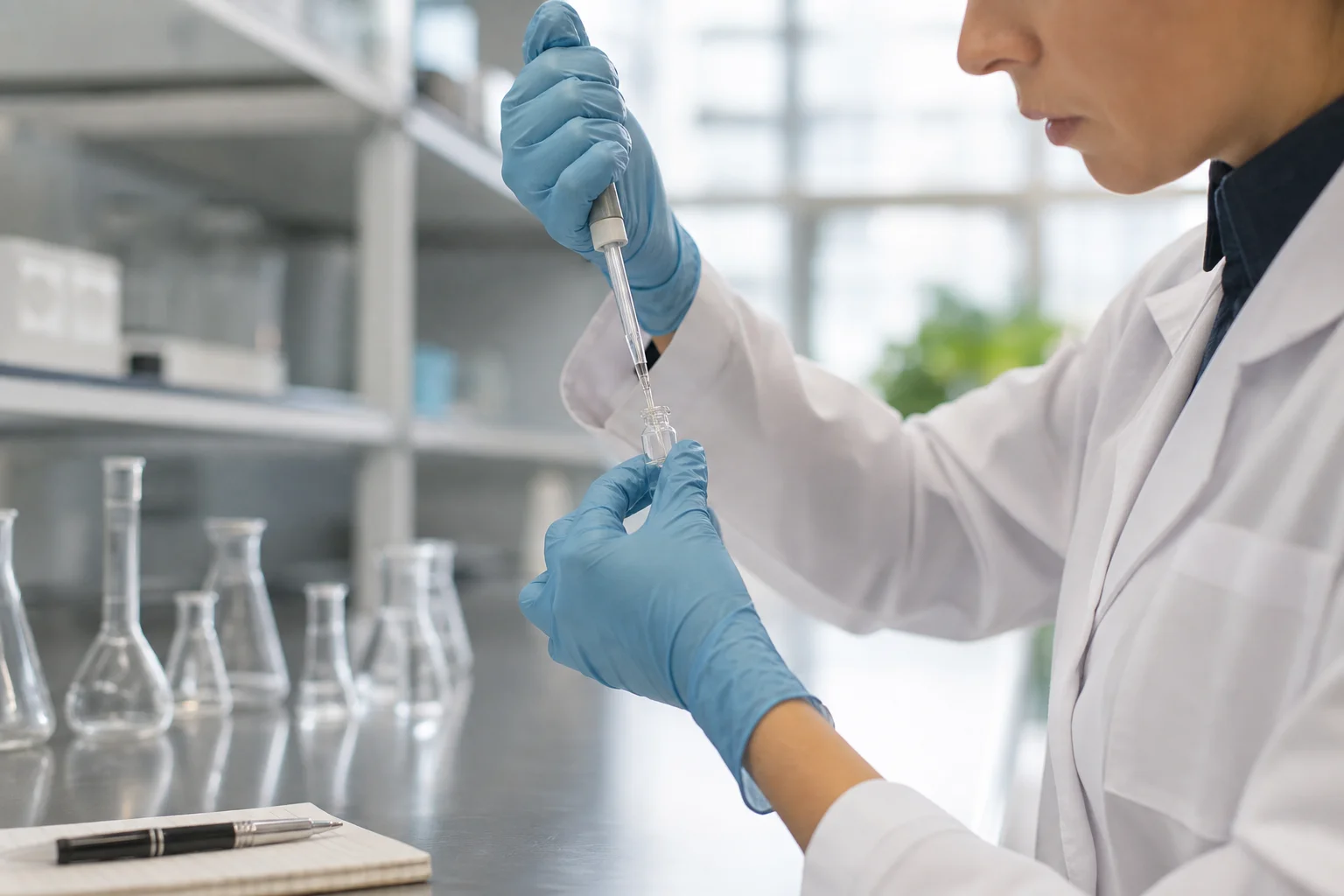
This peptide solubility guide breaks down why some research compounds dissolve instantly in bacteriostatic water for peptide reconstitution while others require acetic acid or an organic solvent. Solubility depends on amino acid sequence, net charge, and hydrophobic residue content, not guesswork, and matching the right solvent protects both compound integrity and reproducible research results.
By Vive Team
What a Peptide Solubility Guide Should Cover First
Peptides are short chains of amino acids linked by peptide bonds, and how easily a given chain dissolves is determined almost entirely by that sequence. After peptide synthesis, most research peptides arrive as a lyophilized powder, a freeze-dried cake that must be reconstituted in a liquid carrier before use in any assay or protocol. Two vials that look identical on a shelf can behave completely differently once a solvent is added: one may dissolve in seconds with a gentle swirl, while another clumps, forms a film on the glass, or refuses to fully clear even after vigorous mixing.
The difference comes down to chemistry, not chance. Solubility is governed by the balance of hydrophilic (water-loving) and hydrophobic (water-repelling) segments within the chain, the peptide's net charge at a given pH, and its overall length. A well-informed peptide solubility guide treats reconstitution as a chemistry problem with a predictable answer, not trial and error.
How Amino Acid Composition Determines Solubility
Every amino acid side chain falls somewhere on a spectrum from strongly hydrophilic to strongly hydrophobic. Residues like lysine, arginine, glutamic acid, and aspartic acid carry a charge at physiological pH and pull water molecules toward the peptide backbone, which improves dissolution in aqueous solutions. Residues like leucine, isoleucine, valine, and phenylalanine avoid water and tend to clump together, which is why peptides containing a high ratio of these residues often resist dissolving in plain water alone.
Net charge matters just as much as the individual residues. A peptide sitting near its isoelectric point, the pH at which its positive and negative charges balance to roughly zero, will often be at its least soluble, because there is no net charge to keep the chain pushed apart in solution. Shifting the pH slightly acidic or slightly basic, away from that point, typically restores solubility by giving the peptide a stronger net positive or net negative charge. This is one reason a small amount of acid is often the simplest fix for a peptide that will not clear in water.
Choosing the Right Solvent for Your Research Compound
Researchers often try water first since it is the simplest fix, and for many peptides it's the only solvent needed. Bacteriostatic water (BAC water), water with a small amount of benzyl alcohol added as a preservative, is the standard choice across most research protocols because it keeps a reconstituted vial usable for multiple sessions without introducing contamination risk.
When a peptide is not soluble in water alone, acetic acid is the next tool researchers reach for. A dilute acetic acid solution, sometimes as little as 0.1 percent, lowers the pH enough to protonate acidic residues and push the peptide's net charge in a direction that favors dissolution. This approach is common for compounds with a high proportion of acidic residues that resist a neutral aqueous buffer.
For peptides that remain cloudy even after acid is tried, an organic solvent becomes necessary. Dimethyl sulfoxide (DMSO) is the most widely used option in a research setting: a small amount, often just a few microliters, is added first to fully wet the powder before water or buffer is introduced. Adding organic solvents directly to a large volume of water at once can cause the peptide to precipitate out again, so the standard order of operations is solvent first, in a small amount, then dilute stepwise.
Working With Hydrophobic Peptides
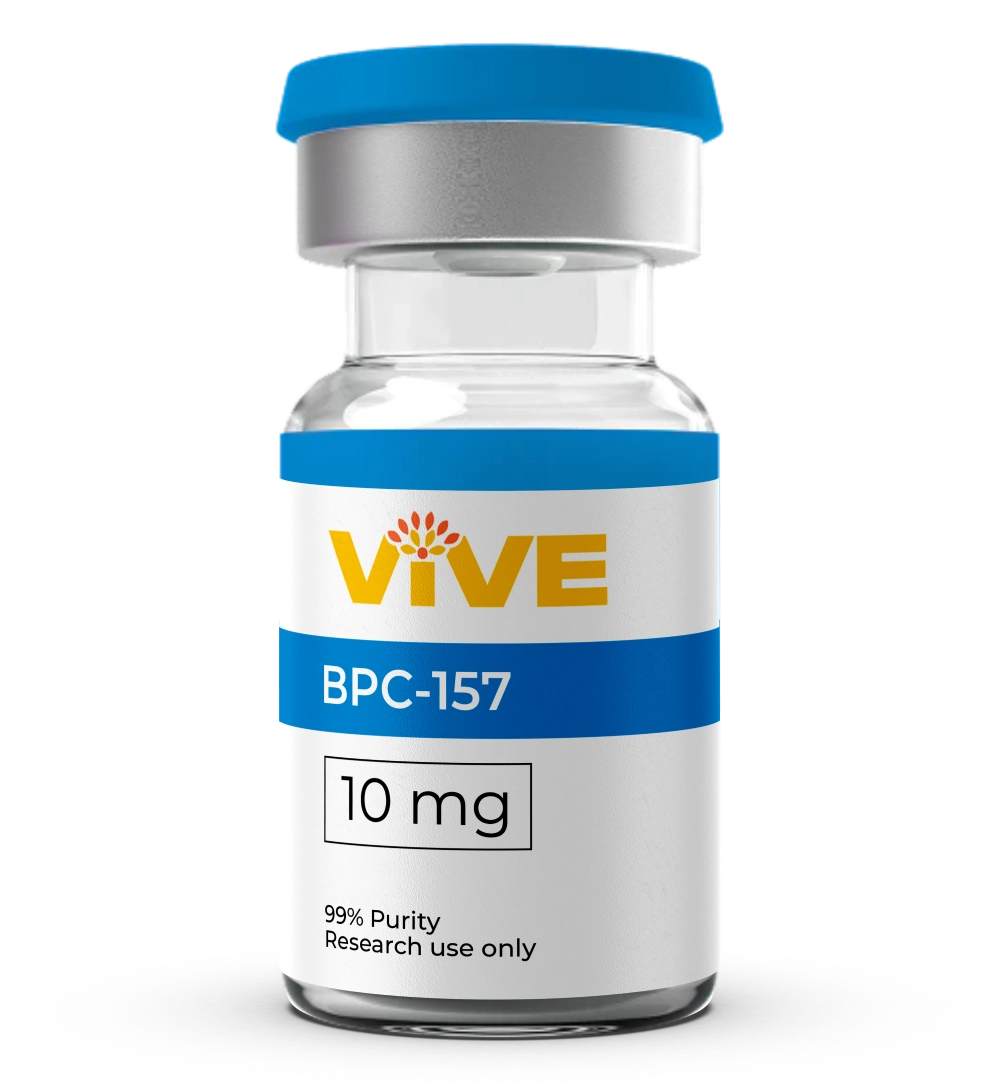
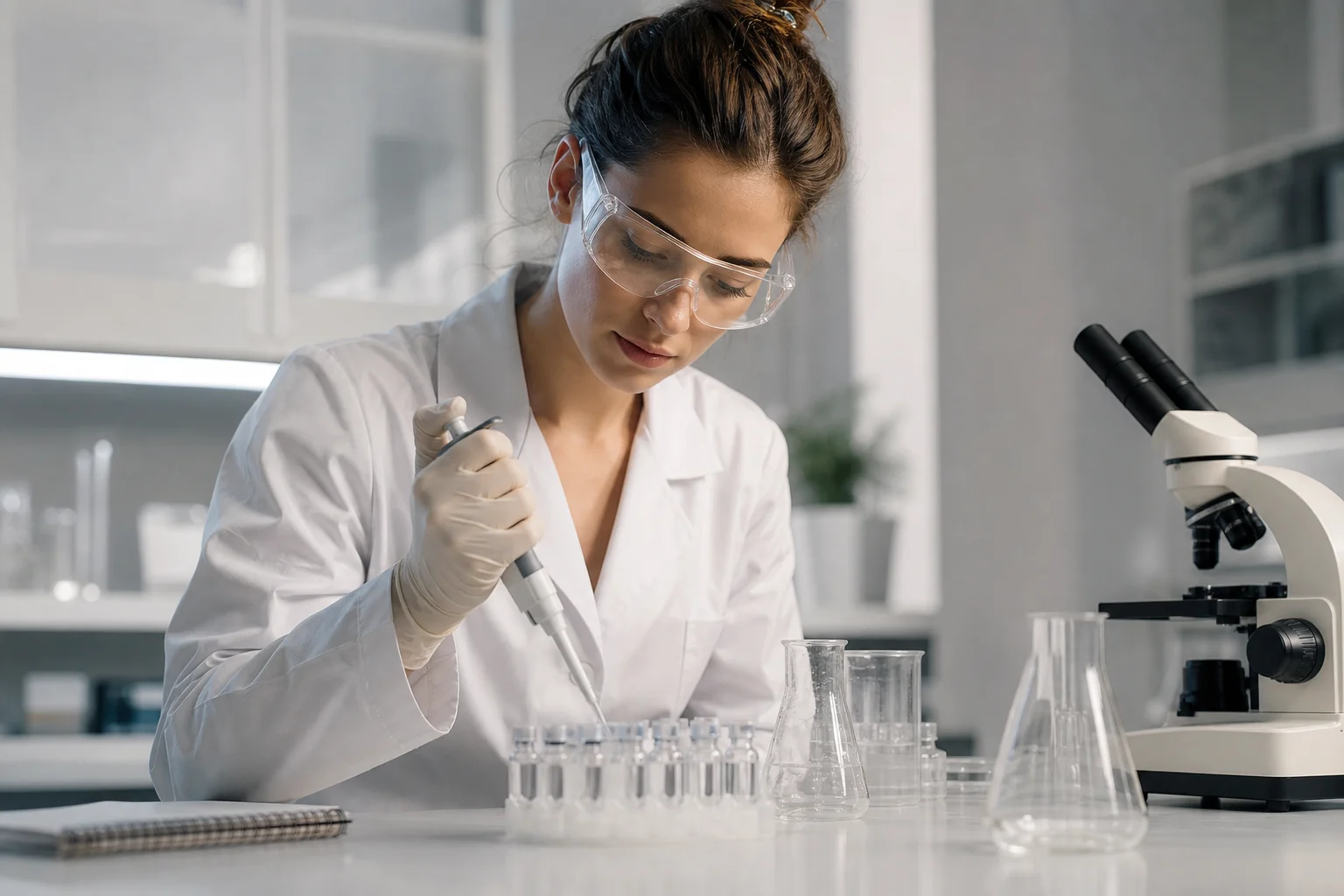
Some research compounds are hydrophobic peptides by design, sequences dominated by nonpolar residues that give them useful structural properties but make them genuinely difficult to dissolve. BPC-157 reconstitution protocols and other short, stable research peptides are usually straightforward, but longer or more lipophilic sequences may need a deliberate step-by-step approach.
The standard method for hydrophobic peptides starts with a small amount of DMSO or acetic acid added directly to the lyophilized powder, well below the final working volume. Swirl gently rather than vortexing, which can shear the peptide bonds in some sequences. Once the powder is fully wetted and the solution looks clear, water is added slowly, in stages, watching for any cloudiness that signals the peptide is beginning to fall out of solution again. If cloudiness appears, stop adding water and let the vial sit briefly at room temperature; many hydrophobic peptides will re-dissolve once fully equilibrated.
Researchers exploring combination protocols often review peptide stacking guidelines alongside solubility planning, since compounds used together may need separate reconstitution steps before being combined in a single vial.
Practical Reconstitution Considerations for Research Use
A few habits reduce failed reconstitutions across almost any peptide. Bring vials to room temperature before adding any liquid, since cold glass can cause condensation that throws off measured volumes. Add solvent slowly down the side of the vial rather than directly onto the powder, which limits foaming and keeps delicate peptide bonds intact. Label every vial with the solvent used and the date, since bacteriostatic water and acetic acid solutions each have different stability windows once a vial is opened.
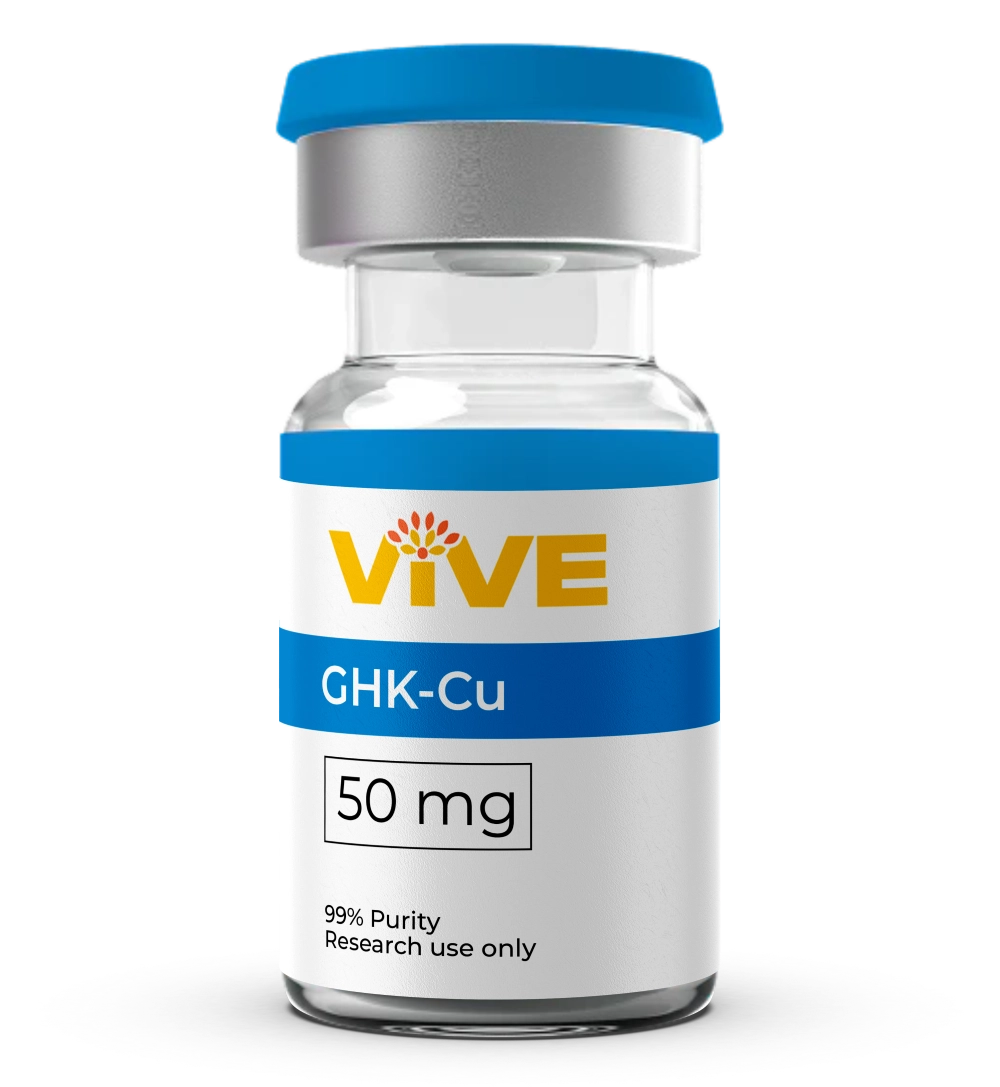
Copper-binding and skin-research peptides raise their own solubility questions, since their coordination chemistry behaves differently from typical peptide sequences. GHK-Cu is a common example, and its copper peptide reconstitution profile follows this same pattern of needing careful pH and solvent selection. Researchers combining regenerative peptides for topical or recovery-focused study should confirm each compound is fully dissolved on its own before combining them in a single vial, since introducing one peptide's solvent into another's solution partway through reconstitution can cause both to fall out of solution.
Whatever solvent path a compound requires, documenting the exact volumes and order of addition is what a thorough peptide solubility guide should always emphasize, since reproducibility is the entire point of careful research practice.
Frequently Asked Questions
What is the best solvent for peptide solubility research? There is no single best solvent, it depends on the peptide's amino acid composition. Water or bacteriostatic water works for most compounds, a dilute acetic acid solution helps peptides with acidic residues, and an organic solvent like DMSO is reserved for genuinely hydrophobic peptides that will not clear in water or acid alone.
Why won't my peptide fully dissolve in water? Cloudiness or clumping usually means the peptide's net charge is close to zero at that pH, or the sequence contains a high proportion of hydrophobic residues. Shifting the pH slightly with a small amount of acetic acid, or pre-wetting the powder with an organic solvent before adding water, typically resolves the issue.
Can I use DMSO for every research peptide? No. DMSO is useful for hydrophobic peptides that resist aqueous solvents, but it is unnecessary, and sometimes counterproductive, for peptides that dissolve cleanly in water. Reserve DMSO for compounds that remain cloudy after water and acetic acid have both been tried, and always add it in a small amount before diluting.
Does peptide solubility affect stability once reconstituted? Yes. A peptide that struggles to dissolve is often more prone to aggregation once in solution, which can shorten how long it remains stable. Using the correct solvent from the start, rather than forcing dissolution with excess mixing or heat, generally produces a more stable working solution for research use.
How much acetic acid should be used to reconstitute a peptide? Researchers typically start with a dilute solution, often around 0.1 percent acetic acid in water, adding it in small increments rather than all at once. The goal is the minimum amount needed to clear the solution, since excess acid is unnecessary once the peptide has fully dissolved.
Explore Research-Grade Peptides Built for Reliable Reconstitution
Solubility planning starts with the compound in front of you. Browse the full peptide library to review reconstitution notes before starting your next protocol.
Research Use Only
All information in this article is intended for educational and research purposes only. VivePeptides products are not intended for human or veterinary use.