Research Article
NAD+ vs SS-31: Mitochondrial Research Compared
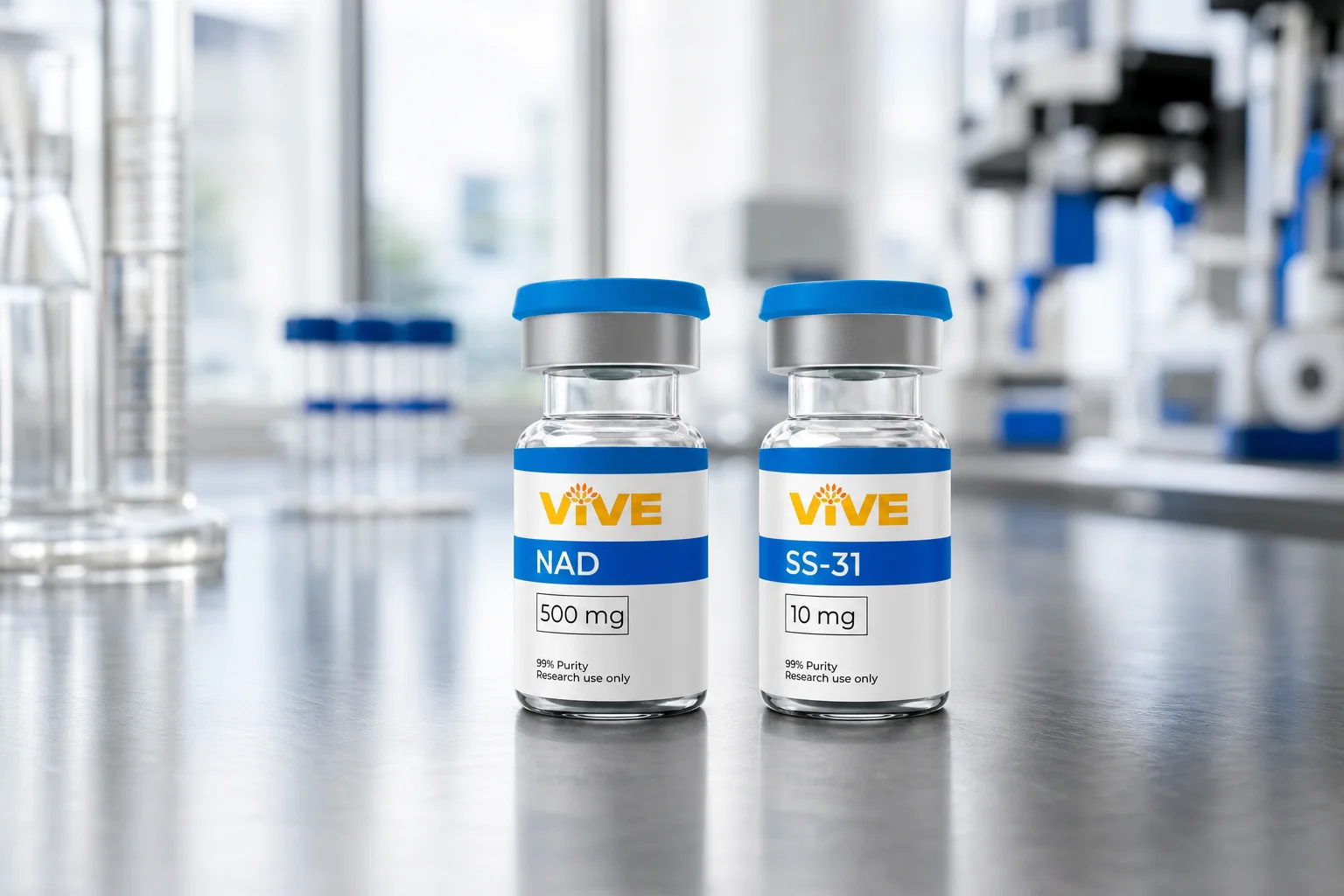
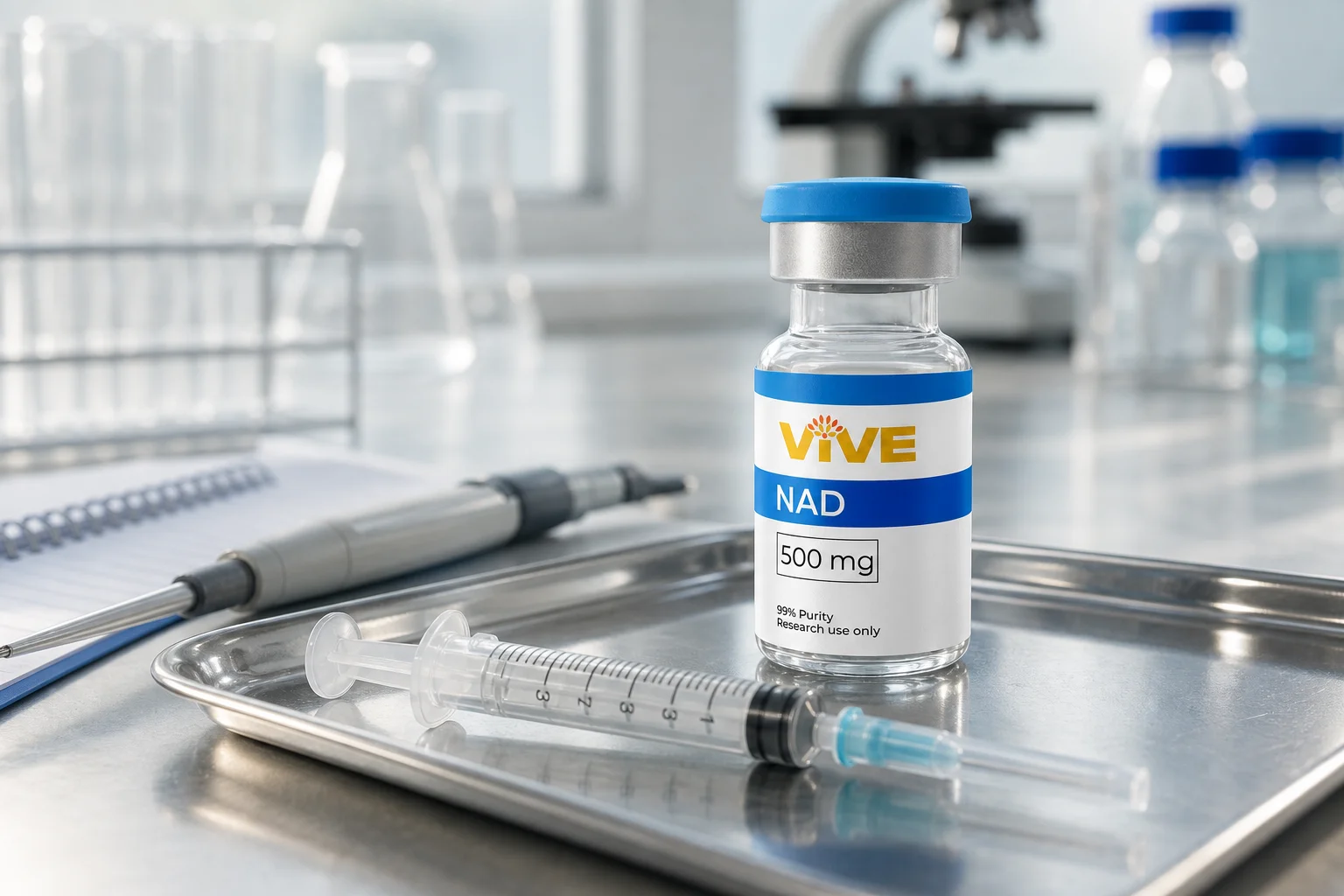
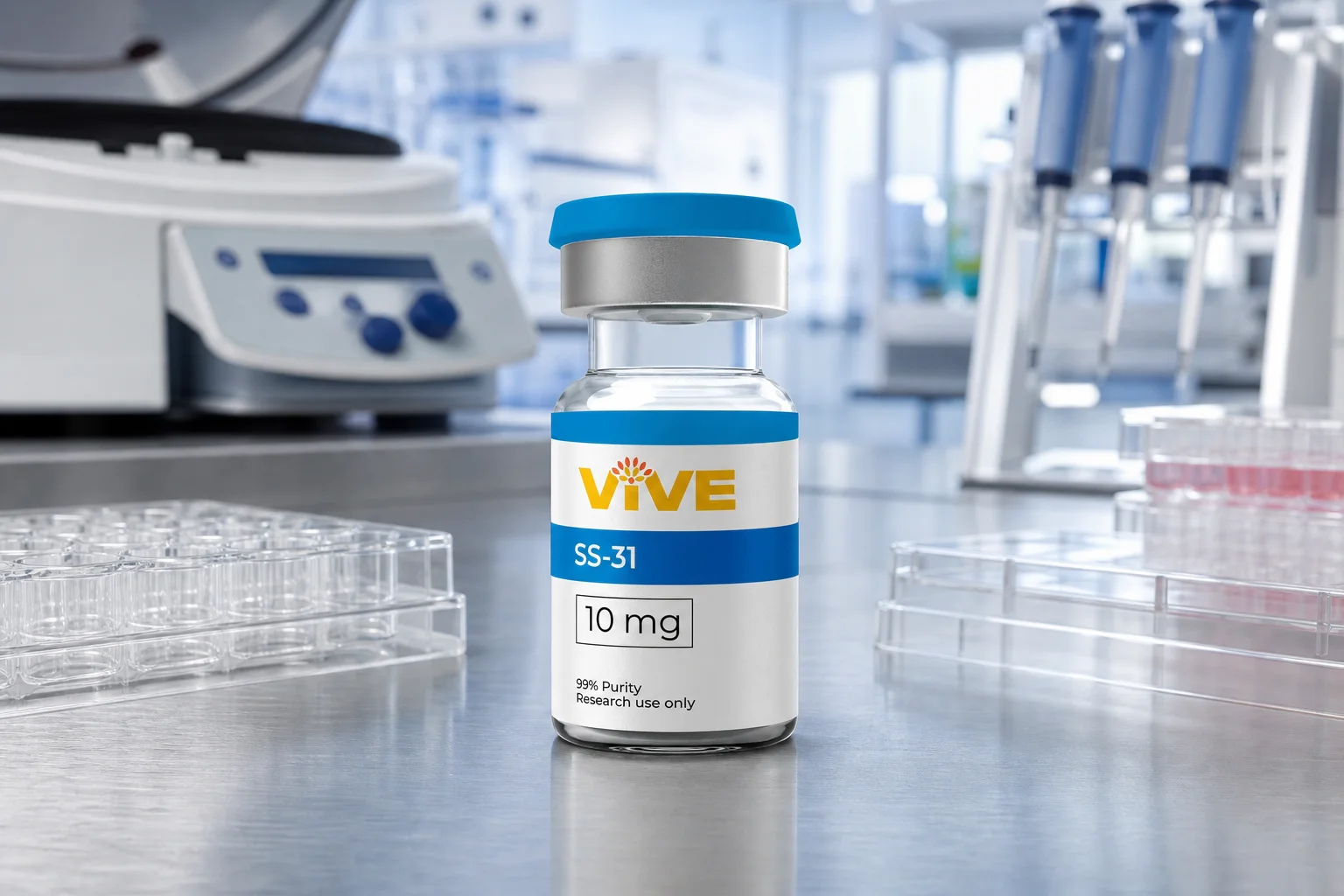
NAD+ vs SS-31 is a frequent comparison among researchers studying mitochondrial function, because the two compounds work through fundamentally different mechanisms in cell and animal models. NAD+, detailed further on the NAD+ reference page, replenishes a coenzyme pool tied to ATP production, while SS-31 binds cardiolipin directly within the inner mitochondrial membrane.
By Vive Team
Understanding NAD+ in Cellular Energy Research
Nicotinamide adenine dinucleotide, commonly abbreviated NAD+, is a coenzyme present in every cell that participates directly in energy production and DNA repair pathways. Research interest in NAD+ supplements has grown alongside study of related precursors such as nicotinamide riboside (NR) and nicotinamide mononucleotide (NMN), both of which raise intracellular NAD+ levels in preclinical models. As cells age, NAD+ concentrations decline, a pattern researchers associate with aging NAD dynamics and reduced metabolic flexibility.
In cell culture and rodent studies, restoring NAD+ pools has been linked to improved mitochondrial function, supporting the broader hypothesis that NAD+ helps sustain healthy energy metabolism across tissue types. Because NAD+ sits at the center of so many metabolic pathways, from DNA repair to longevity signaling, it remains one of the most studied compounds in mitochondrial and aging research. Some researchers investigating body composition outcomes have also explored NAD+ in weight loss study models, though findings vary by species and protocol, underscoring the need for careful, well-controlled experimental design when interpreting NAD+ data across different study populations. This is part of why NAD+ supplement research spans such a wide range of study designs, from single-cell assays to full rodent longevity cohorts.
What Is SS-31 and How It Targets Mitochondria
SS-31, also known as elamipretide, works through an entirely different mechanism from NAD+. Rather than restoring a coenzyme pool, SS-31 binds cardiolipin, a phospholipid concentrated in the inner mitochondrial membrane near the electron transport chain. By stabilizing cardiolipin, SS-31 research models show reduced leakage of reactive oxygen species during ATP production, which in turn appears to limit oxidative stress in stressed or aging mitochondria.
Much of the published research interest in SS-31 originated in cardiac and skeletal muscle models, including studies of heart failure, where mitochondrial dysfunction is a defining feature. Researchers reviewing the SS-31 product overview note that reconstitution protocols differ from NAD+ handling, since SS-31 is typically prepared and stored under different conditions. For a deeper look at the compound's structure and mechanism, see What Is SS-31 (Elamipretide)? Mitochondrial Peptide Research Guide. Because SS-31 acts directly at the membrane level rather than through coenzyme replenishment, it is often studied alongside NAD+ in comparative mitochondrial function research, giving investigators two distinct entry points into the same broader question of cellular energy support.
NAD+ vs SS-31: Mechanistic Differences in Study Models
NAD+ vs SS-31 comparisons in the literature generally come down to where each compound intervenes in mitochondrial bioenergetics. NAD+ operates upstream, replenishing the substrate pool that drives the electron transport chain and downstream ATP production. SS-31 operates downstream, protecting the membrane architecture that houses that same electron transport chain from oxidative stress and reactive oxygen species accumulation.
In study models of metabolic disease, some researchers have paired NAD+ protocols with body composition and weight loss endpoints, while SS-31 research more often centers on cardiac and neurodegenerative models, including heart failure and ischemia-reperfusion injury. Both compounds converge on the same underlying goal, supporting mitochondrial function under metabolic or oxidative challenge, but they reach that goal through mechanistically distinct routes. Understanding this NAD+ vs SS-31 distinction matters for researchers designing comparative protocols, since combining the two in a single study model requires accounting for different reconstitution, storage, and dosing considerations.
Comparing Research Applications Across Rodent, Cell Culture, and Human Models
Preclinical study models remain the primary setting for both NAD+ and SS-31 research. In cell culture, researchers can directly measure ATP production, mitochondrial membrane potential, and markers of oxidative stress with relatively tight experimental control. Rodent models extend this work to whole-organism outcomes, including metabolic rate, body weight, and organ-specific function, which is where much of the weight loss research interest in NAD+ originates.
Human study models are more limited for both compounds and remain firmly in the research-use-only category. Researchers comparing NAD+ and SS-31 alongside other mitochondrial-targeted compounds have noted that this broader peptide class shares a common thread: targeting cellular energy production, even when individual mechanisms diverge. Selecting the right study model depends heavily on the research question. Cell culture is best suited for mechanism-level questions about the electron transport chain, while rodent models better support systemic questions about metabolic and cardiovascular outcomes tied to mitochondrial function. For related longevity and skin-aging peptide comparisons, see 6 Best Peptides for Anti-Aging Research: From GHK-Cu to NAD+, which reviews NAD+ alongside other compounds studied for aging-related outcomes.
Reconstitution and Handling Considerations for Research Use
Proper reconstitution and handling protocols matter for research validity regardless of which compound is under study. NAD+ formulations are typically light-sensitive and require careful reconstitution to preserve coenzyme activity, while SS-31 reconstitution follows its own storage and stability guidelines suited to peptide chemistry. Researchers new to either compound should review manufacturer-provided handling documentation before beginning any protocol, since inconsistent reconstitution is a common source of variability in mitochondrial function assays.
Best practices include using appropriate diluents, avoiding repeated freeze-thaw cycles, and documenting lot numbers for traceability across a study. These handling steps support reproducibility, which is essential when comparing NAD+ vs SS-31 outcomes across independent labs or study replicates. Researchers applying this same rigor across every compound in a comparative protocol reduce a major source of experimental variability in mitochondrial function assays, helping ensure that observed differences reflect true biological mechanism rather than handling error.
Frequently Asked Questions
What is the main difference between NAD+ and SS-31 in research settings? NAD+ replenishes a coenzyme pool that feeds the electron transport chain and supports ATP production, while SS-31 binds cardiolipin to protect the inner mitochondrial membrane directly. Both target mitochondrial function, but NAD+ works upstream at the substrate level and SS-31 works downstream at the membrane level. Researchers select between them, or combine them, based on the mechanism their study model is designed to test.
Does NAD+ or SS-31 have applications in weight loss research? NAD+ has been studied more extensively in weight loss and metabolic research models, since coenzyme availability affects cellular energy production broadly across tissues. SS-31 research has focused primarily on cardiac and neuromuscular models, including heart failure, rather than body composition outcomes. Neither compound is approved for human weight management, and all current data remains research-use-only.
How does SS-31 reduce oxidative stress in study models? SS-31 stabilizes cardiolipin within the inner mitochondrial membrane, which appears to limit electron leakage during ATP production. This stabilization reduces the generation of reactive oxygen species at the source, rather than neutralizing them after formation. Researchers studying oxidative stress in cardiac and neurodegenerative models have used this mechanism as a basis for comparative mitochondrial function studies.
Can NAD+ and SS-31 be studied together in the same protocol? Yes, researchers sometimes pair NAD+ and SS-31 in comparative study models because they act on different points in the same mitochondrial pathway. Doing so requires separate reconstitution and handling steps for each compound, since their stability profiles differ. Documenting dosage, timing, and storage conditions separately for each compound helps preserve data quality across a combined protocol.
Where can researchers find dosage and handling information for NAD+ and SS-31? Compound-specific handling and reconstitution details are available on each product's dedicated page, which outline current research protocols for storage, dilution, and documentation. Researchers should always default to the most conservative handling guidance available and consult institutional protocols before beginning any comparative mitochondrial function study.
Compare NAD+ and SS-31 in the VivePeptides Research Catalog
Researchers weighing NAD+ vs SS-31 for an upcoming study can review current specifications, reconstitution guidance, and available quantities before finalizing a protocol. For additional mitochondrial-support and metabolic research compounds, browse the VivePeptides catalog to compare formats side by side.
Research Use Only
All information in this article is intended for educational and research purposes only. VivePeptides products are not intended for human or veterinary use.