Research Article
What Is NAD+? Nicotinamide Adenine Dinucleotide Guide
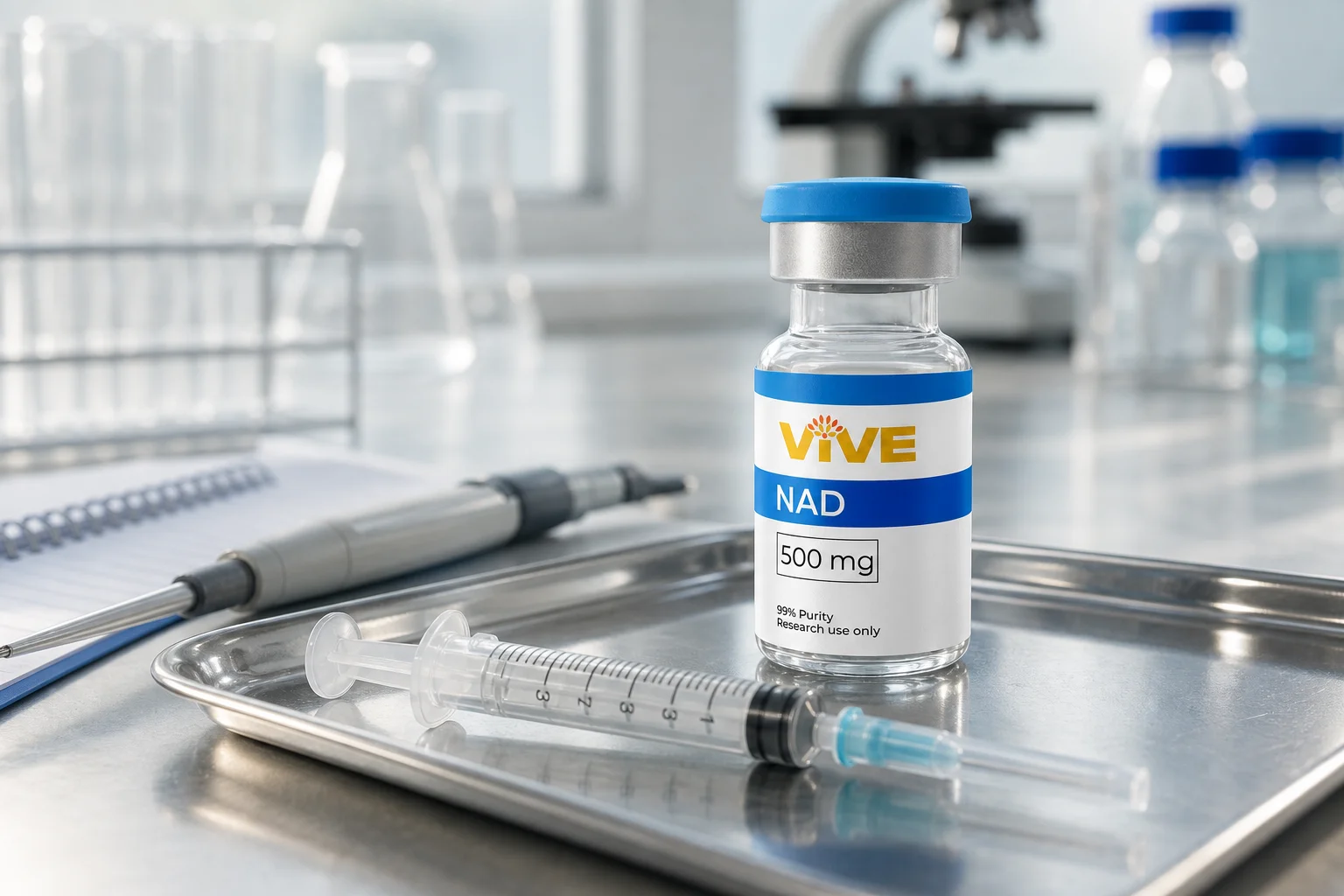
What is NAD+? It is nicotinamide adenine dinucleotide, a coenzyme present in every cell that drives energy metabolism, DNA repair, and cellular signaling. Researchers studying research-grade NAD+ want to understand why this molecule declines with age and how it might be measured or supplemented in a lab setting.
By Vive Team
What Is NAD+ at the Molecular Level?
NAD is the common shorthand for nicotinamide adenine dinucleotide, a small molecule built from two nucleotides joined through a pair of phosphate groups. For anyone asking what is NAD+ from a research standpoint, this two-nucleotide structure is the reason the molecule can act as an electron carrier rather than a static structural molecule. Every reference to NAD nicotinamide adenine dinucleotide in the scientific literature points to this same coenzyme, present in every cell, body tissue, and organ system studied so far. Nicotinamide adenine dinucleotide NAD exists in two interconverting forms: an oxidized form written as NAD+ and a reduced form written as NADH. Cells shuttle electrons between these two states constantly, and that electron transfer is the basic chemistry behind nearly every energy-producing reaction in human metabolism.
How NAD+ Powers Cellular Metabolism and Energy Production
Mitochondria rely on NAD to move electrons through the electron transport chain, the final stage of energy production that generates most of a cell's ATP. Without adequate NAD, mitochondrial function slows, and cells have less usable energy for basic maintenance tasks. Understanding what NAD does inside the electron transport chain clarifies why researchers treat it as a core metabolic marker rather than a peripheral one. NAD was first identified more than a century ago by early biochemists studying fermentation, and it has remained a central molecule in metabolic research ever since. Researchers studying mitochondrial health frequently track NAD levels as a marker of cellular health worth measuring in metabolic research, since the coenzyme sits at the center of glycolysis, the citric acid cycle, and oxidative phosphorylation alike. This central role is part of why the molecule shows up across so many areas of cellular biology, from muscle tissue to brain tissue to the immune system.
NAD+ and DNA Repair: The Enzymes That Depend on It
Two major enzyme families depend directly on NAD to function: sirtuins and poly ADP-ribose polymerases, usually shortened to PARPs. PARP enzymes activate when a cell detects damaged DNA, and they consume NAD as fuel while working to repair the break. This is one of the clearest links between NAD and DNA repair in the research literature: when DNA damage is frequent or PARP activity is high, available NAD can be depleted faster than the cell can replace it. Sirtuins, a separate family of NAD-dependent enzymes, are involved in regulating gene expression, cellular stress responses, and other maintenance processes that researchers associate with healthy aging. The National Institutes of Health has funded substantial basic science on how these NAD-dependent pathways connect cellular energy status to DNA maintenance and long-term cell health, though this remains an active area of study rather than a settled question.
Why NAD Levels Decline With Age
Multiple lines of research show that NAD levels fall as the body ages, with measurable declines documented across blood, muscle, and skin tissue in various studies. The decline appears to start in early adulthood and continue steadily across the decades that follow, which has made NAD a molecule of interest in longevity research. Because NAD cannot be measured through a routine blood draw at a typical clinic, most quantification happens in specialized research labs using mass spectrometry or enzymatic cycling assays. Several mechanisms are thought to contribute to this age-related decline, including a rise in NAD-consuming enzymes like PARPs as DNA damage accumulates, plus a reduction in the enzymes responsible for building NAD from dietary precursors. This is one reason the NAD+ reference page tracks dosage and reconstitution research separately from broader longevity claims: age-related decline is well documented, but exactly how much external NAD or its precursors can offset that decline in a research setting is still being studied.
NAD Precursors and Research Approaches to Increase NAD
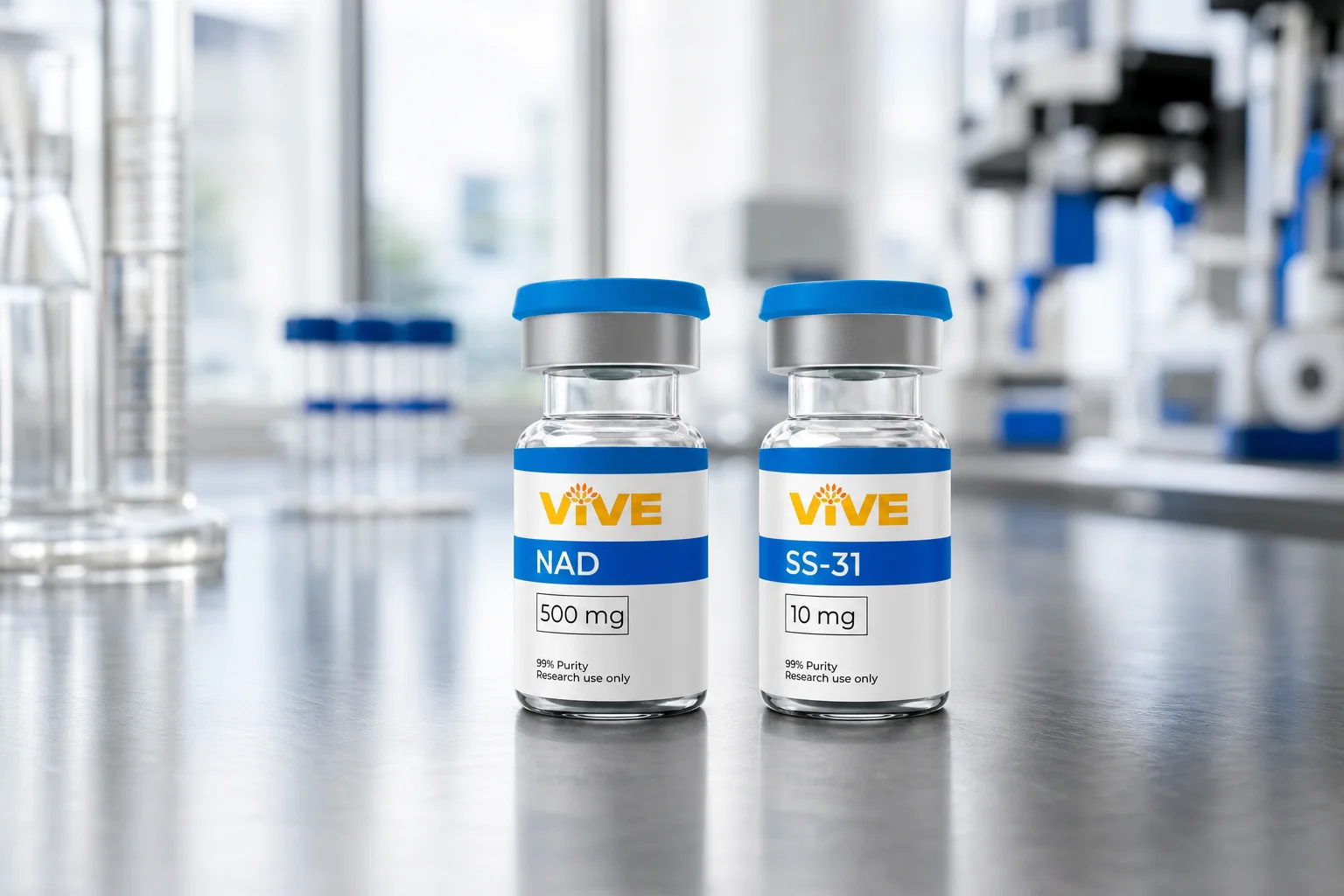
Because mature NAD cannot cross cell membranes efficiently, most research on raising cellular NAD focuses on precursor compounds instead of the molecule itself. Nicotinamide mononucleotide (NMN) and nicotinamide riboside (NR) are the two most studied NAD precursors, both of which cells convert into NAD through a short internal pathway. Other approaches use nicotinamide directly, since it is one of the two building blocks that make up the full coenzyme. Laboratory assays first establish baseline blood NAD. NAD precursor compounds are then introduced under controlled conditions to observe change over time, since self-reported outcomes are not sufficient for controlled research. Because injectable NAD research protocols differ meaningfully from oral precursor protocols, researchers should treat the two approaches as distinct variables rather than interchangeable ways to increase NAD. Unlike over-the-counter supplements marketed directly to consumers, research-grade material is intended strictly for laboratory use. Reconstitution matters here too: peptide and coenzyme research that involves an injectable format generally calls for sterile bacteriostatic water to prepare a stable solution, and protocols should always follow the specific reconstitution guidance published for that compound rather than being improvised.
Frequently Asked Questions
What Is NAD+ Used for in Peptide Research? In peptide and coenzyme research, NAD+ is studied for its role in cellular energy production, DNA repair, and age-related decline in tissue function. Researchers use it as a baseline marker when evaluating how other compounds affect metabolism or cellular stress responses, and as a reference point when comparing precursor compounds like NMN and NR in laboratory settings.
How Is NAD Different From NADH? NAD+ is the oxidized form of the coenzyme, while NADH is the reduced form carrying an extra pair of electrons. Cells continuously convert one into the other during metabolic reactions, and the ratio between the two forms is often used in research as an indicator of a cell's overall metabolic and mitochondrial state.
Do NAD Levels Really Decline With Age? Yes, research consistently shows that NAD levels decrease over the course of adult life, with measurable drops observed in blood and multiple tissue types. This decline is one reason NAD has become a frequent subject in longevity and cellular aging research, though researchers are still working out exactly which mechanisms drive the drop and how significant it is at different life stages.
Can NAD Precursors Increase NAD Levels? Compounds like NMN and NR are converted into NAD through internal cellular pathways, and laboratory studies have measured increases in tissue NAD following their use. Research into whether this translates into measurable changes in cellular function is ongoing, and results vary depending on the model studied, the dose used, and how NAD levels are measured before and after.
Does NAD+ Require Reconstitution for Research Use? Lyophilized NAD+ intended for research use is typically reconstituted with bacteriostatic water before use in a laboratory setting. Following the manufacturer's specific reconstitution and storage guidance helps preserve the stability of the coenzyme, since improper handling can degrade NAD before it is ever used in an experiment.
Explore NAD+ Research With VivePeptides
NAD sits at the center of energy metabolism, DNA repair, and cellular aging research, which makes it one of the more heavily studied coenzymes in the peptide research space. If you want to see how NAD stacks up against other longevity-focused compounds, our guide to 6 best peptides for anti-aging research is a good next stop.
Research Use Only
All information in this article is intended for educational and research purposes only. VivePeptides products are not intended for human or veterinary use.