Research Article
MOTS-c vs NAD+: Mitochondrial Metabolic Research Guide

MOTS-c vs NAD+ sits at the forefront of mitochondrial metabolic research, with both compounds influencing cellular energy production through separate but complementary mechanisms. MOTS-c is a mitochondrial-derived peptide encoded directly by mitochondrial DNA, while NAD+ is the coenzyme that powers redox reactions across every cell in the body. See the NAD+ product overview for purity and specification data.
By Vive Team
Mitochondrial Origins: Where Each Compound Comes From
Both MOTS-c and NAD+ originate within or depend upon the mitochondria, yet they differ substantially in molecular identity and function.
MOTS-c (Mitochondrial Open Reading Frame of the 12S rRNA Type-c) is a 16-amino-acid mitochondrial-derived peptide first characterized by Lee et al. in Cell Metabolism (2015). It is encoded directly by mitochondrial DNA, specifically within the 12S ribosomal RNA gene, making it one of a small class of peptides whose sequence is retained in the mitochondrial genome rather than the nuclear genome. This origin means MOTS-c levels respond directly to mitochondrial stress and metabolic demand.
NAD+ (nicotinamide adenine dinucleotide) is a coenzyme present in all living cells. It functions as an electron carrier in oxidative phosphorylation and as a substrate for sirtuins, poly(ADP-ribose) polymerases (PARPs), and CD38. Without adequate NAD+, energy production in the electron transport chain slows substantially. Verdin (Science, 2015) documented that NAD+ levels in multiple tissues decline by roughly 50% between young adulthood and mid-life, a finding that has made the coenzyme central to aging and metabolic longevity research.
Mechanisms of Action: How Each Molecule Supports Cellular Energy
Understanding the mechanism of each compound clarifies why researchers frequently study them alongside one another.
MOTS-c Peptide Mechanism
The MOTS-c peptide translocates from mitochondria to the nucleus in response to metabolic stress. Once in the nucleus, it regulates genes involved in glucose uptake, fatty acid oxidation, and the folate cycle. Lee et al. (Cell Metabolism, 2015) demonstrated that MOTS-c activates AMPK (AMP-activated protein kinase), a central sensor of cellular energy status, and that this activation reduced insulin resistance in mouse models. The role of MOTS-c in supporting mitochondrial function extends to attenuating reactive oxygen species accumulation during periods of energy deficit, which may protect mitochondrial integrity over time.
NAD+ Mechanism
NAD (nicotinamide adenine dinucleotide) operates as a coenzyme in more than 500 enzymatic reactions (Canto et al., Cell Metabolism, 2015). Its primary role is shuttling electrons from metabolic substrates to the electron transport chain, enabling ATP synthesis and cellular energy production. Beyond energy, NAD+ serves as the mandatory substrate for sirtuin deacetylases (SIRT1-7) and PARP1, two enzyme families central to DNA repair, gene expression regulation, and inflammation control. A decline in NAD+ levels does not only slow energy production; it also impairs DNA repair capacity and genomic stability.
MOTS-c vs NAD+: Key Differences for Metabolic Research
The comparison of MOTS-c vs NAD+ in experimental models reveals that both compounds address overlapping but distinct aspects of metabolic health.
| Feature | MOTS-c | NAD+ | |---|---|---| | Molecular class | Mitochondrial-derived peptide | Coenzyme | | Primary target | AMPK, folate cycle, gene expression | Sirtuins, PARPs, electron transport chain | | DNA repair role | Indirect (gene expression modulation) | Direct (PARP substrate) | | Age-related decline | Documented in serum (Kim et al., Aging, 2022) | Documented in multiple tissues (Verdin, Science, 2015) | | Clinical research | Active preclinical; limited human data | Multiple clinical trials completed |
The mitochondrial-derived peptide classification of MOTS-c also distinguishes it from most research peptides, which are encoded by nuclear DNA. MOTS-c production depends on mitochondrial transcription machinery, so factors that impair mitochondrial function, including oxidative damage and caloric excess, may reduce MOTS-c output before overt metabolic disease appears. This positions MOTS-c levels as a potential early indicator of mitochondrial function decline in research models.
Both compounds exhibit declining levels with aging, a convergence that has made the NAD MOTS-c research axis a productive focus for scientists studying longevity and metabolic resilience. Researchers investigating complementary mitochondrial targets can find relevant experimental design data in our deep dive on Best Peptide Stacks for Research: Synergistic Combinations That Work Together.

Cellular Energy Production, DNA Repair, and the Shared Research Agenda
Both MOTS-c and NAD+ converge on cellular energy production and DNA repair, which is why longevity-focused research protocols frequently examine them in parallel.
Cellular energy production depends on the electron transport chain generating sufficient ATP. NAD+ feeds electrons directly into this chain, while MOTS-c modulates upstream gene expression to optimize substrate availability and reduce oxidative burden. When either is deficient, ATP output drops, impairing downstream biological processes throughout the body.
The DNA repair connection is especially relevant to aging research. NAD+ is consumed by PARP enzymes that detect and repair DNA strand breaks. When NAD+ levels decline, DNA repair slows and genomic instability accumulates. The MOTS-c peptide supports this process indirectly: by activating AMPK and reducing reactive oxygen species, it decreases the frequency of DNA damage events that PARP must address, which in turn reduces the rate of NAD+ consumption. This feedback relationship makes combined study of both compounds scientifically rational.
Researchers should also note that the folate cycle, which MOTS-c regulates, intersects with the one-carbon metabolism pathway that supports NAD+ biosynthesis from tryptophan. This metabolic overlap adds another layer of scientific rationale for studying these two compounds together in the same model.
For broader context on how these compounds fit within the anti-aging peptide research landscape, our deep dive on 6 Best Peptides for Anti-Aging Research provides a useful comparative framework across the most studied research peptides.
Research Protocols: Dosing Context from Published Studies
The following dosing data reflects published preclinical and clinical literature. This information is for research orientation only and does not constitute a protocol recommendation or medical advice.
MOTS-c Dosing in Preclinical Models
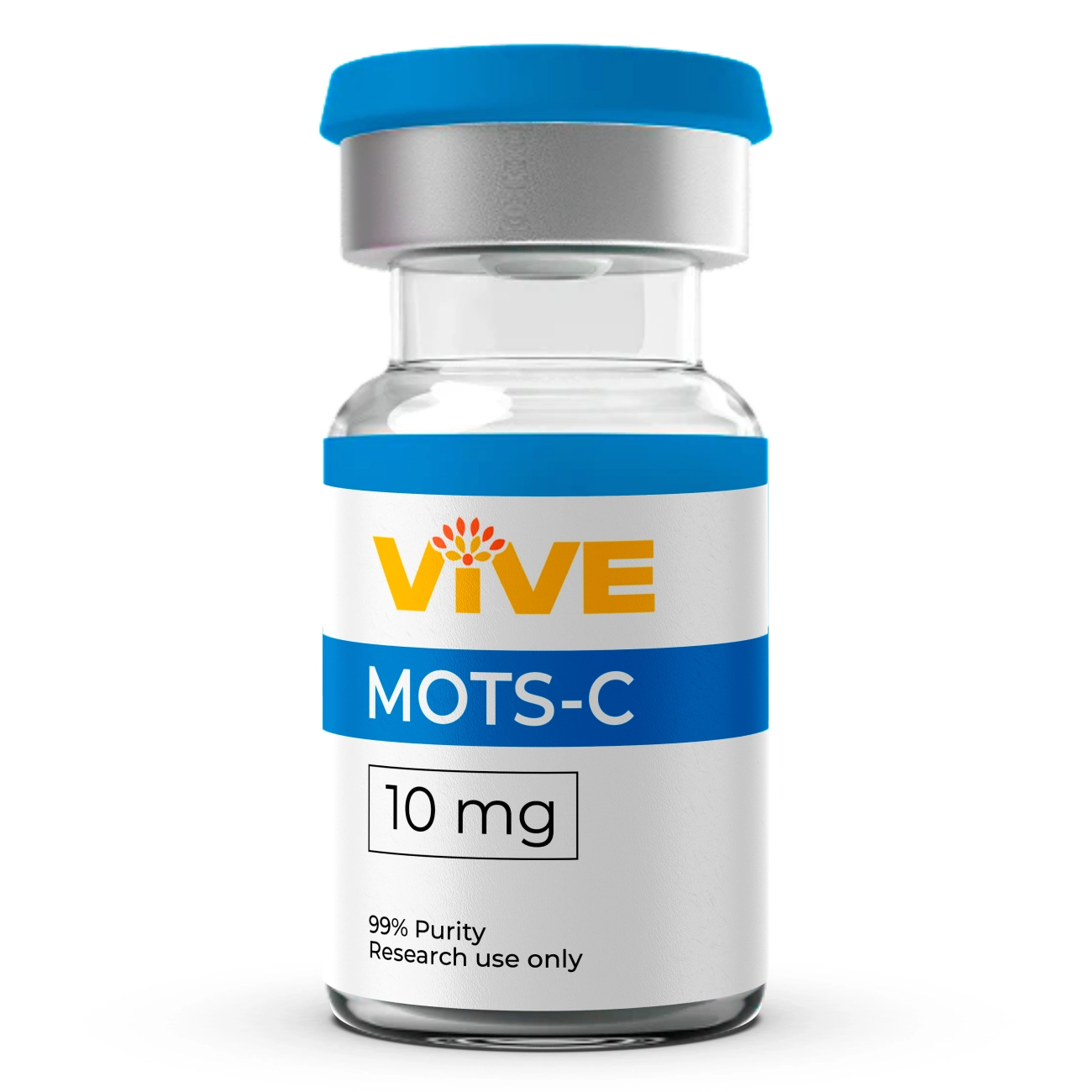
Lee et al. (Cell Metabolism, 2015) used 5 mg/kg intraperitoneal injections in mouse models to observe metabolic and insulin-sensitizing effects. Subsequent rodent studies exploring metabolic and exercise-related endpoints have used similar ranges. Human pharmacokinetic data on the MOTS-c peptide remain limited as of 2026, as this mitochondrial-derived peptide is still in early-stage human research. Researchers procuring MOTS-c mitochondrial peptide can review purity certificates and specification sheets on the product page.
NAD+ and Precursor Dosing in Human Trials
Human clinical trials on nicotinamide riboside (NR) and nicotinamide mononucleotide (NMN), both NAD precursors, have used doses ranging from 250 mg to 1,000 mg per day. Yoshino et al. (Cell Metabolism, 2021) reported that 250 mg/day NMN for 10 weeks improved muscle insulin signaling in postmenopausal women with prediabetes, without significant adverse events. These clinical data provide dose benchmarks, though direct NAD+ infusion research follows separate protocols with distinct pharmacokinetics.
Before beginning any research protocol, confirming compound quality is essential. The How to Verify Peptide Quality: 5 Tests Every Researcher Should Demand outlines the analytical standards every researcher should require before sourcing any peptide compound.
Frequently Asked Questions
What is the primary difference between MOTS-c and NAD+ in research?
MOTS-c is a mitochondrial-derived peptide that regulates gene expression and AMPK activation, while NAD+ is a coenzyme that directly fuels the electron transport chain and serves as a substrate for DNA repair enzymes. They address overlapping aspects of cellular energy and metabolic health through different molecular mechanisms, which is why researchers frequently study them in parallel.
Do NAD+ and MOTS-c levels both decline with aging?
Yes. Verdin (Science, 2015) documented NAD+ decline across multiple tissues with age, and Kim et al. (Aging, 2022) reported declining serum MOTS-c levels in a human cohort. This parallel decline has made their combined study relevant in geroscience and longevity research, where both are viewed as markers of mitochondrial function health.
What is a mitochondrial-derived peptide?
A mitochondrial-derived peptide (MDP) is a short protein encoded by small open reading frames within mitochondrial DNA. MOTS-c is the most studied MDP for metabolic function. Unlike nuclear-encoded proteins, MDPs reflect mitochondrial genome state directly and respond to shifts in membrane potential and cellular energy demand, making them sensitive indicators of metabolic status.
Does the function of NAD+ depend on MOTS-c?
No, NAD+ does not depend on MOTS-c to carry out its coenzyme role. However, MOTS-c activation reduces oxidative stress and lowers the rate of DNA damage, which reduces PARP-mediated NAD+ consumption. Whether this interaction is physiologically significant depends on the tissue model and the experimental conditions studied.
Can researchers study MOTS-c and NAD+ in the same experimental model?
Preclinical researchers have begun designing protocols that target mitochondrial function through complementary pathways simultaneously. Because MOTS-c and NAD+ influence separate but intersecting mechanisms, combined models are a logical extension of single-compound studies. Researchers should consult primary literature and confirm compound purity before designing such protocols.
Advance Your Mitochondrial Research with VivePeptides
MOTS-c and NAD+ each offer a distinct entry point into the science of cellular energy, metabolic resilience, and the biology of aging. Researchers building rigorous protocols can browse the VivePeptides catalog to review certificates of analysis, purity specifications, and compound availability across the full peptide library.
Research Use Only
All information in this article is intended for educational and research purposes only. VivePeptides products are not intended for human or veterinary use.