Research Article
Glow Blend Reconstitution and Research Applications
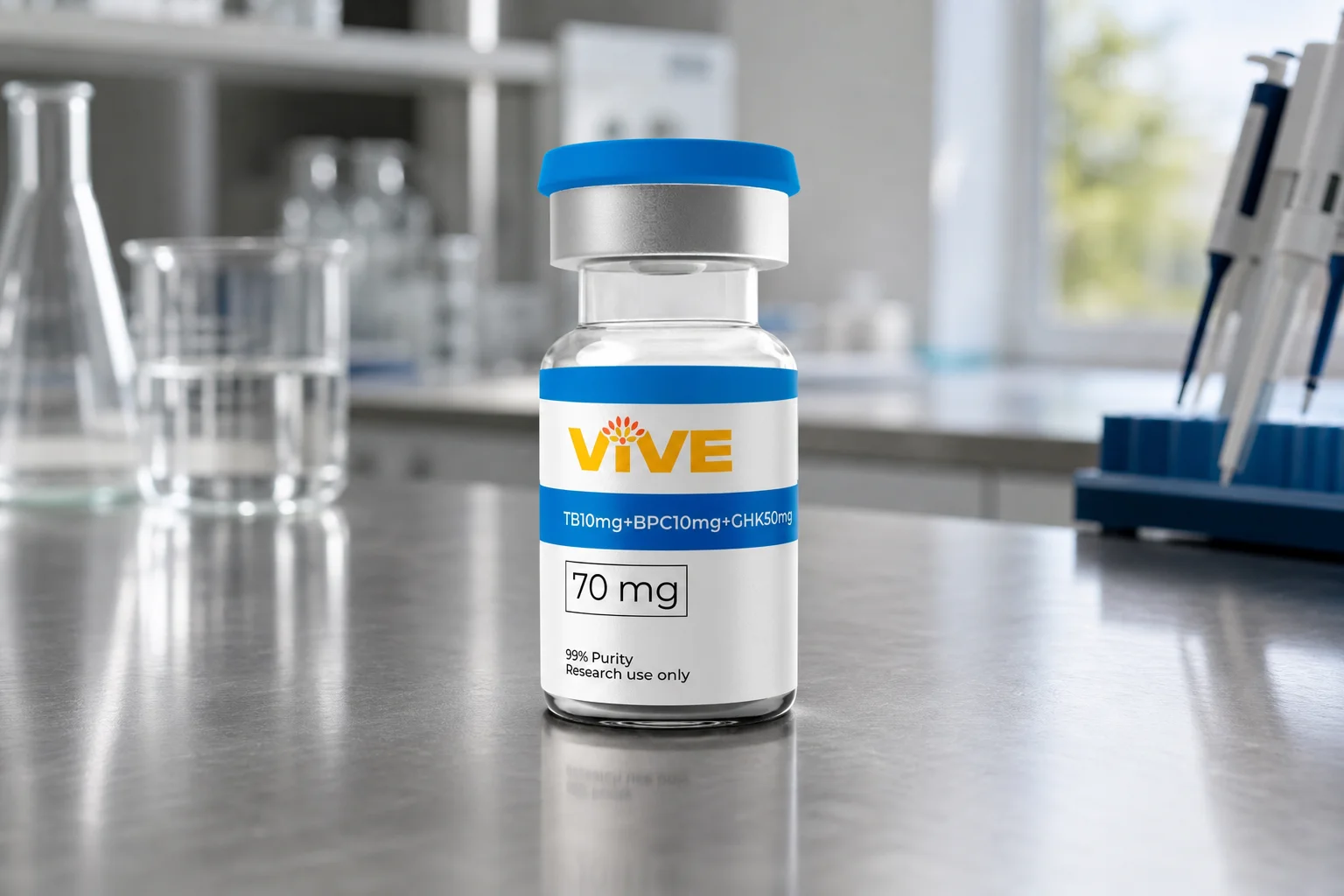
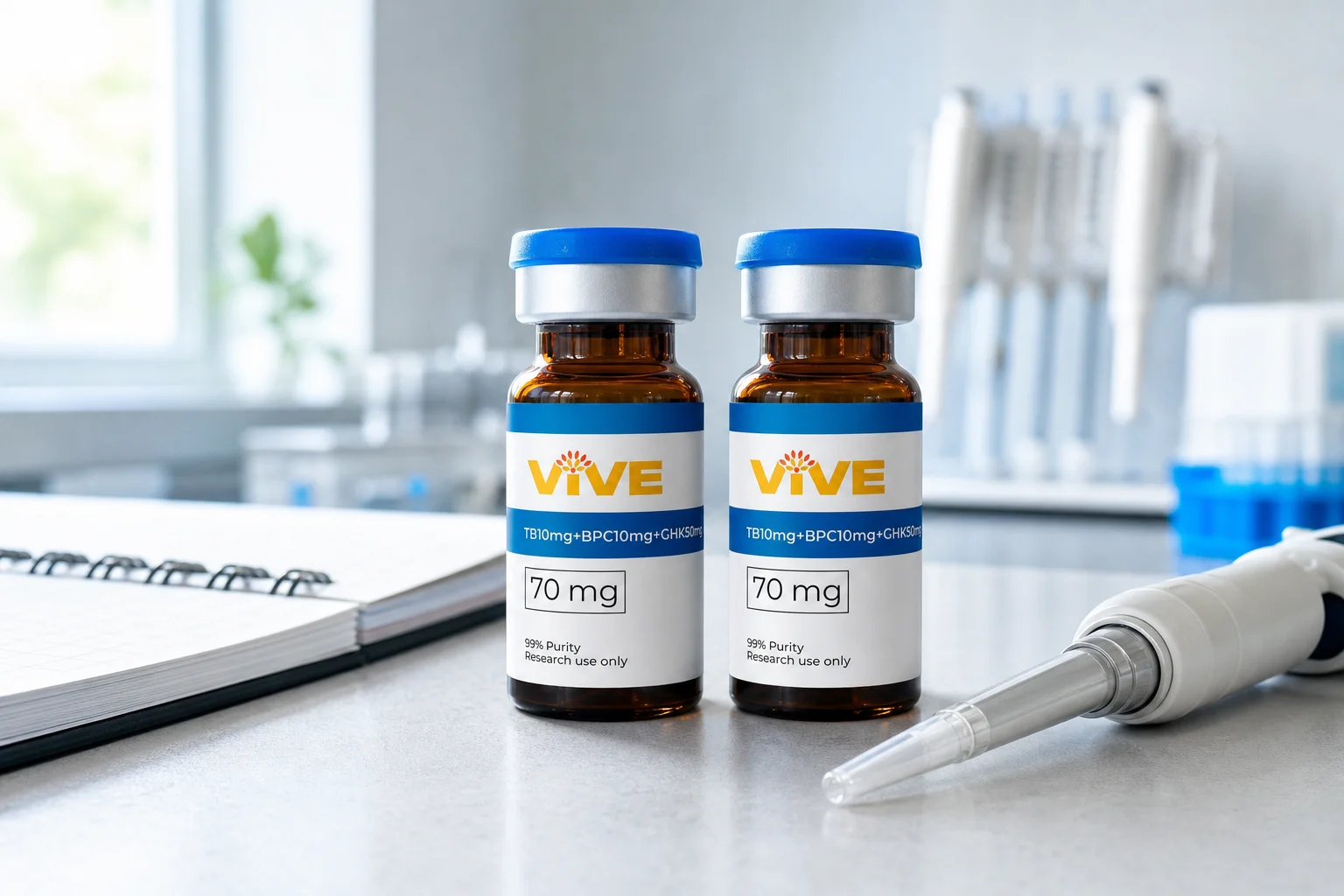
Glow Blend reconstitution and research applications hinge on accurate dilution, cold storage, and careful handling of lyophilized powder. This guide walks through how researchers prepare the Glow Blend reference page, a combination of BPC-157, TB-500, and GHK-Cu, for laboratory research purposes only, not human use.
By Vive Team
Understanding the Glow Blend Combination
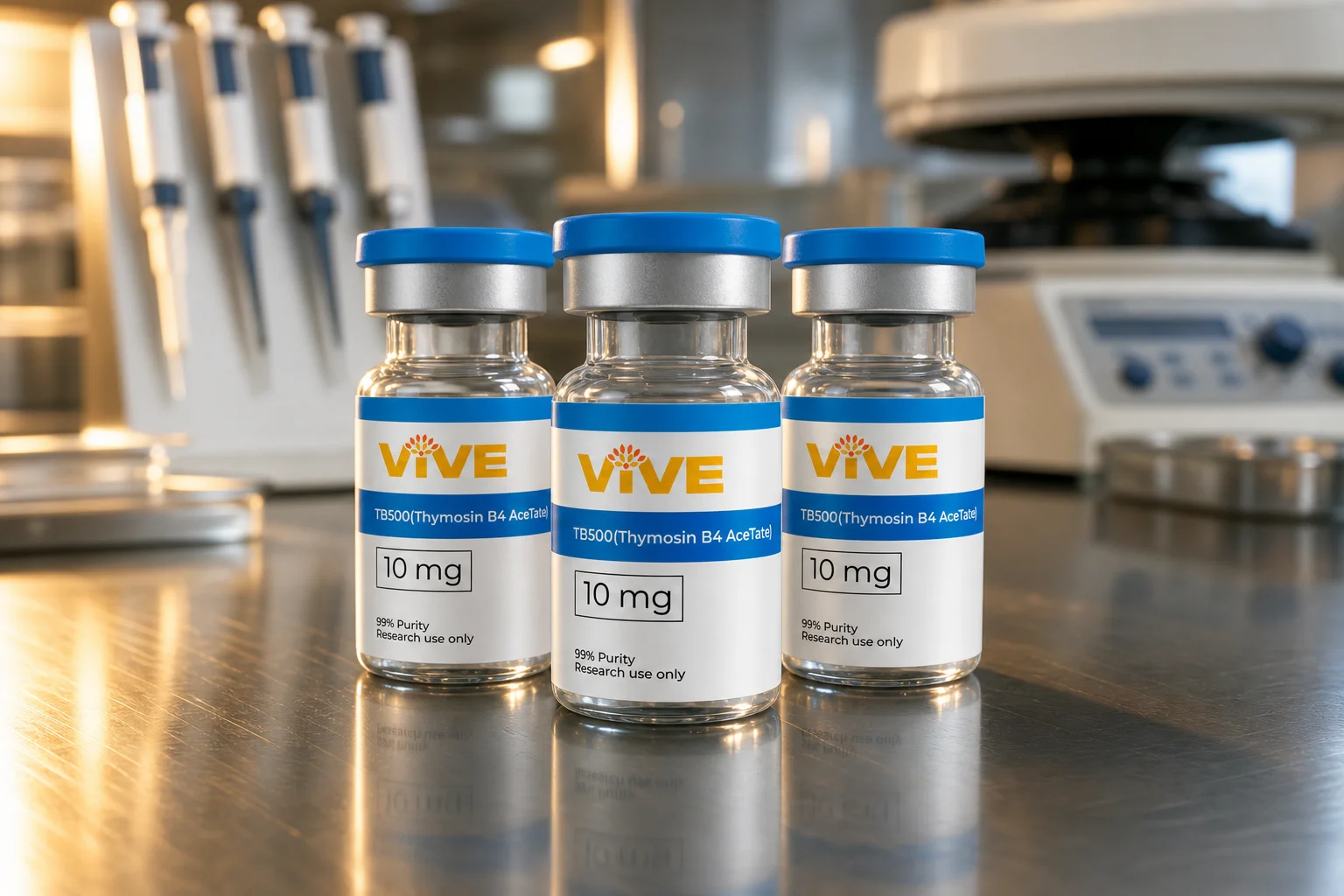
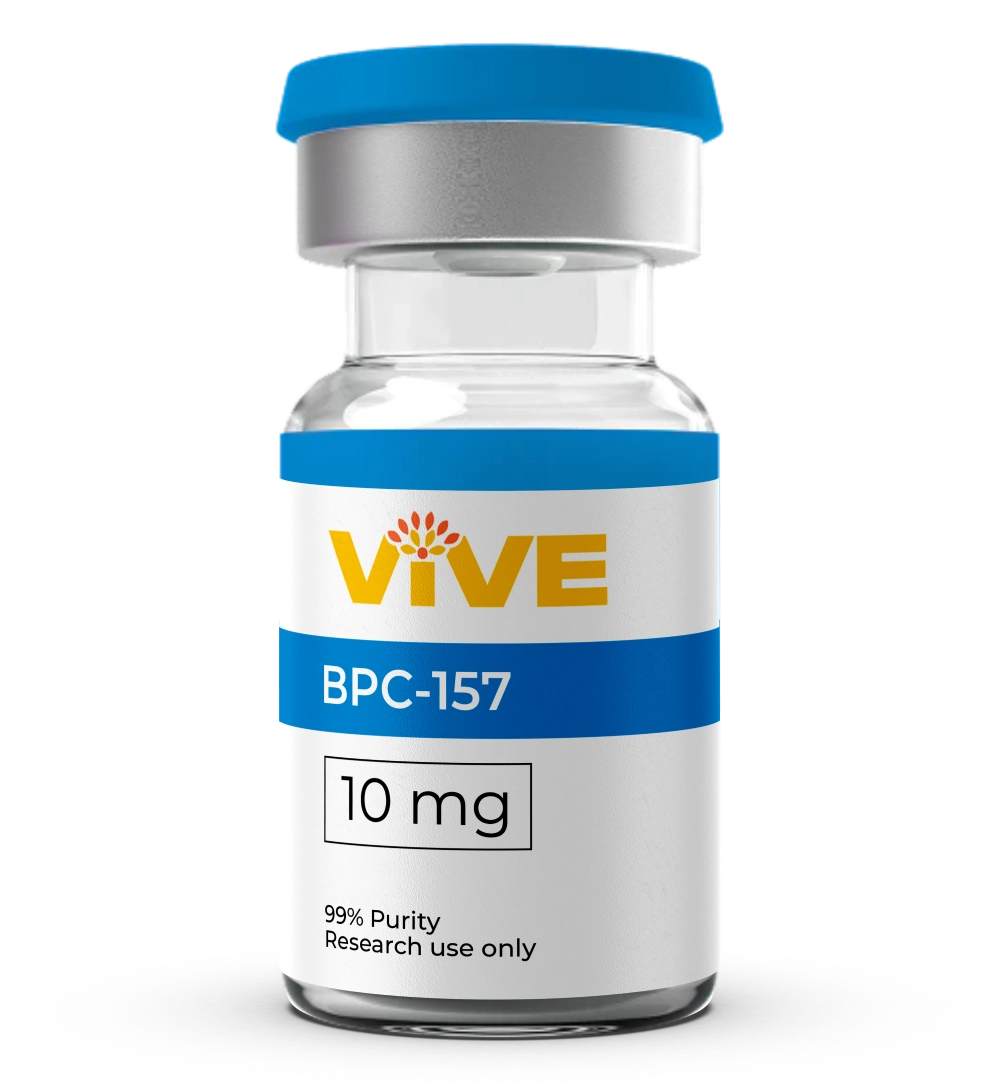
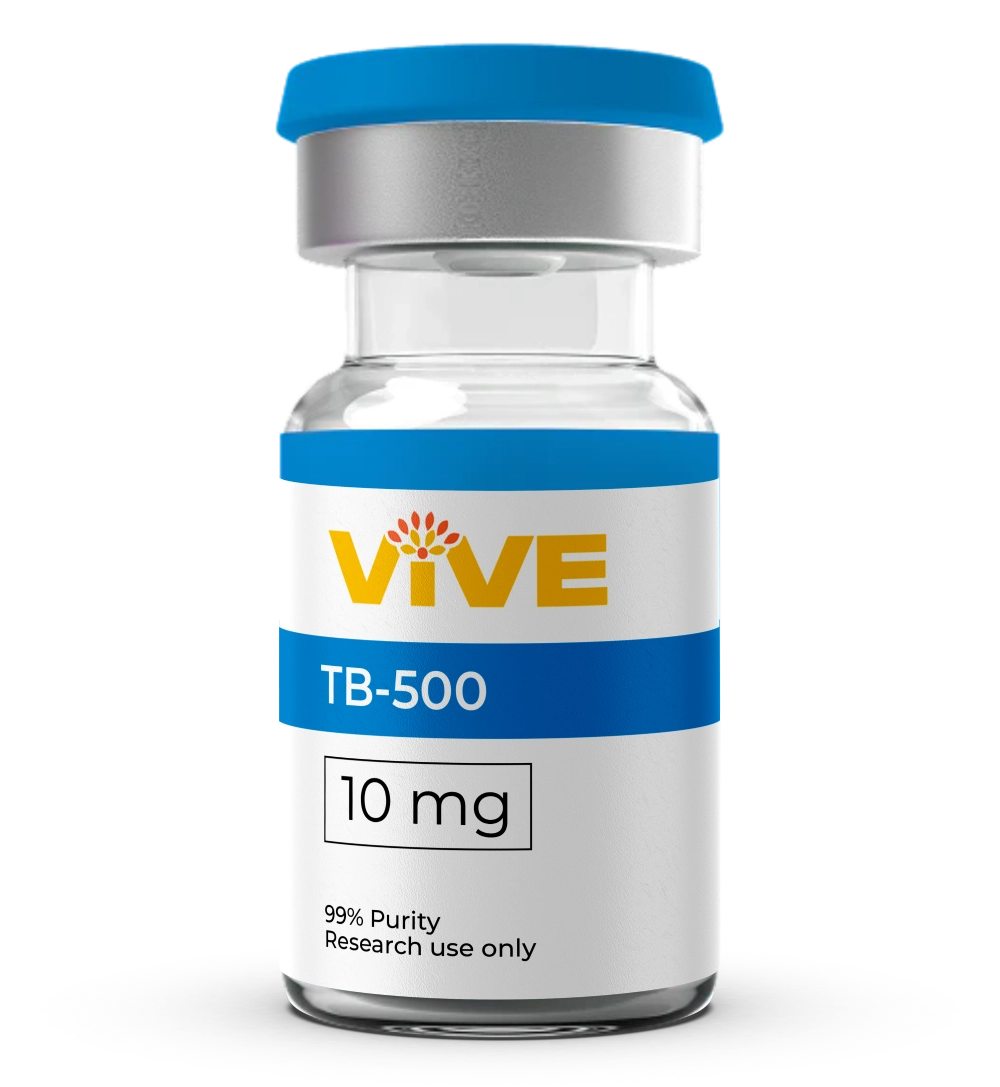
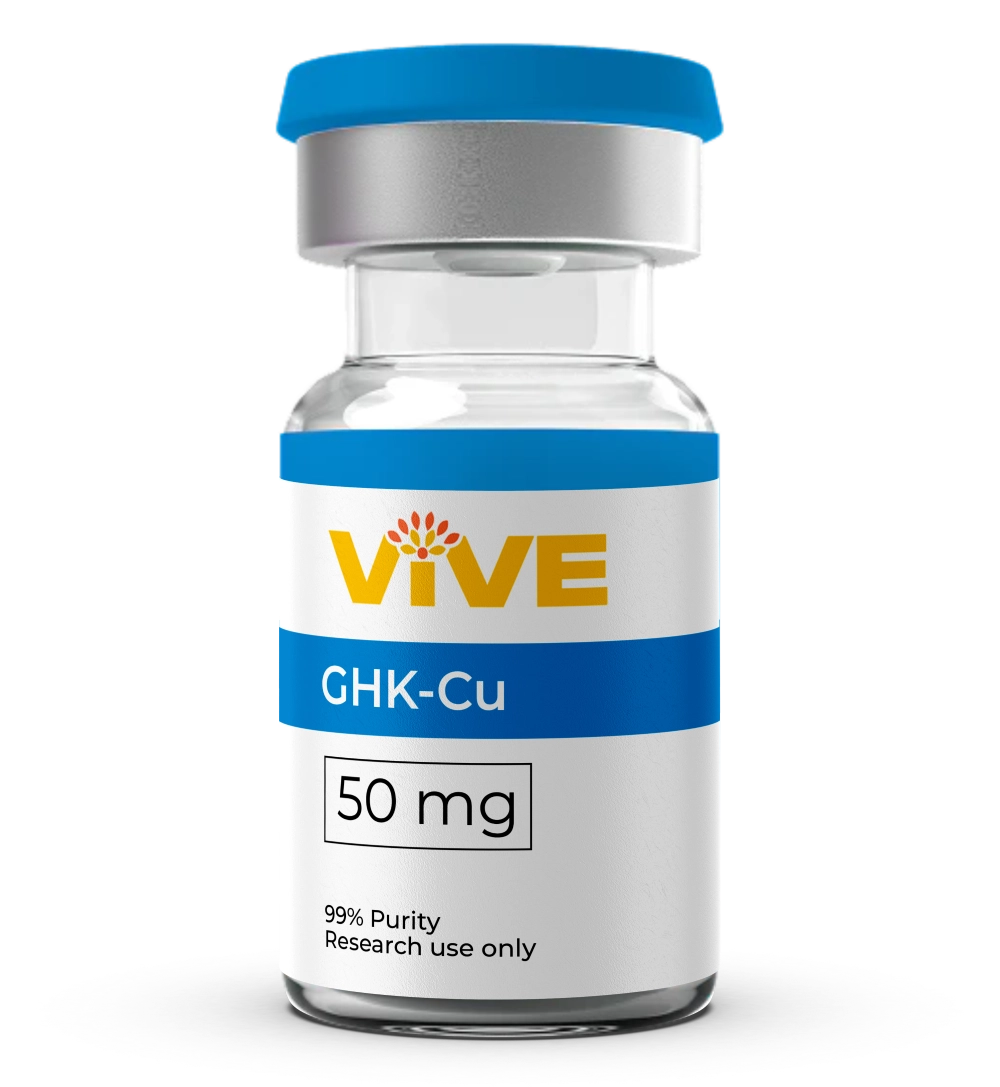
The Glow Blend pairs three peptides that researchers frequently study together: BPC-157, TB-500 (thymosin beta-4), and GHK-Cu. Some research teams shorthand this three-peptide combination as the BPC- TB- GHK-Cu stack in their lab notebooks, a naming convention that reflects how often the compounds appear in the same reconstitution log.
Each peptide arrives as a sealed vial of lyophilized powder, meaning it has been freeze-dried and stripped of moisture for stability during shipping and storage. Before any research protocol begins, the powder must be reconstituted into a liquid solution, a process that requires precision, sterile technique, and an accurate concentration calculation. Getting this step wrong is one of the most common sources of inconsistent results across research settings, which is why documentation and a consistent style matter as much as the mixing itself.
Researchers exploring recovery and regeneration questions sometimes weigh this three-peptide approach against a two-peptide pairing of BPC-157 and GHK-Cu alone, a distinction explored further in BPC-157 versus GHK-Cu research.
A Practical Guide to Glow Blend Reconstitution and Research Applications
Because glow blend reconstitution and research applications depend on precise measurements, many labs standardize their protocol sheets before the first vial is opened. Below is a list of steps that reflects common practice across research settings, though every lab should confirm its own protocol against current guidance from a qualified researcher or institutional safety officer.
Calculating Dilution
- Confirm the peptide amount printed on the vial label (commonly measured in milligrams).
- Decide on a target concentration for the study, then calculate the volume of diluent needed to reach it.
- Use bacteriostatic water for peptide reconstitution, often shortened to BAC water on lab shelves, rather than plain sterile water. The added benzyl alcohol in bacteriostatic water helps keep the solution contamination-free across multiple draws.
- Record the calculated volume in a dated file or lab notebook so the concentration can be verified later.
Mixing and Storage
Insert the needle at an angle against the inside wall of the vial and let the bacteriostatic water run down the glass slowly rather than striking the powder directly. A fast stream can denature the peptide before the study even begins. Once mixed, gently swirl, never shake, until the solution is clear, then store it refrigerated and shielded from light.
Storage period matters as much as the mixing step. Most reconstituted peptides are stable under refrigeration for a defined observation period, typically a matter of weeks, though exact stability varies by compound and should be confirmed against the certificate analysis that ships with each batch. These products are not intended for human use and are sold strictly for laboratory research.
Research Applications Across Recovery, Regeneration, and Skin Studies
Research interest in this three-peptide combination spans several directions. BPC-157 is frequently studied for its role in tissue-repair pathways, TB-500 is examined for cell migration and structural protein research, and GHK-Cu is a long-studied copper-binding peptide with a research history in dermal and connective tissue models. Together, they support a broader research picture than any single compound studied alone.
Anti-aging research is one area where this trio draws consistent attention, particularly around skin structure and collagen-related pathways. Labs building out a multi-peptide research series often expand from GHK-Cu into a broader lineup of anti-aging peptides such as NAD+, a comparison detailed in peptides for anti-aging research.
Some labs also run reconstitution protocols across other research lines, including growth-hormone secretagogue work such as CJC-1295 and Ipamorelin blends. These peptides follow a similar bacteriostatic water reconstitution process to the one described above, and some research teams track them alongside the Glow Blend when studying multiple peptide categories at once.
None of the research summarized here should be read as a health claim or a recommendation for human use. These compounds are labeled for laboratory research only, and access to them should be limited to qualified researchers working within an institutional or private lab setting.
Common Reconstitution Mistakes to Avoid
Even experienced research teams run into avoidable errors when trying to standardize a new reconstitution protocol. The most common mistake is shaking rather than swirling the vial, which can damage the peptide's original structure and lower the vial's effective yield. A second common error is skipping the bacteriostatic water step entirely and substituting plain water, which removes the antimicrobial features that keep a solution usable across multiple draws.
Temperature control is another area worth close attention. A vial left at room temperature for an extended period, whether across a single afternoon or an entire research season, degrades faster than one stored consistently under refrigeration. Some labs learned this after comparing degraded controls, both women and men on the research team running side-by-side batches from January through June, one refrigerated and one left on the counter.
Finally, inconsistent labeling causes downstream confusion. A vial without a dated file, batch number, or lot reference becomes difficult to trace once several reconstitutions have accumulated on the same shelf. Standardizing a labeling style across the lab, whether handwritten or a downloadable template, keeps every result traceable back to its source batch.
Documentation, Certificates of Analysis, and Lab Recordkeeping
A defensible research protocol depends on a paper trail as much as the chemistry itself. Before ordering, confirm that a product's certificate analysis is available and current for the specific batch you receive. This documentation should list the compound's identity, purity percentage, and testing method, giving a research team the profile it needs to compare lot to lot.
Keep a running log of reconstitution dates, diluent volumes, and storage conditions. Many labs assign one team member responsibility for editing and updating this log after every reconstitution event, which keeps the record accurate as protocols evolve. A simple template, whether a shared spreadsheet or a printable form researchers can download and file by hand, reduces the chance of a mismatched dilution later in a study.
Periodically reviewing this documentation, rather than checking it only once, closely mirrors best practice guidance from institutional research offices on reagent tracking. The CDC and NIH both publish general laboratory recordkeeping guidance that applies broadly to research reagents, even though neither agency issues peptide-specific protocols. Data retrieved from a certificate analysis should always be cross-checked against the physical label before a vial is opened.
Frequently Asked Questions
How long does reconstituted Glow Blend remain stable? Stability varies by compound and storage conditions, so researchers should consult the certificate analysis and current literature for each batch rather than relying on a fixed timeline. Refrigeration, protection from light, and minimizing freeze-thaw cycles are consistently associated with better stability across peptide research.
Can bacteriostatic water be reused across multiple reconstitutions? A single vial of BAC water can typically be used for multiple reconstitutions within its labeled shelf life, since the benzyl alcohol content helps limit bacterial growth between draws. Researchers should still inspect the solution for clarity before each use and discard it if it appears cloudy.
Is the Glow Blend intended for human use? No. The Glow Blend and every compound in it are sold strictly for laboratory research purposes and are not intended for human or veterinary use. These products are not human grade and have not been evaluated for safety or efficacy outside a controlled research setting.
Why combine BPC-157, TB-500, and GHK-Cu instead of studying them separately? Some research teams study the three peptides together because their proposed mechanisms touch related but distinct pathways: tissue repair, cell migration, and copper-dependent regeneration research. Studying them in combination can help a lab compare a multi-pathway model against single-compound baselines.
Do all three peptides in the blend require the same reconstitution approach? Yes, in most research protocols. BPC-157, TB-500, and GHK-Cu are all supplied as lyophilized powder and are typically reconstituted with bacteriostatic water using the same slow-pour, gentle-swirl technique described above, though target concentrations differ by compound and study design.
Start Your Glow Blend Research Protocol
Accurate reconstitution is the foundation of every reliable research result, and the right reference materials make that foundation easier to build. Browse the research-grade peptide catalog to review current lot documentation before your next study begins.
Research Use Only
All information in this article is intended for educational and research purposes only. VivePeptides products are not intended for human or veterinary use.