Research Article
IGF-1 LR3 Research Protocol: Reconstitution & Stability
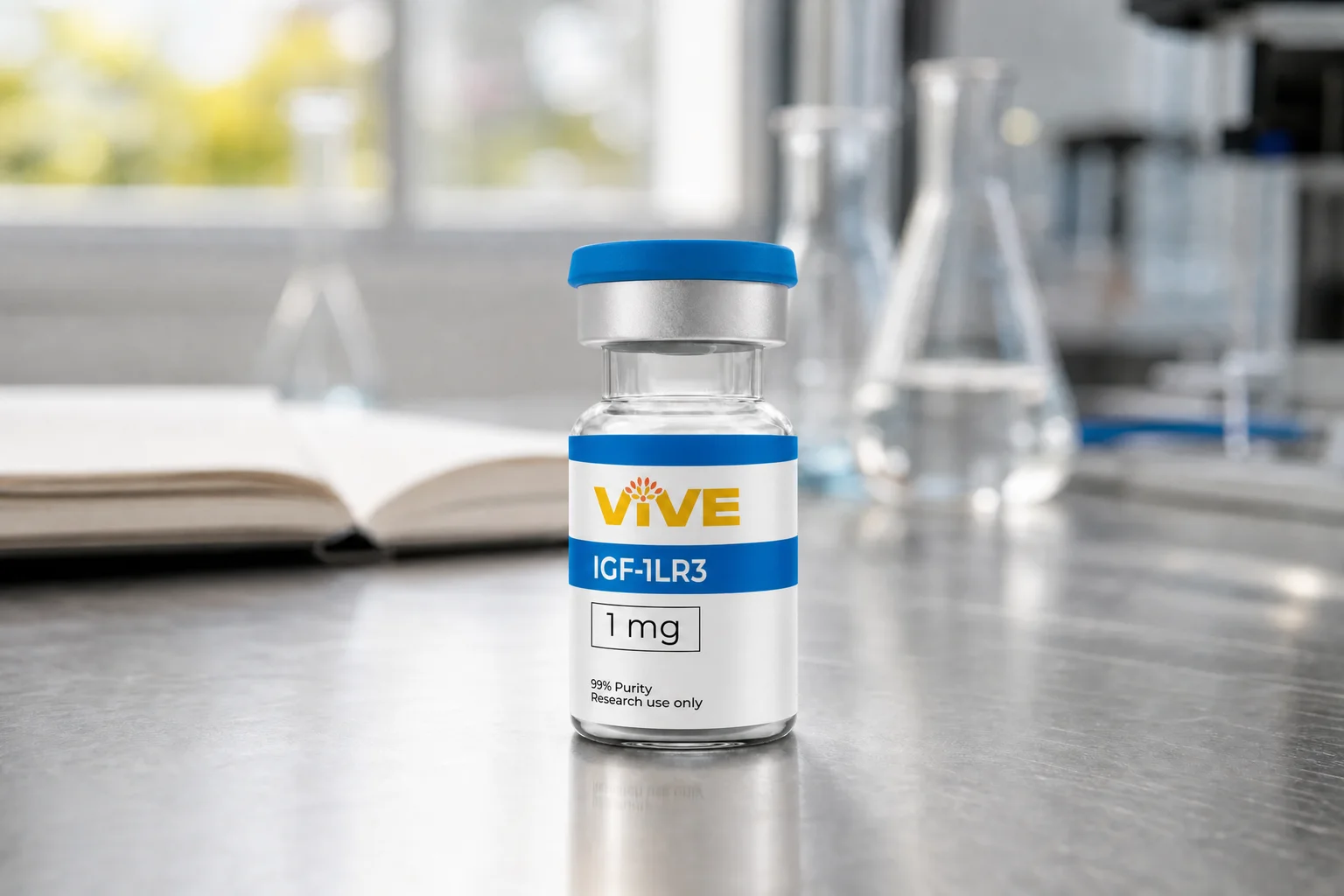
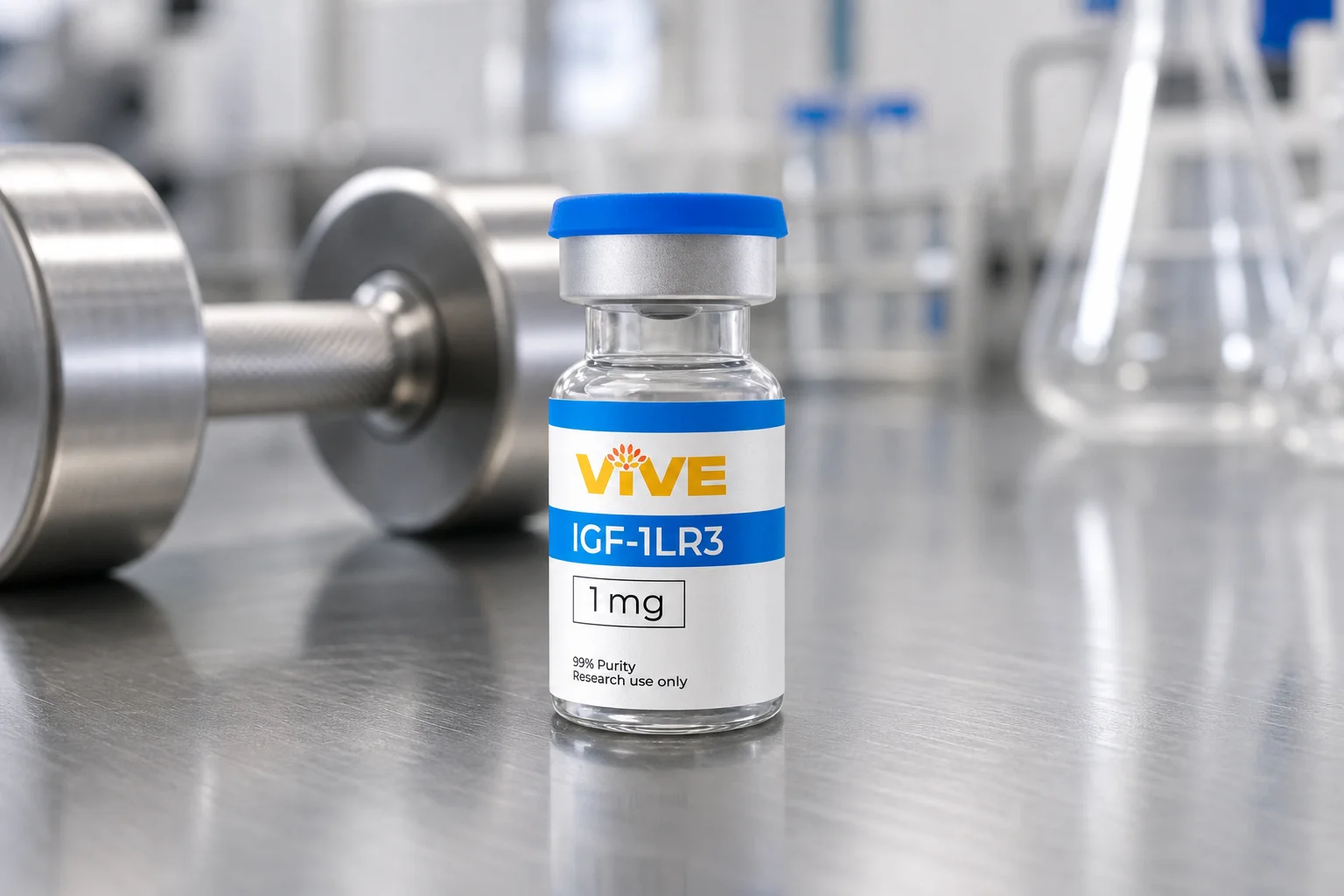
Running an IGF-1 LR3 research protocol correctly starts with getting reconstitution, storage, and concentration math right before the first draw. Before mixing, that means confirming the vial's labeled peptide mass, matching diluent volume to the target concentration the protocol calls for, and verifying that cold chain storage held during shipping, since a temperature lapse before the first draw can undercut potency before reconstitution even begins. Packaging and labeled vial specifics are documented on the IGF-1 LR3 vial specs page for researchers checking a shipment before mixing. This guide walks through every variable that keeps a vial usable for its full research window.
By Vive Team
What Is IGF-1 LR3 and How Does It Work in Research Models
IGF-1 LR3 is a synthetic analog of human insulin-like growth factor, engineered with an extended N-terminus and a substitution near the binding region. IGF-1 LR3 is not identical to the native IGF-1 the body produces downstream of growth hormone signaling, the modifications reduce its affinity for IGF-binding proteins in culture, which is why researchers reach for it when a longer research half-life is the goal. Product listings sometimes render the compound name as IGF-1LR3 in a single word, so a page referencing IGF-1 and IGF-1LR3 side by side is simply using two spellings for the same molecule, and the receptor-binding profile under discussion is IGF-1, not insulin, despite the partial structural overlap covered below.
Mechanistically, IGF-1 LR3 binds the IGF-1 receptor and activates downstream signaling tied to protein synthesis and cell proliferation, the same pathway researchers study when looking at muscle growth and tissue repair in cell and animal models. Because IGF-1 shares structural homology with insulin, it can also engage the insulin receptor at higher concentrations. That cross-reactivity is why published research protocols pair IGF-1 LR3 work with blood glucose monitoring, since insulin-like growth factor activity has been linked to hypoglycemia risk in study designs, and this is a mechanism note for research contexts only, not a statement about human use.
IGF-1 LR3 Reconstitution: Choosing a Diluent and Mixing It Correctly
IGF-1 LR3 reconstitution starts with the diluent. Two options come up in research settings: bacteriostatic water and sterile (non-bacteriostatic) water.
Bacteriostatic water or sterile water
Bacteriostatic water contains a small amount of benzyl alcohol as a preservative, which inhibits microbial growth across repeated punctures of the same stopper. That makes it the more common choice for a multi-draw research vial that will be accessed daily or every few days over several weeks. Sterile water without a preservative is generally reserved for a vial that will be used once, shortly after mixing, since it offers no protection against contamination on a second or third draw.
Step-by-step mixing
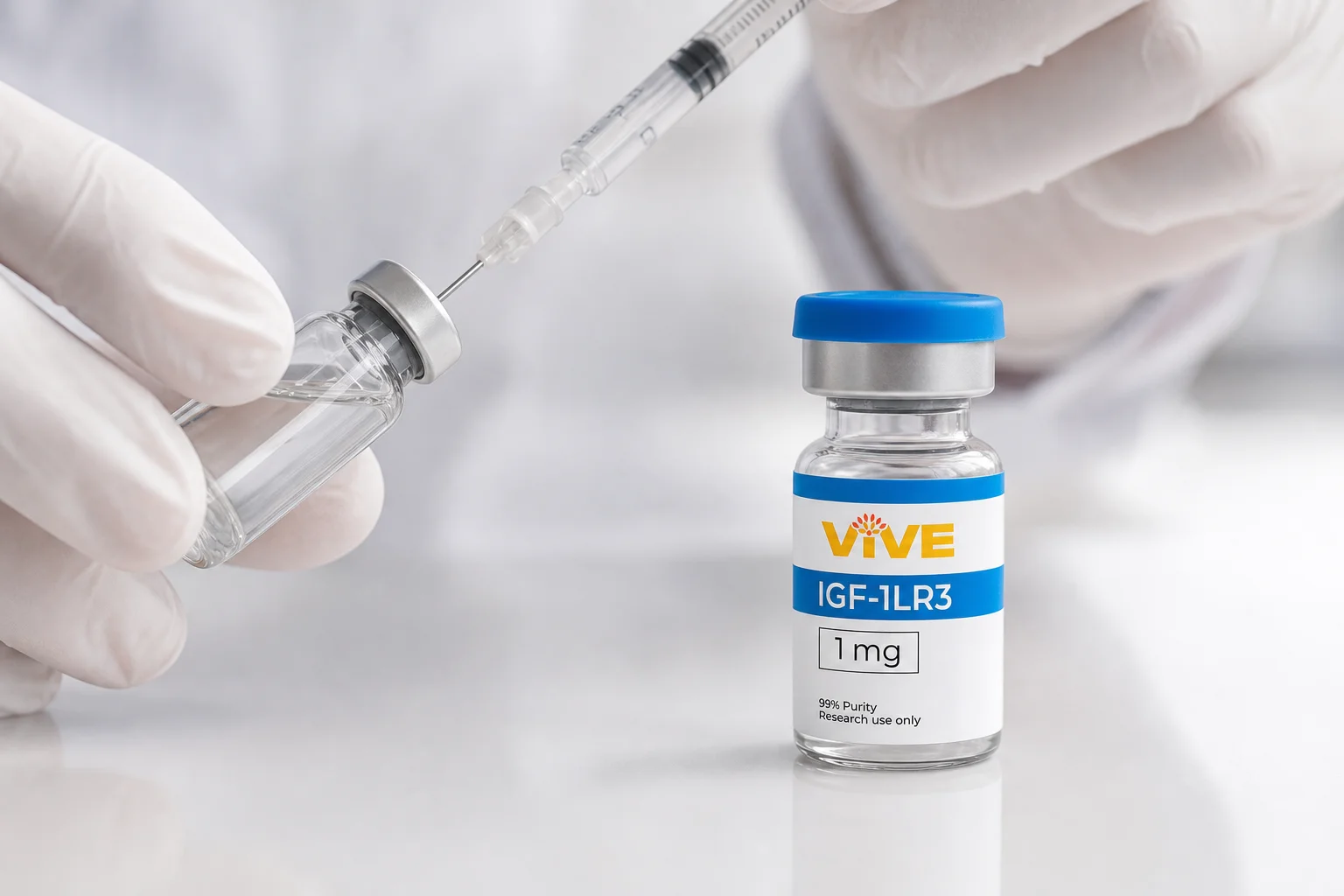
Swab the stopper with an alcohol wipe before every entry. Draw the diluent slowly and let it run down the interior wall of the vial rather than injecting it directly onto the lyophilized powder, direct force can cause foaming, and foaming has been associated with denaturing the protein structure. Let the vial sit undisturbed for a few minutes, then swirl gently, never shake. Full dissolution should leave a clear, colorless solution with no visible particulate.
Stability and Storage of IGF-1 LR3, Before and After Reconstitution
Lyophilized (unmixed) shelf life
Unopened, lyophilized IGF-1 LR3 is the most stable form of the peptide. Kept refrigerated or frozen and shielded from light, a sealed vial commonly remains viable for many months, though researchers should follow the specific lot's documentation rather than assume a fixed number across every batch.
The stability window after mixing
IGF-1 LR3 stability drops sharply once water is added. Reconstituted peptide is generally kept refrigerated at 2 to 8 degrees Celsius and used within roughly two to four weeks for research purposes. Peptide bonds are vulnerable to hydrolysis at room temperature, and bacterial risk climbs the longer a punctured vial sits outside the refrigerator, so minimizing time on the counter between draws matters as much as the storage temperature itself.
Can reconstituted IGF-1 LR3 be frozen
Freezing a reconstituted vial is not generally recommended for routine handling. Repeated freeze-thaw cycles introduce ice-crystal stress that can fragment the peptide chain and reduce potency with each cycle. When a research protocol genuinely calls for frozen storage, single-use aliquots frozen one time only, and thawed once, avoid the repeated-cycle damage that a shared multi-draw vial would suffer.
Light exposure
IGF-1 LR3, like most peptides, should be kept out of direct light before and after reconstitution. Amber vials, the original packaging, or a layer of foil over a clear vial all reduce UV exposure, which over hours and days can degrade the peptide backbone even under otherwise correct temperature control.
Calculating Concentration, Dose, and Volume for an IGF-1 LR3 Research Protocol
Most IGF-1 LR3 vials arrive at 1000 mcg (1 mg). Reconstituting that vial with 2 mL of bacteriostatic water yields a working concentration of 500 mcg per mL, a common starting point in an IGF-1 LR3 research protocol. Insulin syringes marked in units make this math workable at the bench: 100 units equals 1 mL, so 10 units drawn from a 500 mcg/mL vial equals 0.1 mL, or 50 mcg.
Documenting these variables consistently is standard practice in any IGF-1 LR3 research protocol, since concentration, draw volume, and total mcg per day all need to be traceable back to the same reconstitution event. Dosing protocol variables such as research objective, subject body weight in animal models, and injection frequency (daily versus alternating days) all shape the total mcg delivered across a study, and those decisions sit with the study's principal investigator or institutional protocol rather than a general formula. Getting the concentration math wrong at the reconstitution step is the single most common source of dosing error researchers report, because every later draw compounds the same mistake.
Recognizing Degradation and Drawing From the Same Vial Multiple Times
Signs a vial has degraded
A research-grade IGF-1 LR3 vial should reconstitute into a clear, colorless solution. Cloudiness, a yellow or amber tint that was not there at mixing, visible flakes or precipitate, or an unusual odor all indicate the protein structure has broken down, and evidence from peptide-stability literature broadly supports discarding a vial showing any of these signs rather than using it. A vial that will not fully dissolve after a reasonable mixing period should also be treated as compromised.
Reusing the same vial across multiple draws
A single reconstituted vial is designed to be drawn from multiple times across its stability window, provided the stopper is swabbed and a fresh needle used for every entry, this is standard multi-dose handling, not repeated reconstitution. Adding a second round of diluent to an already-mixed vial changes the concentration and is not standard practice; each vial represents one reconstitution event, with remaining volume and draw count tracked from that point forward.
Frequently Asked Questions
Is IGF-1 LR3 the same thing as regular IGF-1? No. IGF-1 LR3 is a modified analog built from the native IGF-1 sequence, with changes intended to reduce binding to IGF-binding proteins in research settings. It still binds the same IGF-1 receptor and activates the same downstream signaling, but its altered structure gives it a longer working half-life than native IGF-1 in vitro.
How much bacteriostatic water should be used to reconstitute an IGF-1 LR3 vial? Volume depends on the target concentration for a given protocol, but 1 to 2 mL of bacteriostatic water per 1000 mcg vial is common in research settings, producing a workable concentration in the hundreds of mcg per mL. The exact volume should match what the study's protocol calls for.
Does IGF-1 LR3 need to be refrigerated after mixing? Yes. Once reconstituted, IGF-1 LR3 is generally stored at 2 to 8 degrees Celsius, protected from light, and used within a few weeks. Leaving a mixed vial at room temperature for extended periods raises both degradation and contamination risk.
Why do IGF-1 LR3 research protocols include blood glucose monitoring? IGF-1's structural similarity to insulin means it can cross-react with the insulin receptor at sufficient concentration, an interaction tied to hypoglycemia in research literature. Protocols built around IGF-1 LR3 typically track blood glucose for this reason, as part of standard research safety monitoring rather than any clinical claim.
Order Research-Grade IGF-1 LR3 From VivePeptides
Every vial in the full peptide library ships for laboratory research use only, with the reconstitution and storage variables above documented on each product page. Review the current lineup before placing your next research order.
Research Use Only
All information in this article is intended for educational and research purposes only. VivePeptides products are not intended for human or veterinary use.