Research Article
GHK-Cu Reconstitution: Solubility & Stability Guide
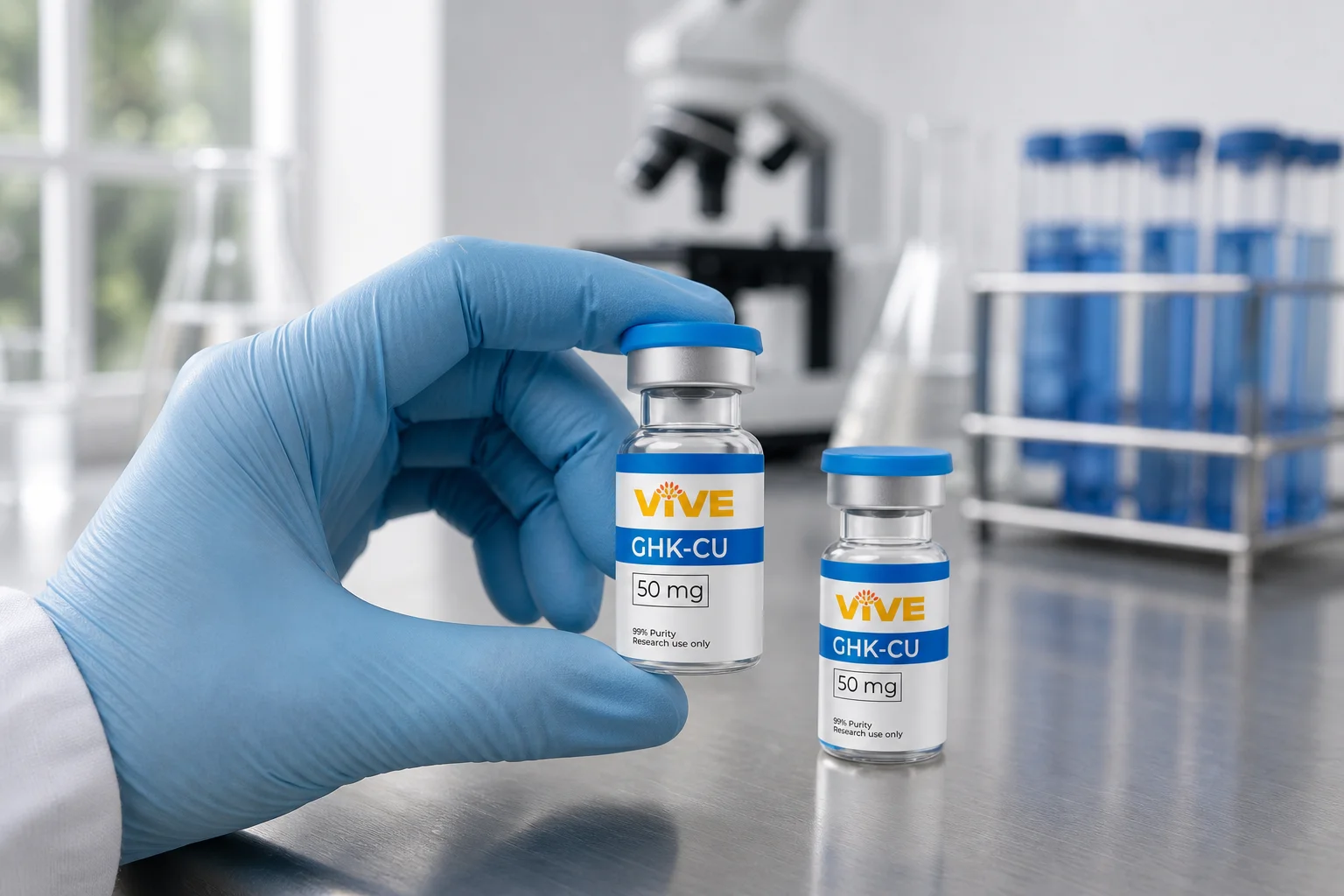
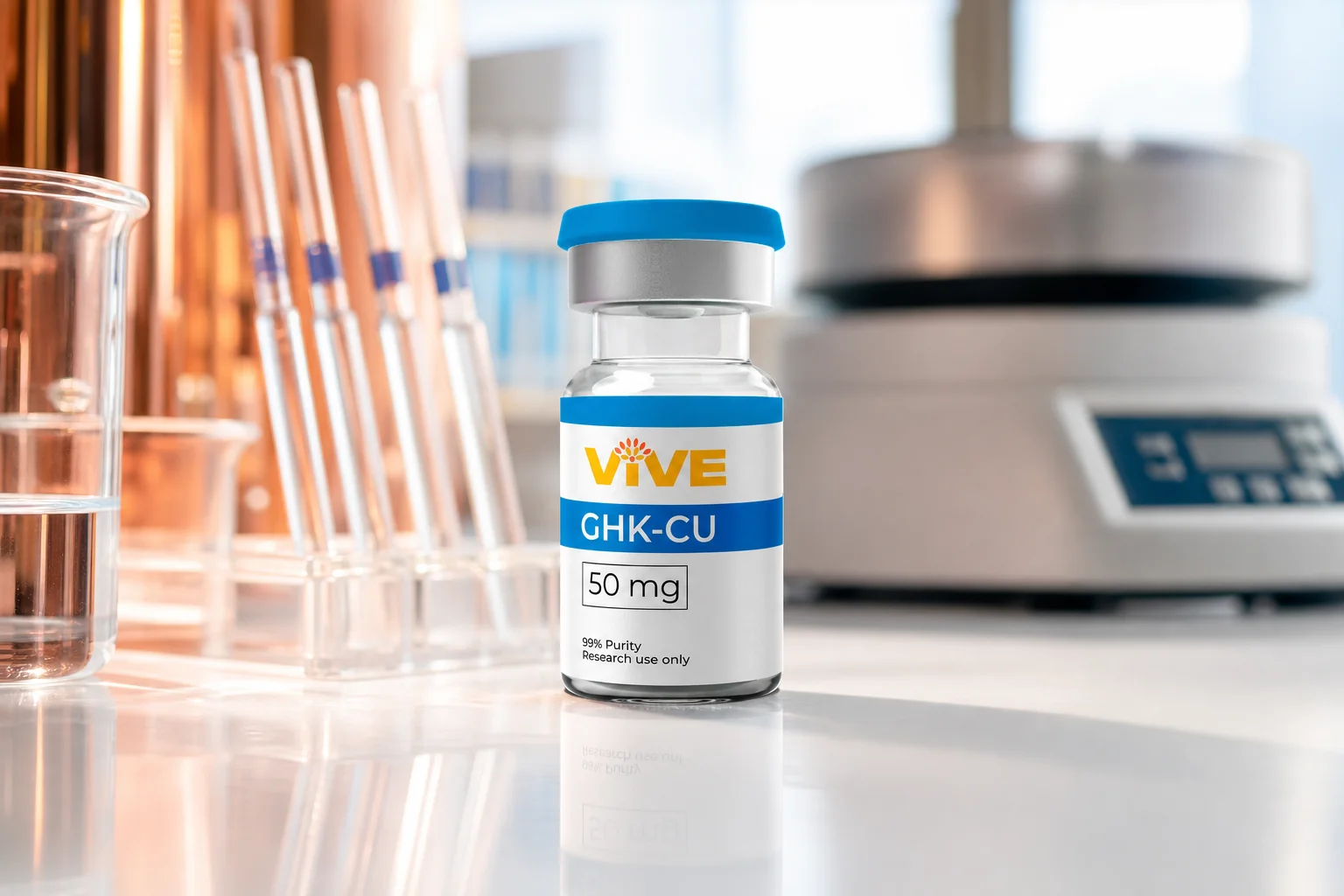
Proper GHK-Cu reconstitution determines whether a vial performs the way a research protocol expects. Anyone working with research-grade GHK-Cu needs a repeatable process for turning lyophilized powder into a stable, correctly concentrated solution, and the steps that get skipped are usually the ones that cause the most trouble later.
By Vive Team
Understanding GHK-Cu and Why Reconstitution Precision Matters
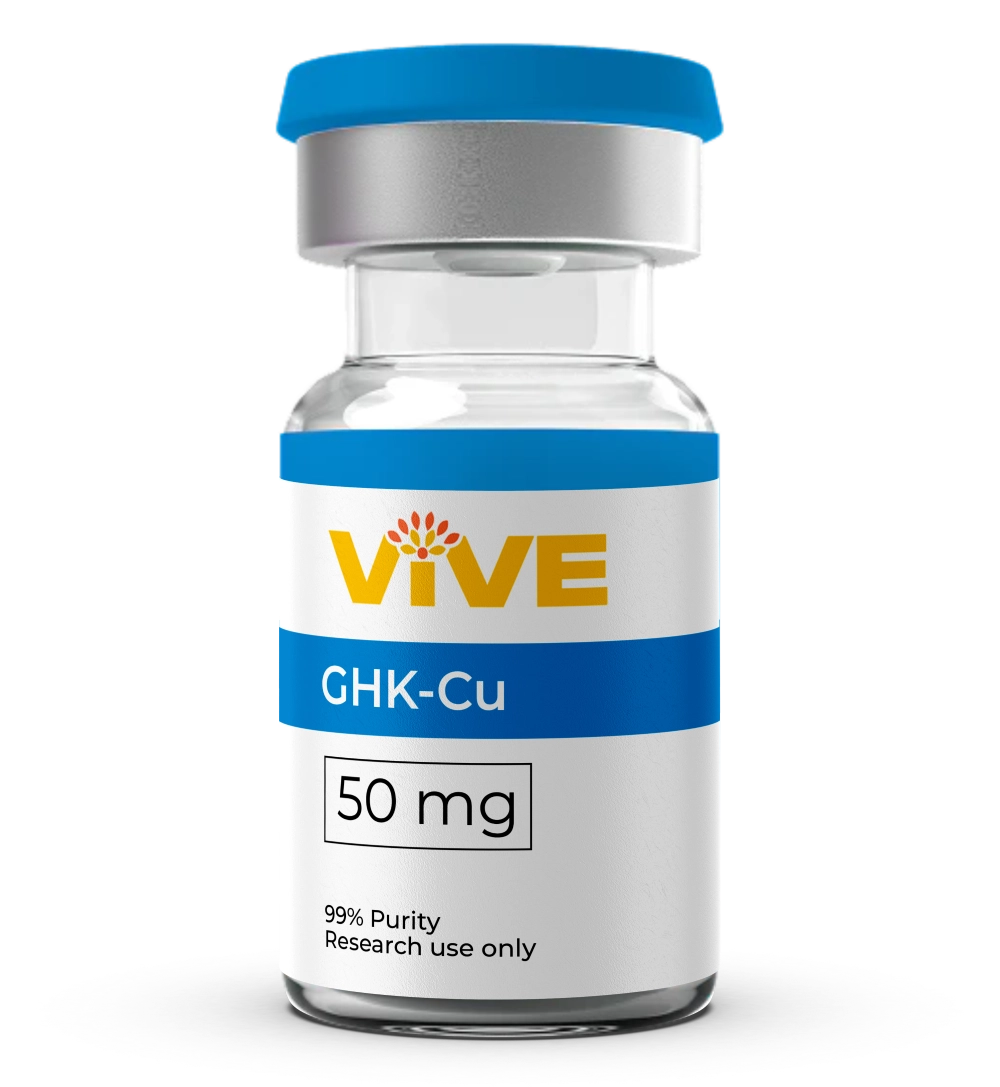
GHK-Cu is a naturally occurring copper peptide studied extensively for its role in tissue remodeling and collagen synthesis in laboratory and dermal research models. The tripeptide binds copper ions to form a stable complex, and that copper binding is part of what makes the molecule so sensitive to handling errors during preparation. Researchers frequently reference the ghk-cu peptide in wound healing tissue studies because it appears to influence how healing tissue organizes new extracellular matrix, but none of that research value survives a reconstitution mistake. A vial that is mixed too aggressively, exposed to the wrong solvent, or left at the wrong temperature stops behaving like the compound described in the literature.
This is why reconstitution is treated as a discrete skill in peptide research, not an afterthought before an experiment. The molecule itself is well characterized. What varies, and what actually determines whether a research session produces clean data, is the technique used to bring the powder into solution.
What You Need Before Starting GHK-Cu Reconstitution
A clean reconstitution setup requires only a few items, but each one matters:
- A vial of lyophilized GHK-Cu powder, stored properly prior to use
- Bacteriostatic water for peptide reconstitution, not plain sterile water
- An insulin syringe with fine-gauge needle for accurate volume draws
- Isopropyl alcohol swabs for disinfecting the rubber stopper
- A flat, stable surface with consistent room temperature conditions
Bacteriostatic water is the standard solvent for peptide reconstitution because it contains a small percentage of benzyl alcohol, which inhibits bacterial growth across multiple withdrawals from the same vial. Plain sterile water lacks this preservative property, so a vial reconstituted with sterile water has a much shorter usable window before contamination risk rises. An insulin syringe is preferred over a standard syringe because its fine markings allow for precise, small volume measurement, which matters when a single vial is being reconstituted to a specific concentration for research use.
Step-by-Step GHK-Cu Reconstitution Protocol
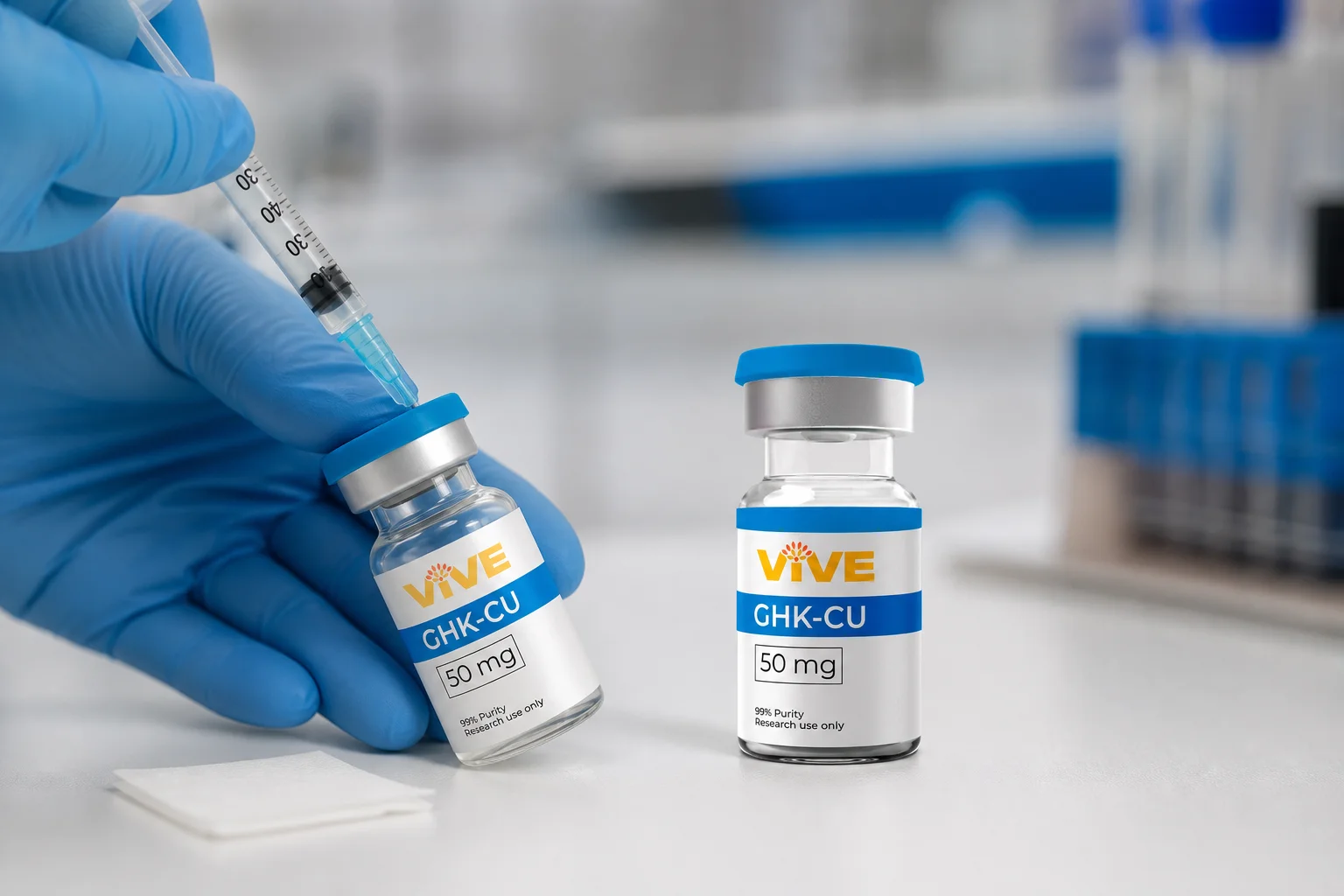
The actual GHK-Cu reconstitution process is straightforward once the supplies are staged, but the order of operations protects the peptide's structure.
1. Disinfect Both Vial Tops
Wipe the rubber stoppers on both the GHK-Cu vial and the bacteriostatic water vial with an alcohol swab. Let the alcohol air dry for a few seconds before proceeding.
2. Draw the Bacteriostatic Water
Using the insulin syringe, draw the intended volume of bacteriostatic water. A common starting reference in peptide research is 2 mL of solvent per vial, though the exact concentration a researcher targets depends on the specific protocol being run, and this is one of the most common points where researchers double check their math before proceeding.
3. Inject Slowly Along the Vial Wall
Insert the needle through the stopper and direct the stream of water down the interior wall of the vial rather than directly onto the lyophilized powder. Injecting a direct stream onto the powder can cause localized turbulence that stresses the peptide's structure.
4. Do Not Shake, Gently Swirl Instead
This is the step most often done incorrectly. Do not shake the vial. Shaking introduces air bubbles and mechanical stress that can denature the peptide and cause it to lose activity before an experiment even begins. Instead, gently swirl the vial in a slow, circular motion until the powder has fully dissolved.
5. Let the Solution Rest and Inspect
Allow the vial to sit undisturbed at room temperature for a few minutes, then inspect it. A properly reconstituted GHK-Cu peptide solution should appear clear, with no visible particulate matter or cloudiness. Reconstituted GHK-Cu solution typically carries a faint blue tint from the copper ion itself, which is expected and not a sign of a problem.
Some researchers working across multiple compounds compare notes on how these same reconstitution mechanics, sterile technique, gentle mixing, correct solvent, translate across most lyophilized research peptides even though the compounds themselves behave differently once in solution.
Common Mistakes That Compromise Reconstituted GHK-Cu
A handful of avoidable errors account for most of the reconstitution problems researchers report, and nearly all of them trace back to rushing a step that requires patience instead of speed.
Adding water too quickly. Pouring bacteriostatic water directly onto the lyophilized powder, rather than letting it stream gently down the vial wall, creates turbulence that can shear the peptide before it ever fully dissolves. Slowing down this single step prevents a surprising share of downstream inconsistency.
Shaking instead of swirling. This bears repeating because it is the most common handling error by a wide margin. Vigorous shaking whips air into the solution and subjects the peptide to mechanical stress it does not tolerate well. A slow, gentle swirl gets the powder into solution just as effectively without the damage.
Using warm water or a warm room. Reconstitution should happen at room temperature, not near a heat source, and the bacteriostatic water itself should not be warmed to "speed up" dissolving. Heat accelerates peptide bond breakdown, so any shortcut that introduces warmth trades a few seconds of convenience for a shorter usable vial.
Skipping the alcohol swab step. Every vial top is a potential entry point for contamination once it has been punctured. Swabbing both the GHK-Cu vial and the bacteriostatic water vial before each draw keeps the solution clear and safe to use across multiple withdrawals.
Guessing at concentration instead of calculating it. A vial's final concentration is a function of how much bacteriostatic water is added to a known amount of powder. Estimating this rather than working out the actual figure makes it difficult to keep dosing consistent across a research timeline, which undermines the reliability of any comparison drawn between sessions.
Storage, Stability, and Shelf Life After Reconstitution
Once a GHK-Cu vial has been reconstituted, storage conditions become the primary variable affecting stability. The solution should be kept refrigerated between uses, away from direct light exposure, since UV and even prolonged ambient light exposure can degrade the peptide bond over time. A vial left at room temperature for extended periods, or one repeatedly exposed to light, will show a shorter usable shelf life than one stored correctly.
Visual inspection remains the simplest ongoing check. If a previously clear solution turns cloudy, develops discoloration beyond its normal faint blue tint, or shows any particulate matter, that is a sign of degradation or possible contamination, and the vial should be discarded rather than used. Damage to the peptide structure from heat, light, or improper mixing is rarely reversible once it has occurred.
Researchers exploring GHK-Cu alongside other regenerative and longevity focused compounds may also want to review our guide to 6 best peptides for anti-aging research, which places GHK-Cu in context alongside other frequently studied options. For a closer comparison of GHK-Cu against a widely referenced recovery peptide, our guide to bpc-157 vs ghk-cu breaks down how the two compounds differ in proposed mechanism despite both appearing frequently in tissue repair research.
Frequently Asked Questions
What ratio of bacteriostatic water to GHK-Cu powder should I use? The right ratio depends on the target concentration for a specific protocol, and researchers should calculate this based on the vial's labeled peptide content and their intended dosing volume. There is no universal ratio, only a math based target concentration that a research plan defines in advance.
Can I use plain sterile water instead of bacteriostatic water? Sterile water can dissolve the powder, but it lacks the benzyl alcohol preservative found in bacteriostatic water, so a vial reconstituted with sterile water should be used quickly and not stored for repeated withdrawals over time.
Why should I not shake the vial? Shaking introduces mechanical stress and air bubbles that can denature the peptide's structure. Gently swirling the vial achieves full dissolution without the physical stress that shaking creates.
How long does reconstituted GHK-Cu remain stable? Shelf life varies based on storage conditions, but a refrigerated, light protected vial generally maintains stability longer than one left at room temperature or exposed to light. Visual clarity is the simplest ongoing indicator of continued stability.
Why does the insulin syringe matter for this process? An insulin syringe provides fine, precise volume markings that make it easier to draw an exact amount of bacteriostatic water or reconstituted solution, which matters for maintaining a consistent, known concentration across a research protocol.
Start Your GHK-Cu Reconstitution Process With the Right Supplies
A clean, well documented reconstitution protocol is the foundation of every reliable GHK-Cu research session. Researchers ready to source verified materials can browse the VivePeptides catalog for research-grade GHK-Cu and the bacteriostatic water needed to prepare it correctly.
Research Use Only
All information in this article is intended for educational and research purposes only. VivePeptides products are not intended for human or veterinary use.