Research Article
SNAP-8 vs GHK-Cu: Anti-Aging Peptide Comparison
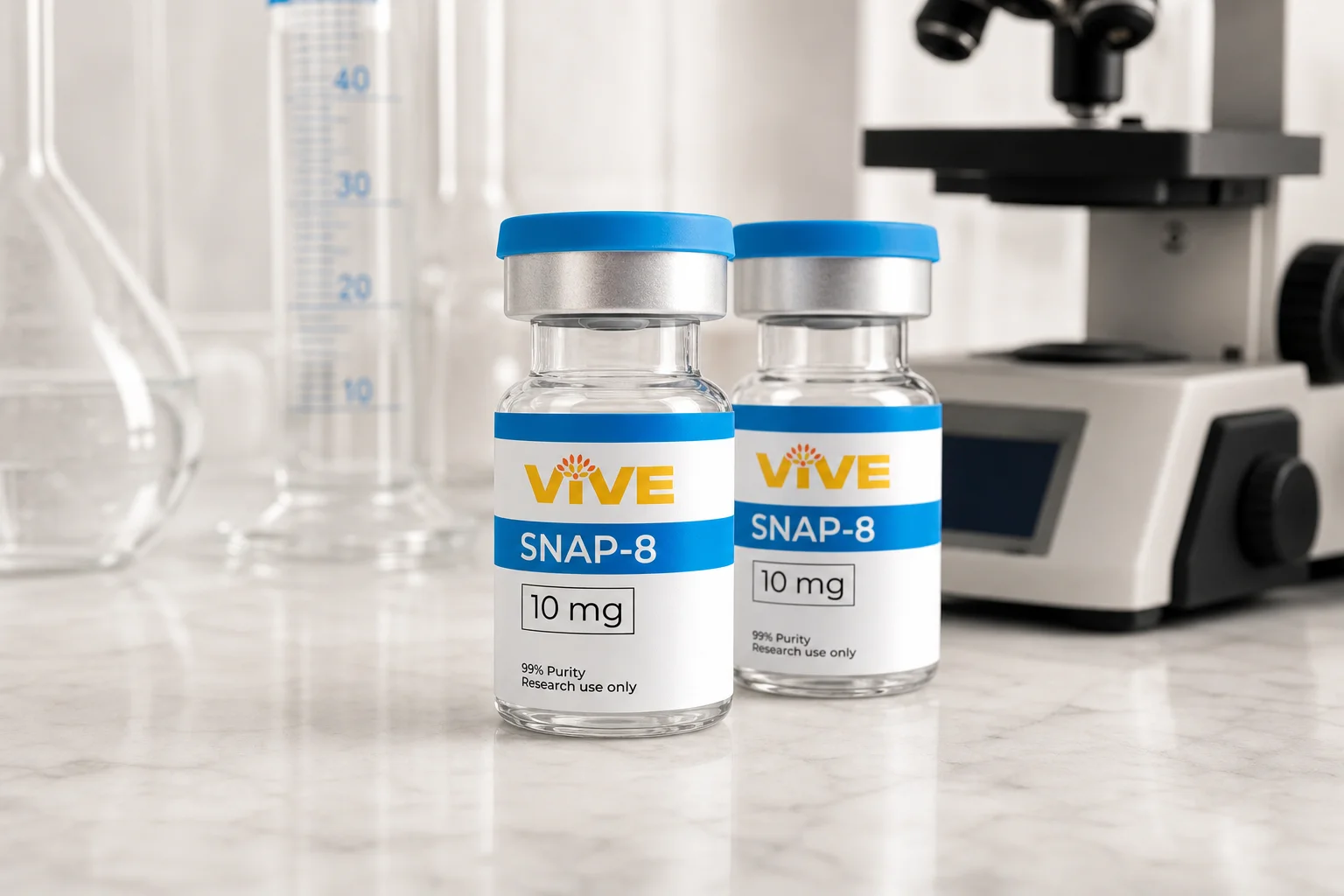
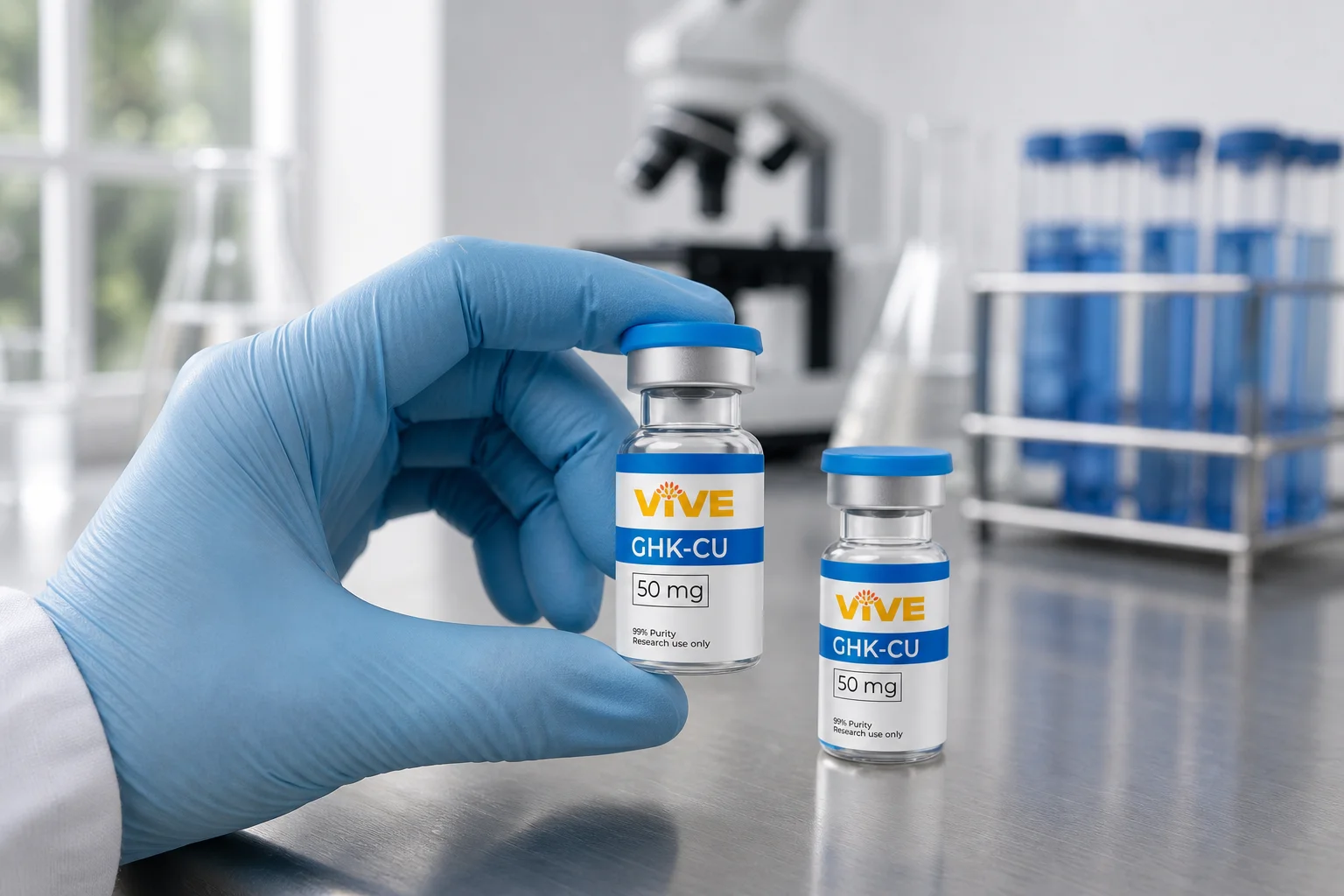
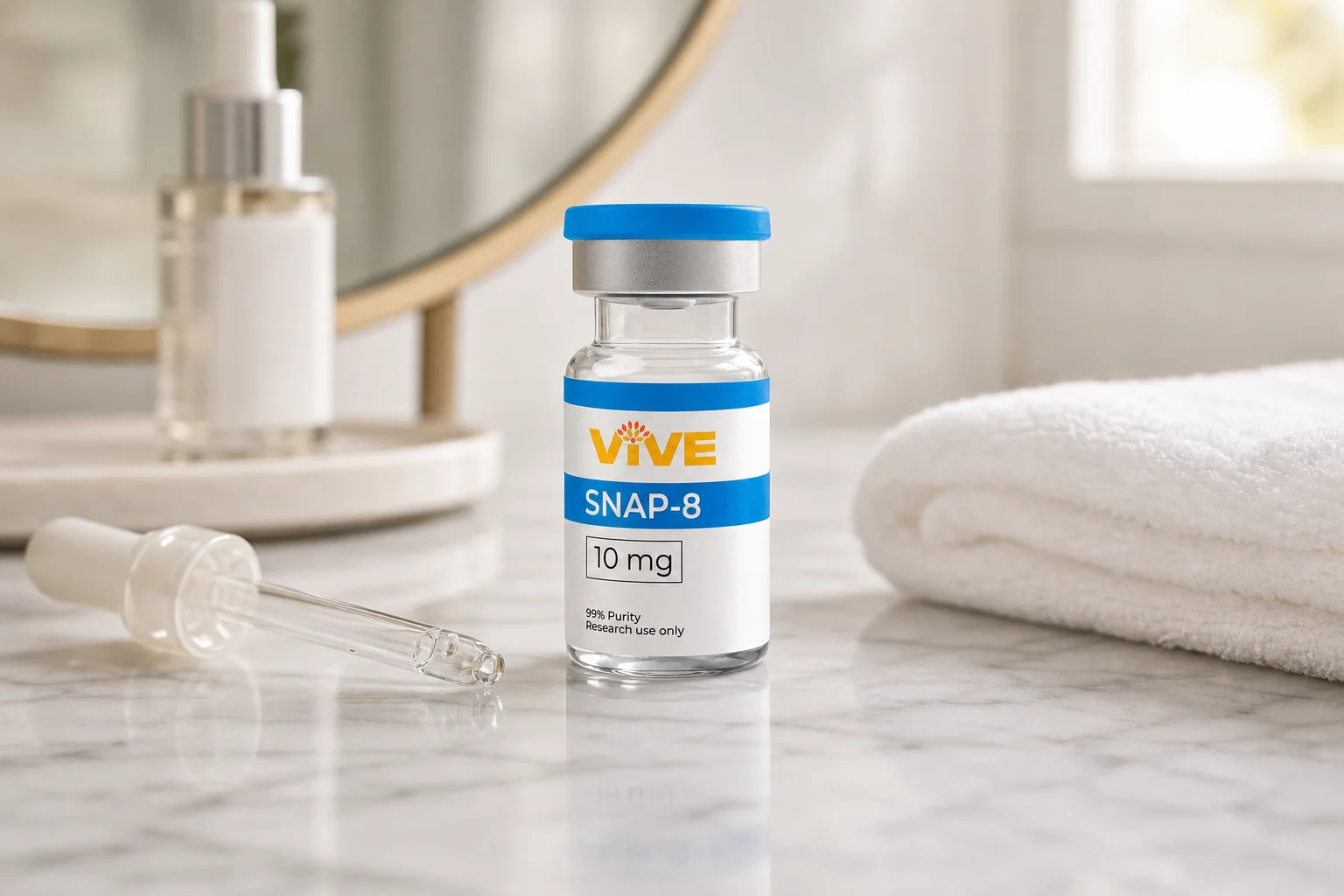
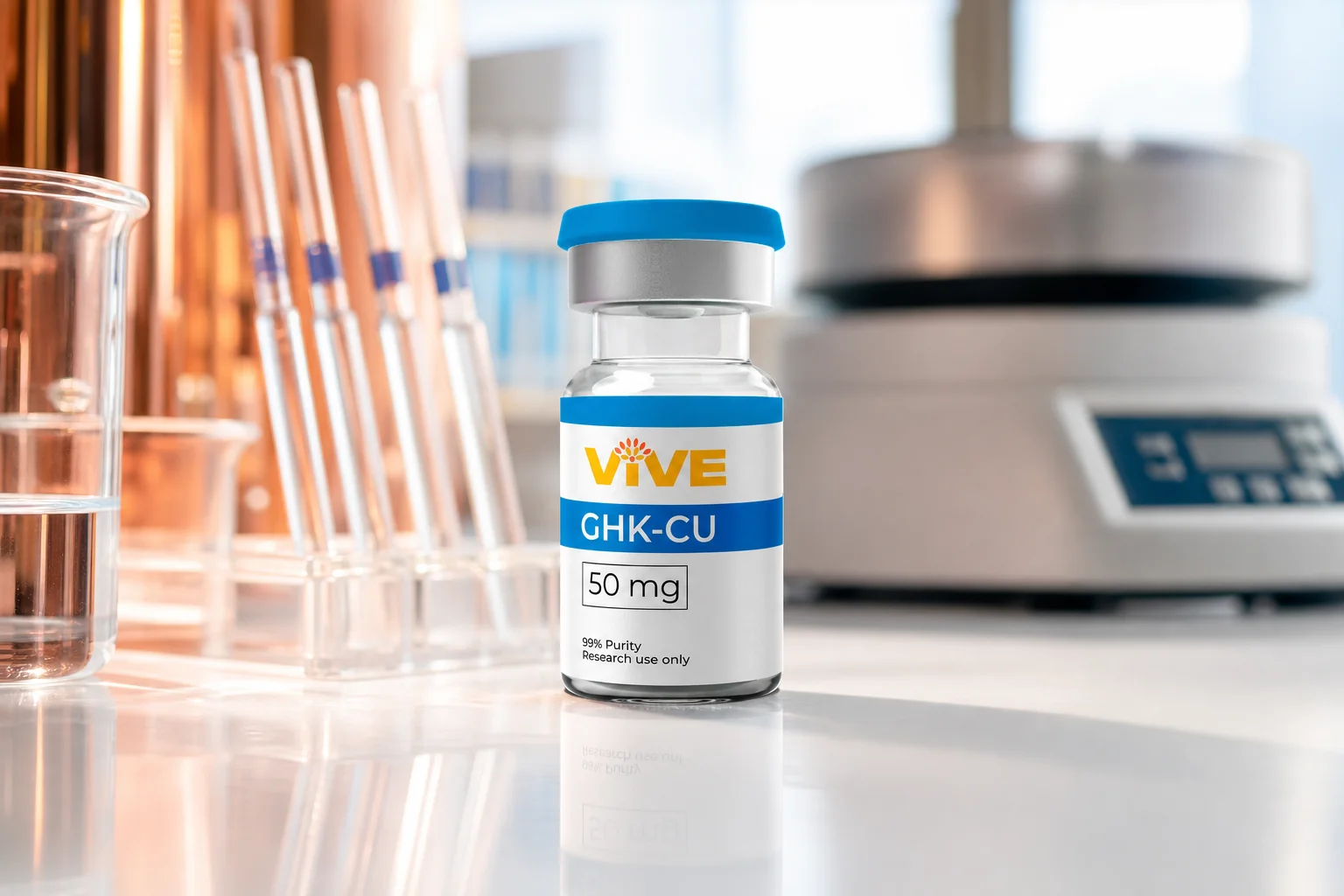
SNAP-8 (acetyl octapeptide-3) and GHK-Cu copper peptide represent two fundamentally different approaches to aging skin. SNAP-8 reduces expression lines by blocking neuromuscular signal transmission, while GHK-Cu drives collagen production and fibroblast remodeling at the cellular level. For researchers evaluating the snap-8 vs ghk-cu literature, understanding these distinct mechanisms is the foundational step.
By Vive Team
SNAP-8 vs GHK-Cu: Mechanisms Compared
SNAP-8 is an acetyl octapeptide that extends the mechanism of argireline (acetyl hexapeptide-3). Both compounds share the SNAP-23/25 inhibition pathway, but the eight-amino-acid sequence in SNAP-8 binds with greater affinity to SNARE receptor complexes at neuromuscular junctions. This binding reduces vesicle docking and neurotransmitter release, limiting the repetitive muscle contractions that deepen fine lines and crow's feet over time.
GHK-Cu operates at the cellular level rather than the neuromuscular junction. The compound, a glycyl-L-histidyl-L-lysine tripeptide chelated to copper(II), was first isolated by Loren Pickart in the 1970s. Subsequent work, including Pickart & Margolina (2018) in Biomedicines, demonstrated that GHK-Cu resets gene expression in aging skin fibroblasts toward younger expression profiles. The result is increased collagen production, elastin synthesis, and glycosaminoglycan deposition, structural components that determine skin elasticity and dermal volume.
Expression Lines vs. Structural Repair in Aging Skin
The snap-8 vs ghk-cu distinction is most visible in the type of skin aging each compound targets.
SNAP-8 addresses dynamic wrinkles, those formed by repeated muscle movement. A 2009 randomized double-blind trial by Blanes-Mira et al., published in the International Journal of Cosmetic Science, tested a 10% SNAP-8 emulsion on 44 volunteers over 28 days. Silicon replica analysis showed statistically significant reductions in expression lines around the orbital area, with measurable improvement in crow's feet depth. The effect is directly linked to reduced neuromuscular activity, not structural remodeling of the dermis.
GHK-Cu addresses the structural substrate of aging skin rather than muscular input. Pickart & Margolina (2018) reported that GHK-Cu application improves skin texture and skin elasticity via fibroblast activation and matrix metalloproteinase regulation. The copper peptide also upregulates CD44 receptors, promoting hyaluronic acid synthesis and retention within the extracellular matrix. This hydration mechanism contributes to the dermal volume associated with younger-looking skin and is distinct from SNAP-8's surface wrinkle attenuation.
For broader context on where these compounds fit within the anti-aging peptide field, our guide to 6 best peptides for anti-aging research covers GHK-Cu alongside NAD+ and other compounds studied in the published literature.
Formulation Protocols for Topical Peptide Serum Research
Both peptides are administered topically in research settings, though formulation requirements differ significantly.
SNAP-8 protocols: Published trials use concentrations ranging from 3% to 10% in aqueous emulsion vehicles. The peptide is pH-sensitive, with optimal stability between 5.0 and 6.5. Higher concentrations improve receptor occupancy, but researchers must validate degradation kinetics at elevated concentrations before drawing dose-response conclusions. Twice-daily application is standard in clinical studies to maintain consistent receptor saturation throughout the observation window.
GHK-Cu protocols: Dermatology studies typically formulate GHK-Cu at 0.1% to 2% in serum or hydrogel carriers. Pickart (2008), writing in Journal of Biomaterials Science, identified 1% GHK-Cu in ex vivo fibroblast models as producing meaningful copper peptide stimulation of collagen production without the pro-oxidant activity observed at higher copper loads. Once-daily or twice-daily application is standard depending on endpoint sensitivity, with most structural remodeling studies running four to twelve weeks.
A peptide serum vehicle delivering both compounds simultaneously is theoretically feasible given their non-competing targets. Researchers should validate individual peptide stability in a shared vehicle before any co-formulation study begins.
Research Timelines and Measurable Endpoints
SNAP-8 and GHK-Cu differ not only in mechanism but in when outcomes become measurable, a practical variable for protocol design.
SNAP-8: Short-Horizon Endpoints
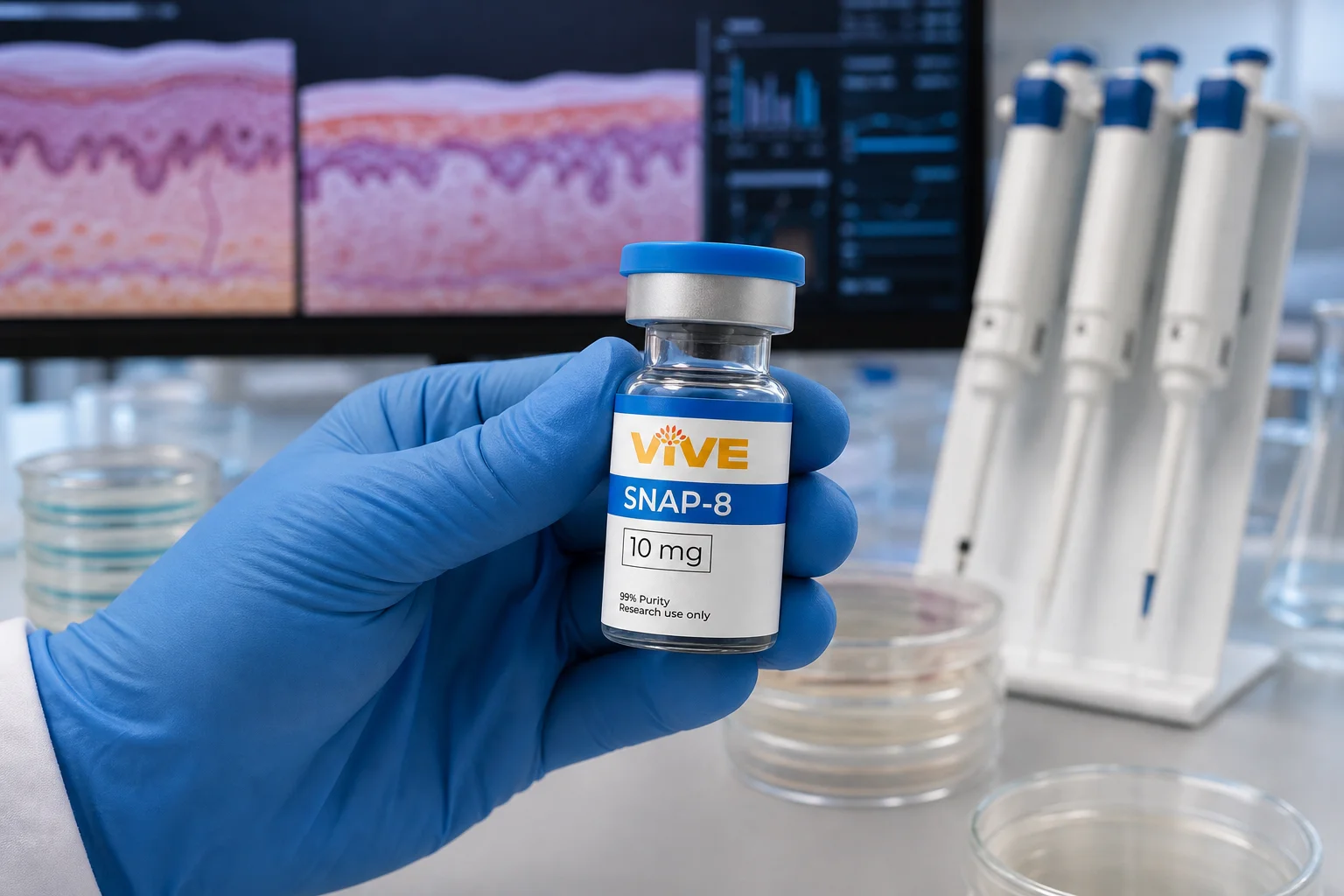
The Blanes-Mira (2009) trial reported significant wrinkle depth reduction at 28 days, making SNAP-8 well-suited for four- to eight-week research cycles. Profilometry and silicon replica analysis of expression lines and crow's feet are standard endpoint tools. Because the mechanism is functional rather than structural, results plateau at receptor saturation and reverse with discontinuation.
GHK-Cu: Long-Horizon Endpoints
GHK-Cu studies report the most robust changes at 8 to 12 weeks. Pickart & Margolina (2018) document continued increases in collagen production and skin elasticity beyond the initial treatment window, consistent with the compound's role as a gene-expression modifier rather than a surface-acting agent. Histological assessment or high-frequency ultrasound are appropriate tools for quantifying dermal density changes in aging skin at these longer timeframes.
Researchers studying GHK-Cu in tissue repair contexts may also find value in our guide to bpc-157 vs ghk-cu, which compares GHK-Cu with BPC-157 on regenerative endpoints in the published literature.
Combining SNAP-8 and GHK-Cu in Multi-Peptide Protocols
Some researchers formulate SNAP-8 and GHK-Cu together to address both dynamic and structural components of aging skin simultaneously. The mechanistic rationale is sound: SNAP-8 limits the muscular inputs that create fine lines in the short term, while GHK-Cu rebuilds the collagen and elastin scaffold that determines long-term skin elasticity.
No published head-to-head randomized controlled trial exists for the combination at the time of writing. However, the distinct receptor targets (SNARE complexes for SNAP-8, fibroblast gene regulatory networks for GHK-Cu) suggest mechanistically additive rather than competing effects. Researchers sourcing SNAP-8 (argireline) peptide and GHK-Cu for dual-peptide formulation studies should maintain independent concentration variables and standardized application timing to preserve outcome attribution across endpoints.
Frequently Asked Questions
What is the primary difference between SNAP-8 and GHK-Cu for aging skin research?
SNAP-8 reduces expression lines by inhibiting the neuromuscular signals that drive repetitive muscle contractions. GHK-Cu, a copper peptide tripeptide complex, resets fibroblast gene expression to stimulate collagen production, improve skin elasticity, and support structural dermal remodeling. SNAP-8 acts at the neuromuscular junction; GHK-Cu acts within the fibroblast. The two compounds target different mechanisms and stages of aging skin.
How long does each peptide take to show measurable results in published studies?
SNAP-8 studies show statistically significant wrinkle depth reduction within 28 days (Blanes-Mira et al., International Journal of Cosmetic Science, 2009). GHK-Cu studies report peak improvements in collagen production and skin texture at 8 to 12 weeks (Pickart & Margolina, Biomedicines, 2018). Short-cycle research protocols favor SNAP-8 endpoints; structural remodeling studies require the longer GHK-Cu timeline.
Does GHK-Cu affect hyaluronic acid levels in aging skin?
GHK-Cu upregulates CD44 surface receptors on fibroblasts, which regulate hyaluronic acid synthesis and binding within the extracellular matrix. Pickart & Margolina (2018) link GHK-Cu activity to improved dermal hydration consistent with increased hyaluronic acid retention. This mechanism is separate from SNAP-8's neuromuscular action and contributes to improved skin texture scores in GHK-Cu-treated models.
Can SNAP-8 and GHK-Cu be combined in the same peptide serum?
Their receptor targets do not overlap: SNAP-8 acts on SNARE complexes at the neuromuscular junction, while GHK-Cu acts on fibroblast gene expression pathways. No published antagonism has been reported. Co-formulation requires pH validation (SNAP-8 is optimal at 5.0 to 6.5) and stability testing for both peptides in the shared vehicle. Researchers should treat them as independent variables until combination stability data is confirmed.
What concentration ranges appear in published SNAP-8 and GHK-Cu research?
Published SNAP-8 trials use 3% to 10% in emulsion vehicles. GHK-Cu studies typically use 0.1% to 2% in serum or hydrogel bases. Pickart (2008, Journal of Biomaterials Science) identifies 1% as the benchmark for ex vivo fibroblast models. Researchers should calibrate to these published ranges when designing comparative studies on fine lines or collagen production endpoints.
Order Research-Grade SNAP-8 and GHK-Cu at VivePeptides
SNAP-8 and GHK-Cu are among the best-characterized peptides for aging skin research, each validated in peer-reviewed literature for distinct mechanisms and endpoints. Both are available with free shipping on qualifying orders through the research-grade peptide catalog.
Research Use Only
All information in this article is intended for educational and research purposes only. VivePeptides products are not intended for human or veterinary use.