Research Article
Selank Dosing and Protocol Variables in Preclinical Research
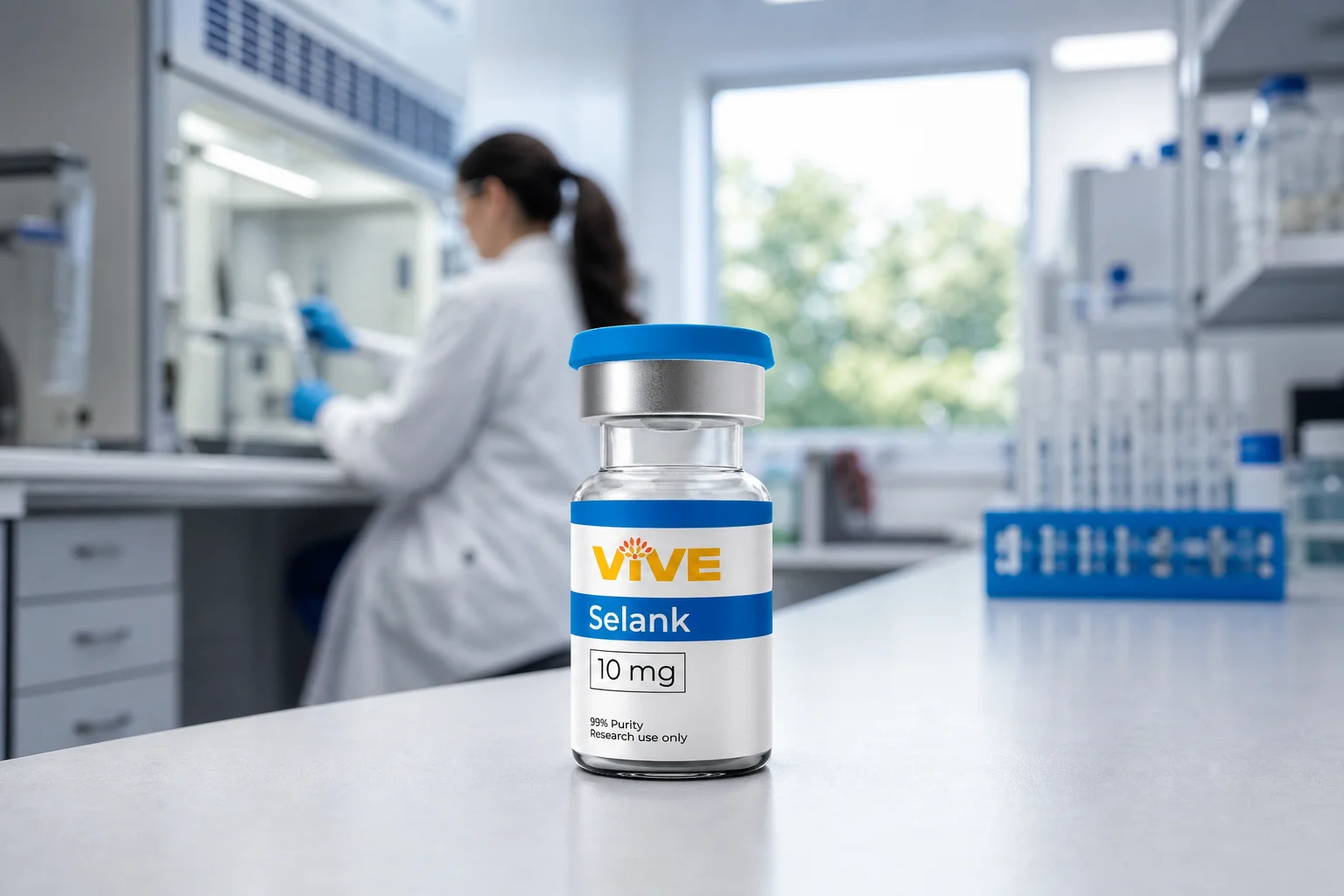
Selank dosing and protocol variables in preclinical research models determine how investigators interpret anxiolytic and cognitive outcomes across published studies. From intranasal delivery to injection based routes, researchers working with a Selank nootropic peptide must account for dose, frequency, and reconstitution method before drawing conclusions about behavioral or neurochemical endpoints.
By Vive Team
Understanding Selank as a Research Peptide
Selank is a synthetic heptapeptide analog of tuftsin, first developed by researchers studying immune and neurochemical regulation in Russia. As a selank peptide, it belongs to a small class of compounds examined in preclinical models for their apparent influence on cognitive function, learning memory, and stress reactivity. VivePeptides supplies Selank strictly for laboratory research, and none of the material in this article should be treated as medical advice or a recommendation for human use.
Because Selank shares structural similarity to tuftsin, a naturally occurring immunomodulatory peptide, researchers have long been interested in how it interacts with the central nervous system when studied outside its original immune context. Much of the foundational work on this peptide comes out of Russian pharmacology programs, where dosing and protocol standards were first established for laboratory animals. Those early frameworks continue to inform how labs in the United States design their own Selank studies today, even though the compound has not been evaluated by the FDA for any therapeutic indication.
Selank Administration Routes in Preclinical Models
Selank administration in published research most commonly occurs through the intranasal route, typically formulated as a Selank nasal spray delivered directly to the nasal mucosa. This route is favored in preclinical protocols because it bypasses first pass metabolism and allows for relatively straightforward, repeatable dosing in rodent models. Some studies instead describe subcutaneous or intraperitoneal injection as an alternative administration method, particularly when researchers want tighter control over absorption timing. For background on how this peptide compares to a related nootropic compound, see more on selank vs semax.
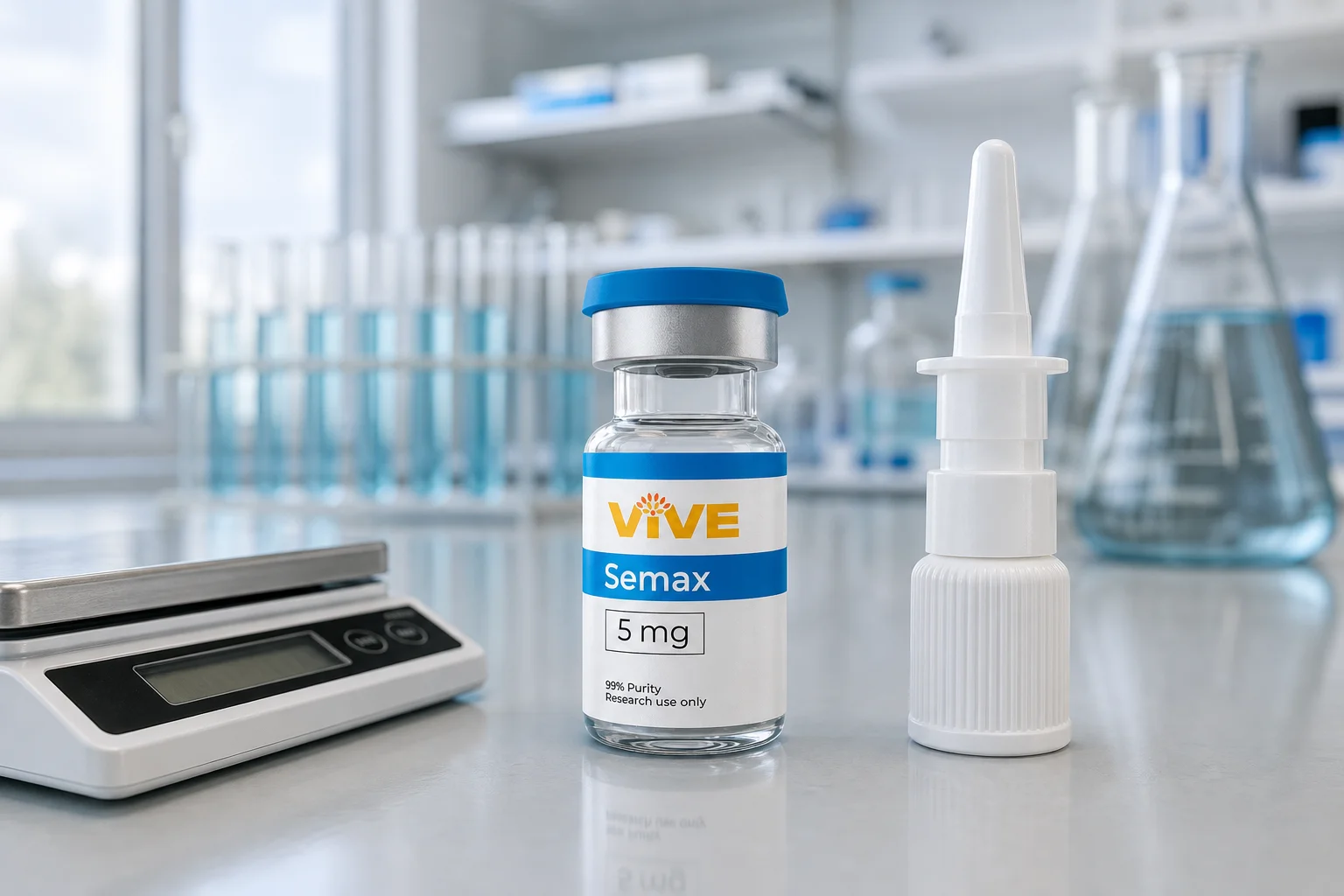
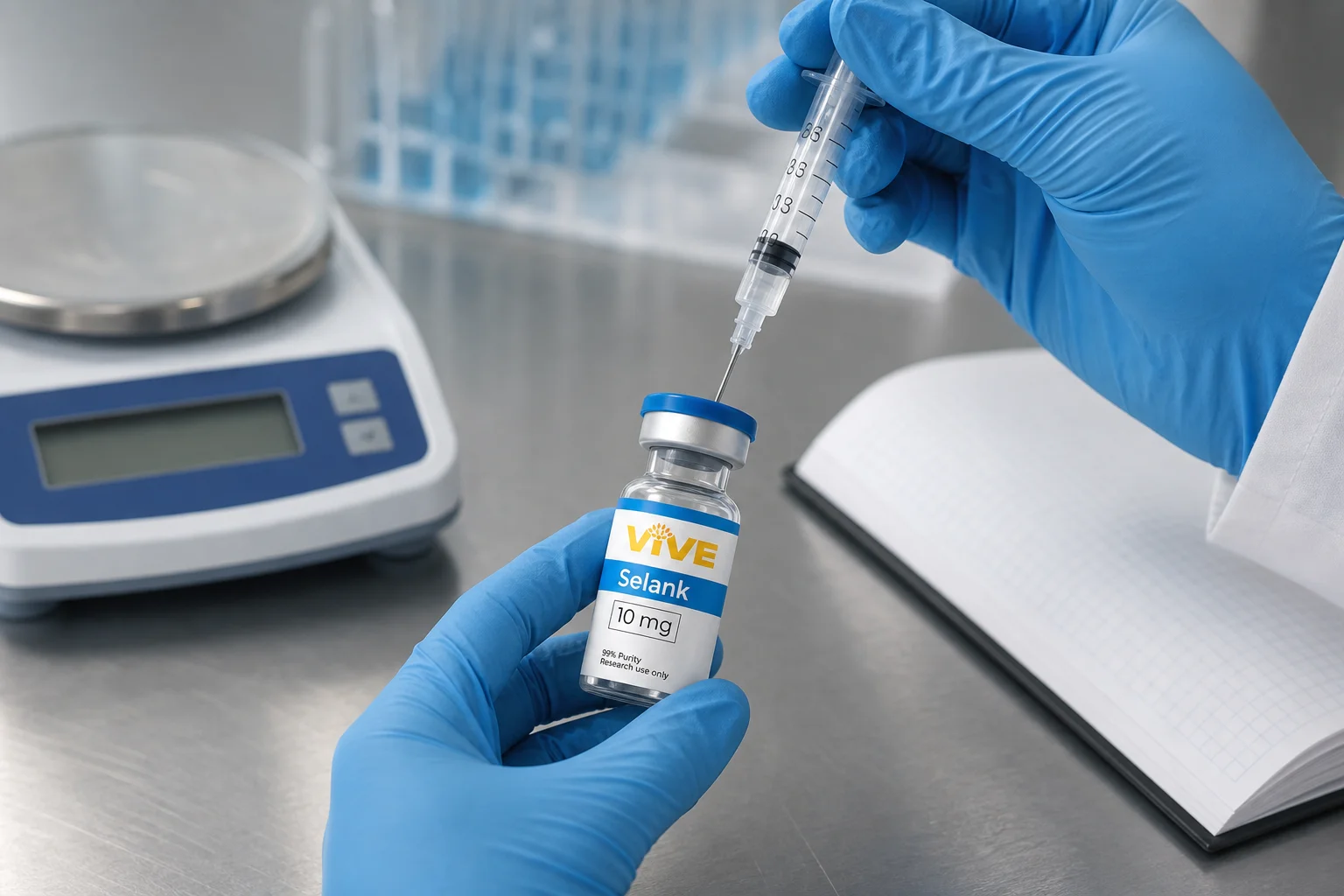
Regardless of route, protocol design typically standardizes dose volume, concentration, and timing relative to behavioral testing. Researchers working with research-grade Semax often note similar considerations, since Semax and Selank share a related nootropic research lineage and are frequently discussed together in the literature. Reconstitution accuracy also matters here: labs generally rely on bacteriostatic water for peptide reconstitution to maintain consistent concentration across study arms, since improperly reconstituted solutions can introduce dosing variability that confounds behavioral results.
Key Selank Dosing and Protocol Variables in Preclinical Research Models
Selank dosing and protocol variables in preclinical research models vary widely across published studies, which makes direct comparisons difficult. Reported doses and dosage schedules in rodent models commonly range from roughly 100 micrograms per kilogram to several milligrams per kilogram, depending on the specific behavioral or biochemical endpoint being measured. Dosing frequency is another major variable: some protocols use a single acute dose before testing, while others apply repeated daily dosing across a week or more to assess cumulative effects.
Duration of exposure, timing relative to stress induction, and the specific anxiety disorder model used, such as the elevated plus maze, open field test, or conditioned fear paradigms, all shape how researchers interpret outcomes. Some research teams also track genes involved in GABA receptor expression or neurotrophic signaling following repeated dosing, since gene level changes can help explain behavioral shifts that dose response curves alone cannot capture.
Side effects observed at higher experimental doses, including transient changes in locomotor activity or feeding behavior, are typically logged alongside primary outcome measures so that safety margins can be established for the animal model in question. Standardizing these dosing and protocol variables, researchers argue, remains one most persistent methodological challenges in the Selank literature, since inconsistent reporting makes cross study comparison unreliable.
Mechanistic Considerations: GABAergic Signaling and BDNF
Selank's anxiolytic effects are generally attributed to modulation of GABAergic neurotransmission, though the exact mechanism remains an active area of investigation rather than a settled fact. Unlike benzodiazepines, which bind directly to GABA-A receptor sites, Selank appears to influence GABAergic tone through indirect pathways, which may explain why some researchers report a more gradual onset of effects compared to classic anxiolytic compounds. Preclinical work has also linked Selank exposure to changes in brain-derived neurotrophic factor, or BDNF, expression in brain regions associated with learning and memory consolidation. Because BDNF plays a role in synaptic plasticity, some researchers hypothesize that the documented effects Selank produces on cognitive tasks may be partly mediated through this neurotrophic pathway, though this connection is still considered preliminary rather than confirmed. For a closer comparison of study design across related compounds, see Selank vs Semax: Comparing Two Nootropic Peptides for Cognitive Research.
Stress reactivity is another frequently studied endpoint. In models designed to mimic generalized anxiety, animals treated with Selank have shown altered corticosterone responses and changes in exploratory activity, which researchers interpret as markers of anxiolytic effects at the behavioral level. None of these findings have been evaluated for safety or effectiveness in humans, and the peptide is not approved for any clinical use in the United States or elsewhere.
Protocol Design Factors That Shape Study Outcomes
Beyond dose and route, several protocol design choices influence how effective a given Selank study appears to be at demonstrating anxiolytic or cognitive outcomes. Sample size, choice of control peptide or vehicle, and the specific anxiety disorder model selected all affect statistical power and reproducibility. Researchers also vary how long they wait between administration and behavioral testing, which can shift results depending on the peptide's apparent time course of action.
Reconstitution protocol is a variable that is easy to overlook but difficult to correct for after the fact. Labs that standardize concentration and storage conditions before a study begins, using consistent reconstitution supplies, reduce one common source of variability. Focus on documentation, meaning detailed records of lot numbers, storage temperature, and dosing schedule, helps other labs replicate findings or identify where discrepancies originate. Many of these findings are credited to multiple contributing authors, cited in the literature using the standard et al format, reflecting how collaborative much of this research area actually is.
Frequently Asked Questions
What doses of Selank are typically used in preclinical research? Reported doses vary widely across published protocols, generally ranging from roughly 100 micrograms per kilogram to several milligrams per kilogram depending on the model and endpoint studied. Dosing frequency also differs, with some protocols using a single acute dose and others applying repeated daily dosing. VivePeptides sells Selank strictly for laboratory research, not for human use.
How is Selank administered in animal studies? Selank administration most commonly occurs through an intranasal Selank nasal spray formulation, which is favored because it avoids first pass metabolism and allows repeatable dosing. Some protocols instead use subcutaneous or intraperitoneal injection when researchers need tighter control over absorption timing. Route selection is typically standardized within a single study to reduce variability.
What mechanism is believed to underlie Selank's anxiolytic effects? Selank's anxiolytic effects are generally linked to modulation of GABAergic neurotransmission, though the pathway appears indirect compared to benzodiazepines. Preclinical work also associates Selank exposure with changes in brain-derived neurotrophic factor expression in brain regions tied to learning and memory. These mechanisms remain under active investigation rather than fully established.
Is Selank approved for human use in the United States? No. Selank has not been evaluated or approved by the FDA for any therapeutic use in the United States, and nothing in preclinical literature should be treated as medical advice. VivePeptides offers Selank exclusively for laboratory research applications, and all handling should follow appropriate research protocols and institutional guidelines.
Review Selank Research Specifications Before Your Next Protocol
Researchers designing Selank dosing and protocol variables in preclinical research models can review current specifications and reconstitution guidance before finalizing a study. For background on how Selank compares to a related nootropic compound, see our guide to selank vs semax.
Research Use Only
All information in this article is intended for educational and research purposes only. VivePeptides products are not intended for human or veterinary use.