Research Article
Lyophilization and Peptide Stability | VivePeptides
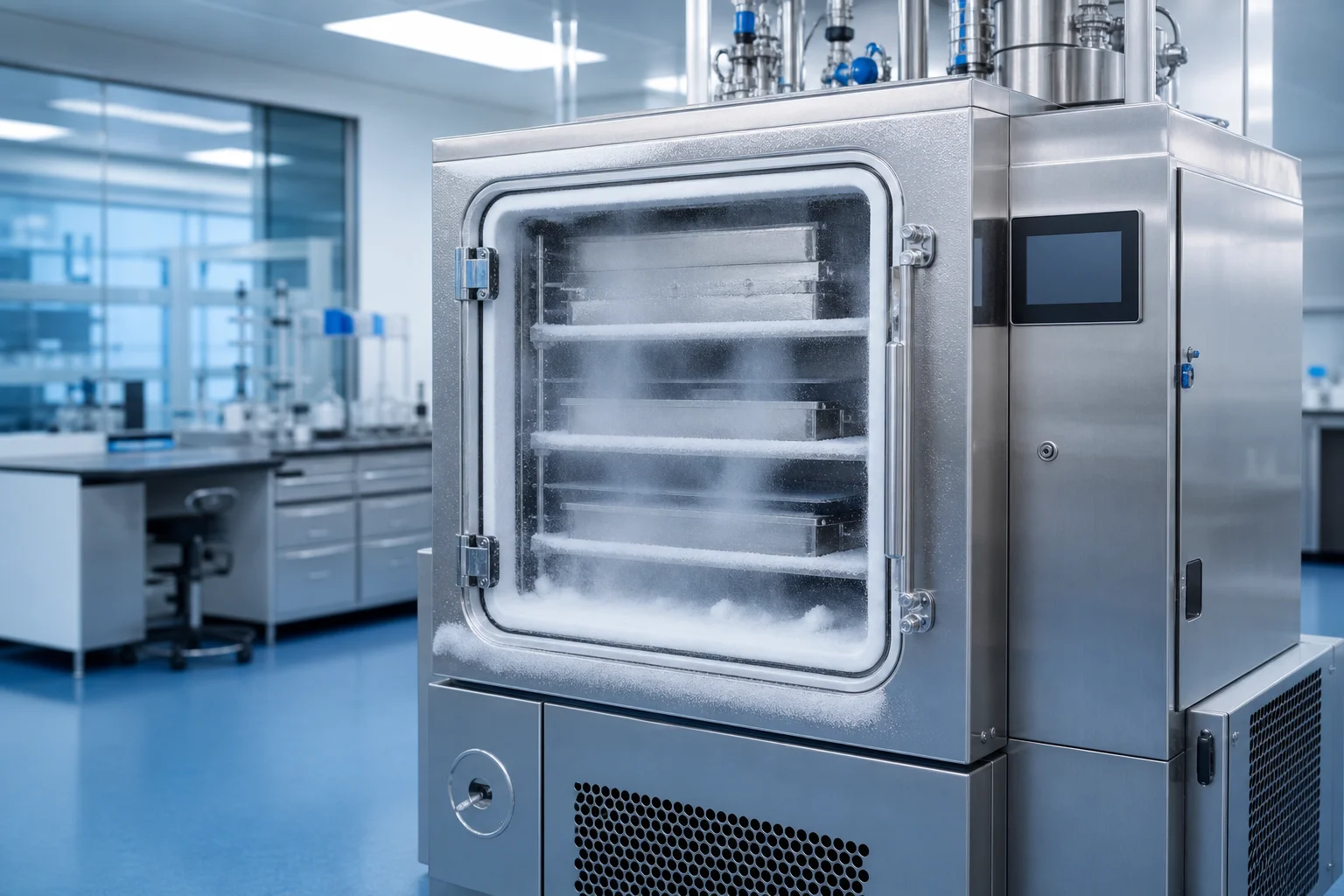
Lyophilization and peptide stability go hand in hand in laboratory research: the freeze-drying process pulls water from a peptide solution while keeping its molecular backbone intact, extending shelf life far beyond what a liquid formulation allows. Researchers who understand this process store and reconstitute compounds with far greater confidence. Browse the research-grade peptide catalog for lyophilized formats.
By Vive Team
Understanding Lyophilization and Peptide Stability in the Lab
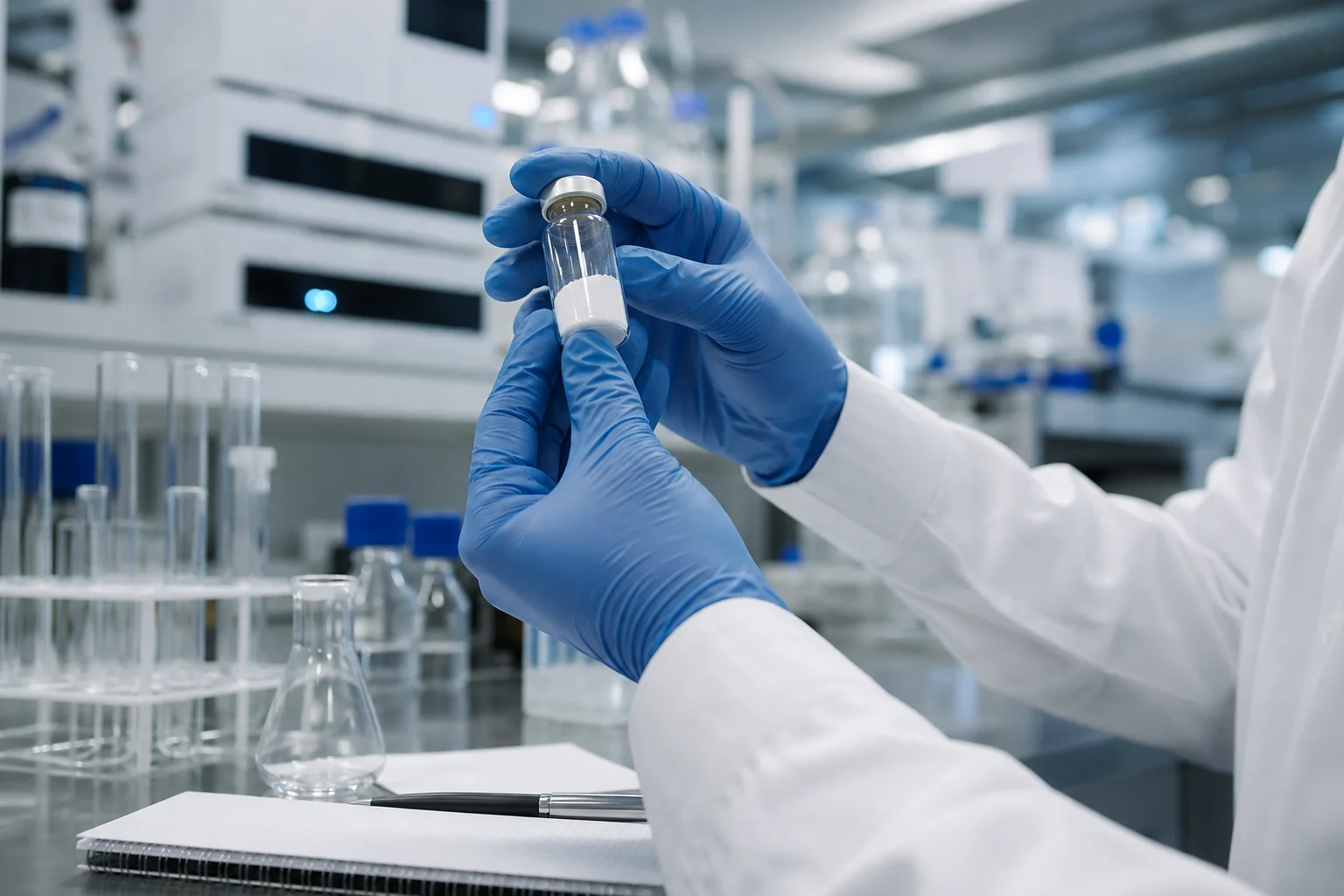
Lyophilization, more commonly known as freeze-drying, is the process of removing water from a frozen substance under vacuum so the material transitions directly from ice to vapor. For research peptides, this matters because peptide bonds are vulnerable to hydrolysis, oxidation, and aggregation whenever water is present. A lyophilized peptide sits in a stable, dry cake that resists these degradation pathways far better than the same compound left dissolved in solution.
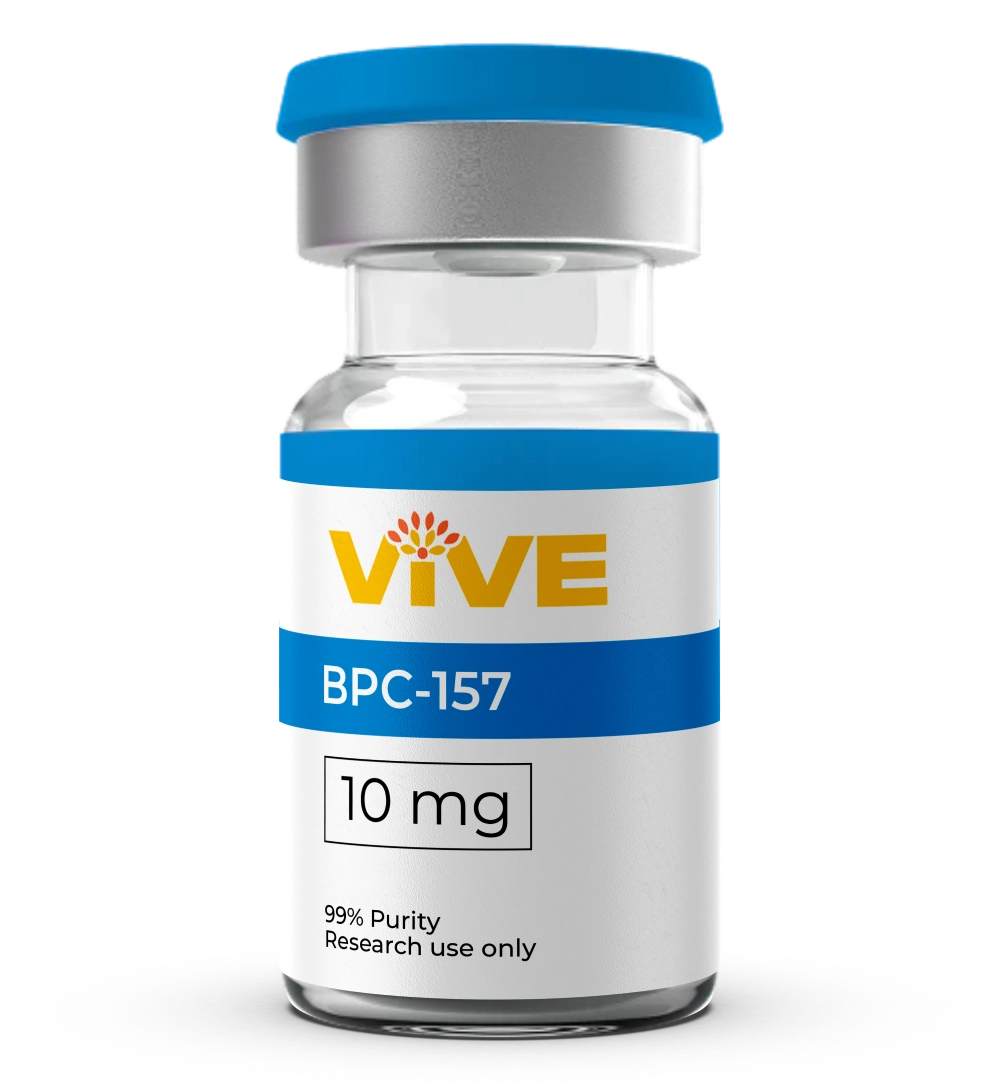
Freeze-dried research peptides last longer than their liquid counterparts because the chemical reactions that drive breakdown slow dramatically once free water is gone. This is the core reason lyophilization and peptide stability are discussed together in nearly every technical peptide reference. A liquid peptide solution left at room temperature can begin to degrade within days, while a properly lyophilized powder stored correctly can remain stable for months. Researchers working with BPC-157 reconstitution protocols or any other lyophilized compound rely on this stability window to plan experiments without racing against a degradation clock.
The Freeze-Drying Process: Freezing, Primary Drying, and Secondary Drying
The freeze-drying process used for research peptides happens in three distinct stages, each controlling a different type of water removal.
Freezing. The peptide solution is cooled until it forms a solid matrix, locking the peptide and any excipients into an ice lattice. The rate and temperature of freezing influence the final cake structure and how easily the product reconstitutes later.
Primary drying. Under vacuum, chamber temperature is raised just enough to let ice sublimate directly from solid to vapor, bypassing the liquid phase entirely. Primary drying removes the bulk of the water content and typically accounts for the longest portion of a lyophilization cycle.
Secondary drying. Once the visible ice is gone, secondary drying targets bound water, the water molecules that remain chemically associated with the peptide and excipient matrix even after sublimation is complete. Removing this bound water is what pushes residual moisture down to levels compatible with long-term storage.
Skipping or rushing either drying stage leaves excess moisture behind, which shortens shelf life and increases the risk of aggregation during storage.
How Lyophilization Preserves Molecular Integrity
A peptide's research relevance depends on its molecular structure staying intact, specifically the sequence of amino acids and the bonds that hold that sequence in its correct conformation. Water is one of the primary drivers of peptide degradation: it enables hydrolysis of peptide bonds and accelerates deamidation and oxidation reactions that alter molecular integrity over time.
By removing free water and leaving behind a dry, porous cake, lyophilization and peptide stability become directly linked at the formulation level. The resulting formulations are far less reactive because the chemical pathways that require dissolved water simply cannot proceed in a solid, dehydrated state. This is why lyophilized peptides and lyophilized powder formats are the default choice across pharmaceutical and research peptide handling, rather than pre-mixed liquid solutions.
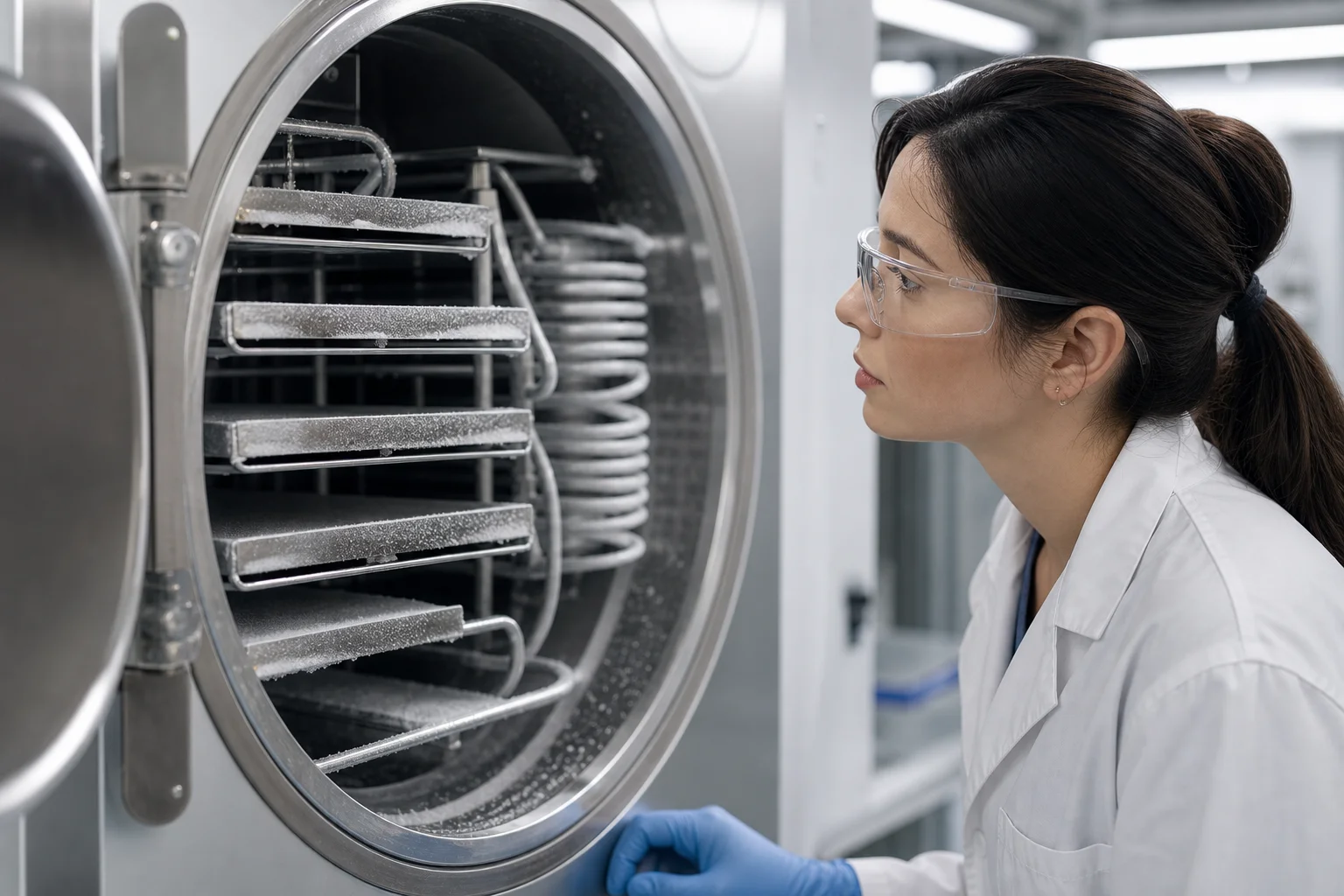
Reconstitution reverses this process only when the researcher is ready to use the material, which is why proper technique when peptides are reconstituted matters just as much as the drying cycle itself.
Shelf Life, Storage, and Reconstituting Lyophilized Peptides
Properly lyophilized research peptides, stored sealed and protected from light and humidity, can maintain their labeled purity for months when kept refrigerated or frozen. Some formulations remain workable at room temperature for shorter windows, though cold storage is still the more conservative choice for extending shelf life. This stability profile is a major reason lyophilization and peptide stability considerations drive purchasing and storage decisions for research labs.
Once a vial is reconstituted, the clock changes. A reconstituted peptide behaves like a liquid formulation again and should be used within the timeframe specified on the product documentation, then stored cold between uses. Reconstitution should always use bacteriostatic water for peptide reconstitution rather than plain sterile water, since the preservative content helps limit microbial growth across multiple draws.
These products are not intended for human consumption, self-administration, or any clinical, therapeutic, or diagnostic use. They are sold strictly for laboratory and in-vitro research purposes by qualified professionals.
Verifying Quality With Mass Spectrometry and Residual Moisture Testing
Reputable suppliers confirm that a lyophilized batch actually delivers on its lyophilization and peptide stability claims through analytical testing rather than assumption. Mass spectrometry is the standard method for confirming peptide identity and purity, since it measures the exact molecular weight of the compound and flags fragments, related substances, or synthesis byproducts that would otherwise go unnoticed.
Alongside mass spectrometry, residual moisture testing checks how much water remains in the cake after the drying cycle finishes. High residual moisture is one of the clearest predictors of poor long-term stability, since it means the secondary drying step left the peptide more exposed to hydrolysis than the specification allows. Quality control on both fronts, molecular identity and residual moisture, gives researchers a defensible basis for trusting a specific lot's shelf life claims.
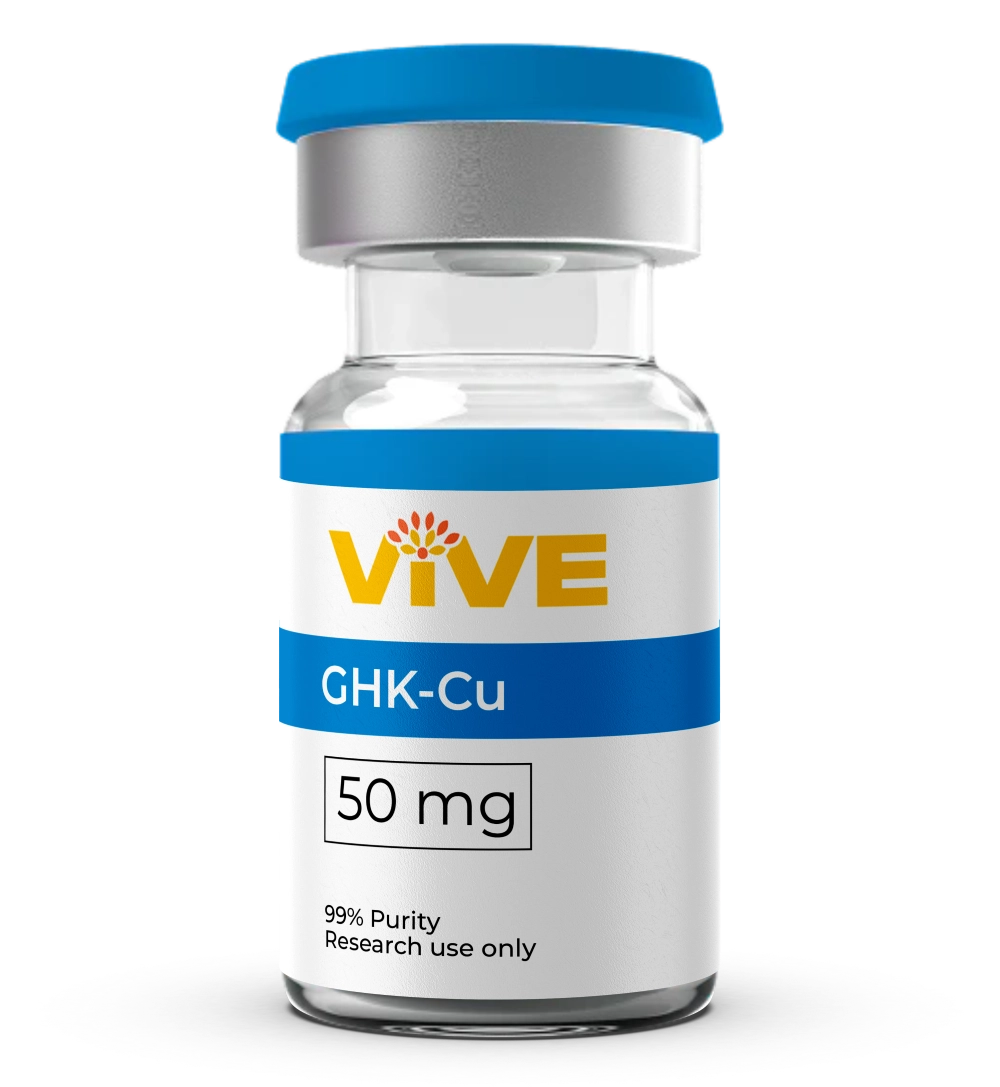
Compounds such as research-grade GHK-Cu and other topically or systemically studied peptides depend on this same testing framework regardless of their individual research application.
Frequently Asked Questions
What does lyophilization mean for peptide stability?
Lyophilization removes water from a peptide solution through freezing and vacuum drying, leaving a stable dry cake behind. Because degradation pathways like hydrolysis need water to proceed, a properly lyophilized peptide resists breakdown far longer than the same peptide left in liquid form, which is the core link between lyophilization and peptide stability in research settings.
How long is the shelf life of lyophilized peptides?
Shelf life varies by peptide and storage conditions, but properly lyophilized, sealed vials stored refrigerated or frozen commonly remain within specification for many months. Exposure to light, humidity, and temperature swings shortens that window, which is why the storage instructions on each product page should guide handling rather than general assumptions.
What is the difference between primary drying and secondary drying?
Primary drying uses vacuum and controlled heat to sublimate frozen water directly to vapor, removing the bulk of the moisture. Secondary drying follows and targets bound water still chemically attached to the peptide and excipients, pushing residual moisture down to the low levels required for long-term stability.
Can reconstituted peptides be refrozen after use?
Reconstituted peptides are generally not intended for repeated freeze-thaw cycles, since that stresses molecular integrity and increases aggregation risk. Most research protocols call for refrigerated storage between draws and discarding the vial once the documented usage window has passed rather than refreezing a reconstituted solution.
Why do labs test lyophilized peptides with mass spectrometry?
Mass spectrometry confirms the exact molecular weight of a peptide, verifying identity and purity while flagging synthesis byproducts or degradation fragments. Combined with residual moisture testing, it gives researchers documented evidence that a specific lyophilized batch meets its stated specifications before it is used in any experiment.
Explore Lyophilized Research Peptides From VivePeptides
VivePeptides ships peptides in lyophilized form specifically to protect molecular integrity and extend shelf life between the lab bench and the freezer, and every listing includes recommended reconstitution and storage guidance. Newer GLP-class compounds like tirzepatide and retatrutide follow the same lyophilized handling standards, with dedicated coverage on next-generation GLP peptides.
Research Use Only
All information in this article is intended for educational and research purposes only. VivePeptides products are not intended for human or veterinary use.