Research Article
Peptide Storage Guide: How to Store Research Peptides

A reliable peptide storage guide is the foundation of reproducible research. Improper temperatures, moisture, and repeated freeze-thaw cycles degrade amino acids faster than most researchers expect, compromising experimental outcomes before a single assay runs. This guide covers evidence-based peptide storage protocols for every compound format available in the research-grade peptide catalog.
By Vive Team
Why Peptide Stability Matters More Than Researchers Often Realize
Peptides are short chains of amino acids linked by amide bonds. Their molecular architecture makes them inherently sensitive to environmental variables: temperature fluctuations, ultraviolet exposure, oxidation, and hydrolysis all accelerate degradation. A single mishandled vial can shift purity by ten percent or more, rendering downstream data unreliable before the first experiment runs.
Researchers working with growth hormone secretagogues, immune modulators, skin-repair compounds, and metabolic peptides share this vulnerability. Because peptide structure determines biological activity, any modification to the primary sequence, including hydrolytic cleavage between residues, changes what the compound does in a model system. The relationship between amino acid sequence and protein function, established by Christian Anfinsen in his 1973 Nobel address published in Science, confirms that degradation at the sequence level is degradation of research utility.
Lyophilized Peptides vs. Peptide Solutions: Two Very Different Storage Profiles
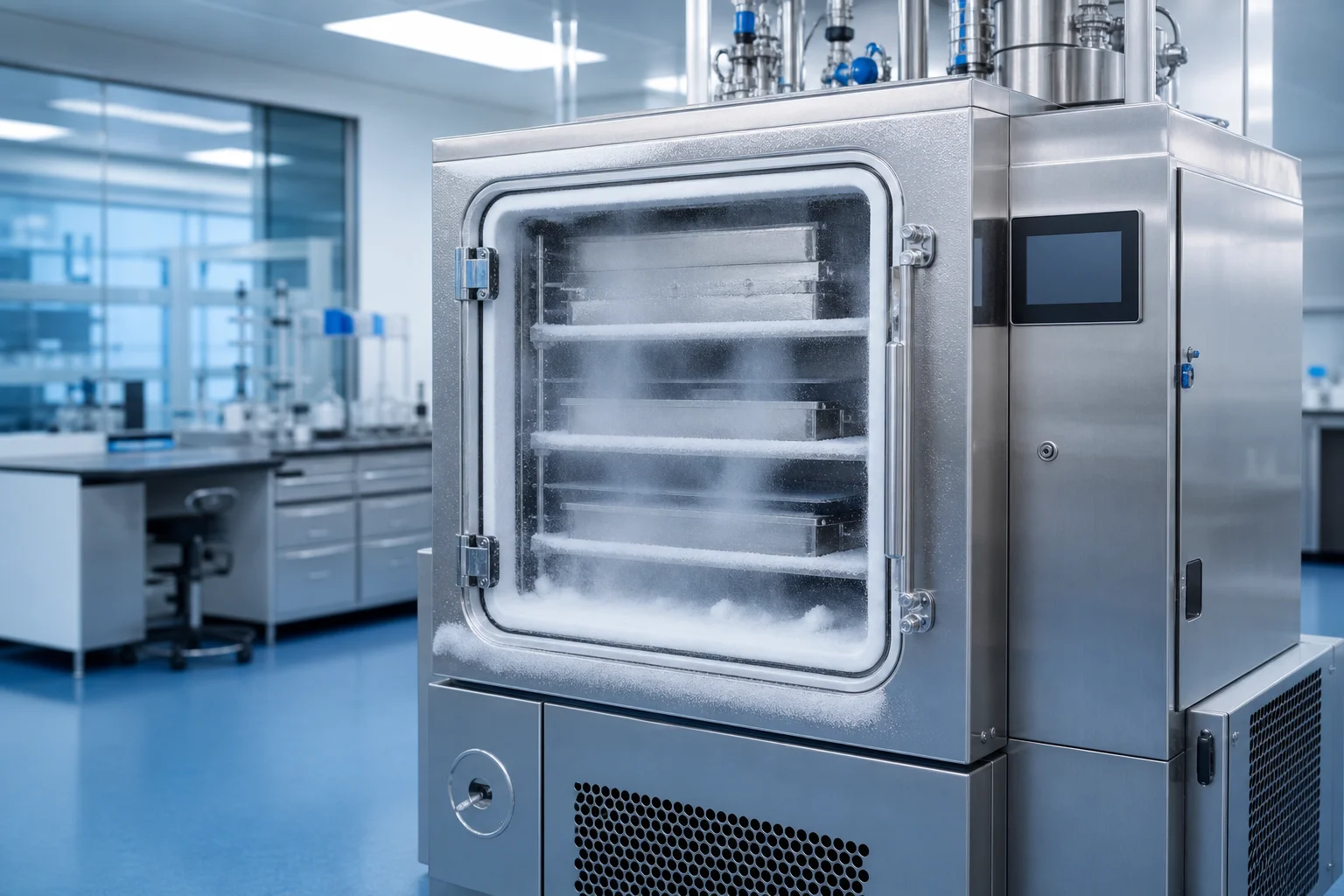
Lyophilized peptides represent the most stable format for long-term storage. The freeze-drying process removes water activity, which is the primary driver of hydrolytic cleavage between amino acid residues. Research published by Manning et al. in the Journal of Pharmaceutical Sciences (1989) established that peptide and protein stability in the solid state is substantially higher than in aqueous solution, a principle that has shaped pharmaceutical peptide formulation for decades.
Peptide solutions behave very differently. Once reconstituted, peptide chains are suspended in aqueous medium where hydrolysis proceeds continuously. Dissolved oxygen accelerates oxidation of methionine and cysteine residues, while light exposure drives photo-oxidation in sequences containing aromatic amino acids. Researchers should limit the time research peptides spend in solution, drawing from aliquoted single-use volumes rather than repeatedly accessing the same reconstituted stock.
For compounds commonly referenced in published studies, the consensus across protocol literature is to reconstitute only what is needed for immediate use, keeping remaining lyophilized stock sealed and cold.
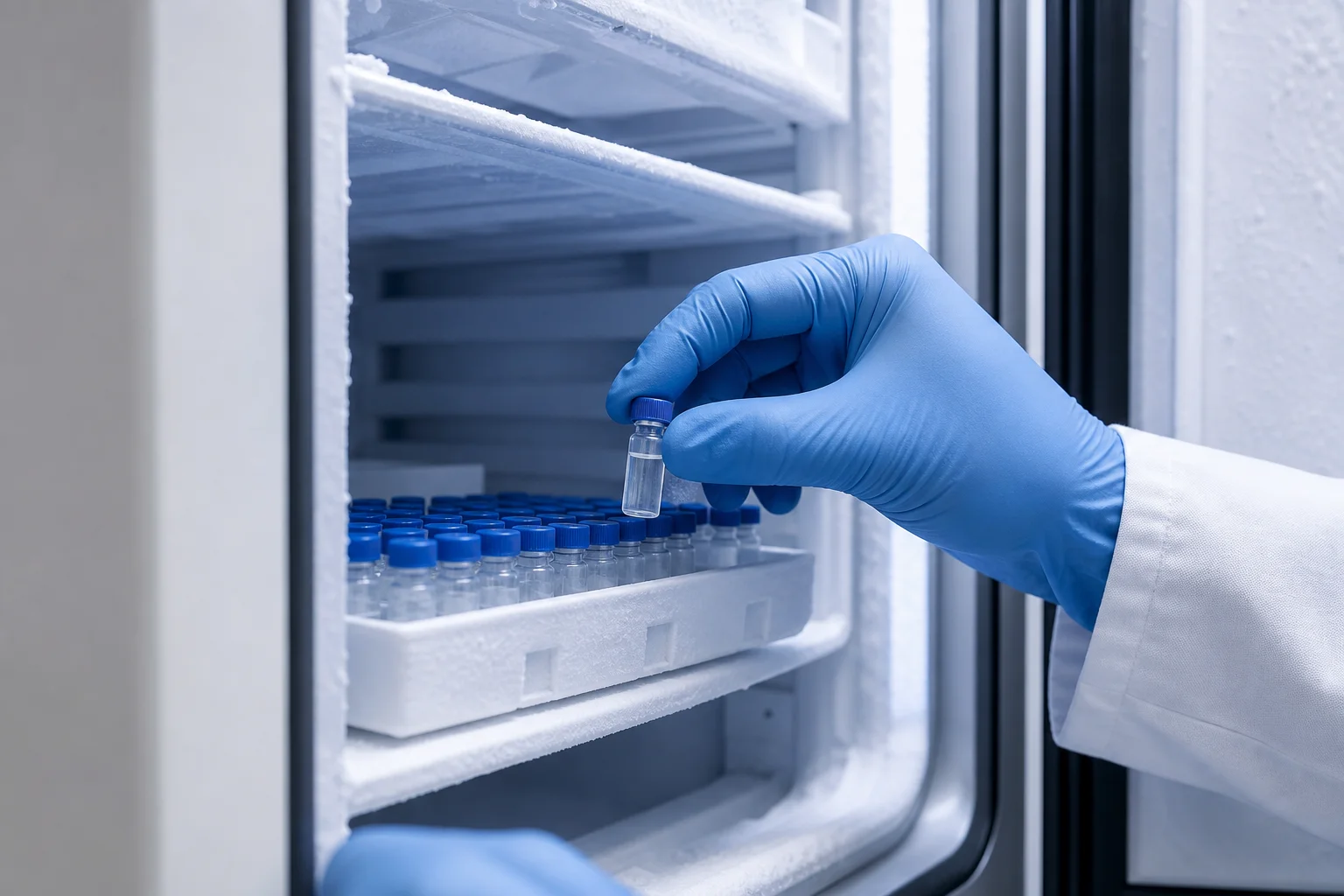
Temperature Guidelines: The Core of Every Peptide Storage Guide
Temperature is the single most controllable variable in any peptide storage guide, and the published literature is consistent on the hierarchy of appropriate conditions.
Room Temperature
Room temperature exposure is acceptable only during the brief window of active reconstitution and immediate preparation. Peptides stored at room temperature for extended periods degrade measurably within days to weeks depending on sequence composition. Heat accelerates both hydrolysis and oxidation. No research peptide should be held at room temperature as a primary storage condition.
Refrigeration for Reconstituted Peptide Solutions
Reconstituted peptide solutions are best stored refrigerated at 2 to 8 degrees Celsius. At this temperature range, chemical degradation rates drop substantially compared to ambient storage. Most reconstituted peptides maintain research-grade integrity for two to four weeks under refrigeration, though sequence-dependent variation is significant. Bacteriostatic water, used as the reconstitution vehicle, extends viable refrigeration time by inhibiting microbial growth through benzyl alcohol activity. Researchers should reference BAC water for peptide research for vehicle selection and volume preparation guidance.
Freezing for Long-Term Storage
To store peptides safely for months or years, temperatures at or below negative 20 degrees Celsius are required. Negative 20 degrees Celsius is appropriate for the majority of lyophilized peptides stored across 12 to 24 months. For long-term storage spanning multiple years, negative 80 degrees Celsius is preferred. Each freeze-thaw cycle introduces mechanical stress and brief exposure to warmer temperatures. Aliquoting peptides into single-use volumes before freezing eliminates repetitive cycling and preserves the integrity of remaining stock.
Humidity, Light, and Container Selection
Moisture is the primary adversary of lyophilized peptides. Even trace ambient humidity can initiate hydrolytic reactions in nominally dry powder. Peptides stored in unsealed or loosely capped vials in humid laboratory environments show measurably accelerated degradation profiles. Desiccants placed alongside vials in storage containers reduce ambient moisture exposure significantly. Following this peptide storage guide from initial receipt through reconstitution protects both compound integrity and research investment.
Glass vials are preferred over plastic for long-term storage. Glass has lower gas permeability and does not leach plasticizers that can interact with peptide chains at the molecular level. Borosilicate glass is the standard in pharmaceutical research for this reason.
Ultraviolet light drives photo-oxidation in peptides containing aromatic amino acids, particularly phenylalanine, tyrosine, and tryptophan. Amber vials or opaque outer packaging mitigate this risk. Collagen-stimulating skin peptides studied for their role in skin remodeling fall within the sequences most often cited in UV-sensitivity literature.
Researchers who want to confirm starting purity before committing vials to a long-term cold storage protocol should review How to Verify Peptide Quality: 5 Tests Every Researcher Should Demand.
Reconstitution Protocols That Protect Peptide Integrity
Reconstitution is the highest-risk phase of the peptide handling workflow. Errors here accelerate degradation from the first moment of use.
Solvent Selection
Most lyophilized peptides reconstitute cleanly in bacteriostatic water, sterile water, or dilute acetic acid for hydrophobic sequences. The solvent must be sterile and pH-appropriate for the peptide's isoelectric point. Adding solvent too quickly or agitating vigorously can cause aggregation. Best practice is to direct solvent slowly down the inner wall of the vial, then swirl gently rather than vortexing.
Volume and Concentration Calculations
Calculating target concentration before opening the vial prevents dilution errors. Each aliquot then delivers a predictable amount, a prerequisite for dose-response consistency in any research protocol. For researchers running parallel experiments or working with multiple compounds, Best Peptide Stacks for Research: Synergistic Combinations That Work Together provides context for how storage and reconstitution protocols interact across concurrent peptide use.
Sequence-Specific Considerations for Common Research Peptide Classes
Not all peptides carry identical storage requirements. Growth hormone-releasing compounds and longer-chain secretagogues that influence hormones through pituitary signaling form secondary and tertiary structures. Tertiary organization adds vulnerability: partial unfolding during a temperature excursion may reduce biological activity even when the primary amino acid sequence remains chemically intact.
Immune-active research peptides studied for their role in modulating the body's natural defense responses carry similar sensitivity considerations. The VivePeptides 2026 Purity Benchmark Report: HPLC Results Across 25 Compounds provides compound-specific purity data relevant to storage planning across the product line.
Shorter-chain peptides, including those built from 3 to 10 amino acids, generally show greater relative stability under standard cold-chain conditions. Even so, the same storage guidelines apply: lyophilized form at negative 20 degrees Celsius, with refrigerated peptide solutions used within two to four weeks of reconstitution.
Frequently Asked Questions
How long can lyophilized peptides be stored?
Lyophilized peptides stored at negative 20 degrees Celsius in sealed, desiccated glass vials away from light typically maintain research-grade purity for 12 to 24 months. Some sequences remain stable beyond 24 months at negative 80 degrees Celsius. Starting with verified high-purity material and maintaining cold-chain handling from receipt through use extends usable life and supports data reliability across the full study period.
Can reconstituted peptide solutions be frozen?
Reconstituted peptide solutions can be frozen at negative 20 degrees Celsius when aliquoted into single-use volumes before the first freeze. Thawed material should be used in full rather than re-frozen. Repeated freeze-thaw cycles degrade solution-phase peptides substantially faster than lyophilized storage, making reconstituted freezing a short-term working-stock strategy rather than a true long-term storage method.
Is room temperature storage ever acceptable for research peptides?
Room temperature handling is acceptable only during the brief window of active reconstitution and preparation. As a sustained storage condition, room temperature is unsuitable for virtually all research peptides. Even stable lyophilized peptides show measurable purity loss after extended exposure above 20 degrees Celsius, with sensitive sequences degrading within days.
What reconstitution vehicle is most broadly compatible?
Bacteriostatic water (sterile water with 0.9% benzyl alcohol) is the most broadly applicable reconstitution vehicle for research peptides. It inhibits microbial growth and extends refrigerated solution stability. Dilute acetic acid (0.1 to 1%) is preferred for hydrophobic sequences. Researchers should match solvent to peptide polarity and consult product-specific reconstitution documentation for each compound.
How does poor storage affect experimental reproducibility?
Degraded peptides produce attenuated or variable biological responses in cell and animal models. If potency varies between vials due to inconsistent storage conditions, inter-experiment reproducibility suffers. Researchers who rely on research peptides as experimental tools cite consistent cold-chain handling as a prerequisite for comparability across independent runs. Purity documentation at manufacture combined with proper storage guidelines at the lab level are both necessary components of a defensible research protocol.
Explore Research-Grade Peptides Built for Reliable Results
Consistent, reproducible research begins with verified source material held to strict purity standards. When lyophilized peptides arrive at research-grade purity with full third-party HPLC documentation, every storage decision you make protects a known starting point. Browse the VivePeptides catalog to review compound specifications, certificates of analysis, and reconstitution resources across the full peptide library.
Research Use Only
All information in this article is intended for educational and research purposes only. VivePeptides products are not intended for human or veterinary use.