Research Article
Purity Percent vs Net Peptide Content Explained
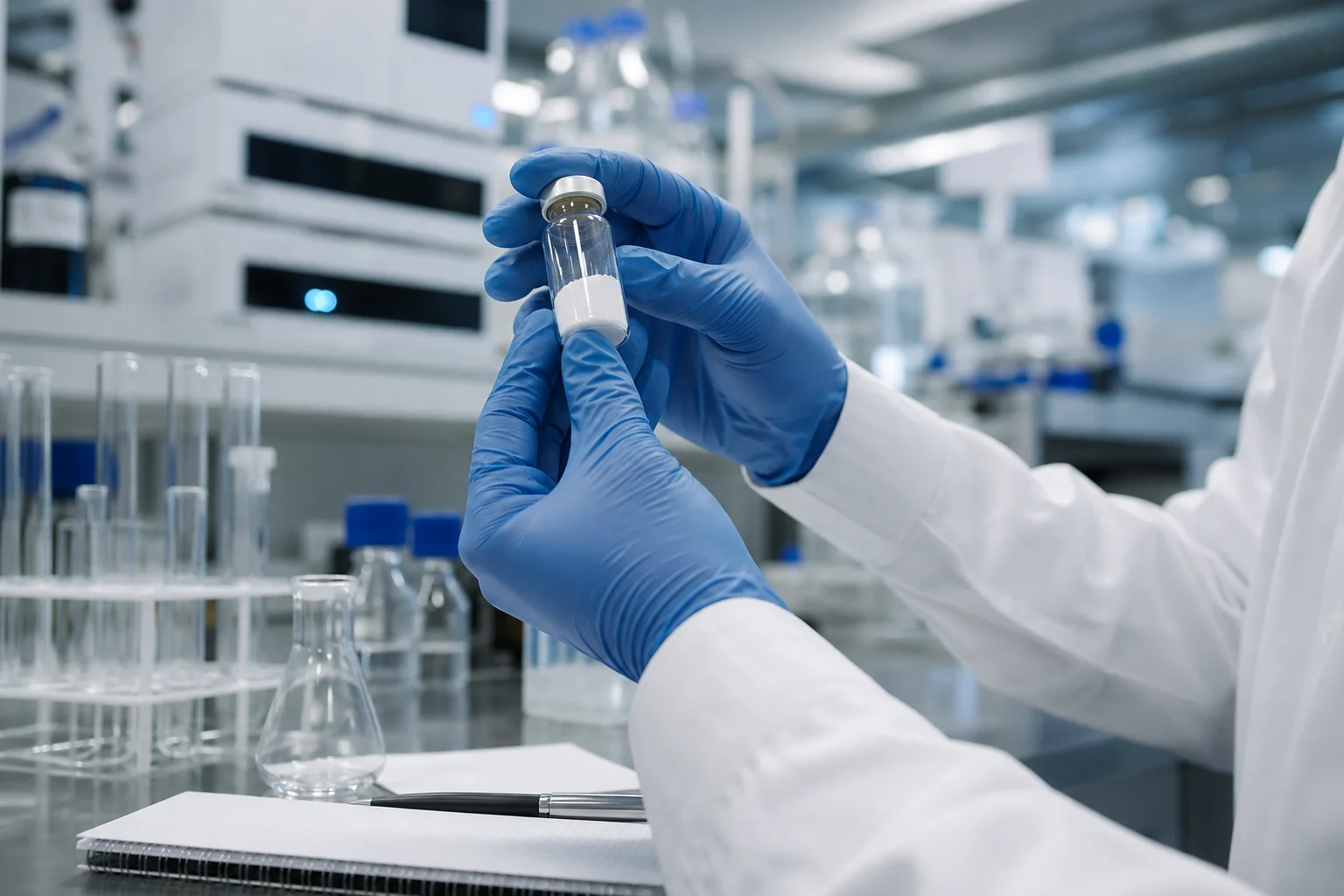
Purity percent vs net peptide content sounds like one measurement with two names, but a certificate of analysis can list 99% purity and only 80% net peptide content for the same vial. Anyone comparing vials in the research-grade peptide catalog needs to read both figures, because only one of them tells you how much actual peptide is inside.
By Vive Team
Purity Percent vs Net Peptide Content: Two Different Measurements
Every credible research peptide vial ships with a COA, and that document usually reports two separate percentages. Confusing them is easy, but they measure different things: one describes peptide purity, the identity and cleanliness of the peptide itself, and the other describes how much of the vial's total material is actually peptide.
What Purity Percent Actually Measures on a COA
Purity percent comes from analytical HPLC, high-performance liquid chromatography. A lab injects a diluted sample, runs it through a column, and records a chromatogram, a series of peaks corresponding to different molecules eluting at different times. Purity percent is the area under the target peptide's peak divided by the total peak area, expressed as a percentage. A 99% HPLC purity reading means 99% of what shows up on the chromatogram at that retention time is the intended peptide sequence and not a truncated, oxidized, or otherwise related impurity. What it does not measure is water content, salt content, or any non-peptide material that never shows up as a separate peak at all.
What Net Peptide Content Actually Measures
Net peptide content answers a different question: out of the total mass in the vial, how much of it is actual peptide? Peptides rarely exist as pure, dry protein. Lyophilized peptide powder typically retains bound water, residual acetate or TFA counterions left over from purification, and trace buffer salts. Net peptide content is usually determined by amino acid analysis, a separate assay that breaks the peptide down into its individual amino acids and quantifies them, or by other quantitative methods such as nitrogen determination. The result is a percentage of the total vial mass that is genuinely peptide material, not water or residual salt.
Why a 99% Pure Peptide Can Read Only 80% Net Content
A peptide can post a 99% HPLC purity result and still carry only 80% net peptide content, and both numbers can be correct at the same time. Purity percent only compares the target peak to other peaks on the same chromatogram; it says nothing about everything that never forms a peak, mainly water and counterions. A highly pure peptide that is also heavily hydrated or salt-laden will score well on purity and comparatively low on net content.
The Role of Salts, Moisture, and Counterions
Three categories of material typically account for the gap between purity percent and net content. Residual moisture from lyophilization can run into double digits by weight for some peptides. Counterions, usually acetate or TFA, attach to the peptide during synthesis and purification and remain bound in the final powder. Buffer salts from earlier purification steps can also carry over in small amounts. None of these interfere with an HPLC purity reading because they do not co-elute as a separate peptide-related peak, but they all add mass to the vial that is not peptide, which is exactly what net peptide content is built to catch.
How to Read a Certificate of Analysis for Both Numbers
A complete COA lists purity percent and net peptide content as separate line items, usually alongside the analytical method used for each. Look for an HPLC purity value tied to a chromatogram or peak report, and a net content value tied to an amino acid analysis or equivalent quantitative assay. The COA should also state the lot number, the identity confirmation method, often mass spectrometry confirming peptide mass matches the expected sequence, and the testing date. Researchers checking something like the BPC-157 product overview should expect to see both figures listed with their respective methods, not one blended number standing in for both. If a COA reports only one of the two percentages, or reports a single figure without naming the method behind it, treat that as an incomplete picture rather than assuming the missing number matches the one you do have.

Why Net Peptide Content Matters More Than Purity Percent for Dosing
For anyone calculating a research dose from a vial's labeled mass, purity percent vs net peptide content is the first distinction worth sorting out, because only one of the two numbers tells you how much peptide is actually available. A vial labeled 10 mg with 99% purity but 80% net content contains roughly 8 mg of actual peptide material, not 9.9 mg. Using the purity figure to back-calculate a dose overstates the available peptide by the entire gap between the two percentages.
Is 99% Purity the Same as 99% Peptide Content?
No. A 99% purity result describes the cleanliness of the peptide relative to other peaks on its own chromatogram. A 99% net peptide content result describes how much of the vial's total weight is peptide. A peptide can carry a 99% purity figure and a net content figure well below that, often somewhere in the 70 to 90% range depending on how the material was processed and stored.
What Counts as a Good Net Peptide Content Percentage
There is no single universal cutoff, since acceptable net content varies by peptide, synthesis method, and salt form. Buyers evaluating a COA generally look for the net content figure to be clearly disclosed and methodologically sound, tied to amino acid analysis or a comparable assay, rather than chasing one specific target number. A supplier that publishes both purity and net content, with the testing method named for each, is giving you enough information to judge the material on its own terms.
Why Your Peptide's Net Content Reads Lower Than Its Purity Percent
Net content almost always reads at or below purity percent, and the reasons are structural rather than a sign of anything wrong. Purity percent only ever compares the peptide to itself; net content compares the peptide to everything else in the vial, including water, counterions, and salts that purity testing was never designed to detect. Some gap between the two figures is expected on essentially every lyophilized peptide product, branded or otherwise.
Does Low Net Content Mean the Product Is Fake or Low Quality?
Not by itself. A lower net content figure reflects moisture and counterion content, a normal feature of peptide chemistry, not evidence of adulteration. What matters is whether the number is disclosed, methodologically documented, and consistent with the identity and purity data on the same COA. A vial with an undisclosed net content, or a COA that reports numbers with no stated testing method, is the actual red flag, not a net content figure that happens to sit meaningfully below the purity percent.
How to Calculate Actual Peptide Mass From Net Content Percentage
Actual peptide mass is calculated by multiplying the vial's total labeled mass by the net peptide content percentage, not the purity percentage. For a vial labeled 5 mg with a net peptide content of 85%, actual peptide mass works out to 4.25 mg, 5 mg multiplied by 0.85. That figure, not the label weight and not the purity percentage, is the number that should anchor any research dosing calculation, and it is why a complete COA reporting both purity and net content matters more than a purity figure alone.
Frequently Asked Questions
Is 99% purity the same as 99% peptide content? No. Purity percent measures how clean the peptide is relative to other peaks on its own HPLC chromatogram, while net peptide content measures how much of the vial's total mass is actual peptide material. A vial can report 99% purity and a net content anywhere from the 70s to the 90s, and both numbers can be accurate at once.
What is a good net peptide content percentage? There is no single universal number, since it varies by peptide, synthesis process, and salt form. What matters more than hitting one specific target is whether the net content figure is disclosed at all, and whether it is tied to a named testing method such as amino acid analysis, rather than left off the COA entirely.
Why is my peptide's net content lower than its purity percent? Net content accounts for water, counterions, and buffer salts left over from lyophilization, none of which show up on an HPLC purity chromatogram. Purity percent only compares the peptide to itself; net content compares it to everything else in the vial. Some gap between the two figures is normal and expected.
Does low net peptide content mean the product is fake or low quality? Not on its own. Lower net content usually reflects moisture and counterion mass, a routine feature of peptide chemistry rather than a sign of adulteration. The real warning sign is a COA that omits net content entirely or lists numbers without naming the testing method behind them.
How do I calculate actual peptide mass from net content percentage? Multiply the vial's total labeled mass by the net peptide content percentage, not the purity percentage. A 10 mg vial with 82% net content contains about 8.2 mg of actual peptide. Using purity percent instead of net content for this calculation will overstate the peptide mass actually available for research use.
Check Both Numbers Before You Order Research Peptides
Purity percent vs net peptide content are two different numbers on the same COA, and a complete report discloses both. Browse the full peptide library to compare vials with disclosed purity and net content data before starting your next research order.
Research Use Only
All information in this article is intended for educational and research purposes only. VivePeptides products are not intended for human or veterinary use.