
US 3rd Party Tested          Free BAC Water on All Orders          Free Shipping          For Lab Use          Secure Checkout          US 3rd Party Tested          Free BAC Water on All Orders          Free Shipping          Trusted By Pharmacies          Secure Checkout

Tirzepatide vs Retatrutide: The Next Generation of GLP-1 Research Peptides

VivePeptides research vials for tirzepatide and retatrutide comparison in lab setting

Tirzepatide and retatrutide occupy adjacent positions on the incretin peptide development timeline, separated by a single additional receptor target. Tirzepatide activates GLP-1 and GIP receptors as a dual agonist. Retatrutide adds glucagon receptor activation, making it a triple agonist. That structural difference has produced meaningfully distinct research profiles, and understanding both is essential for labs investigating metabolic receptor signaling.

The Receptor Architecture Behind Each Compound

The GLP-1 receptor agonist class began with single-target compounds that mimicked native glucagon-like peptide-1. As researchers characterized how GIP (glucose-dependent insulinotropic polypeptide) interacted with GLP-1 signaling in pancreatic beta cells, the scientific rationale for dual agonism became clear. Co-activation of both receptors produces an insulin secretion response that surpasses either receptor’s individual contribution, a synergy that single-agonist compounds could not replicate.

Glucagon introduces a third axis. The glucagon receptor is expressed primarily in the liver and signals through adenylyl cyclase to upregulate fatty acid oxidation, increase hepatic glucose output, and stimulate thermogenic pathways. In isolation, glucagon receptor activation raises blood glucose, which is why its therapeutic application was long considered counterproductive in metabolic contexts. The insight driving retatrutide’s design is that GLP-1’s insulinotropic effect can neutralize glucagon’s glucose-raising activity at the concentrations used in the compound, leaving the fat oxidation and energy expenditure benefits intact.

Tirzepatide

Dual GLP-1 / GIP Agonist

Activates two incretin receptors from a single molecule. GIP co-agonism potentiates the insulin response and influences lipid metabolism. Designed with higher binding affinity for GIP than GLP-1, which researchers associate with its tolerability profile relative to weight reduction magnitude.

Retatrutide

Triple GLP-1 / GIP / Glucagon Agonist

Adds glucagon receptor activation to the GLP-1/GIP base. The glucagon component targets hepatic fatty acid oxidation and thermogenic pathways that dual agonists do not directly engage. The GLP-1 arm counterbalances glucagon’s glycemic effect at research concentrations.

Tirzepatide: Phase Profile and Key Research Data

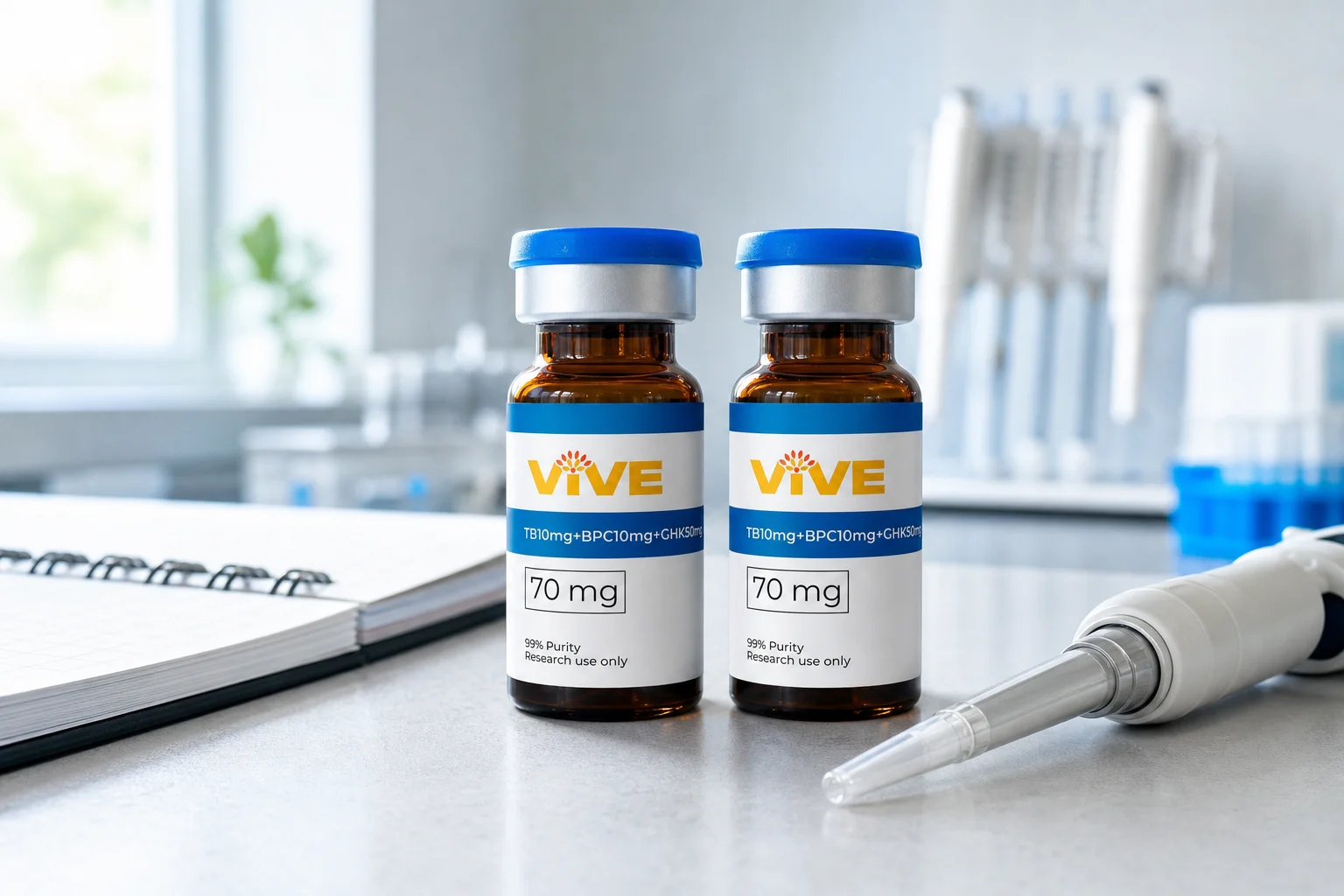
Tirzepatide vs Retatrutide comparison - two VivePeptides research vials side by side

Tirzepatide (LY3298176) is the more established of the two compounds. Phase 1 work began around 2016, with phase 2 data published by 2021 and multiple phase 3 trials completed by 2023. That depth of published literature makes tirzepatide the better-characterized reference compound for labs designing dual agonist studies.

The SURMOUNT-1 trial, led by Ania M. Jastreboff and published in the New England Journal of Medicine in 2022, is the anchor phase 3 dataset for tirzepatide’s weight reduction profile. Across 72 weeks, adults enrolled in the trial receiving the highest weekly research concentration (15 mg) showed mean body weight reduction of 20.9%, compared to 3.1% in the placebo group. Between 89% and 91% of participants on the two highest research concentrations achieved reductions of 5% or more.

20.9%
Mean body weight reduction at 15 mg tirzepatide over 72 weeks (SURMOUNT-1, Jastreboff et al., 2022, NEJM)

Earlier data from the SURPASS-2 trial, published by Frías et al. in the New England Journal of Medicine in 2021, compared tirzepatide directly against semaglutide in adults with type 2 diabetes. Tirzepatide’s dual GIP/GLP-1 mechanism produced meaningfully greater reductions in both HbA1c and body weight than the GLP-1-only comparator, providing the first major clinical confirmation that GIP co-activation adds measurable signal beyond GLP-1 monotherapy.

Tirzepatide’s binding affinity is intentionally asymmetric. The molecule was engineered with approximately equal affinity for GIP receptors as native GIP itself, while binding GLP-1 receptors at roughly one-fifth the affinity of native GLP-1. Researchers speculate this imbalanced affinity may be a key contributor to the compound’s tolerability at concentrations that produce substantial metabolic effects. For in-vitro applications, this affinity asymmetry means receptor selectivity experiments require attention to concentration-response curves at both targets independently.

Research Note: Tirzepatide’s GIP receptor binding affinity is roughly equivalent to native GIP, while its GLP-1 receptor affinity is approximately five times weaker than native GLP-1. This asymmetry is a design feature, not a limitation, and has downstream implications for receptor saturation studies at varying concentrations.

For labs sourcing dual agonist reference compounds, VivePeptides supplies research-grade tirzepatide at 99%+ purity, independently verified by U.S. laboratory HPLC and mass spectrometry analysis, with a batch-specific Certificate of Analysis included with every order.

Retatrutide: Phase Profile and Key Research Data

Retatrutide (LY3437943) is Eli Lilly’s triple hormone receptor agonist, targeting GLP-1, GIP, and glucagon receptors simultaneously. Phase 2 results for retatrutide in obesity were published by Jastreboff et al. in the New England Journal of Medicine in 2023 under the title “Triple-Hormone-Receptor Agonist Retatrutide for Obesity.” This publication marks the primary academic reference point for researchers studying this compound.

At the highest weekly research concentration tested in the phase 2 trial (12 mg), participants showed a mean body weight reduction of 24.2% at 48 weeks, compared to 2.1% in the placebo group. This exceeded the weight reduction figures from tirzepatide’s own phase 2 comparator data at matched timepoints and drew significant scientific attention to the potential contribution of glucagon receptor co-activation.

24.2%
Mean body weight reduction at 12 mg retatrutide over 48 weeks (Jastreboff et al., 2023, NEJM)

Separate phase 2 data published in The Lancet examined retatrutide in adults with type 2 diabetes, reporting HbA1c reductions of up to 2.2% and 82% of enrolled participants reaching HbA1c at or below 6.5%. A parallel phase 2a study in Nature Medicine examined retatrutide’s effect on metabolic dysfunction-associated steatotic liver disease, reporting mean relative liver fat reductions of approximately 82% at the 8 mg and 12 mg research concentrations over 24 weeks. That hepatic data directly implicates the glucagon receptor arm, which is not present in tirzepatide.

Phase 3 trial results have also emerged. Eli Lilly announced positive topline results from the TRIUMPH-4 phase 3 trial evaluating retatrutide’s two highest investigational concentrations, reporting average weight loss of approximately 71.2 pounds (roughly 28.7% of body weight at 68 weeks) in enrolled participants. Phase 3 results continue to accumulate, and regulatory review timelines remain active as of the date of this post.

Glucagon’s Hepatic Role: The glucagon receptor component in retatrutide activates pathways that drive fatty acid oxidation in the liver, increase oxygen consumption, and modulate thermogenic signaling. Preclinical work by Coskun et al. (2022) in Cell Metabolism examined each receptor arm’s contribution in rodent models, finding that GLP-1/GIP co-agonism drove the majority of body weight reduction, while glucagon receptor activation disproportionately influenced hepatic lipid clearance and energy expenditure. These findings position the glucagon arm as an additive, targeted contribution rather than a redundant signal.

Labs investigating triple receptor agonism, hepatic lipid metabolism, or glucagon biology can source research-grade retatrutide from VivePeptides. Every batch ships with independent HPLC and mass spectrometry verification at 99%+ purity and a batch-specific COA.

Head-to-Head Comparison: Tirzepatide vs Retatrutide

Feature Tirzepatide Retatrutide
Agonist classification Dual agonist (GLP-1 + GIP) Triple agonist (GLP-1 + GIP + glucagon)
Developer designation LY3298176, Eli Lilly LY3437943, Eli Lilly
Phase status (as of 2026) Phase 3 complete, FDA approved (2022/2023) Phase 3 active, FDA review pending
Administration route Once-weekly subcutaneous injection Once-weekly subcutaneous injection
Peak weight reduction (phase data) 20.9% over 72 weeks (SURMOUNT-1, 15 mg) 24.2% over 48 weeks (Ph2, 12 mg); ~28.7% at 68 wks (TRIUMPH-4)
GLP-1 receptor activity Yes Yes
GIP receptor activity Yes (primary binding target) Yes
Glucagon receptor activity No Yes
Hepatic fatty acid oxidation signaling Indirect / minimal Direct via glucagon receptor arm
Depth of published literature Extensive (multiple phase 3 trials, post-approval data) Growing (phase 2 + emerging phase 3)
Primary research citation Jastreboff et al., NEJM 2022 (SURMOUNT-1) Jastreboff et al., NEJM 2023 (Phase 2)
Research use availability VivePeptides, research-grade VivePeptides, research-grade

Selecting the Right Compound for Your Research Application

These two peptides address different research questions and should not be treated as interchangeable tools. The decision between them depends on the specific receptor pathway, metabolic endpoint, or mechanistic hypothesis under investigation.

Use Tirzepatide When

GLP-1 / GIP Dual Agonism Focus

The research question centers on incretin synergy, GLP-1/GIP receptor co-activation, or comparison against GLP-1 monotherapy. Tirzepatide’s extensive phase 3 literature and FDA approval status provide a well-characterized reference framework that supports experimental design anchored to published concentration-response data.

Use Retatrutide When

Triple Receptor or Hepatic Signaling Focus

The research question involves glucagon receptor biology, hepatic lipid metabolism, or comparison of dual vs triple receptor engagement as an independent variable. Retatrutide is the only compound in its class to add glucagon receptor activity, making it the necessary choice for any study that must isolate or characterize that third receptor arm.

For labs running comparative mechanistic studies, using both compounds under identical assay conditions enables direct isolation of the glucagon receptor contribution: any difference in output between tirzepatide and retatrutide at matched concentrations can be attributed to the third receptor target. This is an increasingly common experimental design as the field works to quantify the glucagon receptor’s additive contribution.

VivePeptides maintains research-grade inventory of both compounds and supplies semaglutide as a GLP-1 reference compound for studies that require a single-agonist baseline. All three compounds are independently third-party tested at 99%+ purity and ship with batch-specific COAs from our Phoenix, Arizona facility.

For a full catalog of available research peptides, visit the VivePeptides shop.

What the Research Timeline Means for Lab Planning

Phase maturity affects more than regulatory status. It shapes the depth of published concentration-response data available to anchor study design. Tirzepatide has the more mature research record: multiple phase 3 trials across different populations are complete, post-approval real-world data is accumulating, and the full weekly concentration range from 2.5 mg to 15 mg is well-documented in peer-reviewed literature. Labs using tirzepatide have a richer published reference base to draw from when designing protocols.

Retatrutide is in active discovery space. Phase 2 data provides the primary published anchor (Jastreboff et al., 2023), and phase 3 results are continuing to emerge through trials like TRIUMPH-4. This means that retatrutide research is more likely to produce findings that are genuinely novel relative to the existing literature, but labs should account for the fact that the published concentration-response and safety datasets are less complete than tirzepatide’s.

Researchers planning retatrutide studies should monitor phase 3 publications as they emerge and treat phase 2 data as the foundational reference rather than the definitive concentration-response map. The compound’s research profile will become substantially more defined as TRIUMPH trial data accumulates through 2026.

Frequently Asked Questions

What is the core difference between tirzepatide and retatrutide?

The core difference is receptor scope. Tirzepatide is a dual GLP-1/GIP agonist that does not directly engage the glucagon receptor. Retatrutide is a triple GLP-1/GIP/glucagon agonist. The addition of glucagon receptor activation in retatrutide engages hepatic lipid oxidation and thermogenic pathways that tirzepatide does not target, which is why the two compounds produce distinct research profiles despite sharing the GLP-1/GIP base.

Which compound has shown greater weight reduction in clinical data?

Retatrutide’s phase 2 data (Jastreboff et al., 2023) reported a mean 24.2% weight reduction at 48 weeks at the 12 mg concentration, compared to tirzepatide’s 20.9% at 72 weeks in SURMOUNT-1. Phase 3 TRIUMPH-4 data has shown approximately 28.7% weight reduction at 68 weeks. These figures come from separate trials with different durations and populations, and no direct head-to-head clinical trial comparing the two compounds has been completed. Treat the comparison as directionally informative, not conclusive.

Is retatrutide approved by the FDA?

As of the date of this post, retatrutide does not have FDA approval and remains under active phase 3 investigation. Tirzepatide received FDA approval under the names Mounjaro (glycemic management, 2022) and Zepbound (weight management, 2023). Regardless of regulatory status, both compounds available through VivePeptides are for in-vitro laboratory research use only and are not intended for human or veterinary administration.

Can tirzepatide and retatrutide be used in the same research protocol?

Yes. Using both compounds under matched assay conditions is a recognized experimental design for isolating the glucagon receptor’s additive contribution. Any measurable difference between tirzepatide and retatrutide outputs at equivalent GLP-1/GIP concentrations can be attributed to retatrutide’s third receptor arm. This approach is particularly useful for labs investigating hepatic lipid signaling or thermogenic pathway activation.

Where can research-grade tirzepatide and retatrutide be sourced?

VivePeptides supplies both compounds at 99%+ purity, verified by independent U.S. laboratory HPLC and mass spectrometry analysis. Each order ships with a batch-specific Certificate of Analysis. Temperature-controlled fulfillment runs Monday through Friday from Phoenix, Arizona. Visit the tirzepatide product page or retatrutide product page for current availability, or browse the full research peptide catalog.


All VivePeptides compounds are for in-vitro laboratory research purposes only. Not intended for human or veterinary use. These statements have not been evaluated by the Food and Drug Administration.