Research Article
LL-37 vs KPV: Inflammation Research Peptide Comparison
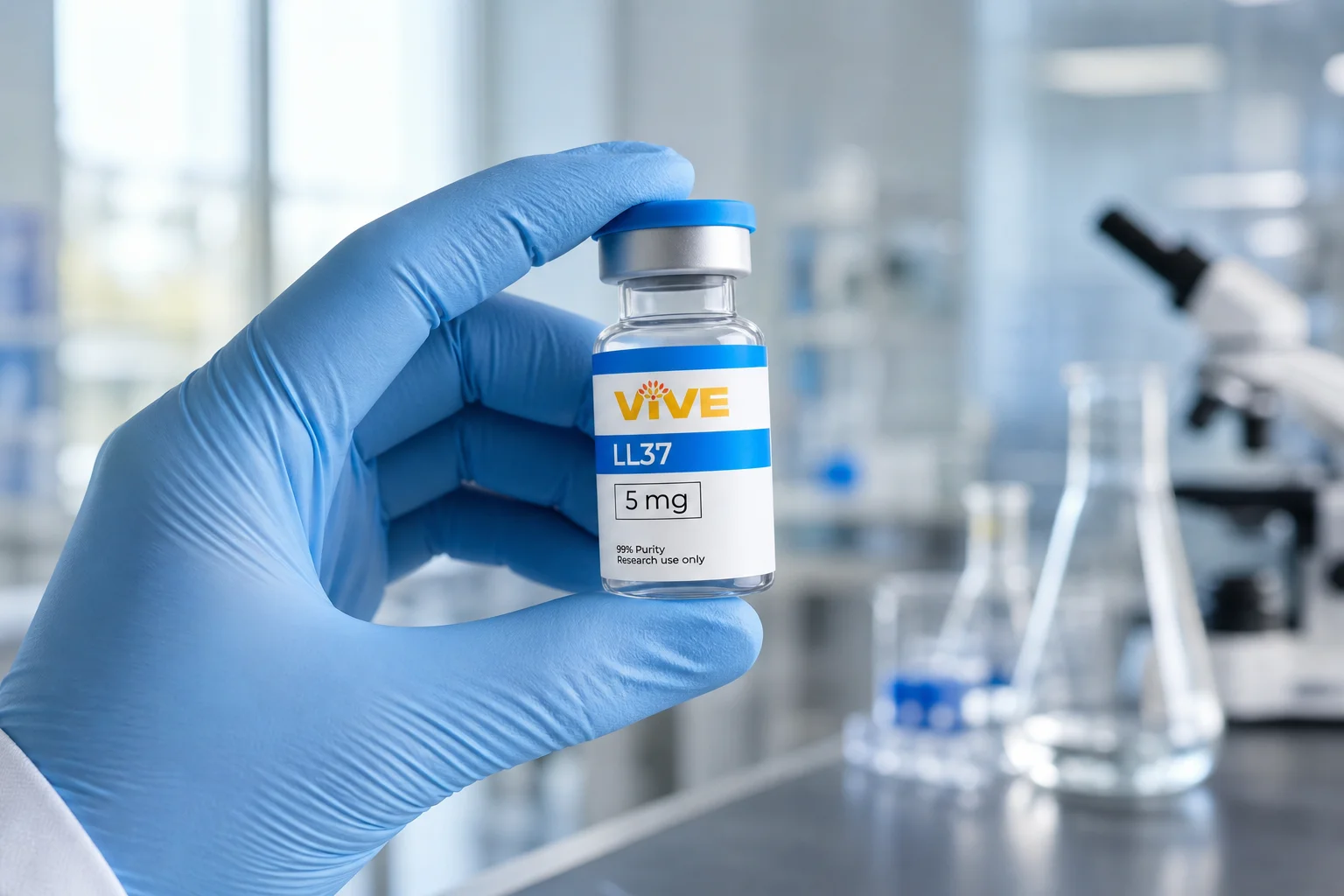
LL-37 vs KPV is one of the most common comparisons in inflammation peptide research, since both are studied for immune-related and antimicrobial peptide activity. Research on the LL-37 (cathelicidin) peptide centers on its cathelicidin structure, while KPV is studied mainly as a small anti-inflammatory tripeptide fragment.
By Vive Team
What Is LL-37 and How Is It Used in Peptide Research?
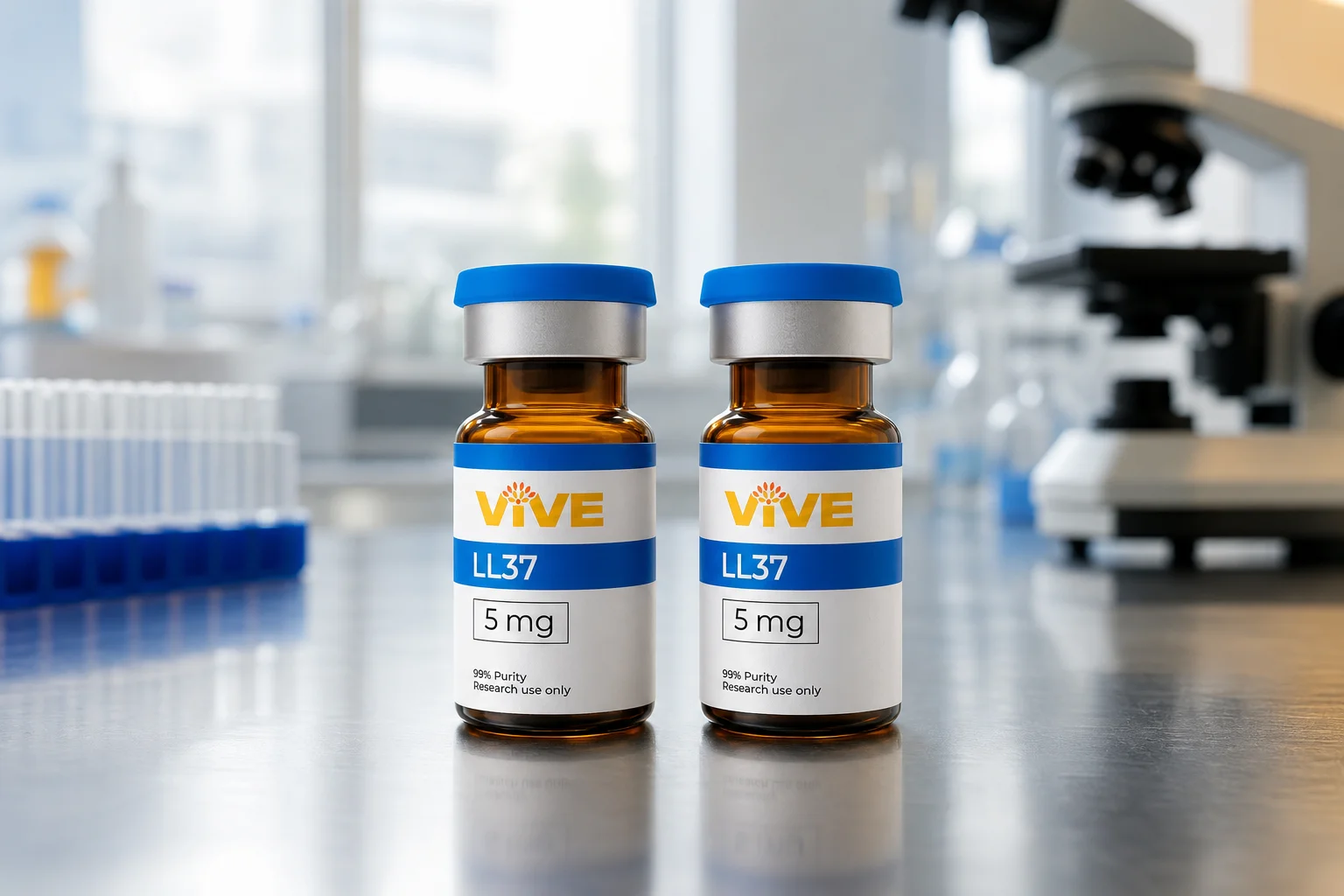
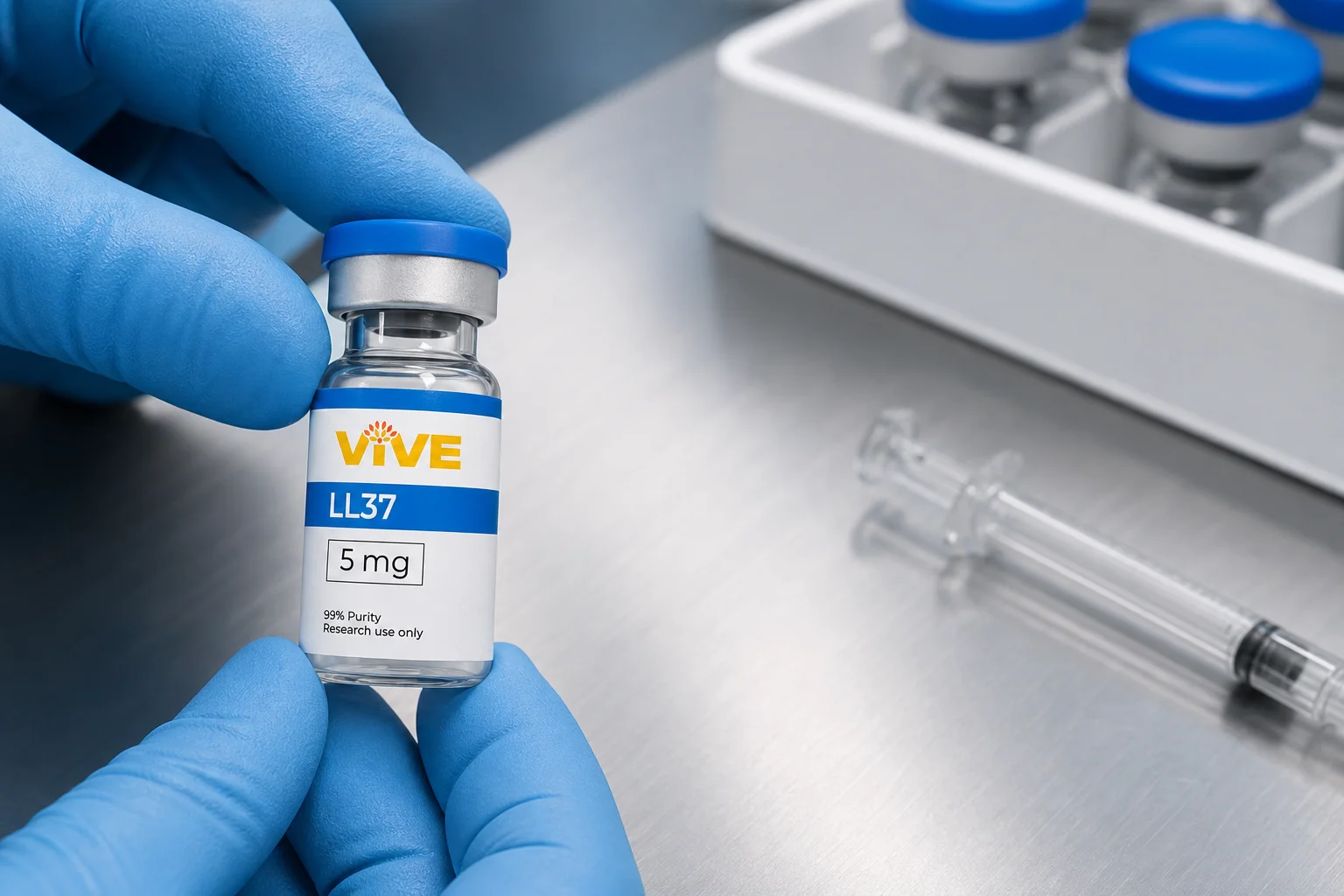
LL-37 is the only cathelicidin antimicrobial peptide identified in humans, a 37-amino-acid fragment derived from the precursor protein hCAP-18. LL-37 research documents antimicrobial activity against several bacterial strains, a role in innate immune signaling, and involvement in wound healing pathways at the skin and gut epithelium. Because LL-37 sits at the intersection of the immune system and epithelial repair, published literature tends to treat it as a multifunctional signaling peptide rather than a narrow, single-purpose antimicrobial agent. VivePeptides supplies LL-37 as a research-only compound, reconstituted and handled under standard laboratory protocols, never for human or animal administration. Researchers, biohackers, and wellness-adjacent professionals following peptide science tend to gravitate toward LL-37 specifically because its dual antimicrobial and immune-signaling profile gives a single compound relevance to several research questions at once, rather than requiring a separate peptide for each pathway.
What Is KPV and How Is It Used in Peptide Research?
KPV is a tripeptide, lysine-proline-valine, corresponding to the C-terminal fragment of alpha-melanocyte-stimulating hormone. Preclinical literature examines the KPV peptide mainly for anti-inflammatory activity in gut and skin tissue models, independent of the pigmentation-related receptor pathway that the parent hormone acts through. Because KPV is such a short, minimal sequence, researchers often describe it as a stripped-down anti-inflammatory motif rather than a full signaling peptide. KPV is not currently part of the VivePeptides research catalog, so specific dosing, purity, or sourcing figures for KPV fall outside what can be confirmed here; researchers should verify any KPV-specific figures directly with their own supplier's documentation. What can be said with confidence is structural: KPV's three-residue sequence makes it one of the smallest anti-inflammatory tripeptides currently discussed in the literature, a specific trait that shapes how it is handled and stored relative to a larger peptide like LL-37.
LL-37 vs KPV: Structural and Mechanistic Differences
Structural Differences
The structural gap between the two is significant. LL-37 is a 37-residue, alpha-helical peptide with an amphipathic charge distribution, the feature researchers link to its ability to disrupt bacterial membranes. KPV, by contrast, is only three amino acids long, too short to fold into any stable secondary structure. This size difference is the starting point for nearly every other comparison between LL-37 and KPV: a helical antimicrobial peptide set against a minimal tripeptide fragment. It also explains why LL-37 shows measurable antimicrobial activity on its own, while KPV's activity depends entirely on receptor and signaling interactions rather than any physical disruption of a bacterial cell.
Mechanism of Action
Their mechanisms diverge accordingly. LL-37's mechanism of action works largely through direct membrane interaction, plus a separate set of receptor-mediated effects on immune cells. KPV's proposed mechanism of action runs through inhibition of NF-kB signaling, a pathway central to inflammatory gene expression, without the membrane-disrupting action attributed to LL-37. In practice, LL-37 peptide research spans antimicrobial and immune-modulatory questions, while KPV research applications stay narrowly focused on inflammation signaling.
Which Peptide Has Stronger Research Support for Inflammation?
Published Research Volume
LL-37's research profile spans decades of antimicrobial, wound healing, and immune-signaling literature, with human cathelicidin biology cited across dermatology, gastroenterology, and infectious disease research since the 1990s. KPV's research profile is smaller and more concentrated, largely preclinical, animal-model work on inflammatory bowel and skin conditions. When it comes to LL-37 vs KPV, publication volume alone favors LL-37 as the more thoroughly characterized peptide.
Skin and Gut Inflammation Research
Both peptides appear in skin and gut inflammation research, but for different reasons. LL-37 research in the gut often centers on its antimicrobial peptide role in epithelial defense, while skin studies focus on wound healing and barrier repair; some of that skin-focused work also evaluates topical application methods. KPV research leans further toward direct anti-inflammatory signaling in colonic and dermal tissue models. Neither peptide's evidence base currently supports calling one broadly "better" for either tissue type; the honest read is that they have been studied for related but distinct questions. A researcher designing a gut-inflammation model may lean toward LL-37 for its documented antimicrobial peptide activity, while one isolating inflammatory signaling without an antimicrobial variable may find KPV's narrower mechanism easier to interpret.
Combining, Storage, and Safety Considerations
Can LL-37 and KPV Be Combined or Stacked?
Some research designs pair an antimicrobial peptide like LL-37 with a smaller anti-inflammatory tripeptide such as KPV to study combined effects on immune and inflammatory pathways within the same model. There is no standardized LL-37 vs KPV combination protocol published, so any stacked design is investigator-built rather than drawn from an established reference. As with any multi-compound research design, documenting each peptide's handling and reconstitution separately keeps results interpretable.
Storage, Stability, and Reconstitution
Peptide stability generally depends on molecular size and storage conditions more than on the specific research question being asked. Larger peptides like LL-37 are typically reconstituted with sterile bacteriostatic water and stored refrigerated or frozen to limit degradation, with many research protocols following a routine, near daily reconstitution check. The KPV peptide's minimal structure means fewer degradation pathways to monitor, though exact storage specifications should still come from the specific supplier's documentation rather than assumption. Freeze-thaw cycles are generally the bigger risk to any reconstituted peptide's stability, so labs running daily research on either compound tend to aliquot small volumes rather than repeatedly thawing a single stock vial.
Safety and Handling Differences
Handling differences follow the same structural gap. LL-37, as a larger peptide with membrane-active properties, is generally handled with standard peptide-lab precautions: sterile technique, calibrated syringes, and controlled storage temperature. KPV's minimal structure means fewer degradation pathways to monitor, though general peptide research handling and sterile practice still apply. Both remain strictly research compounds, not health products intended for human consumption, and all work described here is for laboratory and research use only.
Availability as Research Compounds
LL-37 is available as a research-only compound through the research-grade peptide catalog at VivePeptides. KPV availability varies by supplier, and because no verified sourcing data exists for its specific formulation, researchers should confirm purity, concentration, and handling documentation directly with whichever source they use before beginning any protocol. The right peptide choice ultimately depends on the specific research question being asked, not on which compound is more widely available. Confirming sourcing and documentation before a protocol starts, rather than mid-experiment, remains the simplest way to keep any LL-37 or KPV comparison scientifically clean.
Frequently Asked Questions
Is LL-37 or KPV better for wound healing research? LL-37 has the larger evidence base specific to wound healing, given its documented role in epithelial repair and antimicrobial defense at the skin barrier. KPV's inflammation-focused literature touches on tissue repair indirectly through its anti-inflammatory activity, but it is not primarily studied as a wound healing peptide the way LL-37 is.
What is the key difference between LL-37 and KPV? The key LL-37 vs KPV distinction comes down to size and mechanism: LL-37 is a 37-residue antimicrobial peptide that acts on bacterial membranes and immune signaling, while KPV is a three-amino-acid tripeptide studied for anti-inflammatory signaling alone, with no antimicrobial action documented.
Can LL-37 and KPV be used in the same research protocol? Some investigator-designed protocols combine the two to study immune and inflammatory pathways together, though no standardized combination protocol exists in published literature. Researchers pursuing this route should document reconstitution, storage, and daily handling for each peptide separately.
Which peptide has more published research, LL-37 or KPV? LL-37 has substantially more published research, spanning three decades of antimicrobial, immune, and wound healing literature across human and animal studies. KPV's research profile is newer and narrower, concentrated in preclinical gut and skin inflammation models.
Are LL-37 and KPV both classified as antimicrobial peptides? No. LL-37 is a well-characterized antimicrobial peptide with documented activity against bacterial membranes. KPV is studied specifically for anti-inflammatory signaling and has no established antimicrobial activity, so the two are not interchangeable within that classification despite both being relevant to inflammation research.
Explore Research-Grade LL-37 at VivePeptides
Researchers investigating antimicrobial peptide activity and inflammation signaling can review full specifications and reconstitution guidance on the LL-37 product overview. VivePeptides ships research-only compounds for laboratory use exclusively.
Research Use Only
All information in this article is intended for educational and research purposes only. VivePeptides products are not intended for human or veterinary use.