Research Article
What Is Glutathione? Master Antioxidant Tripeptide Guide

Glutathione is the body's master antioxidant: a tripeptide made from three amino acids that neutralizes free radicals, recycles other antioxidants, and supports liver detoxification. Answering what is glutathione matters for researchers studying oxidative stress, which is also why many browse the VivePeptides catalog for related peptide research tools.
By Vive Team
What Is Glutathione?
Glutathione is a small but powerful molecule classified as a tripeptide, meaning it is built from three amino acids joined by peptide bonds rather than the long chains found in typical proteins. The glutathione tripeptide is composed of cysteine, glutamate, and glycine. Cysteine contributes a reactive sulfur containing side chain that allows glutathione to bind and neutralize free radicals directly, while glutamate and glycine stabilize the overall structure. This compact design lets the molecule move easily between cellular compartments, including the mitochondria, cytosol, and liver, where oxidative stress is often highest. To answer what is glutathione at the molecular level is to understand why such a small compound has such an outsized role in cellular defense.
The Three Amino Acids Behind Glutathione
Cysteine supplies the sulfur group central to glutathione's antioxidant chemistry. Glutamate, also known as glutamic acid, helps anchor the molecule's shape, and glycine completes the tripeptide backbone. Because cysteine is often in short supply compared to the other two amino acids, its availability is generally considered the rate limiting step in how much glutathione a cell can produce.
How the Body Produces Glutathione Naturally
Every cell has the enzymatic machinery to synthesize glutathione internally, though production is concentrated in the liver, which acts as the body's primary detoxification hub. The body regulates glutathione levels through a two step enzymatic pathway that combines cysteine, glutamate, and glycine into the finished tripeptide. Because cysteine availability is often the limiting factor, dietary and lifestyle inputs that supply sulfur containing amino acids may increase glutathione production over time. Researchers studying metabolism note that glutathione levels tend to decline with age, which is part of why antioxidant pathways are now studied alongside other longevity focused compounds such as NAD+ peptide research.
Lifestyle inputs studied alongside diet include sleep quality, physical activity, and reducing unnecessary exposure to environmental toxins, all of which are examined in research contexts for their relationship to overall antioxidant capacity and cellular metabolism. None of this is intended as medical guidance, and any application remains within a research setting only.
Why Oxidative Stress Depletes Glutathione Levels
Free radicals are unstable molecules generated by normal metabolism, exercise, environmental toxins, and inflammation. When free radical production outpaces the body's antioxidant defenses, the resulting imbalance is what researchers call oxidative stress. Glutathione plays crucial role in this balance because it works on multiple fronts at once: it directly neutralizes free radicals, it helps regenerate other antioxidants such as vitamin C (ascorbic acid) and vitamin E back into their active forms, and it supports enzymes that repair oxidative damage to lipids, proteins, and DNA. Glutathione not only defends cells in the moment, it also helps maintain the redox balance that keeps mitochondrial metabolism running efficiently. Chronic oxidative stress can outpace production, which is why researchers tracking glutathione levels often look at dietary sulfur intake and supplement research as variables worth monitoring.
Foods and Nutrients That Support Glutathione Production
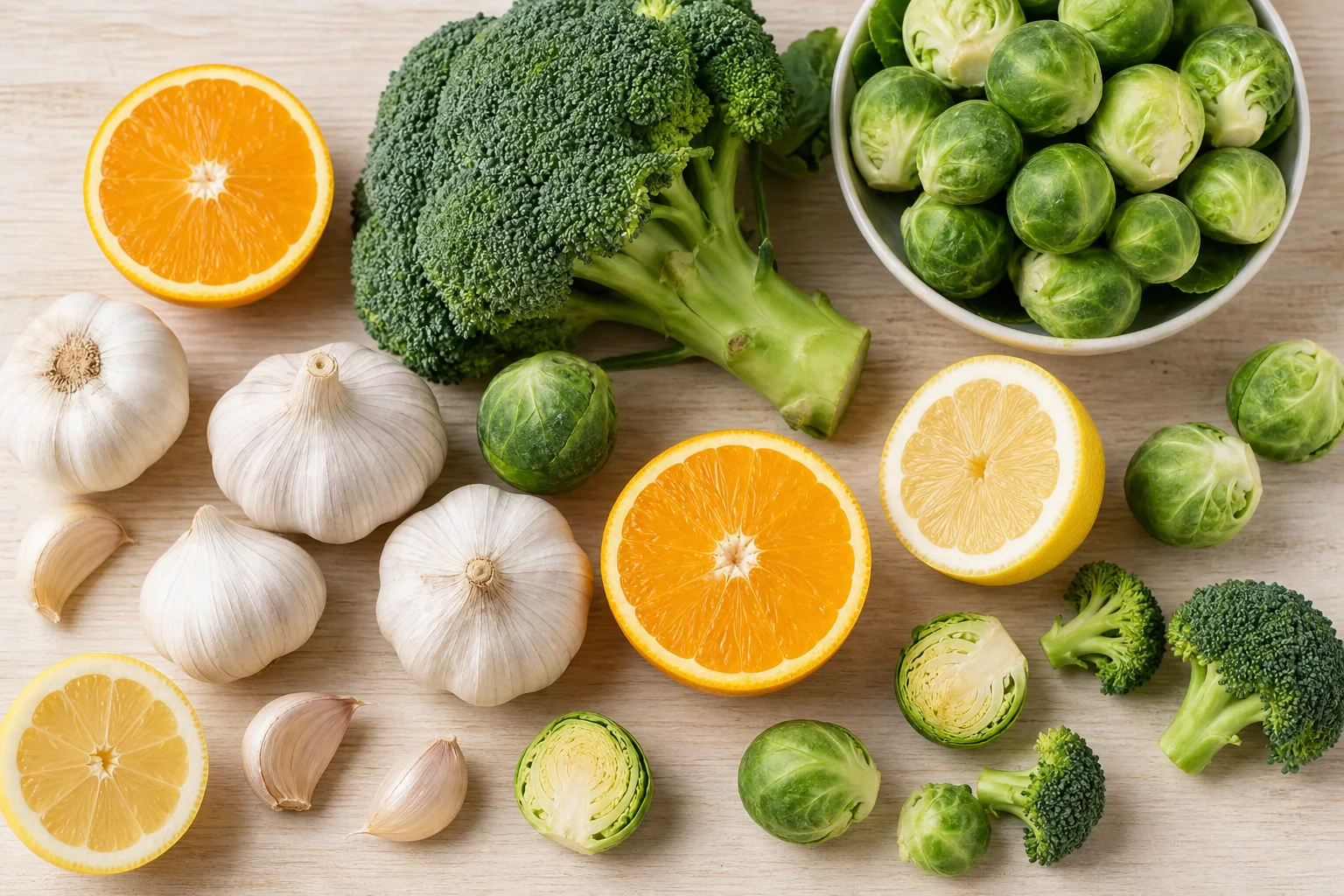
Because the body assembles glutathione from three amino acids, dietary intake of protein and specific micronutrients can influence how much the body can naturally produce. Sulfur rich foods such as garlic, onions, and cruciferous vegetables like broccoli and Brussels sprouts supply the building blocks for cysteine synthesis. Foods high in vitamin C and vitamin E help regenerate glutathione after it neutralizes free radicals, effectively extending its antioxidant capacity. Whey protein and other high quality protein sources are also studied as dietary sources of cysteine and glycine.
Sulfur Rich Foods and Precursors
Some researchers examine oral and topical glutathione supplements as a way to support skin research models and overall antioxidant status, though findings vary widely depending on formulation and absorption. Some researchers explore the potential benefits of glutathione precursors in oxidative stress models, though results vary by study design and population. For research purposes, tracking dietary sources alongside supplement habits is often more informative than looking at any single food in isolation. Liver health is often a focal point in this research because the liver both produces and relies heavily on glutathione for its detoxification enzymes, making it a natural reference point when researchers discuss diet and antioxidant capacity together.
Glutathione Research in Mitochondrial and Longevity Science
Interest in glutathione has grown alongside broader peptide research into mitochondrial health and cellular aging. Because glutathione is closely tied to redox balance inside the mitochondria, it is frequently discussed alongside compounds studied for cellular energy production. Researchers new to this space, and to peptide research in general, often start with The Complete Guide to Reconstituting Peptides with Bacteriostatic Water before handling any compound that requires reconstitution. For a closer look at a different mitochondrial support peptide researched alongside similar oxidative stress pathways, see What Is SS-31 (Elamipretide)? Mitochondrial Peptide Research Guide. Some of this work also extends to skin focused research models, where oxidative stress markers are studied alongside topical and oral approaches, though again strictly within a research framework rather than as consumer health claims. Researchers studying oxidative damage models sometimes pair glutathione measurements with markers of mitochondrial function to understand how antioxidant capacity changes with age or intervention in preclinical models. This remains an active area of research only, with no claims made here about outcomes in humans.
Frequently Asked Questions
What is glutathione and why is it called the master antioxidant? Glutathione is a tripeptide made from three amino acids: cysteine, glutamate, and glycine. Researchers often call it the master antioxidant because it neutralizes free radicals directly, regenerates other antioxidants like vitamin C and vitamin E after they are used up, and supports liver detoxification enzymes. This role across several fronts gives glutathione a broader research profile than most single nutrient antioxidants, which is why it remains a frequent subject in oxidative stress and metabolism studies.
What are the three amino acids that make up glutathione? The glutathione tripeptide is built from cysteine, glutamate (also called glutamic acid), and glycine. Cysteine's sulfur group is central to its antioxidant activity, while glutamate and glycine stabilize the molecule's structure and allow it to be recycled efficiently inside cells. Cysteine availability is generally considered the rate limiting factor in how much glutathione a cell can produce, which is why sulfur containing amino acids receive particular attention in nutrition and metabolism research.
Can you increase glutathione levels naturally? Some research suggests that sulfur rich foods, adequate protein intake, and specific micronutrients such as vitamin C may increase glutathione production over time by supplying the amino acids and cofactors involved in its synthesis. Individual results vary by diet, genetics, and overall health status, and this information is intended for research and educational purposes rather than as a guaranteed outcome for any individual.
How does oxidative stress affect glutathione levels? When free radical production exceeds the body's antioxidant defenses, oxidative stress results, and glutathione levels can decline as the molecule is consumed faster than it is produced or regenerated. Researchers monitor this balance closely because chronic oxidative stress is studied across cellular aging, metabolism, liver function, and skin research, making glutathione levels a commonly tracked marker in redox biology studies.
What foods contain the building blocks for glutathione? Garlic, onions, and cruciferous vegetables like broccoli and Brussels sprouts supply sulfur compounds needed for cysteine synthesis. Foods rich in vitamin C and vitamin E support the recycling of glutathione after it neutralizes free radicals, while high quality protein sources supply the amino acids glutathione is built from. Researchers often study these foods together as complementary dietary sources rather than in isolation.
Continue Your Antioxidant and Mitochondrial Peptide Research
Glutathione research continues to intersect with mitochondrial and metabolic peptide science across the field. Researchers looking to expand their toolkit can explore MOTS-c mitochondrial peptide alongside other compounds studied for cellular energy and oxidative stress support.
Research Use Only
All information in this article is intended for educational and research purposes only. VivePeptides products are not intended for human or veterinary use.