Research Article
Splitting a 10mg Vial Into Aliquots Without Wasting Product
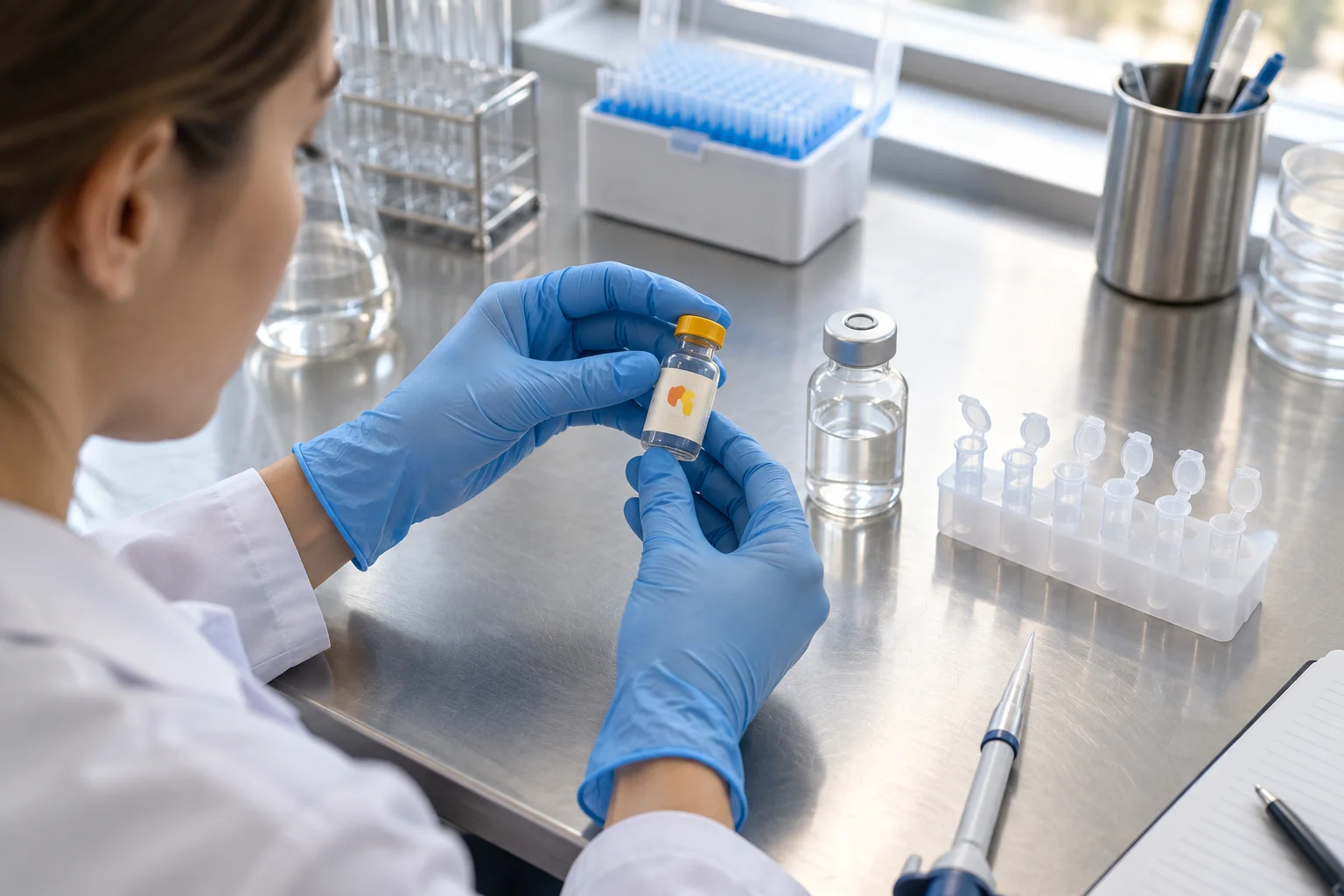
Splitting a 10mg vial into aliquots without wasting product depends on getting three things right: precise reconstitution math, the correct syringe, and a labeling system that survives the freezer. Tirzepatide reconstitution commonly starts from a 10mg vial, and a clean split stretches that stock across many research sessions instead of one.
By Vive Team
Why Splitting a 10mg Vial Into Aliquots Without Wasting Product Starts With the Right Math
Before touching a syringe, the vial needs a plan. Splitting means dividing one reconstituted vial into several smaller, equal-volume portions, each one a usable dose for a single research session, stored separately so the rest of the vial stays sealed and stable. This reconstitution guide covers the math, supplies, and storage steps in order, so every aliquot comes out at the same concentration, with as little product left behind in dead space as the equipment allows.
Working from a written protocol, rather than eyeballing it, is what keeps the math consistent across every aliquot. That means knowing the vial's total peptide content in mg, the volume of bacteriostatic water added, the resulting concentration in mg per mL, and the target dose per aliquot before the needle ever touches the stopper.
Can a Vial Be Aliquoted Before Reconstitution?
A lyophilized (freeze-dried powder) vial can be split by weight in a lab setting with a calibrated scale, but this is impractical for most home research setups and introduces more error than splitting a liquid volume. In practice, reconstituting the full 10mg vial first, then aliquoting the liquid solution, is the more accurate and repeatable approach for small-batch research use.
How Much Bacteriostatic Water to Add Before Aliquoting a 10mg Vial
The volume of bacteriostatic water used to reconstitute a 10mg vial sets the concentration for every aliquot that follows, so it should be decided before splitting, not adjusted partway through. A smaller reconstitution volume produces a more concentrated solution, useful when the target aliquot is a small volume drawn with an insulin syringe. A larger volume produces a more dilute solution that is easier to measure precisely on syringes with wider markings.
There is no single volume that fits every research protocol. Many researchers reconstitute a 10mg vial with somewhere between 1 mL and 3 mL of bacteriostatic water, which yields a concentration in the range of roughly 3.3 mg/mL to 10 mg/mL, but the right figure depends on the target dose per aliquot and the syringe being used to measure it. Once water is added, gently swirl the vial rather than shaking it, since aggressive agitation can affect the solution.
Supplies for Aliquoting a Peptide Vial Accurately
Accurate aliquoting from a single 10 mg vial takes more than a syringe. A complete setup typically includes:
- The reconstituted vial itself, brought to room temperature before drawing
- A sterile insulin syringe with fine gradations for small volume draws
- Sterile empty micro tubes or vials to receive each aliquot
- Alcohol swabs for the vial stopper and tube openings before each draw
- A permanent marker or printed labels for the storage tubes
- A calculator or written volume chart kept next to the workspace
Picking a Syringe Size That Minimizes Waste
A syringe barrel that is too large for the volume being measured makes small differences harder to read accurately, which is one of the more common sources of measurement error, not just wasted solution. For most 10mg vial protocols where a single aliquot is well under 0.5 mL, a 0.3 mL or 0.5 mL insulin syringe with 1-unit gradations gives a more precise draw than a 1 mL syringe stretched to its lower markings.
Calculating Aliquot Volume and Total Yield From a 10mg Vial
Once the vial is reconstituted, the concentration is simple division: total peptide, 10 mg, divided by the volume of bacteriostatic water added. A 10mg vial reconstituted with 2 mL of water yields 5 mg/mL. From there, the volume for each aliquot is the target dose divided by that concentration.
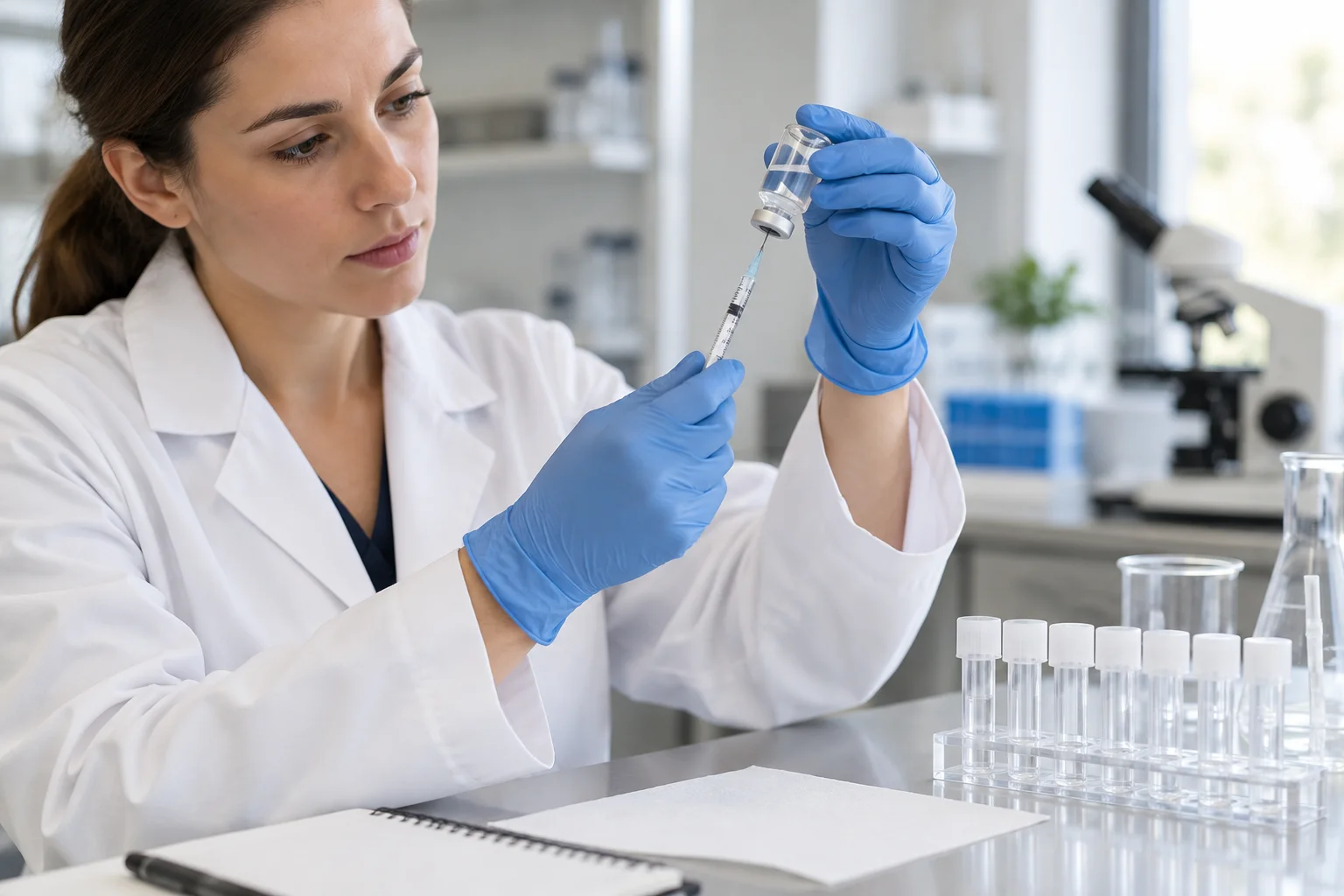
Total yield follows the same logic in reverse. A 2 mL reconstituted vial split into 0.2 mL aliquots yields 10 aliquots; the same vial split into 0.1 mL aliquots yields 20, at half the peptide per aliquot. More aliquots means a smaller dose per tube, so the split should match how the vial is actually being used across sessions, not just how many tubes happen to be on hand. Writing the concentration on every label removes the need to recalculate it later.
Syringe Dead Space and Where Product Gets Lost During Aliquoting
Dead space is the small volume of solution left inside the syringe hub and needle after the plunger is fully depressed, and it is one of the biggest sources of unaccounted product loss when aliquoting. A standard syringe and needle combination can trap several hundredths of a mL per draw, which sounds trivial until it is repeated across ten or more aliquots pulled from the same vial.
Low dead space syringes, built with the needle fused directly to a minimal hub, reduce this loss meaningfully compared to a standard syringe with a detachable needle. For a protocol that depends on getting every aliquot as close to identical as the equipment allows, the syringe and needle combination matters almost as much as the math.
Storing and Labeling Aliquots After Splitting a Vial
Each aliquot should go into its own sterile tube immediately after drawing, labeled with the peptide name, the concentration, the reconstitution date, and the volume in mL. This label is what keeps two visually identical tubes from getting confused weeks later.
Peptide storage after aliquoting generally follows the same rules as the original vial: refrigerated for near-term use, and frozen for aliquots not expected to be used within the timeframe your reconstitution protocol calls for, with a note on the label of when it was pulled from the freezer. When you are ready to reconstitute your next vial, sourcing bacteriostatic water for peptide reconstitution from the same lot keeps the concentration consistent from one split to the next, which matters if you are comparing results across sessions.
Frequently Asked Questions
How long do aliquots stay stable after being split from a 10mg vial? Stability after splitting generally mirrors the stability of the original reconstituted vial, though exact timelines vary by peptide and storage conditions. Most reconstituted peptides are best used within a few weeks when refrigerated, and aliquots frozen promptly after splitting tend to hold up longer than ones left at room temperature. Always follow the specific storage guidance for the peptide being used.
Can aliquots be refrozen after they have thawed to room temperature? Repeated freeze-thaw cycles are generally discouraged for reconstituted peptide solutions, since each cycle can degrade solution quality. This is one of the main reasons to aliquot in the first place: pulling one small tube at a time means the rest of the batch never has to thaw and refreeze.
Does splitting a vial into aliquots change the peptide's concentration? No, splitting a correctly reconstituted vial into equal-volume aliquots does not change the concentration of any individual portion, since each aliquot is simply a smaller sample of the same solution. Concentration only shifts if the aliquots are measured unevenly or if evaporation occurs during a slow draw.
What is the difference between aliquoting a lyophilized vial and a reconstituted one? A lyophilized vial is still freeze-dried powder and cannot be measured by liquid volume until it is reconstituted with bacteriostatic water. Once reconstituted, the vial becomes a liquid solution that can be split by volume with a syringe, which is the approach most small-batch research protocols use.
Get the Right Supplies Before Your Next Split
A clean split starts with sourcing supplies that match the protocol, not improvising with whatever is on hand. Browse the research-grade peptide catalog for vials, bacteriostatic water, and the peptides used most often in aliquoting protocols like this one, so the next time you're splitting a 10mg vial into aliquots without wasting product, the right stock is already on the bench.
Research Use Only
All information in this article is intended for educational and research purposes only. VivePeptides products are not intended for human or veterinary use.