Research Article
5 Storage Supplies That Protect a Vial Between Studies

Researchers who browse the VivePeptides catalog for research peptides also need a plan for what happens between studies. The 5 storage supplies that protect a vial between studies are a light blocking sleeve, a desiccant pack, a labeled rack or case, sealing film, and a temperature appropriate storage spot, and each one guards against a different point of failure.
By Vive Team
What Are the 5 Storage Supplies That Protect a Vial Between Studies?
Vial storage between studies always comes down to the same four threats: light, temperature swings, moisture, and physical damage to the glass or cap. The 5 storage supplies that protect a vial between studies address each of these directly: a light blocking sleeve, a desiccant pack, a vial case or rack, sealing film for the cap, and a stable storage spot within a defined temperature range.
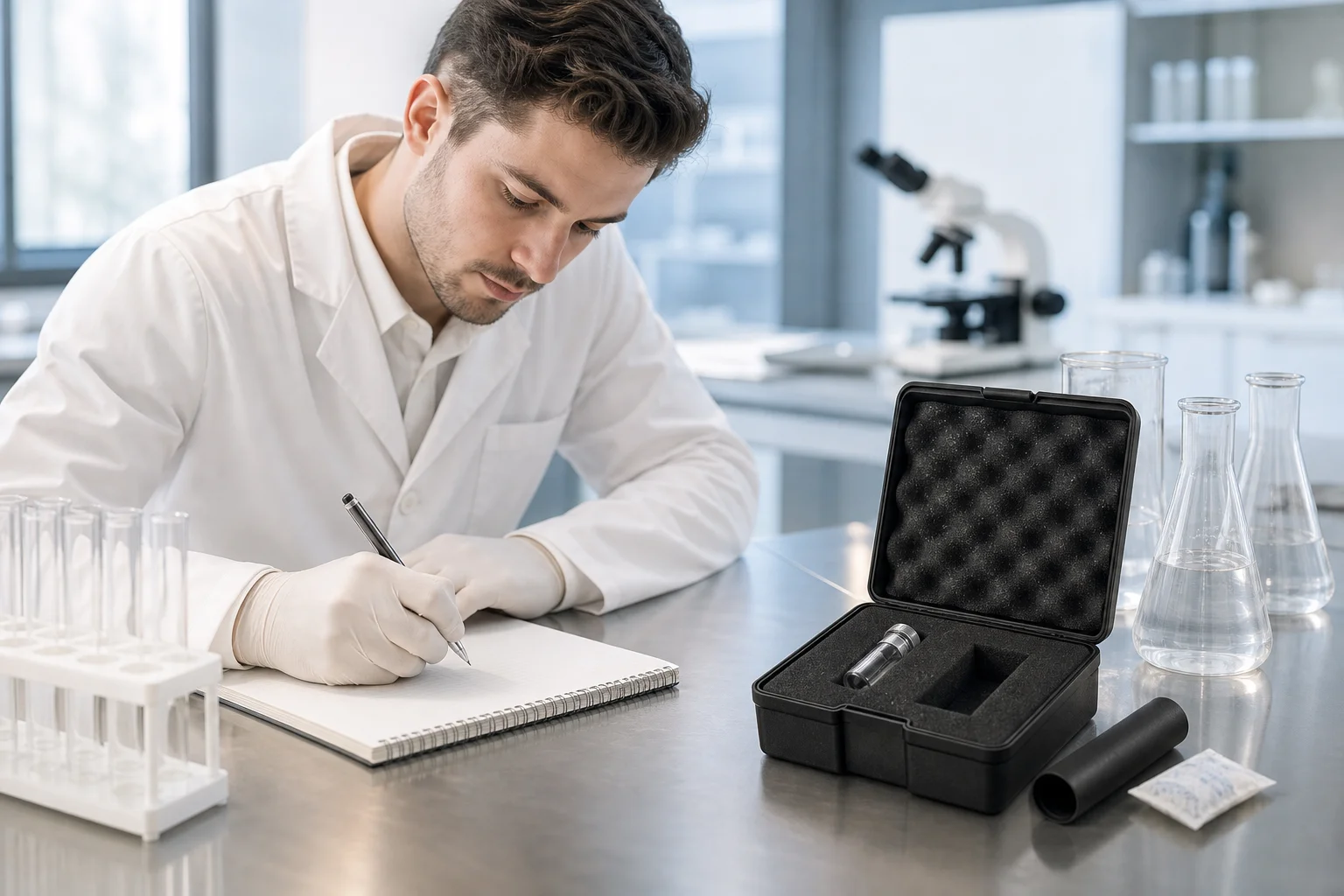
None of these supplies are exotic. A vial case with individual slots is designed to hold glass securely so vials do not knock together. Sleeves are usually opaque or amber colored, sized to slide over a standard vial. Desiccant packs are small enough to sit inside a case without crowding the samples. Sealing film wraps directly over the cap. Together these materials form a simple system rather than a single product, and a lab that skips one piece usually finds the gap shows up as a compromised sample weeks later.
Most researchers do not think about storage supplies until a vial has already been sitting on a shelf for a few weeks, but building the habit early costs very little and protects the chemical integrity of a sample from day one.
Does a Vial Need Refrigeration or Freezer Storage Between Studies?
Most reconstituted peptides are more temperature sensitive than the lyophilized, or freeze dried, powder they started as. Manufacturer guidance for peptides typically calls for refrigeration once a vial has been reconstituted with a diluent, usually in the 36 to 46 degree Fahrenheit range, with freezer storage reserved for longer gaps between studies. Unreconstituted, lyophilized vials are generally more forgiving and some can tolerate brief room temperature stretches, but cold storage is still the safer default in a laboratory setting.
Room Temperature Versus Cold Storage
Room temperature storage is not automatically unsafe for every vial, but it is rarely the recommended default. A vial that has been reconstituted with research-grade bacteriostatic water and then left at room temperature accelerates breakdown of the peptide's structure, which shortens usable stability compared with refrigerated storage. If a study protocol calls for short bench time, that is different from long term room temperature storage between studies, and the two should not be treated the same.
How Do Light-Blocking Sleeves and Desiccant Packs Protect Vial Contents?
Light-Blocking Sleeves
Many peptides are photosensitive, meaning ultraviolet and even normal room light can degrade the compound over time. A light blocking sleeve, usually opaque plastic or amber colored, cuts that exposure down during the stretch between studies. If a vial is left uncovered on an open shelf or a windowsill, that light exposure adds up even when the vial is otherwise stored at the correct temperature, and a researcher can end up with a sample that reads clean by eye but has already lost potency.
Desiccant Packs and Moisture Control
Moisture is the second major threat to a stored vial, particularly for lyophilized powder that has not yet been reconstituted. A small desiccant pack placed alongside the vial in its case pulls ambient humidity out of the air pocket around the cap and rubber stopper. Without one, condensation can form during temperature changes, for example when a vial moves from a refrigerator to room temperature and back, and that moisture can work its way past the seal over repeated cycles.
What Kind of Rack, Case, or Sealing Film Keeps a Vial Secure Between Studies?
Vial Racks and Storage Cases
A dedicated vial case does more than look organized. Foam lined slots, often sized for a 10 slot 2ml vial or a similar small format, keep glass from contacting other vials or hard surfaces, which is where most breakage happens. Cases also make it easy to view what is on hand at a glance instead of digging through a drawer, and a labeled case means a researcher can add a vial to storage and find it again without guessing which sample is which. Many labs keep a small range of case sizes on hand, from single slot travel cases to larger multi sample boxes, and choose based on how many vials a given study needs.
Price is rarely the deciding factor between case options since most are inexpensive, but a few small details matter more: a snug slot keeps a vial from sliding during transport, and a clear lid lets a researcher view contents without opening the case and breaking the cold chain unnecessarily. Some labs simply add the case to their cart alongside sealing film and desiccant packs rather than treating storage supplies as a separate purchase.
Sealing Film Like Parafilm
Parafilm or a similar sealing film wrapped around the cap adds a second barrier against air and moisture beyond the rubber stopper alone. It is especially useful once a cap has been punctured a few times, since repeated draws can leave tiny gaps around the seal. A strip of film stretched snugly over the cap and down the neck of the vial keeps that seal sealed until the next study, and it takes only a few seconds to apply.
How Long Can These 5 Storage Supplies Keep a Vial Stable Between Studies?
Used together, the 5 storage supplies that protect a vial between studies extend how long a vial holds up chemically, but they do not make stability indefinite. Lyophilized peptide powder stored cold, dark, and dry with a desiccant pack typically remains stable the longest, often described by suppliers in terms of months rather than weeks. Once a vial is reconstituted, that window shortens considerably, and refrigerated storage becomes necessary rather than optional.
Materials matter too: cases built from rigid plastic or aluminum hold up to repeated laboratory use far better than a plain cardboard box, and glass vials protected by a proper case rarely crack in transit the way an unprotected vial can. The best approach combines all five supplies rather than relying on just one, and that combination is what makes the difference in a lab that runs studies on a regular schedule. Dating a vial at reconstitution, then keeping it cold, sealed, and out of light, turns storage into a routine instead of a guess.
Frequently Asked Questions
How long can a vial sit between studies before it needs to be discarded? There is no single universal timeline, since it depends on whether the vial is lyophilized or reconstituted, how it has been stored, and the specific peptide involved. Lyophilized vials stored cold and dark generally hold up the longest. Reconstituted vials have a shorter window and usually need to be used or discarded sooner. When in doubt, follow the storage guidance that came with that specific product.
Can vials be stored at room temperature between studies? Some lyophilized vials tolerate short room temperature stretches, but it is not the recommended default for most research peptides, and reconstituted vials should not be left at room temperature between studies. Refrigeration is the safer standard, with freezer storage reserved for longer gaps. If a protocol requires room temperature bench time, that should be treated as a brief exception rather than ongoing storage.
Do all vials need the same storage supplies? Not exactly. Lyophilized powder benefits most from a desiccant pack and light protection, while a reconstituted vial depends more on consistent refrigeration and a secure seal. A vial case and light blocking sleeve are useful across the board, but the emphasis shifts depending on whether the vial has already been reconstituted.
How often should storage supplies like desiccant packs be replaced? Desiccant packs lose effectiveness once they absorb their capacity of moisture, which some packs signal with a color change indicator. As a general habit, checking or swapping a pack every few months, or any time it looks saturated, keeps the moisture barrier reliable rather than assuming one pack lasts indefinitely.
Build a Storage Routine Around the Right Supplies
Pairing the right storage supplies with a consistent routine is what keeps a vial usable from one study to the next. Explore the full peptide library to see the research peptides these storage practices are built to protect.
Research Use Only
All information in this article is intended for educational and research purposes only. VivePeptides products are not intended for human or veterinary use.