Research Article
Buying a Full Stack at Once vs One Vial at a Time

Buying a full stack at once vs one vial at a time comes down to protocol size, budget, and how many compounds you're actually running this month. A stack bundles several vials at a lower combined price through the browse the VivePeptides catalog; single vials keep each purchase separate, adjustable, and easier to track.
By Vive Team
Full Stack Orders and Single-Vial Orders: What Actually Changes
A peptide stack is a preset bundle of multiple research compounds sold together, usually because they're commonly studied in combination, such as a recovery-focused trio or a growth-hormone-axis pairing. Buying one is a single transaction: one shipping charge, one invoice, and every vial arrives the same day. Buying one vial at a time means placing a separate order each time a new compound is added to a protocol, whether that's this week or months from now.
The practical difference shows up in three places: what arrives in the box, how the paperwork is organized, and when reorder decisions have to be made. A stack answers what a protocol needs once, at checkout; single vials answer it every time a new compound gets added. It's the same BPC-157 whether it ships alone or inside a bundle: what changes is packaging, invoicing, and how many line items an order log has to track.
Why Buying a Full Stack at Once vs One Vial at a Time Changes Your Total Cost
Cost is usually the first factor researchers compare, and it usually favors the stack. Bundled pricing spreads a single discount across every vial, so the total for a five-compound stack is typically lower than placing five individual orders across five months. Buying a full stack at once vs one vial at a time is really a question of whether that savings gets used before it expires: a discount on a compound sitting unused in a freezer isn't real savings, it's a smaller loss.
Single-vial buying has its own cost logic. Ordering only the compound needed for the current phase of a protocol avoids paying for capacity that won't get used, and lets a budget flex month to month instead of committing everything upfront. For a researcher running one compound at a time, or switching protocols often, the lower per-order cost can beat the bundled discount once unused inventory is factored in. Check the per-vial price on each product page against the stack's breakdown before assuming the bundle wins by default.
The Pros and Cons of Ordering Peptides One Vial at a Time
Buying one vial at a time keeps a research budget flexible. Nothing gets ordered until a protocol calls for it, which avoids tying up funds in compounds that might sit unused. It also makes it simple to swap in a different compound if a protocol changes direction, since there's no bundled set to work around.
The tradeoff is logistics. Every new vial means a new order, shipping charge, and delivery window to plan around, which adds friction for anyone running several compounds at once. Reconstitution supplies like bacteriostatic water also have to be reordered separately unless bought in bulk alongside the vials. For a single compound or a short-term protocol, one-vial-at-a-time buying is usually simpler. For a multi-compound protocol run every month, the repeated ordering adds up in both cost and coordination.
How to Know You're Ready for a Full Stack vs Starting With One Vial
Readiness comes down to three factors: how many compounds a protocol calls for right now, how confident the plan is to run for several months rather than a few weeks, and how much upfront cost is comfortable to commit at checkout. A researcher who already knows they'll run three or four compounds on a defined schedule usually gets more value from a stack. A researcher still narrowing down which compound fits their protocol, or running a short trial, is better served starting with one vial.
Beginners don't default to single vials, and experienced researchers don't default to stacks. The better question is whether the protocol is settled. An unsettled protocol that changes every few weeks wastes a bundled discount on compounds that never get used before priorities shift. A settled, multi-compound protocol wastes time and shipping fees reordering one vial at a time. Choose based on the protocol, not on how new the researcher is to the process.
How Buying a Stack Affects Storage and Shelf Life Compared to Single Vials
Storage logic changes with order size. A full stack arrives with several vials at once, most lyophilized (freeze-dried) and stable for months in a home refrigerator or freezer when kept dark and undisturbed. The vials not in immediate use simply wait their turn; unopened, properly stored lyophilized peptide typically holds its published stability data well past the point a single-vial buyer would have finished their one compound.
The shelf-life question changes once a vial is reconstituted with bacteriostatic water. From that point, most reconstituted peptides are best used within days to a few weeks under refrigeration, whether they came from a stack or a single order. Buying a stack doesn't extend that window, it just means more vials are queued up in lyophilized form waiting their own timeline. Verify the specific compound's stability notes on its product page before assuming every peptide in a stack behaves the same way in storage.

Does a Full Stack Make Dosing and Cycling Multiple Peptides Easier
Running more than one compound at a time means tracking more than one reconstitution date, storage note, and dosing schedule. A stack doesn't automatically simplify any of that, since each peptide still needs its own log. What it does simplify is the ordering side: every compound in a cycle arrives together instead of on staggered delivery dates, making it easier to start a multi-compound protocol the same day rather than waiting on the slowest shipment.
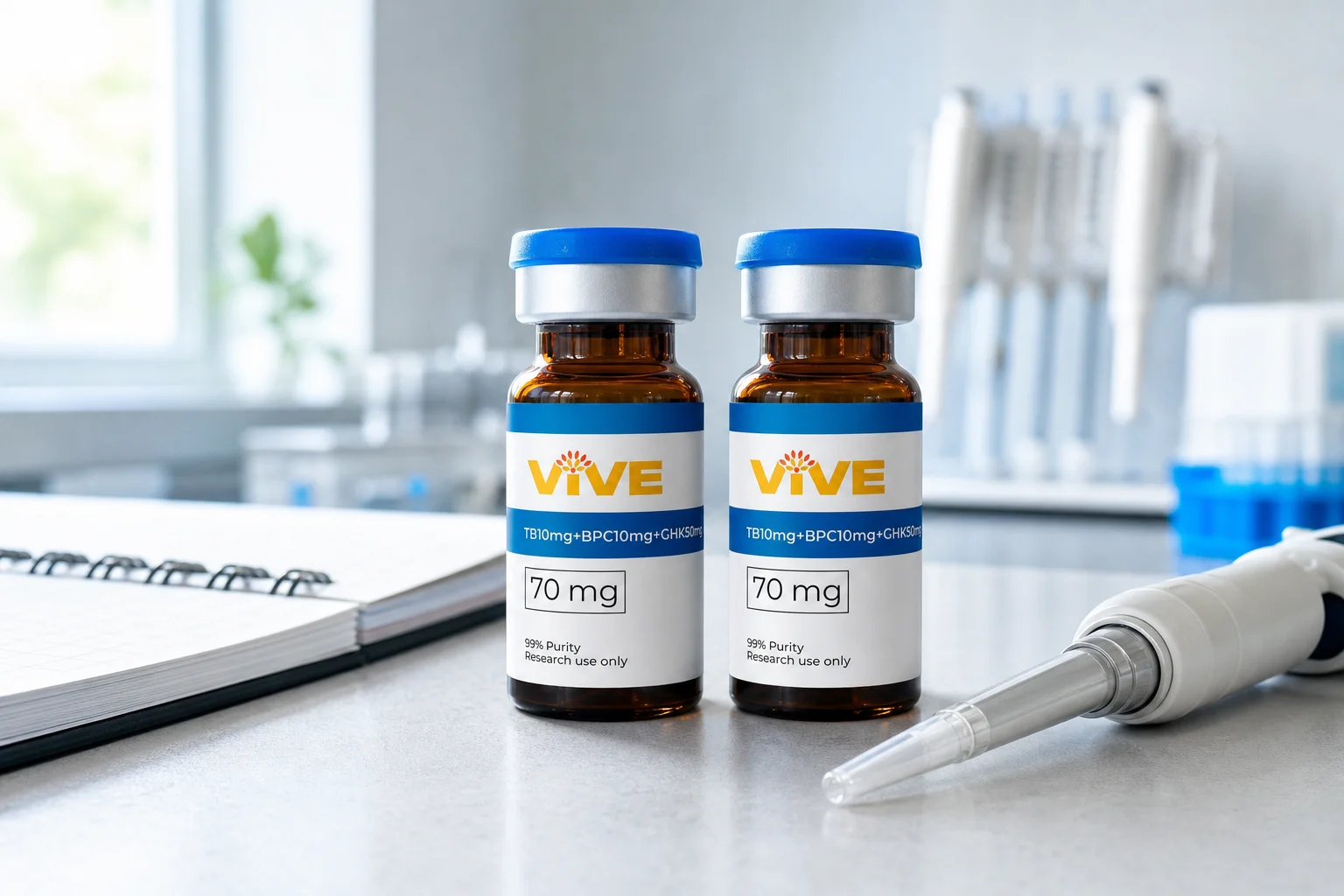
Researchers commonly cycle recovery-focused compounds together, sometimes called the Wolverine Stack for its combination of tissue and skin-focused peptides. Anyone running that exact combination without tracking three separate reorder dates can order the Glow Blend as one bundle, which lists current vial count and total price as a single line item on its product page. Buying the pieces individually still works, it just means three separate delivery windows to plan a cycle's start date around instead of one.
When Building Your Own Stack One Vial at a Time Makes More Sense
Some protocols are genuinely better assembled one compound at a time. A protocol still in an early testing phase, one that only calls for a single peptide type, or one where the compound list is likely to change based on early results, doesn't benefit from a bundled commitment. Custom-building a stack by ordering vials separately also lets a researcher choose exact quantities per compound instead of accepting a fixed count set by a preset bundle.
This approach also fits anyone comparing multiple compound types before settling on a combination. Ordering two different compounds separately, for instance, lets a researcher run a short comparison before deciding which one, or both, belongs in a longer protocol. Once the compound list is settled and the protocol is expected to run for months, moving to a bundled stack usually lowers the total cost of getting there.
Frequently Asked Questions
How many vials come in a full peptide stack? Vial count depends on the specific stack. VivePeptides preset blends, like the Glow Blend or KLOW Blend, list their exact vial count and compound breakdown on each product page. A custom stack built by ordering vials separately can include as many compounds as a protocol calls for, since there's no fixed bundle size to work around.
Is it safe to buy a full peptide research stack at once? Safety here is about storage and research handling, not medical use, since these compounds are sold for laboratory research only. Buying several vials at once isn't inherently riskier than buying one, as long as each compound is stored, reconstituted, and logged according to its own product information rather than treated as identical to the others in the box.
Do single vials cost more per vial than a stack? Usually, yes. Bundled pricing spreads a discount across every vial in a stack, so the per-vial cost is typically lower than ordering the same compounds one at a time. The gap narrows or disappears if part of a stack goes unused, since an unused vial has no real savings attached regardless of the discount it was bought at.
Can beginners buy a full stack, or should they start with one vial? Either can work. What matters more than experience level is whether the protocol is settled. A beginner running a single, well-defined compound can start with one vial; a beginner who already knows they need several compounds for a documented protocol can buy a full stack just as reasonably as an experienced researcher would.
Order the Way Your Protocol Actually Runs
Whether a protocol calls for one compound or a full multi-peptide cycle, the right purchase pattern is the one that matches how the research is actually run, not a default. Compare current vial counts and pricing across the full peptide library before placing the next order.
Research Use Only
All information in this article is intended for educational and research purposes only. VivePeptides products are not intended for human or veterinary use.