Research Article
7 Things a Vendor Should Include Free With Every Order

These are the 7 things a vendor should include free with every order: a certificate of analysis, reconstitution instructions, bacteriostatic water, syringes, storage and handling guidance, research support, and discreet, temperature-safe packaging. Compare this list against the full peptide library before placing your next research order.
By Vive Team
Why These Are the 7 Things a Vendor Should Include Free With Every Order
Researchers comparing peptide vendors often focus on price per milligram and skip past the extras that actually determine whether an order is usable, verifiable, and safe to store. A peptide company that only ships a vial and an invoice is asking the buyer to source everything else on their own: water, syringes, a certificate of analysis, and answers to basic handling questions. That approach shifts cost and risk onto the customer without saying so upfront. This differs sharply from companies that treat these extras as a locked-in profit center rather than a standard part of the order.
A vendor that has built a real research-supply business, rather than a drop-shipped storefront, typically includes seven things at no extra charge: a certificate of analysis (COA), reconstitution instructions, bacteriostatic water, syringes, storage and handling guidance, access to research support, and packaging built to protect a temperature-sensitive product in transit. None of these are premium add-ons. They are the baseline a legitimate vendor should meet on every order, whether it is a single vial or a larger order for a research team.
The sections below cover what each of these seven items should look like in practice, and how to tell a vendor that genuinely includes them from one that just lists them in marketing copy.
Free Certificate of Analysis (COA) With Every Order
A certificate of analysis (a lab document confirming a product's identity and purity) should come free with every order, not as a paid upgrade or a document you have to request after the fact. A reputable vendor provides a certificate of analysis with every order, generated by an independent third-party lab rather than an in-house test the company runs on itself.
The COA should list the specific lot number tied to the vial in your shipment, the purity percentage, and the testing method used, so the data on the page matches the product in your hand. Some vendors keep an archived original of every certificate on file and let it be retrieved later by lot number, which matters if you need to reference a specific batch months after an order ships. If a vendor cannot produce this documentation, or only offers it after a purchase, that is a real gap, not a minor inconvenience.
Free Reconstitution Instructions and Storage Guidance
Reconstitution Instructions
Reconstitution instructions (the steps for mixing a lyophilized, or freeze-dried, peptide with a liquid diluent) should ship with the product itself, either as a printed insert or a linked page a customer can find without contacting support first. Instructions should cover the diluent volume, mixing technique, and any notes specific to that peptide, since concentration and stability needs vary across a vendor's product range.
Storage and Handling Guidance
Storage guidance should answer the questions a new customer actually has: how the product should be stored before and after reconstitution, how long it typically stores well once mixed, and what handling steps reduce degradation risk. A vendor that stores this information behind a support ticket, rather than publishing it, is putting an avoidable barrier between the customer and the product they already paid for.
Free Bacteriostatic Water and Syringes With Your Order
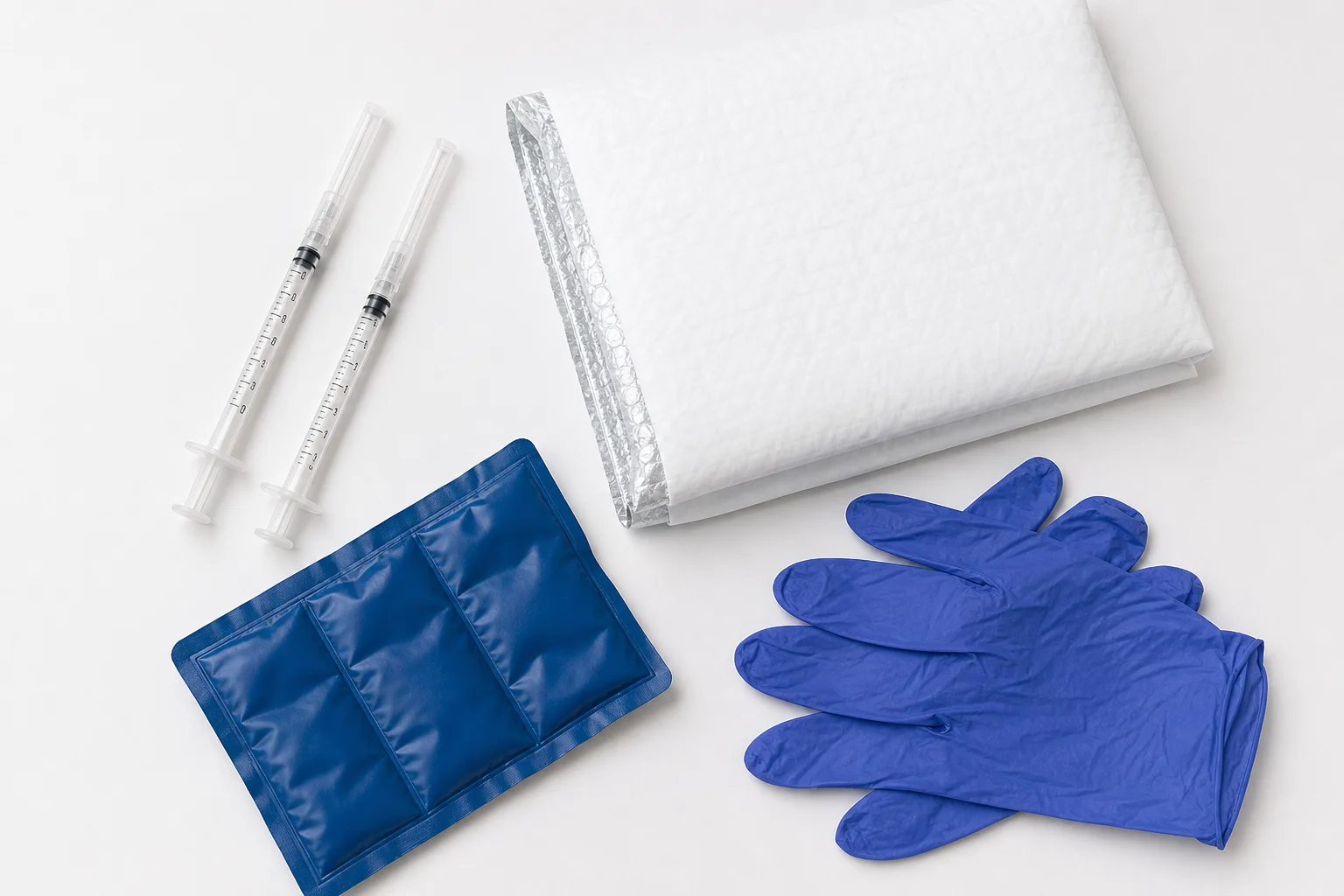
Bacteriostatic water and syringes are two of the most commonly upsold items in this industry, even though they cost a vendor very little relative to the product itself. An order that ships a vial with nothing to reconstitute it with in a lab setting is an incomplete order, and charging separately for these basics is one of the more common ways a company pads margin without changing the price on the label.
VivePeptides ships bacteriostatic water for peptide reconstitution alongside qualifying orders, and stocks syringes so a research order arrives ready to use rather than requiring a second purchase from a separate supplier. This is a small line item for a vendor to cover and a meaningful one for a customer to skip having to source elsewhere.
Free Access to Research Support and Customer Service
A vendor's job does not end at checkout. Customers should have a real path to ask reconstitution, storage, or order-status questions and get an answer from a person, not just an automated reply. This kind of support does not need to be complicated: email or chat access, a reasonable response window, and staff who can help with order management, reconstitution, and storage questions rather than pointing you to a generic FAQ.
This matters most when something about an order looks off: a missing COA, a damaged shipment, or a question about which product in a company's range fits a given research need. Vendors that treat support as a free, standard part of the order tend to retain customers longer than ones that treat it as an afterthought.
Why Discreet, Temperature-Safe Packaging Matters
Packaging is not just about branding. Peptides are temperature-sensitive, and a box that sits in a hot mail truck or on a porch for hours can degrade a product before a customer ever opens it. Free packaging that includes insulation and, where the season calls for it, an ice pack or gel pack, is a security measure for the product, not a courtesy.
Discreet packaging matters for a separate reason: privacy. An order arriving in a box or envelope with no branding, product names, or company information printed on the outside protects the customer's privacy and reduces the chance of a package being flagged, opened, or stolen in transit. Vendors that skip this step are shifting a real risk onto the customer for the sake of a lower shipping cost.
How to Tell If a Vendor's Free Extras Are Real or Just Marketing
Not every company that lists free extras on a homepage actually includes them at checkout. A few checks separate a real offer from a marketing claim:
- Look for the specific items (COA, water, syringes, packaging standard) listed on the product page itself, not only on a general policies page.
- Check whether the COA for your specific lot is retrieved and shown before you buy, or promised only after.
- Read order confirmation and shipping emails for confirmation that these items are included, rather than assuming from a banner ad.
- Ask support directly and see how specific the answer is. A vague reply is itself information about how the company operates.
A vendor with nothing to hide will usually answer these questions quickly and specifically. One that hedges or redirects is telling you something too.
Frequently Asked Questions
Is a COA required with every peptide order? There is no single regulatory body that mandates a certificate of analysis on every research peptide shipment, so requirements vary by vendor rather than by law. That said, a COA is the standard way to verify identity and purity, and a research-focused vendor should provide one as a routine part of every order rather than an optional extra.
What should I do if my peptide order arrives without a COA? Contact the vendor's customer service and ask for the certificate tied to your specific lot number before using the product. A legitimate company should be able to produce this document quickly. If a vendor cannot provide lot-specific documentation on request, treat that as a reason to source from a different company going forward.
Are bacteriostatic water and syringes included free or sold separately? This varies by vendor. Some include bacteriostatic water for peptide reconstitution and syringes with every qualifying order, while others sell them as separate line items. Check the product page or cart before checkout, since this detail is not always obvious from a homepage claim alone.
Does every peptide vendor ship orders with ice packs or cold packaging? No. Cold-chain packaging practices differ across vendors and often depend on season, shipping distance, and how temperature-sensitive a specific product is. A vendor that consistently uses insulated, temperature-aware packaging is taking storage guidance seriously rather than treating it as optional.
What are the 7 things a vendor should include free with every order? A certificate of analysis, reconstitution instructions, bacteriostatic water, syringes, storage and handling guidance, access to research support, and discreet, temperature-safe packaging are the 7 things a vendor should include free with every order. Together they cover verification, usability, and safe handling without adding cost at checkout.
Compare What Ships Free With Your Next Research Order
Before you place your next order, check whether a vendor's free extras show up on the product page and in your cart, not just in ad copy. Browse the VivePeptides shop to see what ships standard with every order.
Research Use Only
All information in this article is intended for educational and research purposes only. VivePeptides products are not intended for human or veterinary use.