Research Article
7 Consumables That Run Out Before Your Vials Do
Most researchers restock the wrong thing first, then discover a full peptide vial sitting useless because a filter, syringe, or bottle of water ran dry. This guide names the 7 consumables that run out before your vials do, so your bench never stalls mid-protocol. Before your next order, browse the VivePeptides catalog to check current stock levels.
By Vive Team
What Are the 7 Consumables That Run Out Before Your Vials Do?
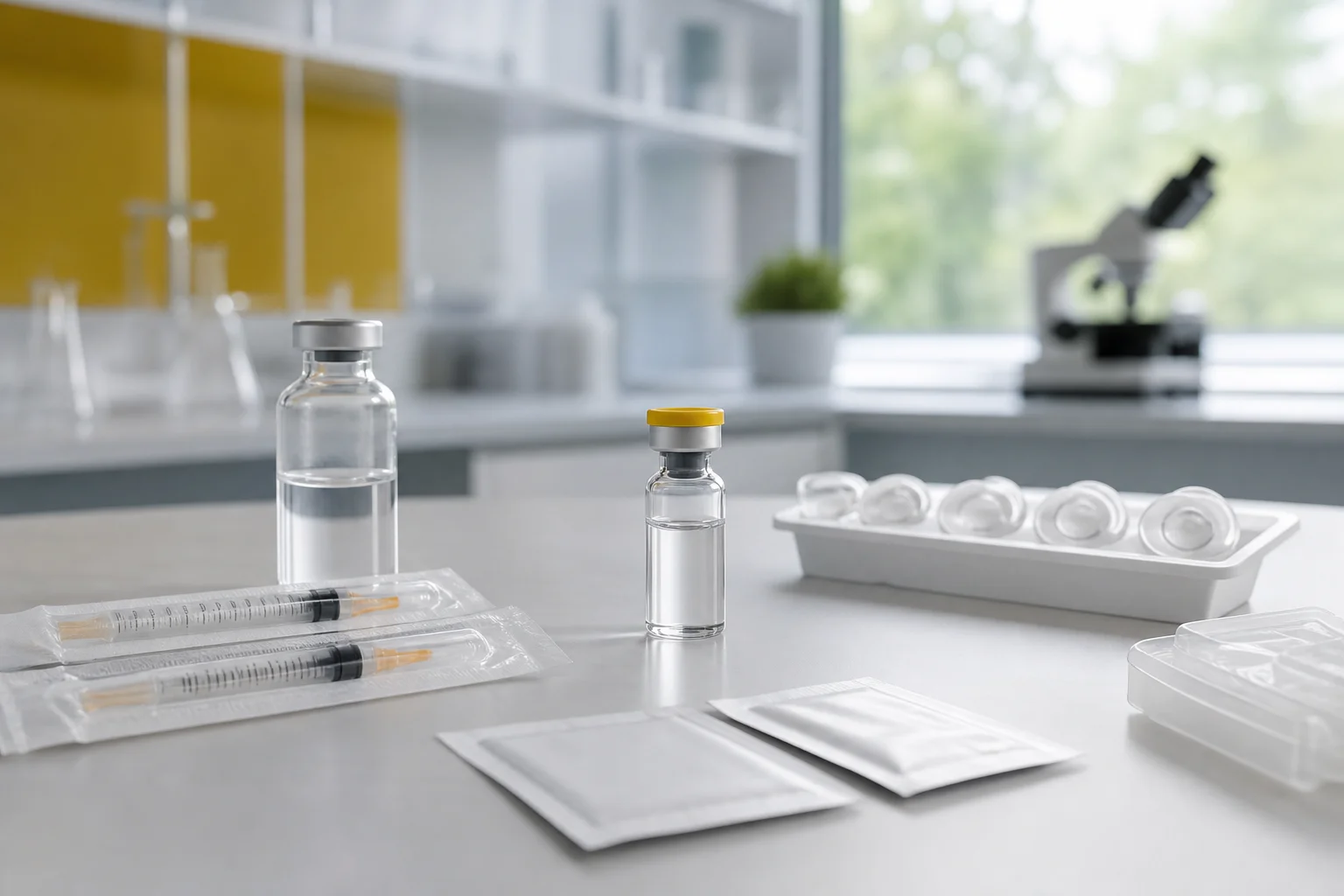
A sealed peptide vial can sit in a research freezer for months without expiring, which is why health-focused labs and biohackers alike sometimes underestimate how fast the surrounding lab consumables disappear. In practice, the 7 consumables that run out before your vials do are bacteriostatic water, syringes and needles, alcohol prep pads, sterile reconstitution filters, storage tubes, pipette tips, and nitrile gloves. Each of these laboratory consumables and pieces of basic lab equipment gets used at a faster rate than the peptide itself, since a single vial can support many reconstitution and injection events, while each syringe, filter, and swab is typically single-use. Tracking consumption of these products separately from your peptide inventory is one of the simplest ways to keep a research bench running without a mid-protocol scramble.
How Much Bacteriostatic Water Do You Need Per Vial?
The volume of bacteriostatic water a researcher draws per vial depends on the target concentration level and the specific protocol being followed, so there is no single universal number. Many published reconstitution references describe somewhere between 1 mL and 3 mL of research-grade bacteriostatic water per vial, with smaller volumes producing a more concentrated solution and larger volumes diluting it further. Because a single multi-dose bottle of bacteriostatic water can support several separate peptide vials, researchers frequently underestimate how quickly a bottle empties once a lab runs multiple protocols in parallel. Keeping a spare bottle on hand, rather than waiting until the current one is nearly empty, prevents a reconstitution session from being interrupted.
How Many Syringes and Needles Should You Keep on Hand Per Cycle?
Syringes and needles are consumed on a strict one-per-use basis in most research settings, which makes them the fastest-moving item on this list. A researcher running a daily reconstitution and administration cycle for a single peptide will typically use one syringe per dose, plus a separate mixing needle if the reconstitution and delivery route call for different gauges. Some labs also change needles between drawing and injecting, since researchers who mount a fresh needle for delivery avoid dulling it on the vial's rubber stopper. Stocking a two-to-four-week buffer of syringes and needles, rather than reordering one box at a time, keeps a lab from pausing a study because a single delivery arrived late. For labs running multiple protocols at once, such as a GLP-1 peptide and a growth-hormone secretagogue tested in parallel, syringe consumption can climb quickly, so tracking usage by project rather than by shelf count gives a more accurate reorder signal.
How Long Do Alcohol Swabs and Sterilization Supplies Last?
Individually wrapped alcohol prep pads are shelf-stable for extended periods when the outer packaging stays sealed, since the isopropyl alcohol is contained in a sterile foil pouch that prevents evaporation. Once a full box is opened, each pad is still sealed individually, so the pack's shelf life is really the shelf life of the least-used pad inside it. The speed at which alcohol swabs and filters disappear often surprises new researchers more than syringe usage does, since sterilization supplies get used at every reconstitution and every injection. A lab that treats them as an afterthought behind the vials and filters is the one most likely to run short first. A basic quality check before ordering is to count remaining pads against the number of reconstitution and administration events scheduled for the next two weeks.

Do Peptide Reconstitution Filters Need to Be Replaced, and How Often?
Yes. Sterile reconstitution filters, most commonly 0.22-micron syringe filters, are single-use items designed to remove bacteria and particulates as bacteriostatic water passes into a vial. Reusing a filter across multiple reconstitution events defeats its purpose, since the filter membrane can trap residue from the first use and offers no meaningful resistance to contamination on a second pass. These filters serve the same sterile-barrier role in a research lab that they do in cell culture work, where a compromised filter can jeopardize an entire batch rather than a single dose. Because filters are inexpensive relative to the peptide they protect, most labs standardize on ordering them in bulk alongside pipette tips and other laboratory consumables rather than buying them one at a time.
How Often Should You Reorder Peptide Research Supplies?
Most labs treat consumables as an afterthought next to the peptide products they are ordering, but reorder timing for consumables is what actually determines whether a scheduled reconstitution happens on time. A practical reorder cadence starts with a running inventory system: a simple spreadsheet or lab log that tracks how many vials, syringes, filters, and swabs are consumed each week. Most research labs settle into a two-to-four-week reorder cycle, timed to arrive before the current supply hits roughly a 20 percent buffer rather than zero. Because pipette tips, tubes, and gloves are typically the cheapest items on a research invoice, ordering them in bulk alongside a peptide order reduces both cost per unit and the number of shipments a lab has to receive and unpack. Whichever protocol you are running, knowing the 7 consumables that run out before your vials do makes reordering far less stressful, and it is worth checking for periodic bulk deals on filters, tubes, and prep pads, since these smaller items are easy to overlook until a session is delayed waiting on them.
Frequently Asked Questions
What happens if you run out of a consumable mid-reconstitution? Running out of bacteriostatic water, a filter, or an alcohol swab mid-session usually means pausing the reconstitution rather than improvising with an unsterile substitute. A vial that has already been partially reconstituted should be capped and refrigerated per the product's storage guidance while the missing consumable is sourced, rather than left exposed on the bench. Keeping a small backup stock of the fastest-moving items, syringes, filters, and swabs, is the simplest way to avoid this interruption altogether.
Can you reuse a syringe for more than one peptide dose? Most research protocols treat syringes and needles as single-use items, since repeated punctures dull the needle tip and reuse increases the chance of introducing contamination into a vial. Even when the same peptide is being drawn twice in one day, using a fresh syringe for each draw is the standard practice in a research setting. Syringes are inexpensive relative to the peptide they support, which is part of why they run out well before the vial does.
How long does bacteriostatic water last once it's opened? Once a multi-dose bottle of bacteriostatic water is opened, many manufacturer guidelines suggest it remains usable for several weeks when stored refrigerated and handled with a clean needle each time. Exact timelines vary by manufacturer, so checking the specific product's labeling is the most reliable answer. Because the preservative loses effectiveness over repeated punctures, labs running frequent reconstitutions often go through a bottle well before that window closes.
How many vials does one bottle of bacteriostatic water cover? A standard 30 mL bottle of bacteriostatic water can typically support somewhere between 10 and 30 vial reconstitutions, depending on how many milliliters a given protocol calls for per vial. A lab reconstituting several peptides at a lower volume per vial will get more mileage from a single bottle than one running higher-volume protocols. Because this number varies so much by use case, most labs are better served tracking actual consumption than estimating from the bottle size alone.
What's the shelf life of alcohol prep pads once the pack is opened? Individually wrapped alcohol prep pads stay sterile until their own foil seal is broken, so opening the outer box does not start a countdown on the pads still sealed inside. The practical shelf life of a full pack is closer to a year or more when stored in a cool, dry place away from direct sunlight, though checking the manufacturer's printed expiration date on the box remains the most reliable guide.
Keep Your Bench Stocked With VivePeptides
Consumables are easy to deprioritize next to the peptide itself, but they are what keeps a research schedule on track. Explore and discover the full peptide library to reorder your next round of consumables together, so a missing filter or empty water bottle never delays a scheduled protocol.
Research Use Only
All information in this article is intended for educational and research purposes only. VivePeptides products are not intended for human or veterinary use.