Research Article
What Is SNAP-8? Octapeptide Anti-Wrinkle Compound
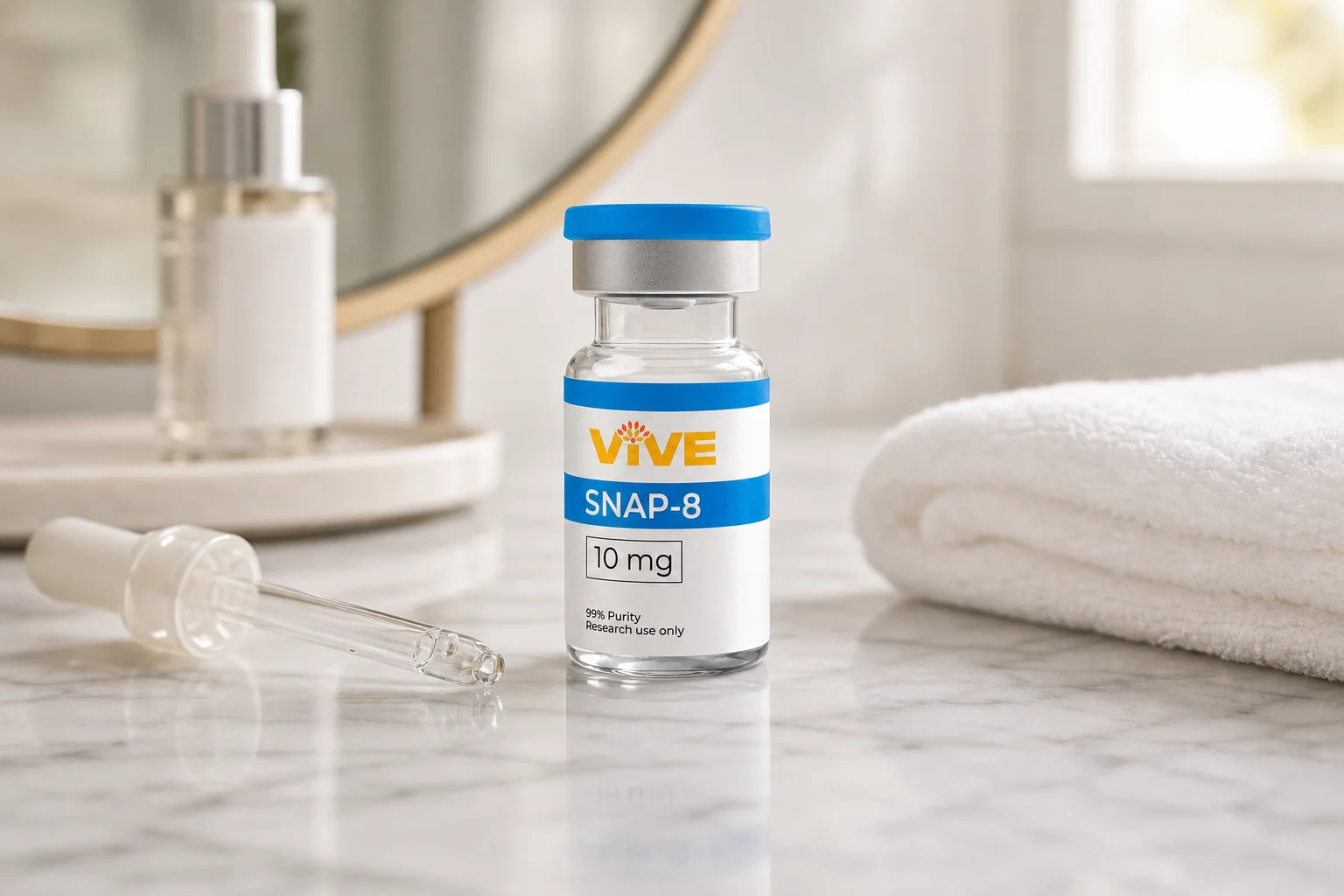
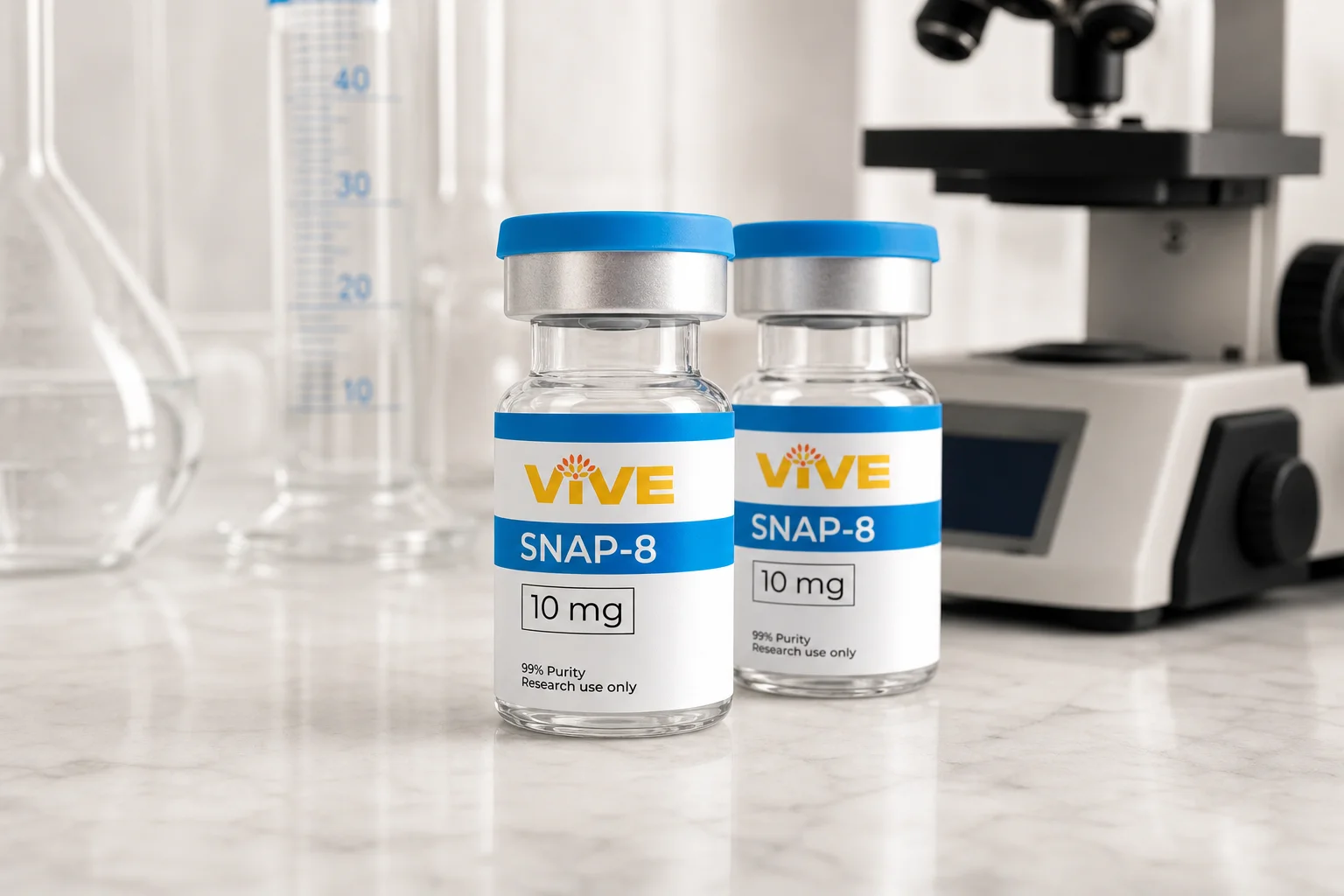
What is SNAP-8? It is a synthetic octapeptide, formally Acetyl Octapeptide-3, developed for topical research into facial muscles, expression lines, and wrinkle depth. Formulated as a non-injectable alternative to neuromodulator research, research-grade SNAP-8 is studied for its proposed effect on muscle contractions that deepen fine lines over time.
By Vive Team
What Is SNAP-8 at the Molecular Level?
SNAP-8, or Acetyl Octapeptide-3, is a synthetic peptide built from a chain of eight amino acids. Its structure is derived from SNAP-25, a protein component of the SNARE complex involved in neurotransmitter vesicle docking at the neuromuscular junction. Cosmetic chemists extended the original hexapeptide chain, marketed as Argireline, by two additional amino acids, a modification researchers believe may improve binding affinity to the SNARE complex and, by extension, its influence on the muscle contractions responsible for expression lines.
In topical cosmetic research, SNAP-8 is classified as a neurotransmitter-inhibiting peptide, distinct from moisturizing agents like hyaluronic acid or structural proteins like collagen. Its proposed mechanism targets the signaling pathway between nerve endings and facial muscles rather than hydration or skin barrier support alone. This SNARE-mediated pathway is the same general system explored in research on injectable neuromodulators, though SNAP-8's topical delivery method and larger molecular size limit its ability to fully replicate that action at the neuromuscular junction.
How SNAP-8 May Interact With Facial Muscles and Expression Lines
Understanding how SNAP-8 works begins with the biology of muscle contraction. Facial expression lines form through years of repeated facial muscle movement. Every smile, frown, or squint relies on acetylcholine release at the neuromuscular junction, triggering the SNARE complex to fuse vesicles and contract the muscle fiber. Over time, this repeated motion is a primary driver behind lines wrinkles formation, particularly around the forehead, brow, and eye area.
SNAP-8 research proposes that the peptide competes with SNAP-25 for a position in the SNARE complex, potentially reducing the frequency or intensity of these muscle contractions when applied topically. Because the compound does not cross into the muscle itself, unlike an injectable approach, cosmetic researchers frame its action as surface-level and reversible, most relevant to fine lines that form from repetitive expression rather than lines caused primarily by lost collagen or elasticity.
Who Studies SNAP-8 in Peptide Research
SNAP-8 sits at the intersection of cosmetic chemistry and personal research, drawing interest from several groups. Formulation researchers and cosmetic chemists study it as a functional ingredient for anti-aging serum development, testing concentration thresholds and stability alongside carriers like hyaluronic acid. Independent biohackers and wellness professionals who track topical peptide research often compare SNAP-8 against Argireline and injectable neuromodulator data to understand which mechanism best fits a given research question.
Because SNAP-8 is not injected, it does not carry the same handling requirements as reconstituted peptides. Researchers do not need bacteriostatic water, syringes, or sterile technique to study a topical SNAP-8 formulation, which lowers the barrier to entry compared to peptides prepared for injectable research. That accessibility is part of why SNAP-8 formulations appear frequently in early-stage cosmetic peptide research and consumer-facing serum studies, even though data comparing it directly to established options like botulinum toxin remains limited.
All research involving SNAP-8 should be documented, batch-tested, and treated strictly as research use, not as a therapeutic or medical treatment.
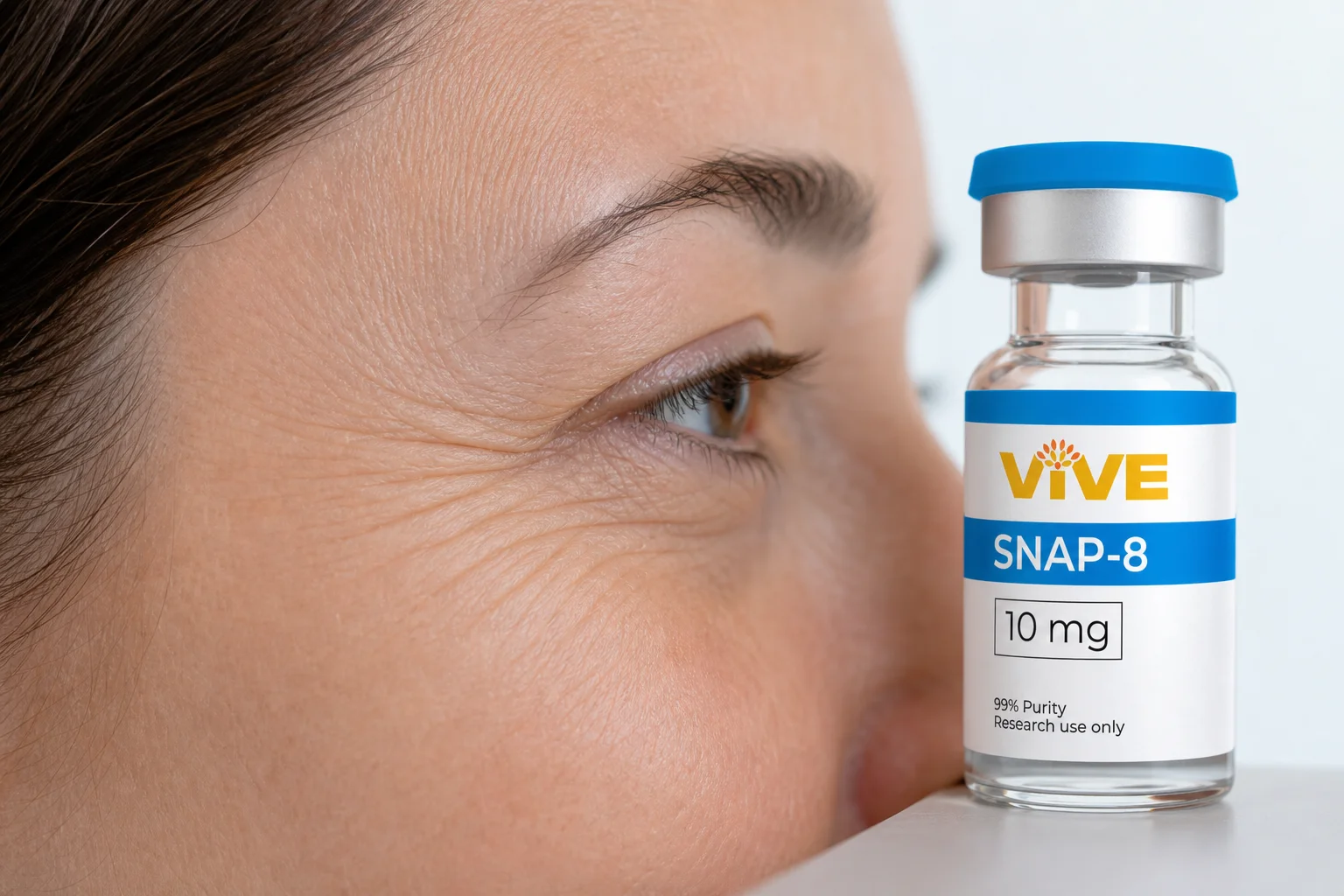
SNAP-8 in Topical Research Formulations: Serums and Application
Because SNAP-8 is studied exclusively as a topical compound rather than an injectable, it is most commonly formulated into serums, creams, and targeted eye treatments. Researchers who use SNAP-8 in skincare formulations typically apply it directly to clean skin, often layered under a moisturizer to support penetration through the outer skin barrier.
Formulators typically favor water-based serum systems for SNAP-8 because the peptide is hydrophilic and can degrade in the presence of certain preservative systems or prolonged light exposure. Packaging in airless, opaque containers is common in cosmetic peptide research to limit oxidation and help preserve potency between manufacturing and use.
Recommended Application Protocol in Research Settings
Published formulation research on structurally related octapeptides suggests visible changes in wrinkle depth require consistent use over a minimum of four to eight weeks, with topical application once or twice daily. A single application is unlikely to produce measurable results; the peptide's proposed mechanism depends on cumulative reduction in muscle activity at the treated site rather than an immediate, one-time effect.
Many topical anti-aging formulations pair SNAP-8 with complementary ingredients such as hyaluronic acid for surface hydration or GHK-Cu skin-research data for its studied role in dermal signaling. When evaluating a formulation for research purposes, checking the full ingredient list and confirming third-party purity testing matters as much as the SNAP-8 concentration itself.
SNAP-8 Compared to Other Cosmetic Peptides
SNAP-8 is frequently compared to Argireline, or Acetyl Hexapeptide-8, its six-amino-acid predecessor. Researchers generally note that SNAP-8's additional amino acid pair may extend its binding profile, though head-to-head data comparing the two remains limited. For a side-by-side breakdown of reported findings, see our guide to snap 8 vs argireline anti wrinkle peptide comparison.
SNAP-8 is also studied alongside copper-based peptides for skin structure research. Where SNAP-8's proposed role concerns muscle signaling, GHK-Cu research centers on dermal remodeling and collagen-related pathways, a distinction covered in more on snap 8 vs ghk cu anti aging comparison. Researchers frequently combine peptides with different mechanisms in a single formulation on the theory that muscle-focused and structure-focused ingredients address separate contributors to visible aging.
As a synthetic peptide intended for topical research rather than injection, SNAP-8 carries a different safety and handling profile than reconstituted injectable compounds. Researchers working with injectable peptides that require reconstitution, such as those prepared with bacteriostatic water, follow separate protocols entirely. See The Complete Guide to Reconstituting Peptides with Bacteriostatic Water for that process, and browse the VivePeptides catalog to compare formulations side by side. All SNAP-8 orders from VivePeptides include free shipping and a certificate of analysis for each batch.
Frequently Asked Questions
What is SNAP-8 made of? SNAP-8 is the trade name for Acetyl Octapeptide-3, a synthetic peptide built from a chain of eight amino acids modeled after SNAP-25, a protein involved in neurotransmitter release at the neuromuscular junction. It is manufactured for topical cosmetic research rather than oral or injectable use, and is typically supplied as a lyophilized powder or pre-formulated serum base for further study.
How is SNAP-8 different from Botox? Botulinum toxin is injected and works by blocking acetylcholine release directly at the neuromuscular junction, producing a systemic, longer-lasting muscle-relaxing effect. SNAP-8 is applied topically and is studied for a milder, surface-level interaction with the SNARE complex. Researchers generally consider SNAP-8 formulations part of preventative or maintenance-focused study, not a replacement for injectable neuromodulator research or medical treatment.
How often should SNAP-8 be applied in research settings? Most published formulation protocols for topical octapeptides call for application once or twice daily to clean, dry skin. Consistent use over several weeks is generally required before any change in wrinkle depth becomes measurable, since the peptide's proposed mechanism relies on cumulative reduction in muscle activity rather than an immediate effect from a single dose.
Can SNAP-8 be combined with other peptides like GHK-Cu? Yes. Because SNAP-8's proposed mechanism targets muscle-related signaling while ingredients like GHK-Cu and hyaluronic acid address dermal structure and hydration separately, researchers frequently formulate them together in multi-peptide serums. Reviewing each compound's individual data before combining them in a single research formulation is recommended.
What is SNAP-8 used for beyond anti-wrinkle research? While most published research on SNAP-8 focuses on expression lines and wrinkle depth around the eyes and forehead, some formulators explore it in broader anti-aging skincare serum lines alongside collagen-supporting peptides. Its research use remains limited to topical cosmetic study, not systemic or therapeutic application.
Continue Your SNAP-8 Research Journey
Now that you know what is SNAP-8 and how it fits into topical anti-wrinkle peptide research, put that knowledge to use. Read our full Snap 8 Vs Argireline Anti Wrinkle Peptide Comparison before selecting a formulation to study, and remember that every compound on VivePeptides is intended strictly for laboratory and research use.
Research Use Only
All information in this article is intended for educational and research purposes only. VivePeptides products are not intended for human or veterinary use.