Research Article
What Is PEG-MGF? Mechano Growth Factor Research

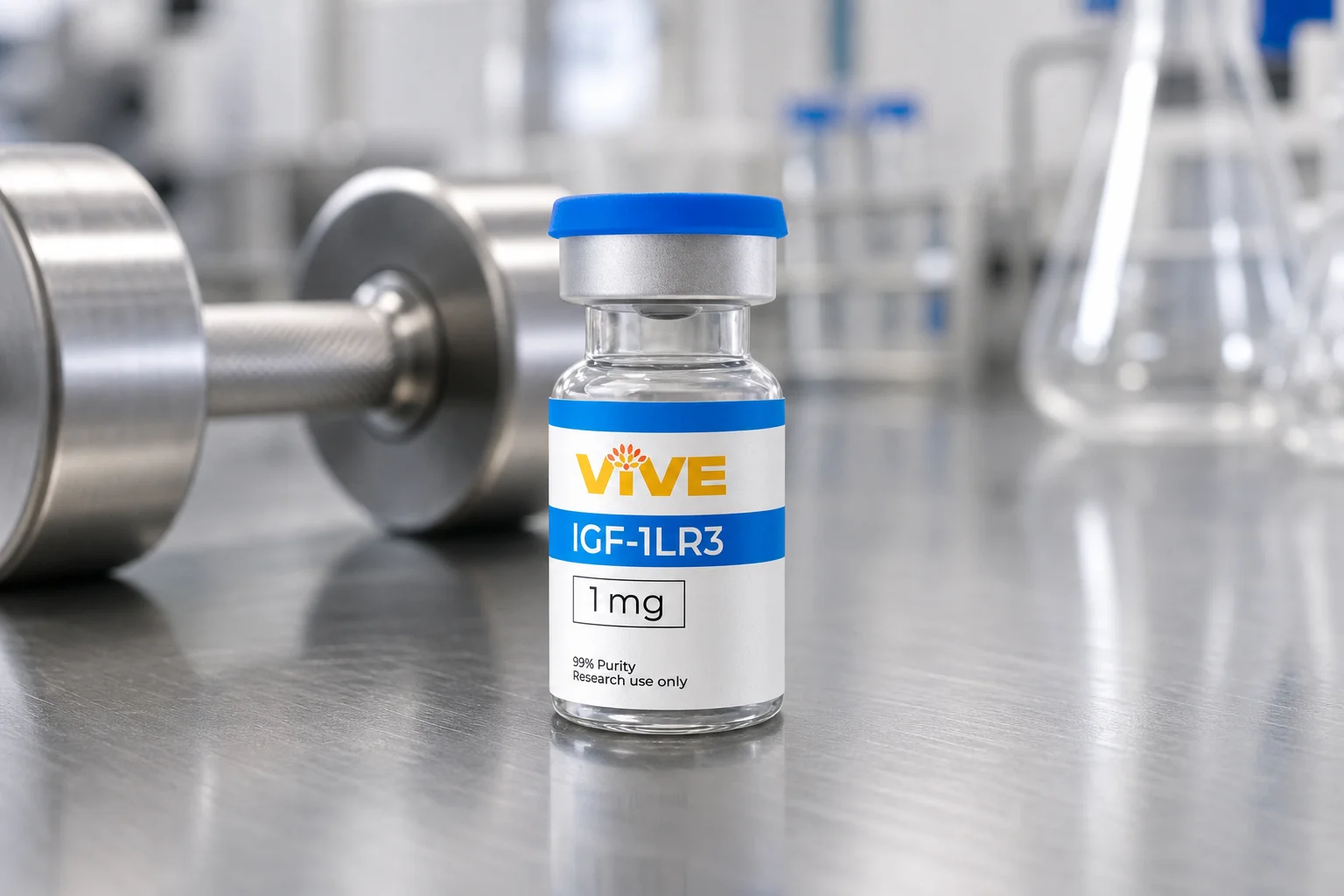
What is PEG-MGF? It is a pegylated form of mechano growth factor, a splice variant of IGF-1 studied for its signaling role in muscle tissue after mechanical load. Researchers comparing IGF-1 pathway peptides often review the IGF-1 LR3 product overview alongside PEG-MGF literature for context.
By Vive Team
Mechano Growth Factor Explained: What Is PEG-MGF?
Mechano growth factor (MGF) is a splice variant of the IGF-1 gene that muscle tissue expresses locally after mechanical stress or micro damage from exercise or injury. Unlike systemic IGF-1, which the liver produces and releases into the bloodstream, MGF is synthesized directly inside working muscle tissue, where researchers believe it plays an early signaling role in the growth factor cascade tied to tissue repair.
PEG-MGF simply refers to a pegylated version of this splice variant. Pegylation is the process of attaching chains of polyethylene glycol to a peptide backbone. This process increases the peptide's average molecular weight, which slows renal clearance and extends how long the compound remains detectable in circulation during a research protocol. Polyethylene glycol chains also form a hydration shell around the peptide that can shield its surface electric charge from immune recognition, a property researchers use PEG conjugation to study when comparing native and modified peptide behavior.
MGF was first characterized by exercise physiology researchers in the early 2000s studying how muscle tissue adapts to mechanical loading, and it has since become one of the more closely watched IGF-1 splice variants in muscle repair research. That early work is part of why PEG-MGF, and the pegylation strategy behind it, developed as a tool for extending the observation window researchers get with an otherwise fast-clearing signaling peptide.
Splice Variants, Satellite Cells, and Muscle Tissue Signaling
The IGF-1 gene produces more than one splice variant, and each appears to serve a distinct signaling window in the muscle repair timeline. Research models describe MGF as an early-response splice variant that activates dormant satellite cells, the resident stem cells embedded within muscle tissue that are responsible for muscle repair and regeneration following mechanical damage. Once activated, satellite cells proliferate and fuse into existing muscle fibers, a process central to how researchers model recovery from exercise-induced micro-tears.
The IGF-1 gene is also described using the labels IGF-1Ea and IGF-1Ec in some literature, with IGF-1Ec corresponding to the human splice variant most closely associated with the MGF signal. This naming distinction matters in research settings because studies referencing IGF-1Ec, IGF-1Eb, or MGF are not always describing the exact same molecule, and comparing results across papers requires checking which splice variant a given study actually measured.
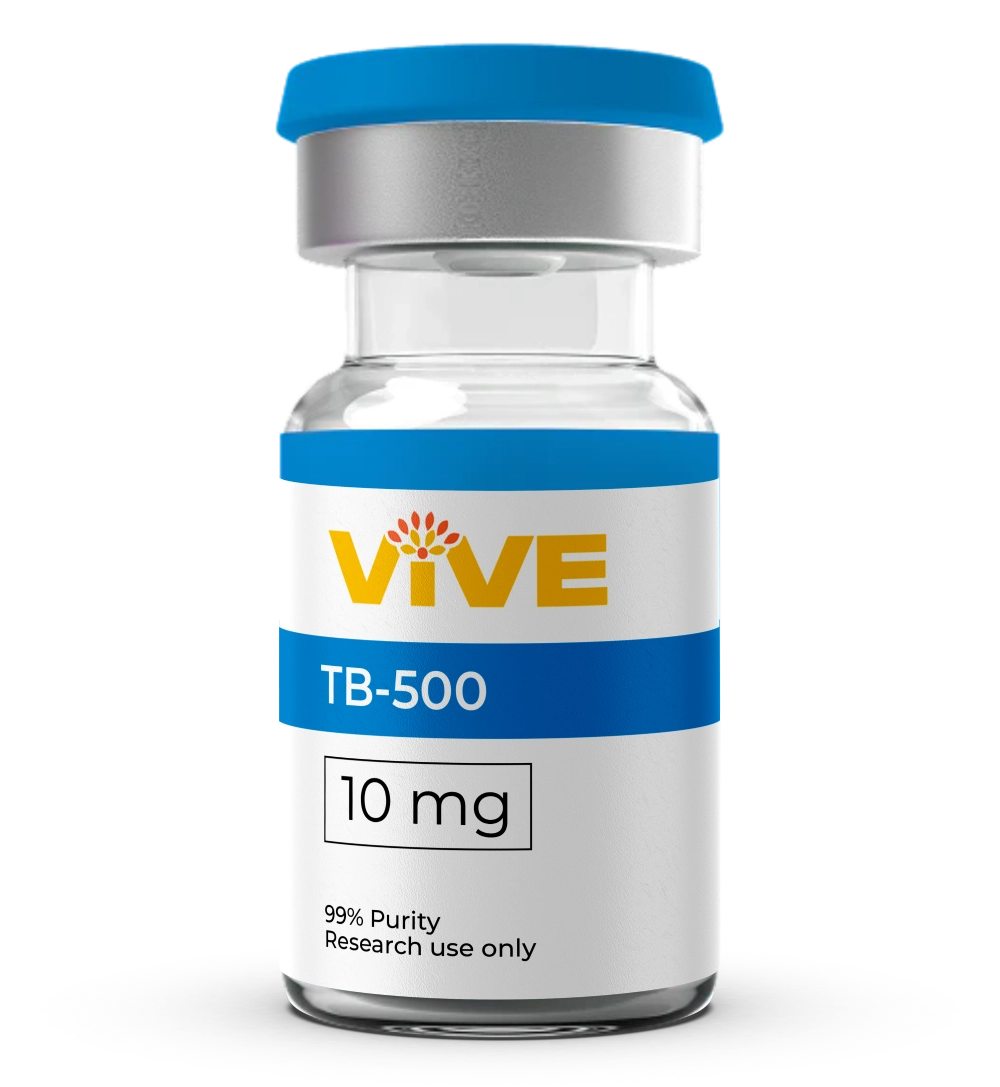
For example, preclinical literature has examined how the balance between MGF-driven satellite cell activation and later-phase systemic IGF-1 signaling shapes the overall growth factor response to injury. This two-stage model is one reason PEG-MGF draws separate research interest from broader tissue repair peptides such as TB-500 recovery-research data, which researchers typically study for a more systemic recovery mechanism rather than the localized satellite cell activation associated with MGF splice variants.
PEG Ratio, Molecular Weight, and the Chemistry Behind Pegylation
The term PEG ratio typically refers to the size of the polyethylene glycol chain attached relative to the base peptide, most often expressed as the average molecular weight of the PEG polymer itself, such as PEG 2000 or PEG 5000. A higher PEG ratio generally produces a larger overall molecular weight and a longer research half-life, though it can also change how the modified peptide behaves in binding assays compared to the unmodified original. Selecting a PEG ratio is typically based on the specific research goal: a smaller PEG chain preserves more of the peptide's original binding behavior, while a larger chain favors half-life extension over binding fidelity.
Pegylation offers several practical research utilities beyond half-life extension, including improved solubility and reduced aggregation during storage. Third-party laboratories commonly confirm the identity and purity of a pegylated peptide using high-performance liquid chromatography and mass spectrometry, with gas chromatography sometimes supplementing analysis of related small-molecule byproducts. Reviewing a certificate of analysis that reports the confirmed average molecular weight is one of the more reliable ways to verify that a PEG-MGF sample matches its labeled specification.

Reconstitution, Storage, and Handling in Research Settings
Lyophilized PEG-MGF, like most peptides, must be reconstituted with a sterile diluent before use in a research protocol. Most labs reach for bacteriostatic water for peptide reconstitution rather than plain sterile water, since the added benzyl alcohol preservative allows a multi-dose vial to be stored and drawn from repeatedly without contamination. For step-by-step technique, see our guide to the complete guide to reconstituting peptides with bacteriostatic water, which walks through volume calculations and slow-swirl mixing that protect peptide structure.
Handling protocols call for care at each step: wiping the vial cap with an alcohol swab before each draw, keeping the reconstituted solution refrigerated, and shielding it from light and heat. Peptides are proteins, and like dietary protein from food, an oral dose would be broken down by stomach acid and enzymes before it ever reached circulation. That is why research protocols rely on injectable routes delivered just beneath the skin rather than a capsule or oral solution. Most reconstituted research peptides remain stable under refrigeration for only a limited window, and researchers should log the reconstitution date directly on the vial cap or an accompanying label so a sample is never used past its documented stability period.
Current Research, Side Effects Reporting, and Sourcing Considerations
Published literature on MGF and its pegylated analog remains concentrated in preclinical and in vitro settings rather than large controlled human trials, so any side effects reporting available today comes primarily from animal models and cell culture work. The National Institutes of Health hosts a substantial body of peer-reviewed articles on IGF-1 splice variant biology, and researchers are encouraged to read primary literature directly rather than rely on secondhand summaries when evaluating both mechanism and side effects data.
Some preclinical work in this broader research area has looked at muscle tissue repair following exercise-induced strain or surgery in animal models, though findings from animal studies do not establish outcomes in humans, and PEG-MGF is sold strictly for laboratory and research use, not for human or veterinary consumption. Researchers new to this literature are encouraged to consult their institution's animal care and use guidelines before designing any protocol involving MGF or PEG-MGF, since oversight requirements vary by institution and jurisdiction.
When sourcing PEG-MGF or any related research peptide, evaluate the supplying company on the same criteria every time: independent third-party purity testing, transparent batch-specific certificates of analysis, and clear research-use-only labeling. Price alone is a poor filter, since the lowest-price products are frequently the ones cutting corners on testing.
Researchers building a broader peptide research library often pair MGF splice variant literature with adjacent categories, such as our guide to what is ss-31 (elamipretide)? mitochondrial peptide research guide, to compare how different molecular modification strategies affect stability and delivery across peptide classes.
Frequently Asked Questions
What is PEG-MGF used for in research? PEG-MGF is studied as a longer-acting version of mechano growth factor, the IGF-1 splice variant muscle tissue produces after mechanical stress. Researchers use it to investigate satellite cell activation and early-phase muscle repair signaling. It is sold strictly for laboratory research and is not approved or intended for human use.
How is PEG-MGF different from unmodified MGF? Unmodified MGF has a short half-life and breaks down quickly once introduced into a research system. Attaching polyethylene glycol increases the peptide's average molecular weight, which slows clearance and extends the window researchers have to observe its effects during a protocol.
What PEG ratio is typical for pegylated research peptides? Most pegylated peptides, including PEG-MGF, use PEG chains in the 2000 to 5000 average molecular weight range, though heavier PEG chains are sometimes tested. The exact ratio depends on the manufacturer's synthesis process and the half-life extension the research design calls for.
Are there known side effects associated with PEG-MGF? Controlled human side effects data is limited, since most available findings come from animal models and in vitro work rather than human trials. Researchers should review primary literature and treat any reported findings as preliminary rather than confirmed outcomes in humans.
How should PEG-MGF be stored and reconstituted? PEG-MGF ships as a lyophilized powder that should be reconstituted with bacteriostatic water and kept refrigerated afterward. The vial cap should be cleaned with an alcohol swab before every draw, and the solution should be shielded from light and used within the timeframe noted on its certificate of analysis.
Start Your PEG-MGF Research with Verified VivePeptides Products
VivePeptides supplies research-grade peptides with batch-specific certificates of analysis so researchers can verify identity and purity before any protocol begins. Browse the VivePeptides catalog to compare PEG-MGF-adjacent peptides and reconstitution supplies in one place before starting your next protocol.
Research Use Only
All information in this article is intended for educational and research purposes only. VivePeptides products are not intended for human or veterinary use.