Research Article
PT-141 vs Melanotan 2: Melanocortin Research Guide
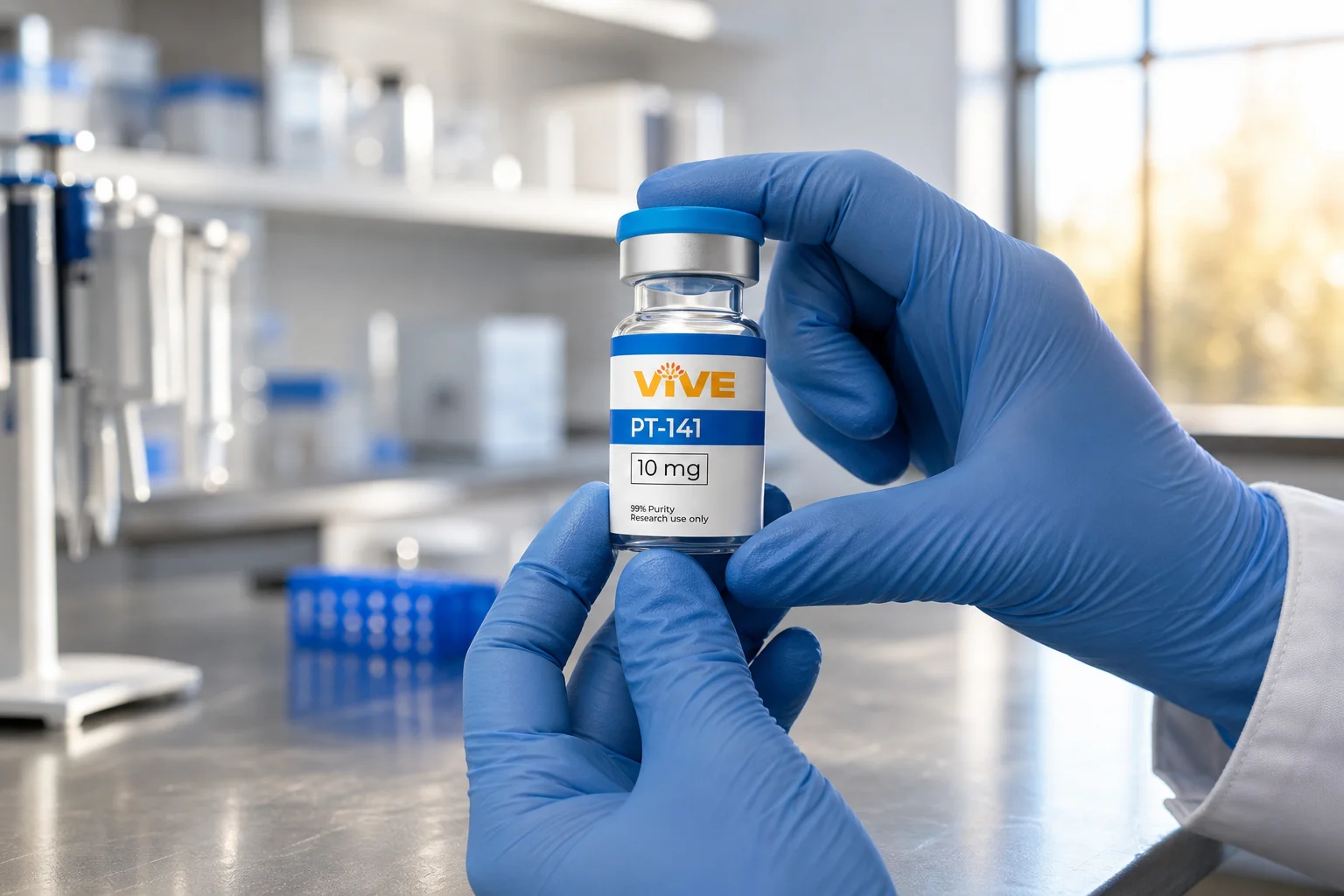
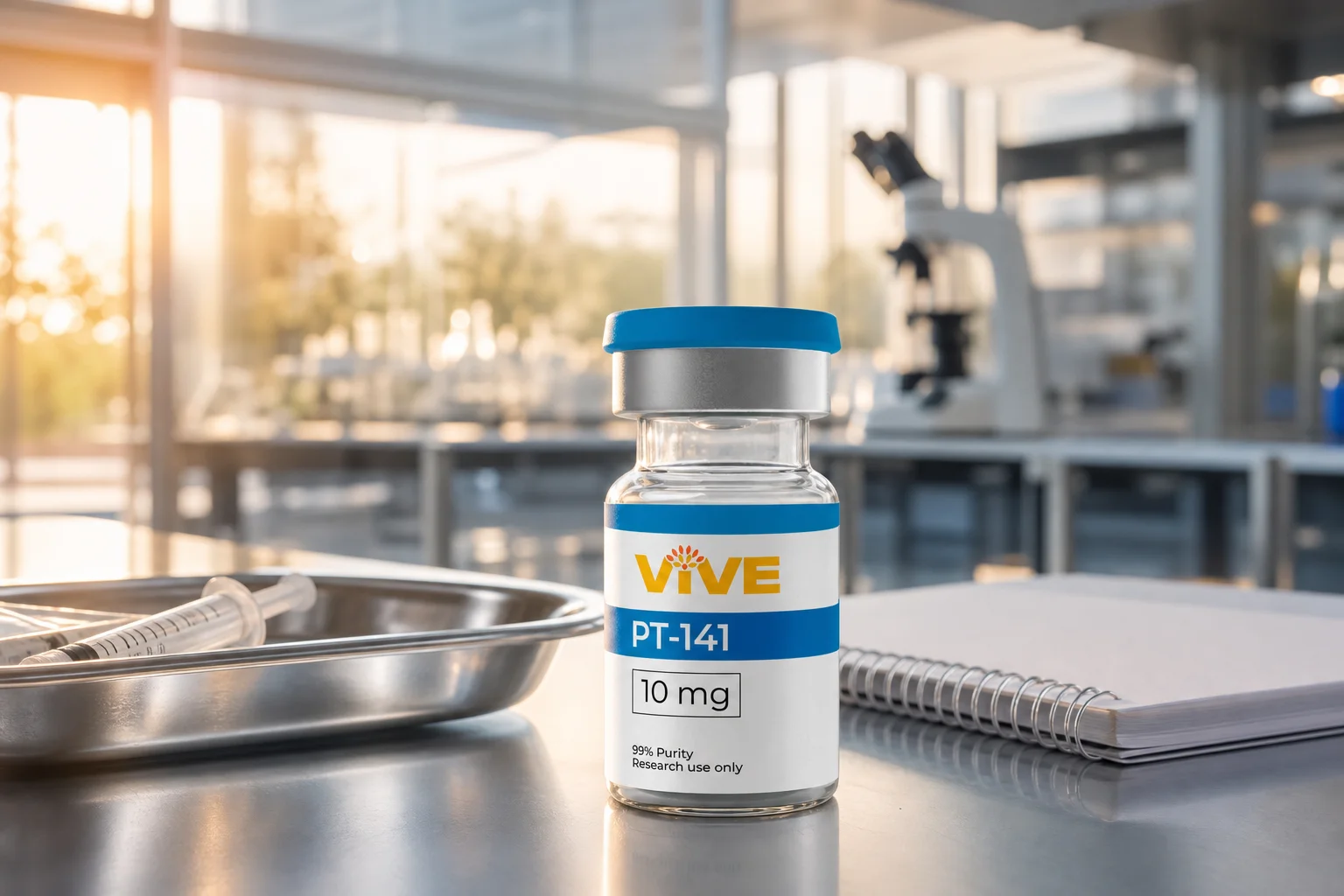
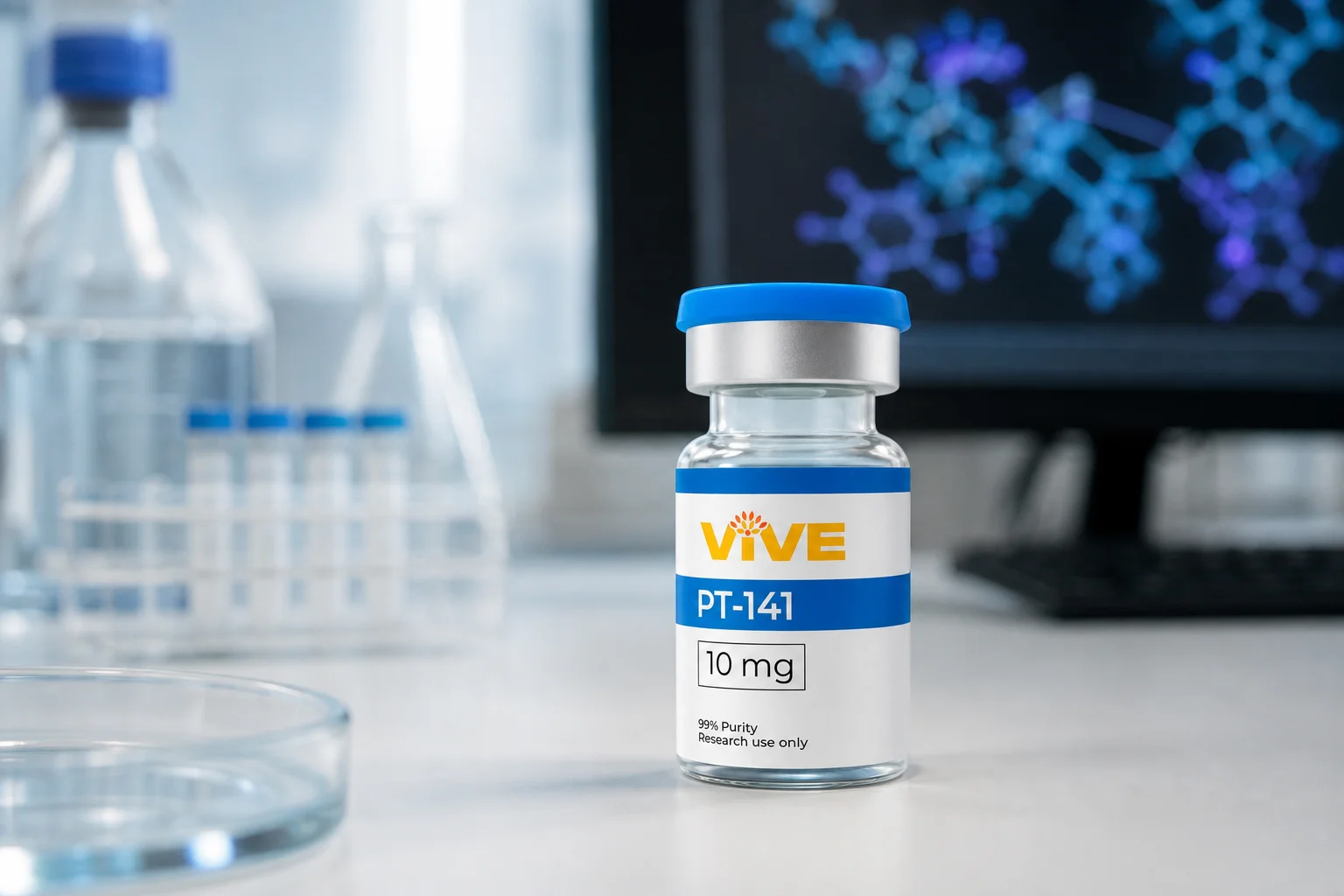
PT-141 vs Melanotan 2 comes down to receptor targeting: PT-141 (bremelanotide) selectively engages the melanocortin pathway tied to sexual arousal research, while Melanotan 2 activates a broader set of melanocortin receptors linked to pigmentation. This guide compares their mechanisms, side effect profiles, and research use, starting with research-grade PT-141.
By Vive Team
PT-141 vs Melanotan 2: How the Two Peptides Differ
Both peptides trace back to alpha-MSH (melanocyte-stimulating hormone) research, but they were engineered for different jobs. Melanotan 2 (MT-2) is a synthetic, non-selective melanocortin receptor agonist, meaning it activates several receptors in the melanocortin family at once, including the MC1R pathway that drives pigmentation in melanocyte research. PT-141 was developed by modifying that same core structure to reduce MC1R activity while preserving activity at the central melanocortin receptors associated with sexual arousal. That is why sexual function research is where PT-141 draws the most attention, while pigmentation and tanning studies remain the primary draw for Melanotan 2.
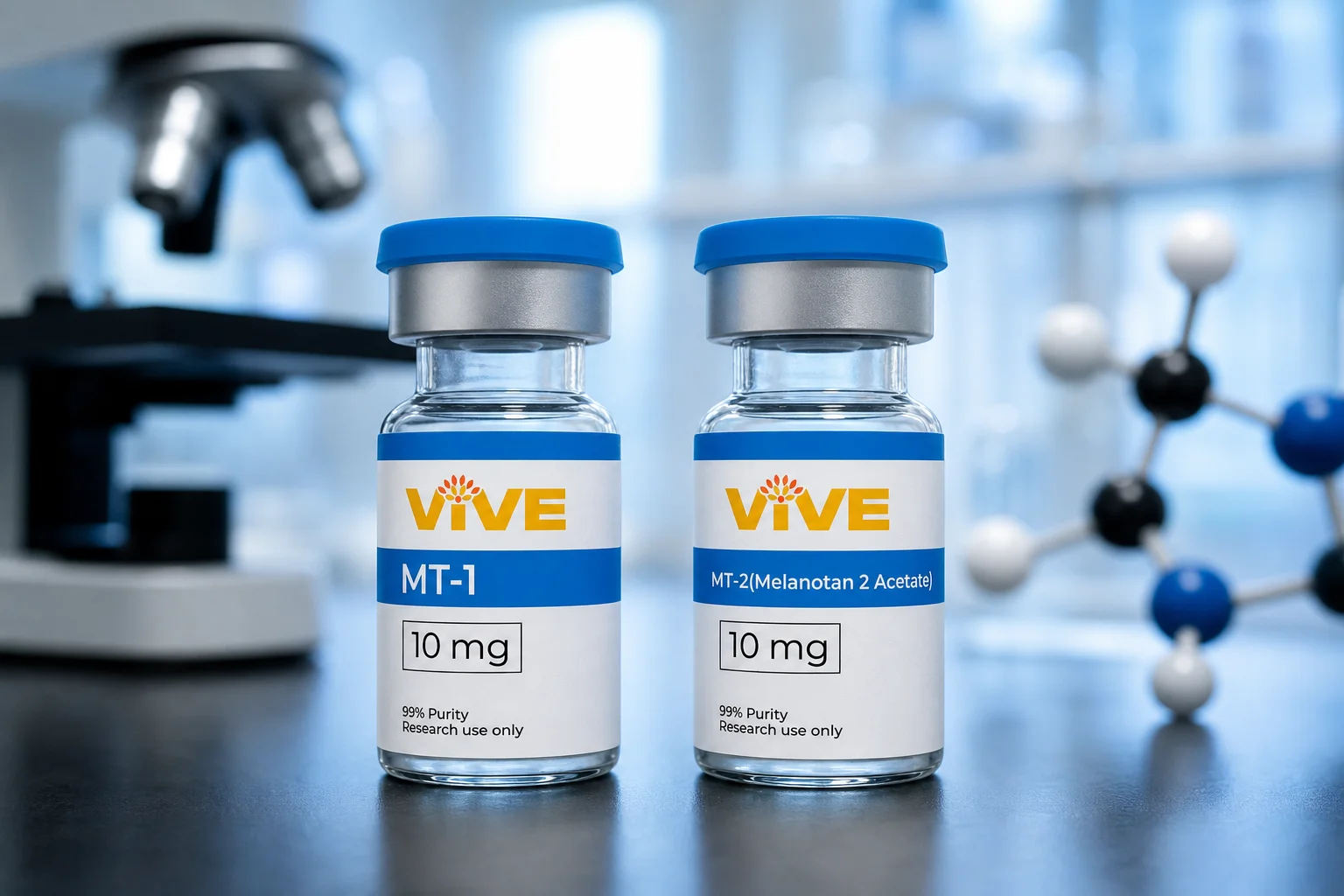
Melanotan 2 also belongs to a small family of alpha-MSH analogs built around the same cyclic backbone. Melanotan 2 dosage research works with a compound that has broad receptor activation, while Melanotan 1 (MT-1) was engineered for a narrower, MC1R-selective pigmentation profile that produces slower, more even melanocyte activation without the appetite and arousal effects tied to MC4R engagement. That structural distinction shapes the melanotan compound family differences researchers weigh before choosing one compound over another for a given protocol.
How Do PT-141 and Melanotan 2 Work Differently in the Body?
Melanocortin receptors are a family of five G-protein-coupled receptors, MC1R through MC5R, spread across the skin, brain, and immune system. MC1R sits on melanocyte skin cells and drives pigmentation, while MC3R and MC4R sit in the central nervous system and are linked to appetite and sexual arousal pathways in research literature. Melanotan 2 is considered a non-selective agonist: it binds broadly across this melanocortin receptor family, which is what makes it useful for pigmentation research but also means its effects are harder to isolate to one system. PT-141 was built with tighter receptor selectivity in mind, favoring the central melanocortin receptors, MC4R in particular, over MC1R, which shifts its research profile toward sexual function rather than skin pigmentation.
That selectivity is also the reason bremelanotide, PT-141's pharmaceutical name, became the first compound in this class to reach FDA approval, marketed as Vyleesi for hypoactive sexual desire disorder in premenopausal women. Its approved mechanism of action offers a rare instance of clinical trial grade data behind a melanocortin compound, something Melanotan 2 has never had since it has never gone through FDA review. Both compounds are supplied here strictly for laboratory research use, not for human consumption.
What Are the Side Effect Differences Between PT-141 and Melanotan 2?
Because both peptides act on overlapping melanocortin receptors, they share some of the same reported effects, most notably nausea and flushing, particularly with early or first time exposure in a research setting. Nausea is listed as the most commonly reported adverse event in the FDA prescribing information for bremelanotide, which reflects PT-141's concentrated activity at the central melanocortin receptors involved in nausea signaling. Melanotan 2's broader activation across the melanocortin receptor family has been associated in research literature and user reports with a wider range of effects, including flushing, appetite changes, and spontaneous erections noted in some male research contexts, in addition to nausea.
Because Melanotan 2 has never completed FDA review, there is no standardized adverse event dataset for it comparable to what exists for bremelanotide. Any side by side comparison of the two should be read as a difference in reporting depth as much as a difference in actual effect, and researchers should document individual responses carefully rather than assuming either compound's profile from anecdotal reports alone.
How Do Dosing Protocols Compare Between PT-141 and Melanotan 2 in Research?
When it comes to PT-141 vs Melanotan 2 dosing, PT-141 has an unusually clear reference point because bremelanotide's approved form, Vyleesi, uses a fixed 1.75 mg subcutaneous dose delivered by autoinjector, a figure established through the clinical trials that supported its FDA approval. That gives researchers a validated anchor point when designing dose response protocols.
Melanotan 2 has no equivalent. Because it has never been reviewed or approved by the FDA, there is no standardized, publicly verified dosing figure for it, and any specific microgram amount attributed to Melanotan 2 online should be treated as unverified rather than a clinical standard. Researchers working with either compound typically follow their own institution's reconstitution and handling protocols rather than a single universal number. Questions about a specific research protocol, including reconstitution volume or storage, are best directed to a lab's own standards rather than a generalized chart.
Can PT-141 and Melanotan 2 Be Used Together in a Research Stack?
Some research protocols combine peptides that act on different receptor systems to study combined effects, but PT-141 and Melanotan 2 overlap directly at MC4R, which means stacking them may compound rather than diversify the effects being studied, including the nausea and flushing both are already associated with individually. Combining two compounds that act on the same central melanocortin receptor pathway also makes it harder to attribute an observed effect to one input or the other, which complicates data interpretation.
Whether a stack makes sense for a given protocol is a study design decision that depends on the specific research question being asked. It should be worked out on a protocol by protocol basis, in many cases with input from whoever is overseeing the research, rather than assumed as a default approach simply because both peptides are available.
Frequently Asked Questions
Is PT-141 basically the same as Melanotan 2? No. They share a structural origin, both are alpha-MSH analogs, but PT-141 was modified specifically to reduce MC1R activity and favor the central melanocortin receptor pathway tied to sexual arousal research, while Melanotan 2 retains broad activity across the melanocortin receptor family, including the MC1R pathway responsible for pigmentation. That receptor selectivity difference is what separates their research applications.
Which causes less nausea and flushing, PT-141 or Melanotan 2? There is no head to head clinical dataset comparing the two directly. Nausea is the most commonly reported adverse event in FDA prescribing information for bremelanotide, while Melanotan 2's broader receptor activation has been linked in research literature and user reports to a wider range of effects, including flushing. Neither has a verified numeric incidence rate suitable for a precise comparison.
Is PT-141 considered safer than Melanotan 2 in research settings? PT-141, as bremelanotide, is the only one of the two with FDA reviewed clinical trial data behind it, which gives researchers a documented safety and dosing reference. Melanotan 2 has never completed FDA review, so it lacks an equivalent standardized dataset. That difference in regulatory history, not a direct safety ranking, is the most accurate way to compare the two.
Does PT-141 cause skin tanning like Melanotan 2 does? PT-141 was specifically modified to reduce activity at MC1R, the melanocortin receptor most responsible for melanocyte pigmentation, so tanning is not considered part of its research profile the way it is for Melanotan 2. Melanotan 2's broader, non-selective receptor activity is what made pigmentation and tanning research its primary application from the start.
Which is more potent per microgram, PT-141 or Melanotan 2? There is no verified head to head binding affinity data comparing the two on a microgram basis, so a precise potency ranking cannot be stated accurately. The more meaningful difference between them is receptor selectivity, not raw potency: PT-141 concentrates its activity at the central melanocortin receptors tied to sexual arousal, while Melanotan 2 spreads activity across the broader melanocortin receptor family.
Browse Research-Grade Peptides at VivePeptides
Whether a protocol calls for PT-141's receptor-selective profile or Melanotan 2's broader melanocortin activity, both are available as research compounds through the full peptide library, sourced and handled to the same laboratory research standard.
Research Use Only
All information in this article is intended for educational and research purposes only. VivePeptides products are not intended for human or veterinary use.