Research Article
What Is PT-141 (Bremelanotide)? Complete Research Guide
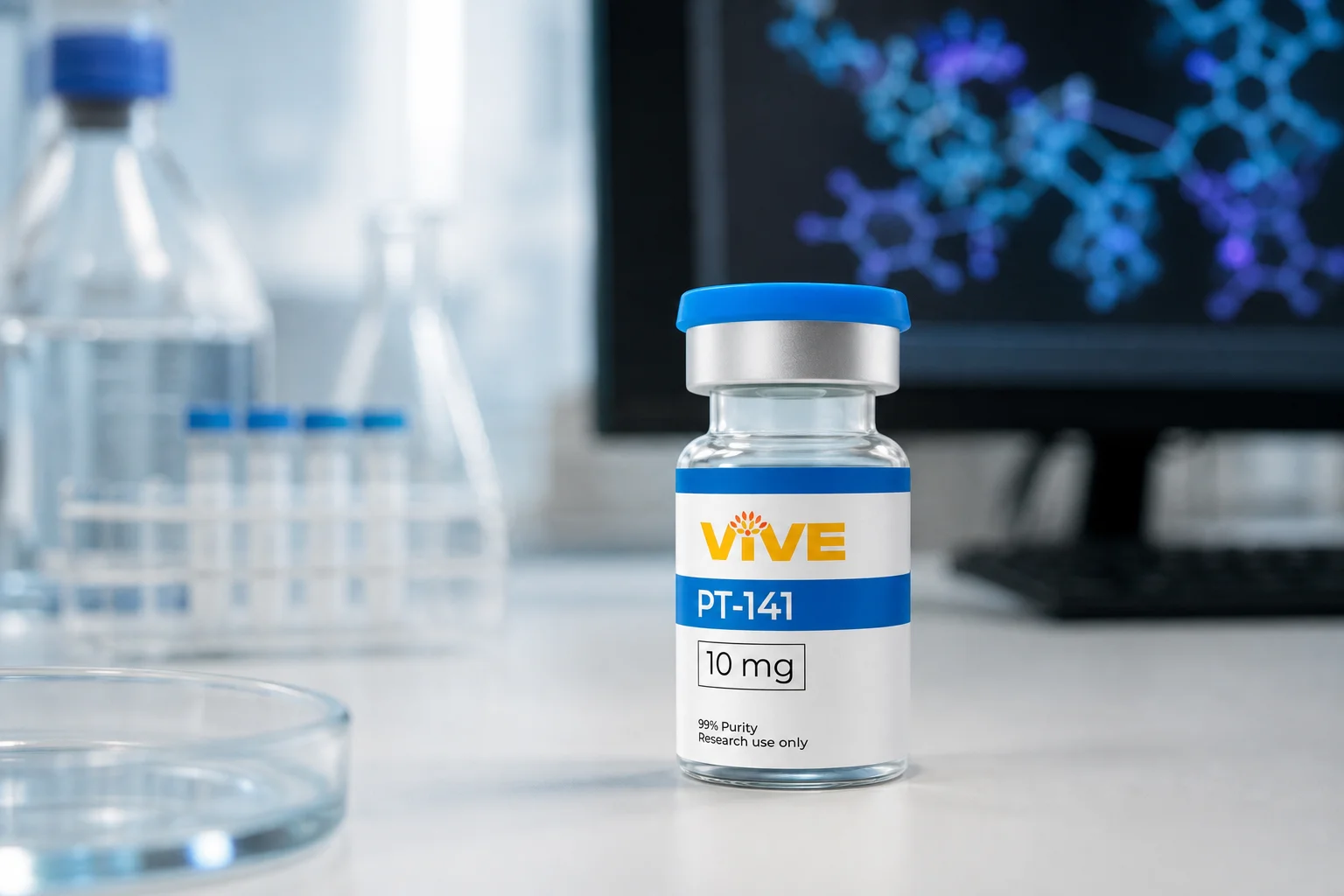
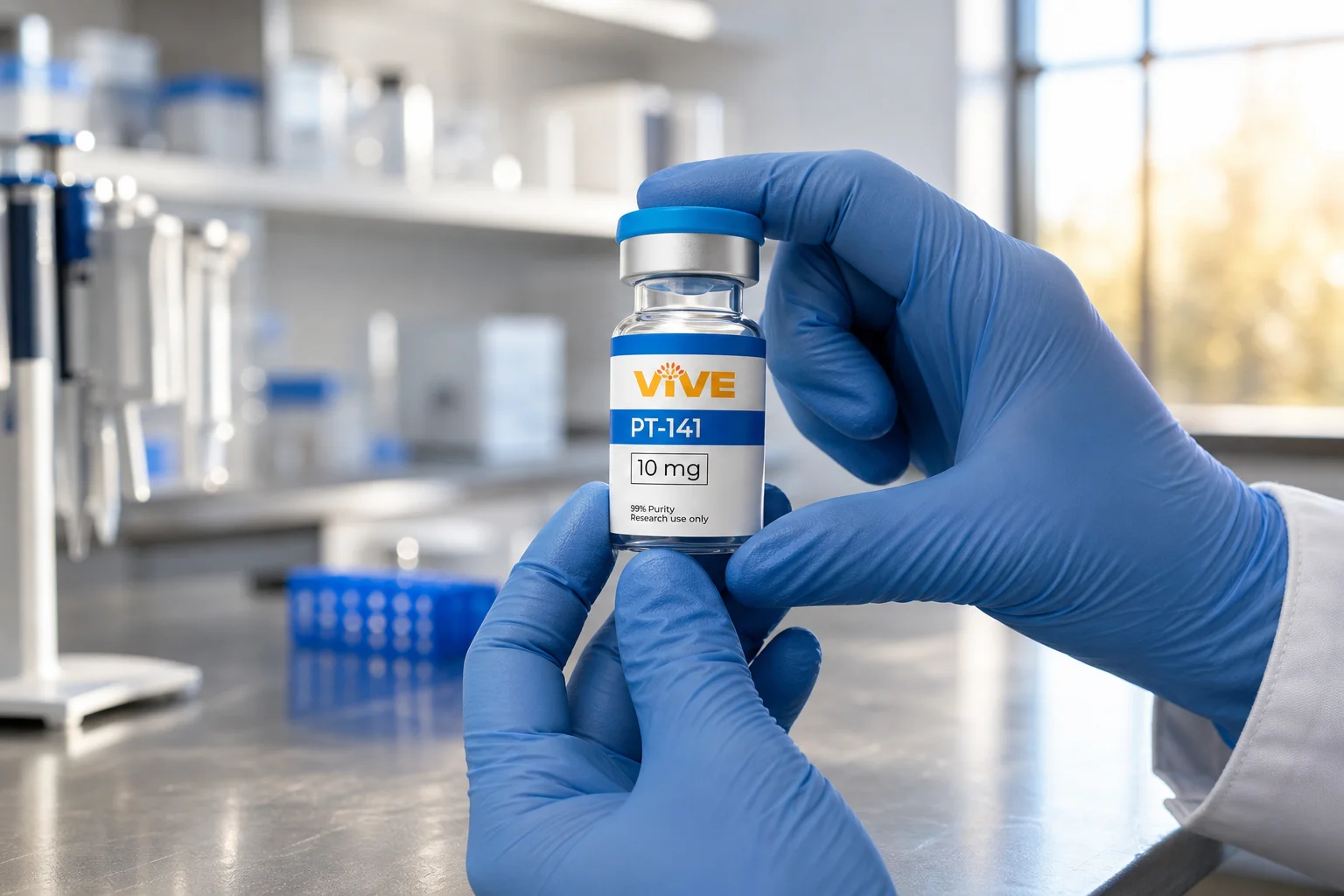
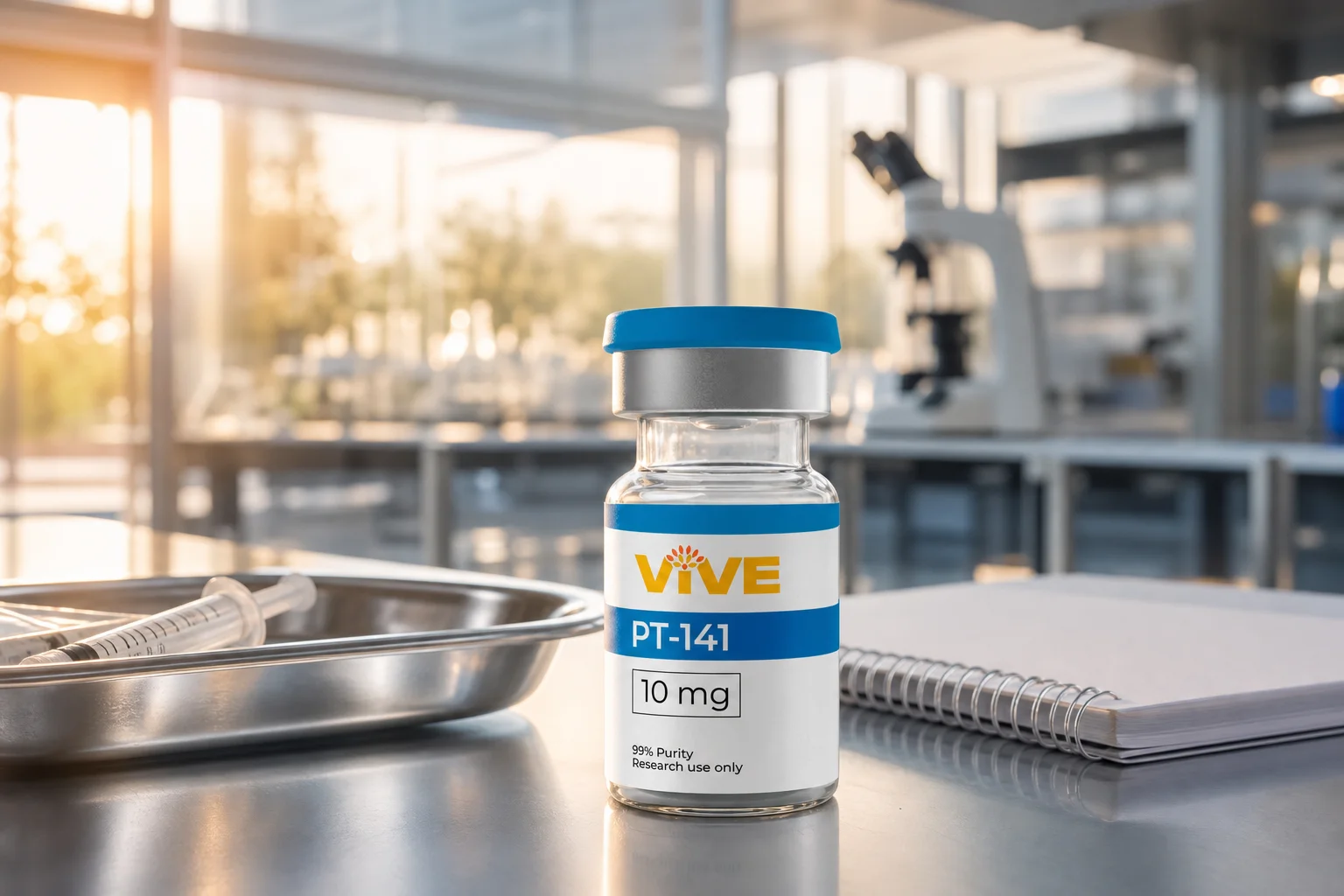
PT-141 (bremelanotide) is a synthetic melanocortin agonist peptide that targets melanocortin receptors in the brain to modulate sexual arousal and desire. Originally derived from Melanotan II research, bremelanotide pt-141 has become one of the most studied peptides addressing sexual dysfunction in both men and women through central nervous system pathways rather than peripheral vascular mechanisms.
The Melanocortin System and the Biology of Sexual Desire
The melanocortin system is a network of neuropeptides and receptors distributed throughout the brain and peripheral tissues. Melanocortin receptors (MC1R through MC5R) mediate a wide range of physiological processes, including pigmentation, energy homeostasis, and reproductive behavior. MC3R and MC4R, concentrated in hypothalamic and limbic regions, are the primary receptors associated with sexual desire and arousal.
Activation of these receptors initiates downstream dopaminergic signaling in circuits governing motivation and reward. This central mechanism distinguishes PT-141 fundamentally from phosphodiesterase type 5 inhibitors, which act on vascular smooth muscle. PT-141 initiates the arousal response upstream, at the level of the brain, before peripheral vascular changes occur.
For researchers studying the neurobiology of desire, this upstream action is the defining pharmacological feature of the compound.
How Bremelanotide PT-141 Works: Mechanism of Action
Bremelanotide pt-141 is a cyclic heptapeptide derived from alpha-melanocyte-stimulating hormone (alpha-MSH). Its modified amino acid sequence enables binding to melanocortin receptors in the hypothalamus, particularly within the paraventricular nucleus, a region with direct projections to spinal autonomic nuclei that regulate sexual activity.
Pfaus JG and colleagues (2004, Pharmacology Biochemistry and Behavior) demonstrated in preclinical models that melanocortin receptor activation increased appetitive sexual behaviors and solicitation responses. This research supported the hypothesis that central melanocortin signaling drives sexual desire as an initiating event rather than a secondary consequence of arousal.
Administration in research protocols is typically via subcutaneous injection. The peptide reaches peak plasma concentration within approximately one hour of subcutaneous injection, with a half-life near 2.7 hours. This delivery route bypasses first-pass hepatic metabolism, providing predictable bioavailability compared to oral formulations.

PT-141 Research in Erectile Dysfunction
The earliest clinical investigations of PT-141 focused on erectile dysfunction in male subjects. Wessells H and colleagues (1998, Journal of Urology) documented spontaneous erectile responses in healthy male volunteers following intranasal bremelanotide administration. This was the first human evidence that melanocortin agonism could produce a sexual response independent of tactile or visual stimulation.
Subsequent Phase II trials shifted to subcutaneous injection formulations with refined dosing. Diamond LE and colleagues (2006, Journal of Sexual Medicine) reported dose-dependent improvements in erectile function scores among men with erectile dysfunction who had not responded adequately to PDE5 inhibitors. This positioned PT-141 as a research candidate for a population with limited pharmacological alternatives.
The underlying mechanism involves MC4R-mediated activation of the paraventricular nucleus, which then signals spinal autonomic pathways controlling erectile tissue. Because this pathway operates independently of nitric oxide signaling, PT-141 remains pharmacologically active in cases where vascular-targeted treatments produce insufficient response.
PT-141 and Female Sexual Dysfunction
Research interest has expanded substantially toward female sexual dysfunction, particularly hypoactive sexual desire disorder (HSDD). HSDD is defined by persistent, distressing reduction in sexual desire not attributable to another disorder or medication, and treatment options historically available to women have been limited.
Clayton AH and colleagues (2016, Journal of Sexual Medicine) conducted a Phase IIb randomized controlled trial in premenopausal women diagnosed with HSDD. Participants receiving subcutaneous injection of bremelanotide reported statistically significant increases in satisfying sexual events and improved validated desire scale scores compared to placebo. The study documented meaningful clinical improvements in both sexual desire and sexual arousal outcomes.
In 2019, the FDA approved bremelanotide under the trade name Vyleesi for acquired, generalized HSDD in premenopausal women. That approval applies to pharmaceutical-grade formulations within a clinical treatment context and does not extend to research peptide use.
For researchers studying female sexual dysfunction, PT-141 remains one of the few compounds with demonstrated central mechanism data across multiple controlled trials.
Common Effects and Research Safety Considerations
Across clinical trials, a consistent common effects profile has been documented for bremelanotide. Include nausea as the most frequently reported adverse event, occurring in a dose-dependent pattern. Transient facial flushing and headache are also regularly noted in study populations.
Blood pressure is a critical monitoring parameter. Transient increases in blood pressure of approximately 6 mmHg systolic and 3 mmHg diastolic have been documented following subcutaneous injection, with peak onset near 12 minutes post-dose and resolution within 12 hours (Kingsberg SA et al., 2019, Obstetrics and Gynecology). Research protocols for PT-141 consistently exclude subjects with uncontrolled hypertension or significant cardiovascular risk.
Skin hyperpigmentation is a secondary effect associated with MC1R activity on melanocytes. This pharmacological property is shared with structurally related compounds, including Melanotan 2 (MT2), from which PT-141 was originally derived. The structural modification in PT-141 reduces but does not fully eliminate this effect.
Distinguishing PT-141 from Vascular-Targeted Therapies
The fundamental distinction between PT-141 and PDE5 inhibitors is anatomical. PDE5 inhibitors enhance nitric oxide signaling in vascular endothelium, requiring prior sexual stimulation and producing their primary effects in peripheral tissue. PT-141 acts at the level of the brain, increasing sexual arousal through melanocortin receptor activation before downstream vascular changes occur.
This distinction has direct implications for research design. Sexual dysfunction driven primarily by desire deficits or central arousal impairment represents a mechanistically different target than dysfunction driven by vascular insufficiency. PT-141 is studied specifically for the former category, either as a standalone intervention or in combination paradigms, though combination safety data remains limited to early-phase cohorts.
Researchers interested in the broader peptide pharmacology landscape can review PT-141 and the full catalog at VivePeptides.
Frequently Asked Questions
What is PT-141 (bremelanotide) and how does it work?
PT-141 (bremelanotide) is a synthetic cyclic heptapeptide classified as a melanocortin agonist. It works by binding to MC3R and MC4R melanocortin receptors in the hypothalamus, activating dopaminergic signaling pathways associated with sexual desire and arousal. Unlike PDE5 inhibitors, it acts centrally in the brain rather than on peripheral vascular tissue, initiating the arousal response through a neurological mechanism.
What sexual dysfunction conditions has PT-141 been studied for?
PT-141 research has addressed erectile dysfunction in men and hypoactive sexual desire disorder in women. Clinical trials have documented improvements in erectile function scores, sexual desire, and satisfying sexual activity across both populations. The 2019 FDA approval of bremelanotide for HSDD in premenopausal women reflects the strongest clinical evidence base from the female sexual dysfunction research arm.
What are the most common effects reported in PT-141 research?
Common effects documented across clinical trials include nausea (the most frequent, dose-dependent), transient facial flushing, headache, and brief increases in blood pressure. Kingsberg SA et al. (2019, Obstetrics and Gynecology) reported blood pressure increases averaging 6 mmHg systolic, resolving within 12 hours. These effects are consistently reported in published trial safety data.
How is PT-141 administered in research protocols?
PT-141 is administered via subcutaneous injection in clinical and preclinical research settings. This route provides predictable absorption and bypasses hepatic first-pass metabolism. Peak plasma concentrations are reached approximately one hour post-injection. Early investigations used intranasal delivery, but subcutaneous injection became the standard format in later-phase trials due to improved pharmacokinetic consistency.
How does PT-141 compare to Melanotan peptides structurally?
PT-141 was derived from Melanotan II through structural modification designed to reduce tanning activity while preserving MC3R and MC4R binding affinity relevant to sexual arousal. Both compounds are melanocortin agonist peptides, but PT-141 is more selective for the receptors associated with sexual response and carries a modified sequence that attenuates the pronounced pigmentation effects seen with Melanotan compounds.
PT-141 (bremelanotide) is available for research purposes through VivePeptides. Browse the full peptide catalog, review product specifications, and add to cart directly at VivePeptides Shop.
Research Use Only
All information in this article is intended for educational and research purposes only. VivePeptides products are not intended for human or veterinary use.