Research Article
How Peptide Purity Degrades Over Time | VivePeptides

Peptide purity degrades over time through three interconnected chemical pathways, oxidation, aggregation, and hydrolysis, each accelerated by heat, light, moisture, or repeated freeze-thaw cycles. Understanding how peptide purity degrades over time lets researchers protect sample integrity from the moment they browse the VivePeptides catalog through final use in the lab.
By Vive Team
How Peptide Purity Degrades Over Time at the Molecular Level
Every peptide leaves the lab with a defined purity percentage, typically 95 percent or higher for research-grade material, established through high-performance liquid chromatography and confirmed by mass spectrometry. These two analytical methods work together: mass spectrometry verifies the molecular weight of the finished peptide against its expected value, confirming the amino acid sequence assembled correctly during synthesis, while chromatography separates out any truncated fragments or side products left over from the synthesis process. A peptide chain is only as reliable as the amino acids used to build it, and even a single incorrect amino acid, a misfolded protein structure, or a trace contaminant can lower purity below the threshold researchers need for reproducible results. This baseline purity, documented on a certificate of analysis, is the number that starts declining the moment a vial is exposed to heat, light, or moisture, regardless of how carefully it was manufactured. For labs running clinical-adjacent protocols, that documentation supports reproducibility across the full body of work a research program produces over months or years.
From that baseline, peptide purity degrades over time along three overlapping chemical pathways: oxidation, aggregation, and hydrolysis. Each pathway attacks a different part of the molecule, and most degraded samples show evidence of more than one process happening at once. Oxidation alters the chemical structure of specific amino acids, aggregation causes individual peptide molecules to stick together into larger clusters, and hydrolysis breaks the peptide bonds that hold the amino acid chain together. Researchers tracking peptide quality across a study's timeline typically monitor all three, since a sample that looks physically unchanged can still carry a meaningfully altered molecular weight profile once it reaches analytical testing. In research and wellness science settings alike, this distinction between visible stability and true chemical stability matters more than appearance ever will.
Oxidation: Chemical Reactivity Breaks Down Sensitive Amino Acids
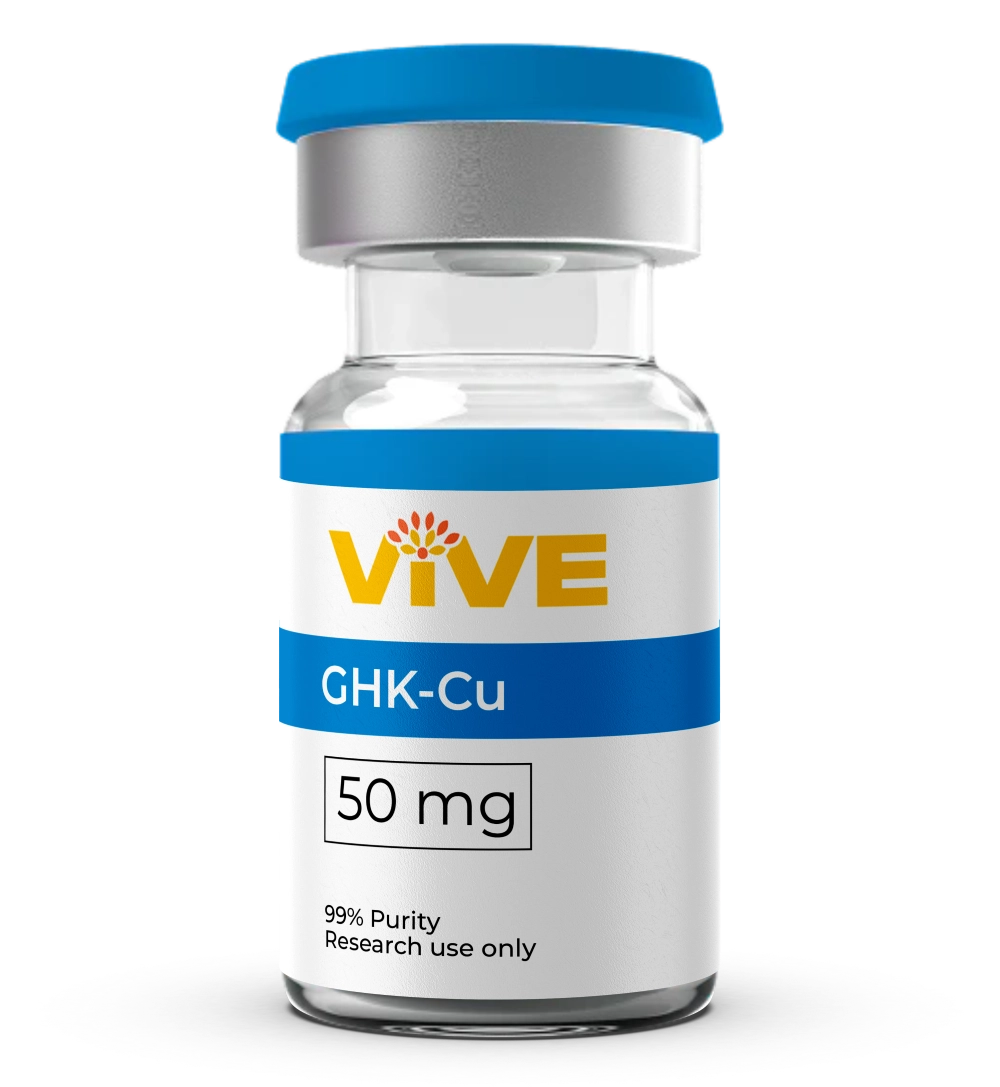
Oxidation is one of the clearest illustrations of how peptide purity degrades over time in a research setting. Certain amino acids, particularly methionine, cysteine, and tryptophan, contain side chains that react readily with oxygen, especially once a lyophilized peptide has been reconstituted into liquid form. This reaction adds oxygen atoms to the amino acid side chain, shifting the peptide's molecular weight by a small but detectable amount. Mass spectrometry can flag this shift immediately, since an oxidized peptide registers a mass several units higher than its unoxidized counterpart. Light exposure accelerates oxidation considerably, which is why amber vials and dark storage are standard practice across the peptide research community. GHK-Cu, a peptide frequently used in skin and tissue-related research, is especially prone to these shifts given its copper-binding structure, which makes consistent light control a meaningful protocol variable rather than an afterthought. Even brief exposure during weighing or transfer steps can register on a follow-up mass spectrometry reading.
Aggregation: When Peptide Molecules Clump Into Larger Structures
Aggregation happens when individual peptide molecules bond to one another instead of remaining dispersed in solution, forming clusters that range from soluble oligomers to visible precipitate. Hydrophobic peptides and those with a higher net charge are more prone to this behavior, particularly at higher concentrations or after repeated freeze-thaw cycles. Once aggregation begins, the peptide's effective molecular weight in solution increases, and the proteins involved may lose the structural conformation that supported their original activity in an assay. Agitation, such as vigorous shaking during reconstitution with bacteriostatic water for peptide reconstitution, can also introduce mechanical stress that speeds up clustering, so gentle swirling is generally preferred over shaking. This same clustering risk applies to growth-focused research compounds, which tend to be especially concentration-sensitive compared to smaller peptide fragments. Filtering a reconstituted solution before use is one additional step some labs adopt to catch aggregation early.

Hydrolysis: Water Exposure Breaks Peptide Bonds
Hydrolysis is a chemical reaction in which water molecules break the peptide bonds linking individual amino acids together, gradually cutting a full-length chain into shorter fragments. This process accelerates naturally in acidic or alkaline solutions, at warmer temperatures, and with extended time in liquid form, which is why reconstituted peptides carry a shorter usable window than their lyophilized form. A peptide fragment produced by hydrolysis shows a distinctly lower molecular weight under mass spectrometry, and depending on where the bond broke, the resulting piece may no longer resemble the original active sequence at all. This is one of the primary reasons research protocols recommend reconstituting only the volume needed for near-term use rather than preparing large batches in advance, since human error during handling, such as inconsistent swirling or delayed refrigeration, can quietly compound the problem. Buffer choice during reconstitution also plays a measurable role in how fast hydrolysis proceeds.
Peptide Storage and Handling Practices That Preserve Quality
Proper peptide storage conditions slow all three degradation pathways at once. Lyophilized peptides generally remain stable in a freezer for extended periods, while reconstituted peptides should move to refrigeration and be used within a defined window, often measured in weeks rather than months. This is precisely how peptide purity degrades over time when storage handling protocols are inconsistent: a vial left at room temperature, exposed to light, or repeatedly freeze-thawed will show measurably lower purity on retesting than an identical vial stored correctly from the start. Minimizing air exposure during reconstitution, choosing bacteriostatic water suited for research use rather than plain saline, and labeling vials with reconstitution dates all support consistent peptide quality across a study. Wellness and health-focused labs handling blood or tissue samples apply the same storage discipline, since an analytical instrument cannot distinguish between a peptide that failed on the bench and one that failed in the freezer. Because most researchers order peptides online rather than through a local supplier, documenting handling conditions from the moment a shipment arrives becomes part of maintaining data integrity, not just an administrative afterthought. A degraded sample is not only a scientific inconvenience, it also represents a loss relative to the price paid for research-grade material in the first place, whether the compound sits alongside dietary protein sources or other food-derived amino acid references in a lab notebook.
Frequently Asked Questions
How quickly does peptide purity degrade after reconstitution? Degradation speed depends on the specific peptide, but many reconstituted compounds show measurable purity loss within two to four weeks under refrigeration, and considerably faster at room temperature. Lyophilized peptides remain stable for much longer. Mass spectrometry retesting is the most reliable way to confirm current purity rather than relying on visual inspection alone, especially before a new phase of a study begins.
Can oxidation be detected without lab equipment? Not reliably. Oxidation frequently produces no visible change in color or clarity, even though the amino acid structure and molecular weight have already shifted. Mass spectrometry or chromatography analysis is required to confirm whether a sample still meets its original purity specification for research use, since appearance alone cannot substitute for analytical confirmation.
Does freezing prevent all forms of degradation? Freezing significantly slows hydrolysis and aggregation by limiting molecular movement, but repeated freeze-thaw cycles can themselves promote aggregation over time. A single, stable freezer temperature with minimal cycling supports peptide quality far better than frequent temperature changes between uses, and a dedicated research freezer reduces the number of open-door cycles a vial experiences.
Is a cloudy solution always a sign of degradation? Cloudiness or visible particulate often indicates aggregation, but a clear solution is not automatically pure. Hydrolysis and oxidation frequently proceed without any visible change at all, which is why analytical testing rather than appearance is the standard most research protocols rely on when confirming whether a sample is still usable.
How does peptide purity relate to molecular weight readings? Purity and molecular weight are connected but distinct measurements. A peptide can register the correct molecular weight and still contain impurities from incomplete synthesis, while a shift in molecular weight almost always signals that a degradation pathway, whether oxidation, aggregation, or hydrolysis, has already begun to alter the sample.
Protect Every Vial With Research-Grade Storage Practices
Purity is only as good as the handling behind it, so pair every study protocol with reconstitution supplies built for consistency, including research-grade GHK-Cu and the reconstitution materials that support it.
Research Use Only
All information in this article is intended for educational and research purposes only. VivePeptides products are not intended for human or veterinary use.