Research Article
AOD-9604 vs Tesamorelin: Metabolic Research Compared
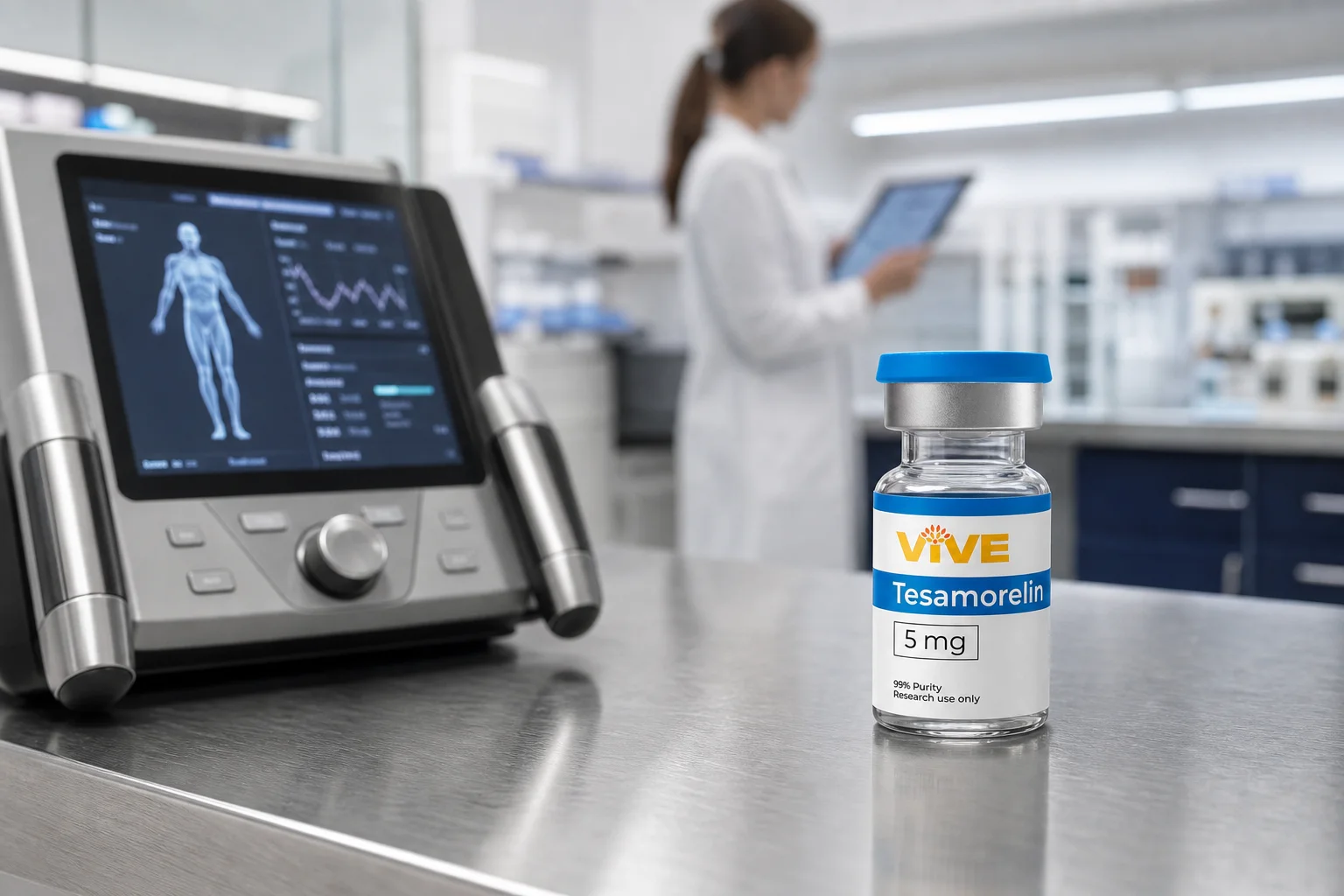
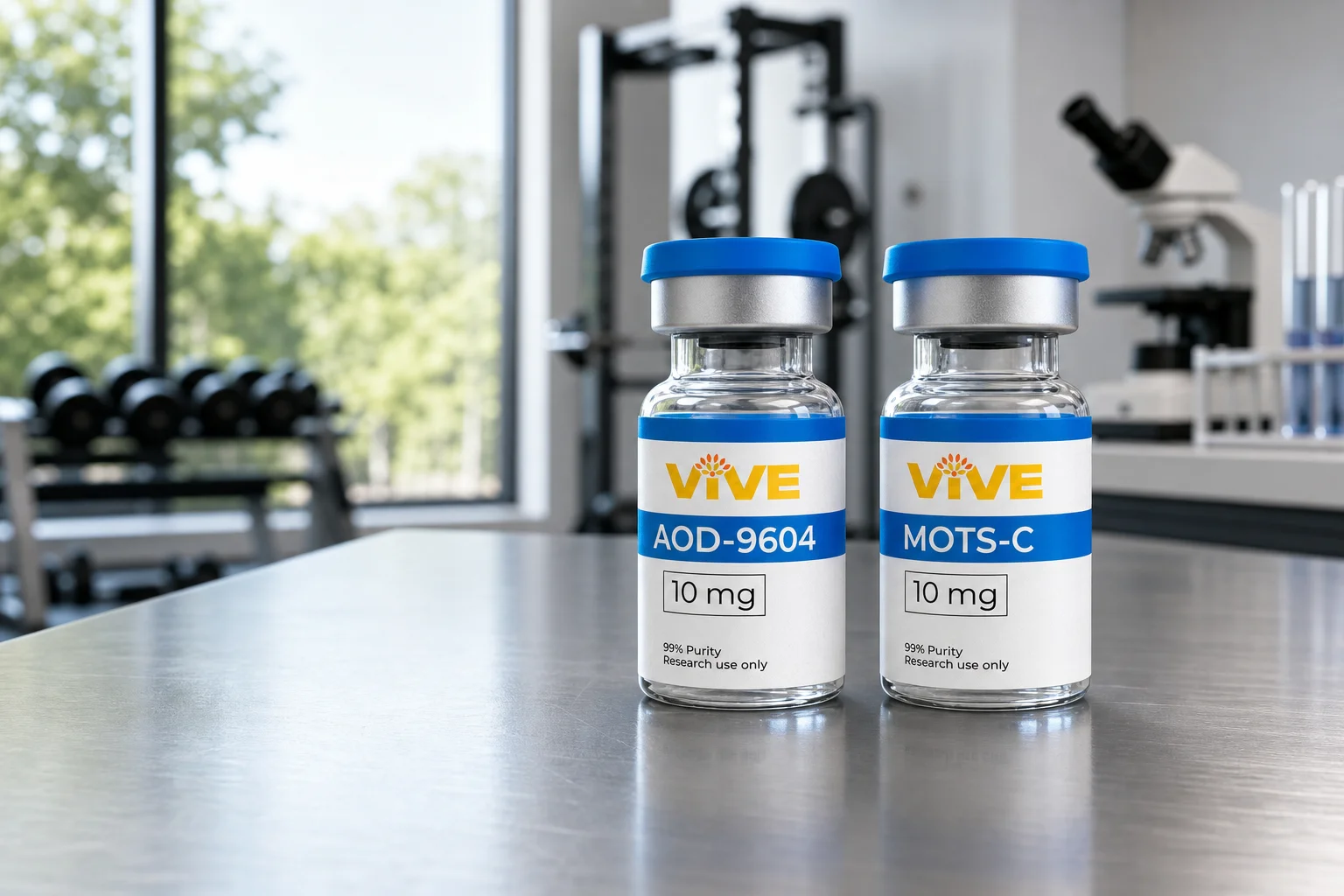
AOD-9604 vs Tesamorelin research comparisons come up often among researchers studying fat metabolism and growth hormone pathways, since both peptides intersect with adipose tissue signaling but work through different mechanisms. AOD-9604 is a modified growth hormone fragment, while Tesamorelin is a GHRH analog available for review in the research-grade peptide catalog, each with a distinct research history.
By Vive Team
What Is AOD-9604 and How Does It Work in Metabolic Research?
AOD-9604 is a modified fragment of human growth hormone, specifically the region known as hGH fragment 176-191. Researchers isolated this fragment because it appears to retain the lipolytic (fat-breakdown) activity associated with the growth hormone molecule, without carrying the same effects on blood glucose or tissue growth that come with full-length growth hormone. In laboratory and early clinical research, AOD-9604 has been studied as a tool for investigating how the body mobilizes and breaks down stored fat within adipose tissue.
The proposed mechanism centers on stimulating lipolysis, the process by which fat cells release stored triglycerides for use as energy, while limiting lipogenesis, the formation of new fat stores. This selective activity is why AOD-9604 continues to draw interest in peptide therapy research focused on weight loss and broader metabolic function, even though it has not received regulatory approval for any clinical indication. All peptides discussed in this article are intended strictly for laboratory and research use, not for human consumption or clinical treatment.
What Is Tesamorelin and How Does It Work in Metabolic Research?
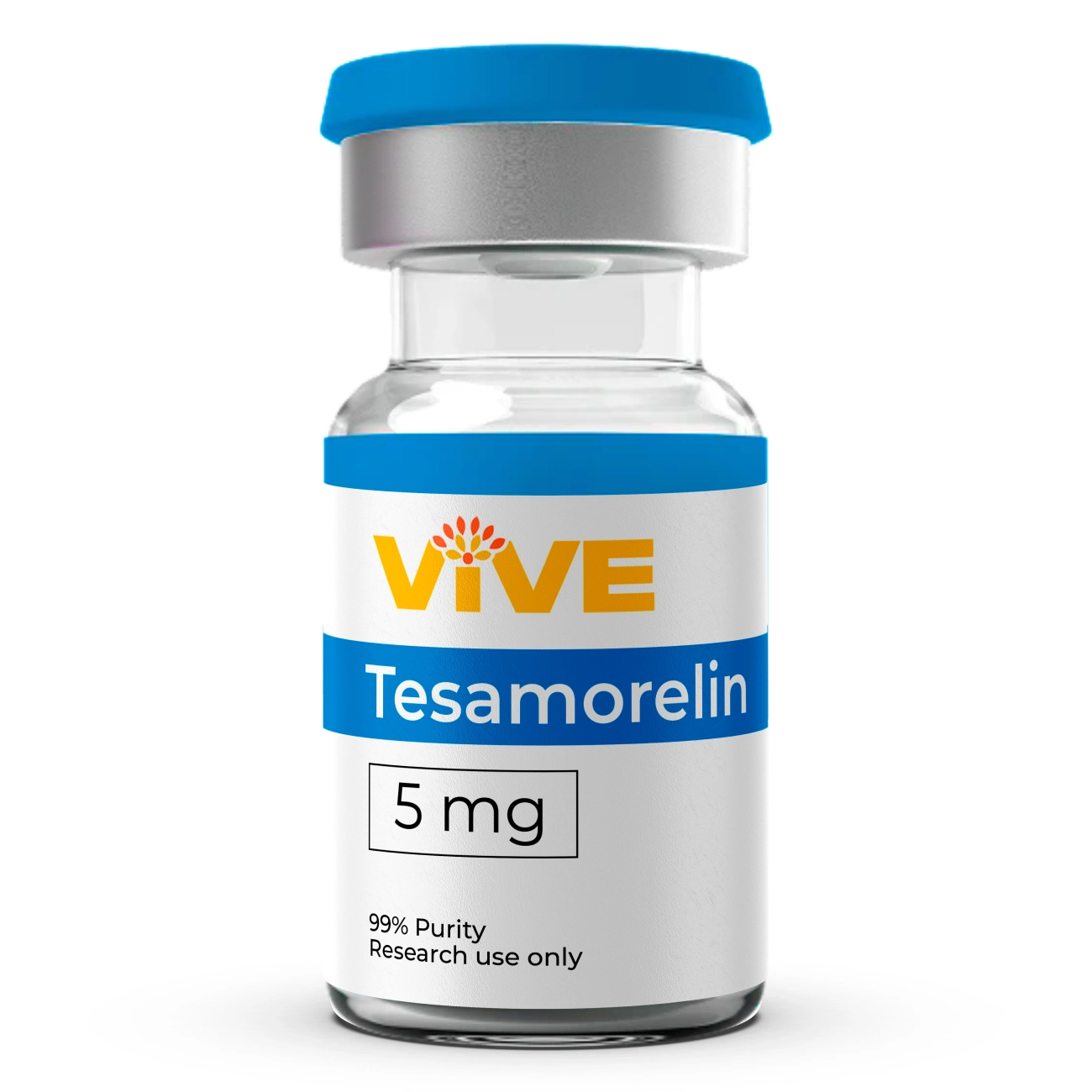
Tesamorelin is a synthetic analog of growth hormone releasing hormone (GHRH), the hypothalamic signal that prompts the pituitary gland to secrete the body's own growth hormone. Rather than introducing a growth hormone fragment directly, Tesamorelin dosage research is built around amplifying the body's natural growth hormone pulse, which in turn raises downstream signaling molecules such as IGF-1.
Tesamorelin carries FDA-approved status for a specific clinical indication tied to visceral adipose tissue reduction in a defined patient population, which places it in a different regulatory category than AOD-9604 and most other research peptides. That approval covers a lipodystrophy-related indication and is unrelated to the research-use products discussed here. Because of that regulatory history, Tesamorelin has a comparatively established published research base, though researchers should review primary literature directly rather than relying on summarized figures.
Mechanism of Action: How AOD-9604 and Tesamorelin Differ
The core mechanistic distinction in AOD-9604 vs Tesamorelin research comes down to where each molecule acts. AOD-9604 is studied as a peptide fragment believed to act more directly on fat cell activity, independent of a full growth hormone surge. Tesamorelin, as a GHRH analog, works upstream at the pituitary level, stimulating the body's own growth hormone release pattern rather than supplying a growth-hormone-derived fragment.
This difference in mechanism shapes how each peptide is positioned in metabolic research. AOD-9604 research questions tend to focus on localized lipolytic signaling and fat cell behavior. Tesamorelin research questions more often involve the growth hormone releasing hormone, pituitary axis, and downstream markers like IGF-1, given its mechanism of stimulating endogenous hormone release rather than acting as a fragment analog itself.
Fat Metabolism and Visceral Fat: What the Research Shows
AOD-9604 and Fat Metabolism Research
Early research on AOD-9604 explored its effect on fat metabolism, particularly whether it could promote fat loss without the metabolic tradeoffs associated with full-length growth hormone. Clinical trials assessing AOD-9604 for obesity did not consistently meet their primary endpoints against placebo, which shifted much of the ongoing interest toward mechanism-level questions rather than established clinical dosing claims. Current research use of AOD-9604 largely centers on understanding lipolytic signaling pathways rather than confirmed weight loss outcomes.
Tesamorelin and Visceral Fat Studies
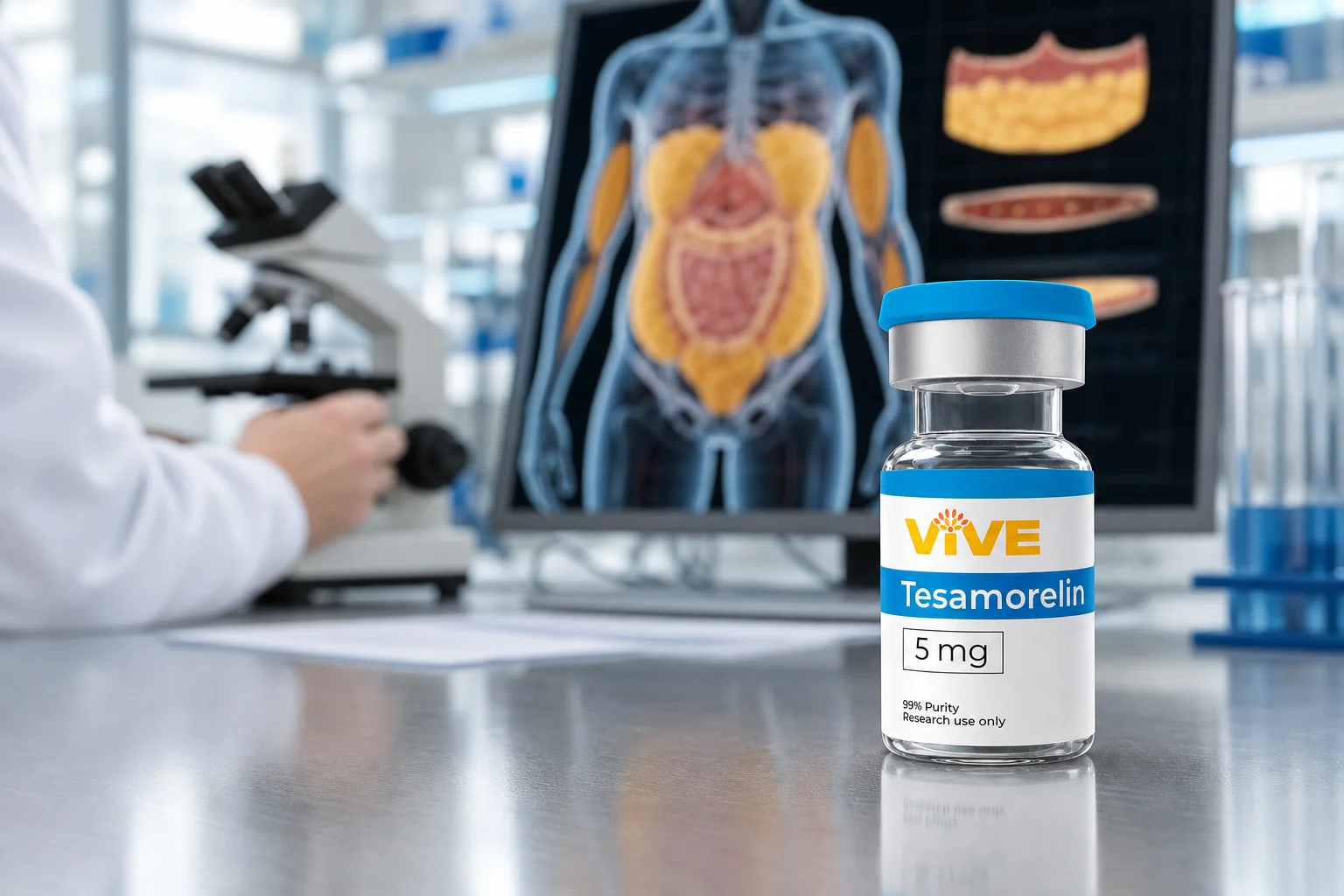
Tesamorelin research is more closely tied to visceral fat, the deeper abdominal fat surrounding internal organs, as distinct from subcutaneous fat stored under the skin. Because Tesamorelin's approved indication specifically addresses visceral adipose tissue, the bulk of its published evidence base focuses on that fat depot rather than overall body weight, a distinction researchers should keep in mind when interpreting outcomes across studies.
Comparing AOD-9604 and Tesamorelin Research Protocols and Study Subjects
When comparing AOD-9604 vs Tesamorelin research protocols directly, the differences in study design become clearer. Tesamorelin's clinical trial history generally involved adult subjects within the specific patient population tied to its approved indication, studied under structured, regulated protocols. AOD-9604 research has spanned a broader mix of preclinical and early-phase human studies, often in general adult populations being evaluated for fat metabolism and weight-related endpoints rather than a single defined condition.
Protocol design in both cases typically follows standard research conventions: a defined study duration, a consistent administration schedule set by the individual research protocol, and monitoring of relevant metabolic or body composition markers. Specific dosing schedules vary by institution and study design, so researchers should consult primary study protocols and institutional review guidance rather than generalized summaries.
Reported Research Safety Profiles of AOD-9604 vs Tesamorelin
Safety reporting differs between the two peptides largely because of their different regulatory histories. Tesamorelin's approved labeling documents safety data from formal clinical trials, and reported effects in that literature generally fall into classes such as injection site reactions and joint-related symptoms, which are typical of GHRH analog research broadly. AOD-9604, without an approved label, has a safety evidence base drawn mainly from earlier-phase trials and preclinical work, which is generally smaller in scope than Tesamorelin's.
In both cases, researchers should treat reported safety data as protocol-specific and consult primary sources and institutional review boards before designing any study, since individual research safety profiles can vary with dose, duration, and subject population.
Storage, Classification, and Combined Research Considerations
Are AOD-9604 and Tesamorelin the Same Class of Peptide?
No. AOD-9604 is classified as a growth hormone fragment analog, while Tesamorelin is classified as a GHRH analog. Both fall under the broader umbrella of peptides connected to the growth hormone axis, but they belong to distinct structural and mechanistic classes, which is part of why direct comparison requires looking at mechanism rather than treating them as interchangeable options.
Can AOD-9604 and Tesamorelin Be Studied Together?
Some research protocols explore combined peptide administration, but whether AOD-9604 and Tesamorelin can be studied together depends entirely on the specific research question, institutional approval, and protocol design. This is a decision that belongs to the researcher and their institutional review process rather than a general recommendation, and any combined protocol should account for the fact that each peptide acts through a different part of the growth hormone pathway.
Storage and Reconstitution Differences
Both peptides are typically supplied as a lyophilized powder that requires reconstitution before use in research settings, generally with bacteriostatic water, and both are commonly stored refrigerated and protected from light once reconstituted. Exact storage windows and reconstitution ratios vary by manufacturer and protocol, so researchers should follow the specific handling guidance provided with their peptide rather than assuming the two are interchangeable in storage requirements.
Frequently Asked Questions
Is AOD-9604 or Tesamorelin more studied for fat loss research? Tesamorelin has a larger formal clinical evidence base because of its FDA-approved indication, which generated structured trial data over time. AOD-9604 has been studied longer in a research context but did not progress through the same regulatory pathway, so its published evidence base is comparatively smaller and more mechanism focused.
Is Tesamorelin FDA-approved? Yes, Tesamorelin holds FDA-approved status for a specific clinical indication involving visceral adipose tissue reduction in a defined patient population. That approval does not extend to general weight loss use, and the research-grade Tesamorelin sold for laboratory purposes is intended strictly for research, not clinical treatment.
What research subjects are typically used in AOD-9604 versus Tesamorelin studies? Tesamorelin studies have generally involved adult subjects within the specific population tied to its approved indication. AOD-9604 research has included a broader range of preclinical models and early-phase adult human studies focused on fat metabolism and weight-related endpoints.
How long do AOD-9604 and Tesamorelin research protocols typically run? Study duration varies significantly by research question and institutional design, ranging from short mechanistic studies to longer trials tracking body composition changes. There is no single standard timeline for either peptide, so researchers should reference the specific protocol and study design in question.
What is the main practical difference between AOD-9604 and Tesamorelin research? AOD-9604 is studied as a growth hormone fragment believed to influence fat cells more directly, while Tesamorelin works upstream by stimulating the body's own growth hormone release through the GHRH pathway. That mechanistic difference is the main factor researchers weigh when choosing which peptide fits a given study question.
Start Your AOD-9604 and Tesamorelin Research with VivePeptides
Researchers comparing AOD-9604 vs Tesamorelin for a metabolic study can review current specifications and Shop research peptides through the VivePeptides catalog before finalizing a protocol.
Research Use Only
All information in this article is intended for educational and research purposes only. VivePeptides products are not intended for human or veterinary use.