Research Article
10ml vs 30ml Bacteriostatic Water: Which to Buy
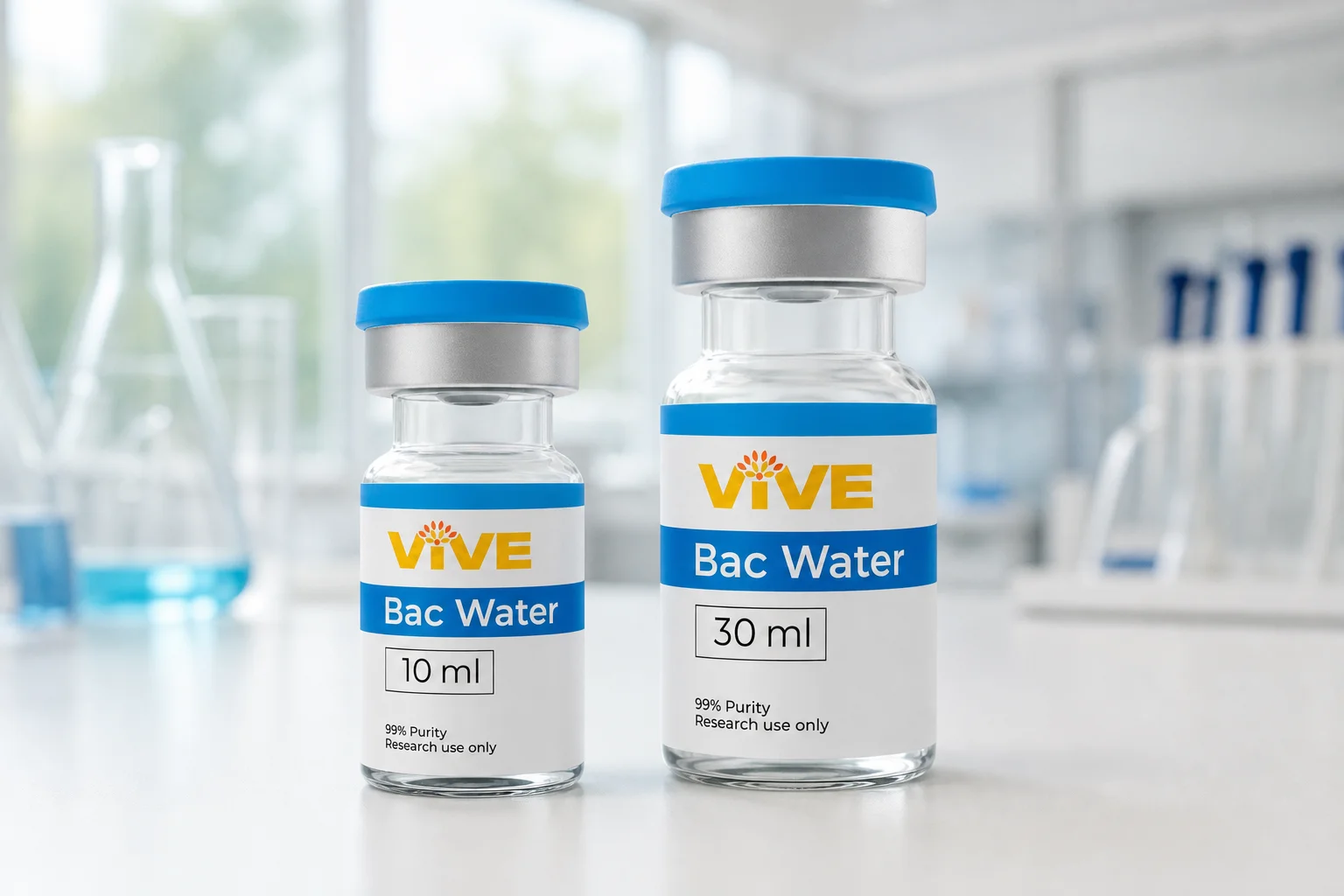
Choosing between 10ml vs 30ml of bacteriostatic water depends on how many peptide vials you plan to reconstitute and how quickly you will use them before the sterile water breaks down after opening. A 10ml bottle fits a single-peptide protocol without leftover waste, while a 30ml bottle of research-grade bacteriostatic water covers multiple vials or a longer research run.
By Vive Team
What Is the Difference Between 10ml and 30ml Bacteriostatic Water Bottles
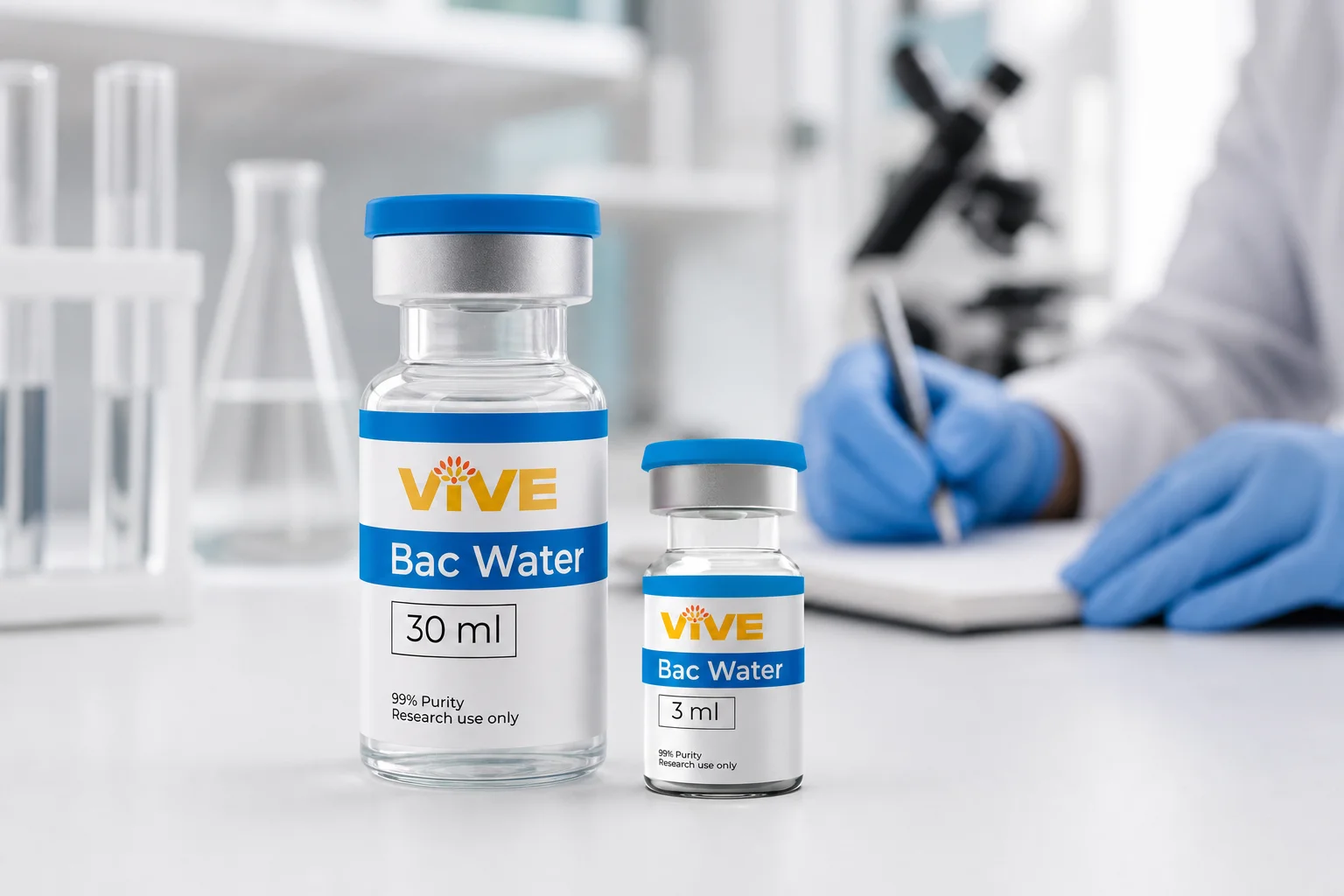
The core difference between a 10ml vs 30ml bacteriostatic water bottle is total volume, not formulation. Both sizes hold sterile water preserved with 0.9% benzyl alcohol, the same preservative used across the VivePeptides bacteriostatic water product line. Benzyl alcohol is what lets a multi-dose vial be punctured more than once without needing sterile technique to start over each time, unlike single-use sterile water for injection. The 10ml bottle is built for shorter research runs or a single peptide vial. The 30ml bottle carries three times the volume in the same style of rubber-stopped vial, which matters once you are reconstituting more than one peptide or running a longer protocol. Neither size changes the concentration of benzyl alcohol or how the diluent behaves once it meets lyophilized peptide powder. The only variable is how much bacteriostatic water you have on hand before you need to open a second bottle.
How Much Bacteriostatic Water Do You Actually Need Per Reconstitution Cycle
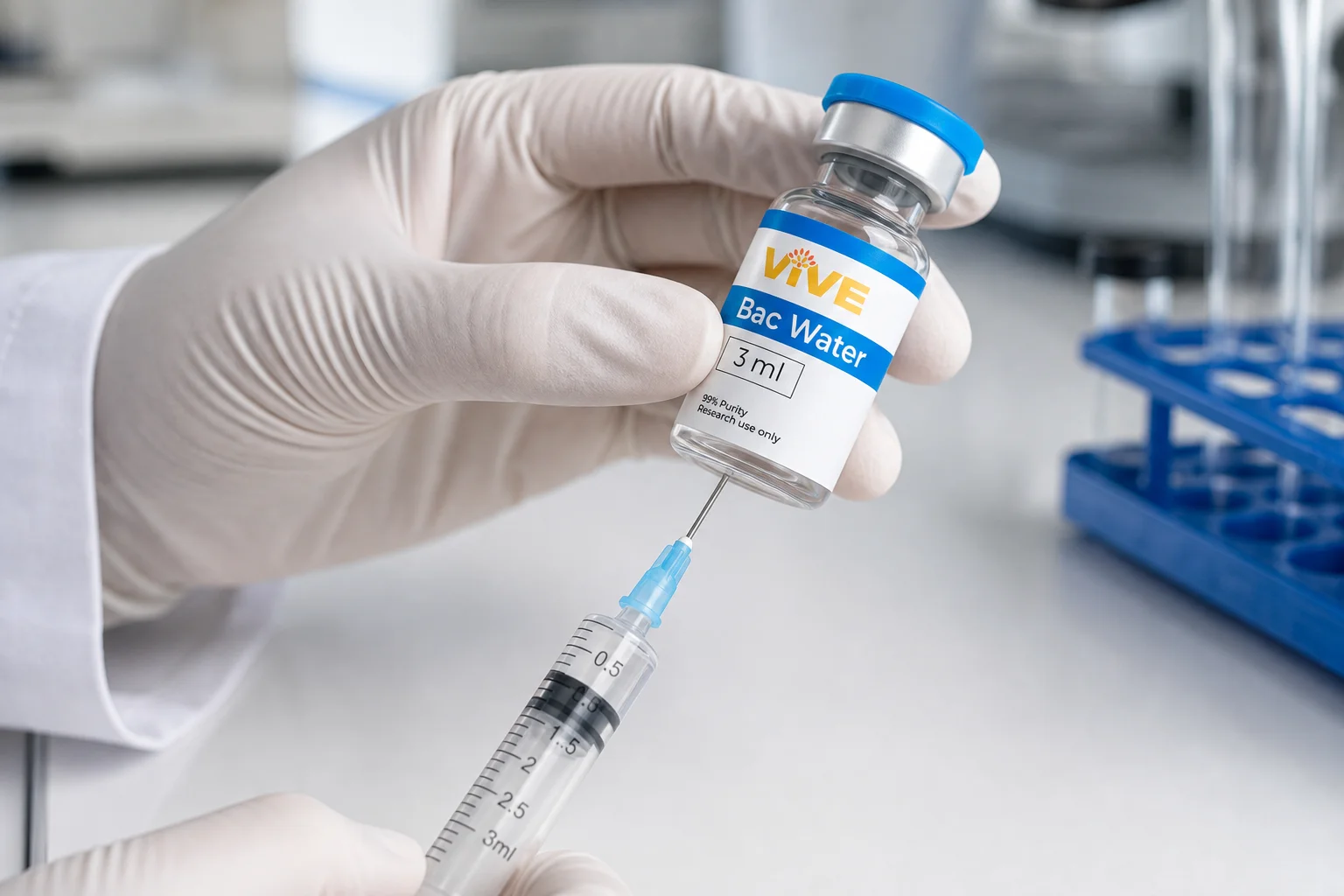
Reconstitution volume depends on the peptide, how many milligrams are in the vial, and how concentrated you want the final solution for your research protocol. Most researchers draw somewhere between 1ml and 3ml bacteriostatic water per vial, though the exact figure should follow the specific peptide's own reconstitution guidance rather than a single fixed rule. Each draw pulls a set volume through the rubber stopper, and repeated draws are exactly what the benzyl alcohol preservative is designed to support without breaking sterility. For BPC-157 reconstitution protocols and similar single-vial peptides, a 2ml vial draw is common, but this varies enough between products that it is worth checking each product's own documentation before drawing.
How Many Peptide Vials One Bottle Can Reconstitute
At a 2ml draw per vial, a 10ml bottle typically reconstitutes about five vials before it runs out, while a 30ml bottle stretches to roughly fifteen 2ml vials. Those numbers shift depending on draw size, so treat them as a planning estimate rather than a guarantee. A researcher working through a single peptide stack usually empties a 10ml bottle in the same window as one product. Someone rotating through several peptides in one cycle burns through volume faster and leans toward the 30ml bottle instead.
Is 10ml vs 30ml Bacteriostatic Water More Cost Effective Per ml
Cost per ml is usually the deciding factor once volume needs are settled, and the math tends to favor the larger bottle. Because a fixed portion of any bottle's price covers the vial, the rubber stopper, and packaging rather than the water itself, spreading that fixed cost across 30ml instead of 10ml usually brings the effective cost per ml of bacteriostatic water down. That advantage only holds if the extra volume actually gets used inside the sterile window. Unused diluent left in the bottle past that point is a real cost even if the price per bottle looked better on paper.
Which Bottle Wastes Less Water Before the 28-Day Expiration
A 10ml bottle is far more likely to be fully used within its sterile window simply because there is less volume to get through. A 30ml bottle bought for a short single-peptide run often has diluent left over once the 28-day window closes, and that leftover has to be discarded rather than carried forward. For anyone unsure how much they will actually use in a month, the smaller bottle carries less waste risk even if its per-ml cost is a little higher.
Does Bottle Size Affect How Long Bacteriostatic Water Stays Sterile After First Puncture
Bottle size does not change how long bacteriostatic water stays usable after the rubber stopper is first punctured. Both the 10ml and 30ml bottles use the same benzyl alcohol concentration, and that preservative, not the bottle's volume, is what keeps the bacteriostatic water sterile through repeated draws. General guidance for multi-dose vials, including CDC injection safety recommendations, commonly points to a 28-day window after first puncture, though researchers should treat this as a general convention rather than a hard rule tied to any single product.
Sterility Differences Between 10ml and 30ml Bottles
There is no inherent sterility difference between the two sizes. What actually affects sterility is technique: using a fresh needle for each draw, wiping the stopper with alcohol before puncturing, and storing the bottle refrigerated between uses. A 30ml bottle punctured more often over a longer stretch carries slightly more cumulative handling risk simply because it gets accessed more times, not because the larger volume is inherently less sterile.
How Long an Opened Bottle Lasts
In many cases, an opened 10ml or 30ml bottle is treated the same way once punctured, commonly discarded around 28 days after the first draw regardless of how much diluent remains inside. Researchers who are unsure about a specific product's shelf life after opening should check that product's own documentation rather than assume the general convention applies without exception.
When Should You Choose 10ml Over 30ml Bacteriostatic Water
Your bacteriostatic water bottle size should match how many vials you are reconstituting, not just what looks cheapest per ml. The 10ml bottle makes sense any time volume needs are small and predictable: a single peptide, a short research window, or a first attempt at reconstitution where minimizing leftover diluent matters more than cost per ml. It is also the more practical choice for anyone storing a research fridge with several different peptides, since each opened bottle competes for the same 28-day clock and a smaller bottle is easier to track and use up on time.
Using a 30ml Bottle for a Single Small Peptide Vial
A 30ml bottle can reconstitute a single small vial without any issue. Nothing about the process requires matching bottle size to vial size. The tradeoff is what happens to the rest of the bottle. If that single vial is the only thing being reconstituted that cycle, most of the 30ml will likely go unused before the sterile window closes, which is the exact scenario the smaller bottle is built to avoid.
Can You Mix Leftover Bacteriostatic Water From a 10ml and 30ml Bottle
Combining leftover diluent from two separate opened bottles is not recommended, even though both contain the same sterile water and benzyl alcohol formulation. Each bottle has its own first-puncture date, and once that date is lost to a combined container, there is no reliable way to know which 28-day window actually applies. Mixing also multiplies the number of times a needle has broken the seal on either source, which raises the handling risk described earlier. The simpler practice, and the one most peptide researchers follow, is to fully use one bottle before opening the next, whatever size it is.
Frequently Asked Questions
What size bacteriostatic water bottle do most peptide research users buy? Most researchers weighing 10ml vs 30ml bacteriostatic water choose based on how many peptides they are running at once. Those working a single peptide or a short protocol tend to buy the 10ml bottle since it is easier to fully use before the sterile window closes. Those running multiple peptides at once, or reconstituting frequently, more often choose the 30ml bottle for the lower cost per ml, even though it takes longer to empty.
Is bacteriostatic water vs sterile water the same thing? No. Sterile water for injection is water alone, with no preservative, and is meant for single use. Bacteriostatic water is sterile water with 0.9% benzyl alcohol added, which is what allows a single vial to be punctured and drawn from multiple times over its sterile window.
Can you use bacteriostatic water after its expiration date? No. Once a bottle passes its printed expiration date, or roughly 28 days after first puncture, whichever comes first, it should be discarded rather than used for further reconstitution. Using expired diluent introduces a sterility risk that the benzyl alcohol preservative is no longer reliably managing.
Do you need a prescription to buy bacteriostatic water for research use? Bacteriostatic water sold for laboratory and research purposes, like the bottles in the VivePeptides catalog, does not require a prescription. It is intended strictly for research use, not for human or veterinary administration, and should be handled accordingly in a research setting.
Find the Right Bacteriostatic Water Size for Your Research
Whether a protocol calls for a single 10ml bottle or the volume a 30ml bottle provides, matching bottle size to actual reconstitution needs cuts down on wasted diluent and unnecessary cost. Browse the VivePeptides catalog for bacteriostatic water and the full peptide lineup it supports.
Research Use Only
All information in this article is intended for educational and research purposes only. VivePeptides products are not intended for human or veterinary use.