Research Article
How Long an Opened Bacteriostatic Water Bottle Stays Usable
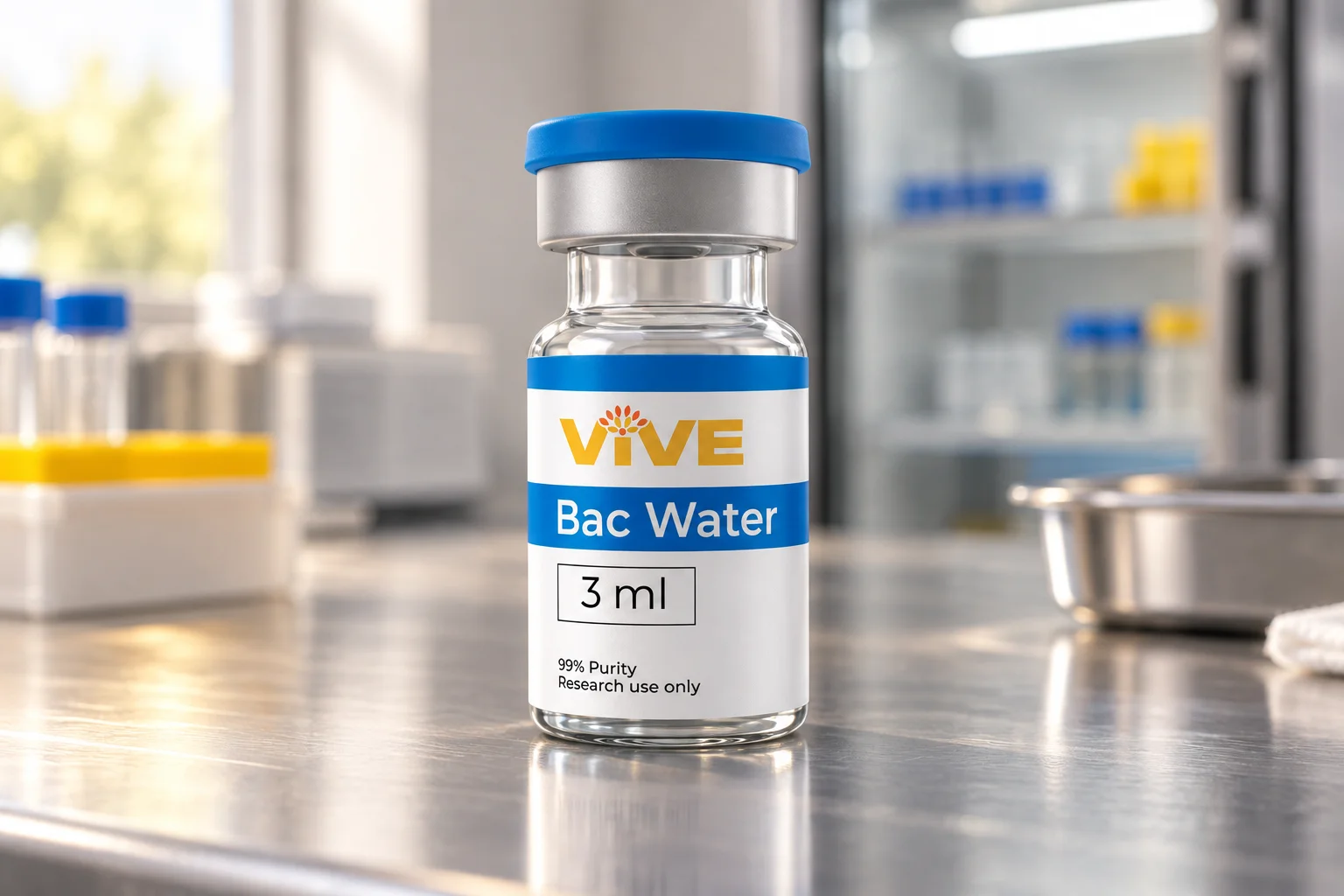
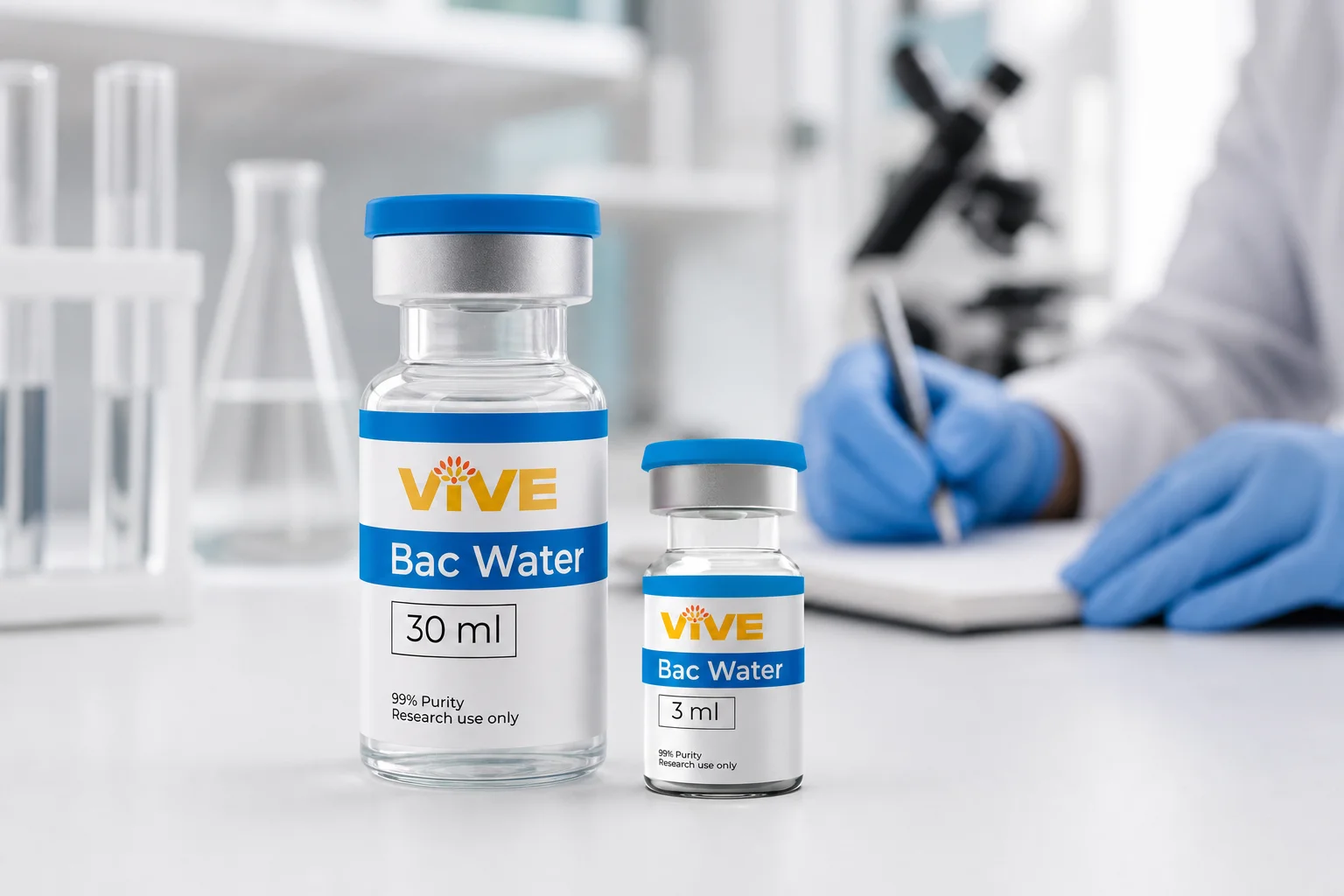
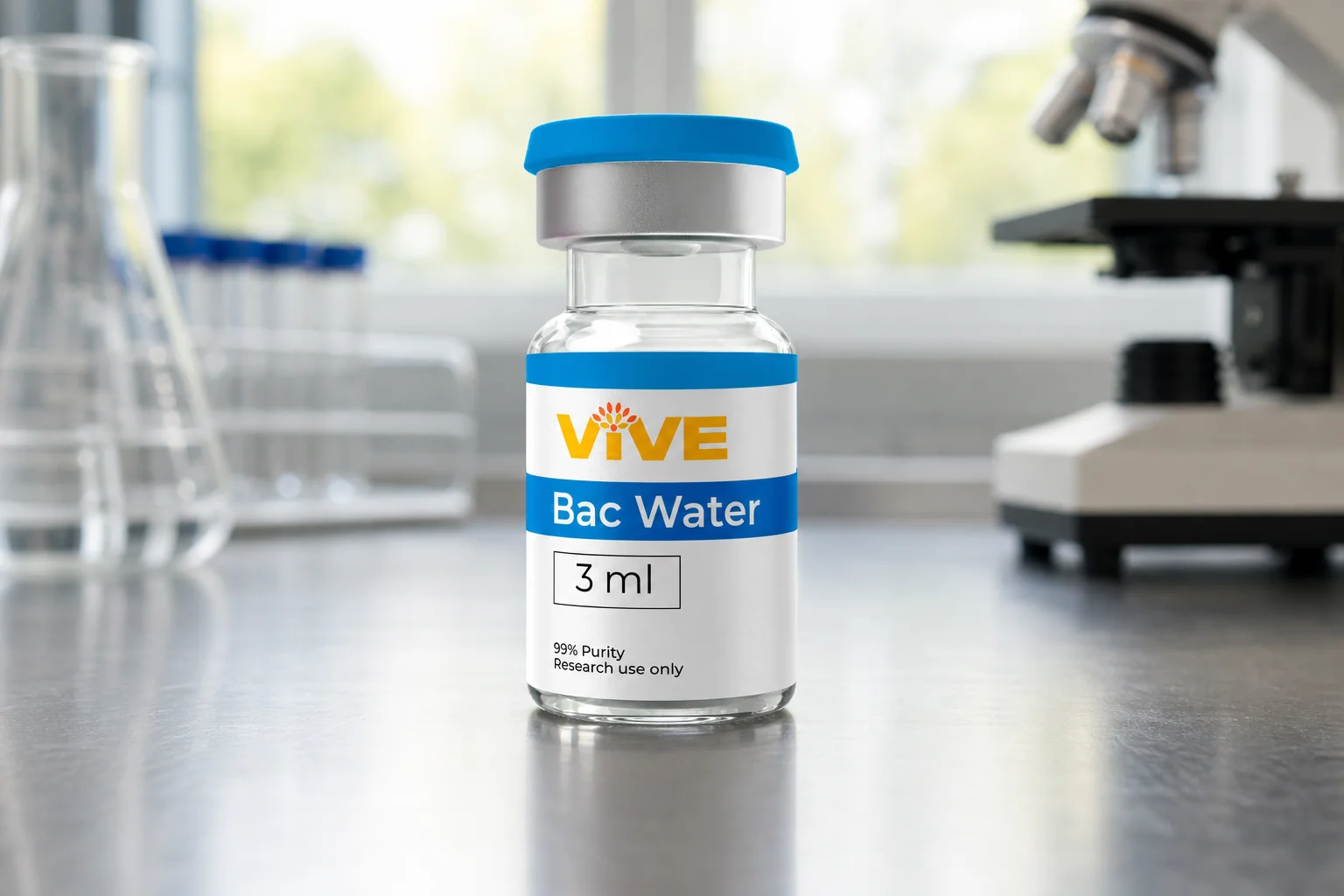
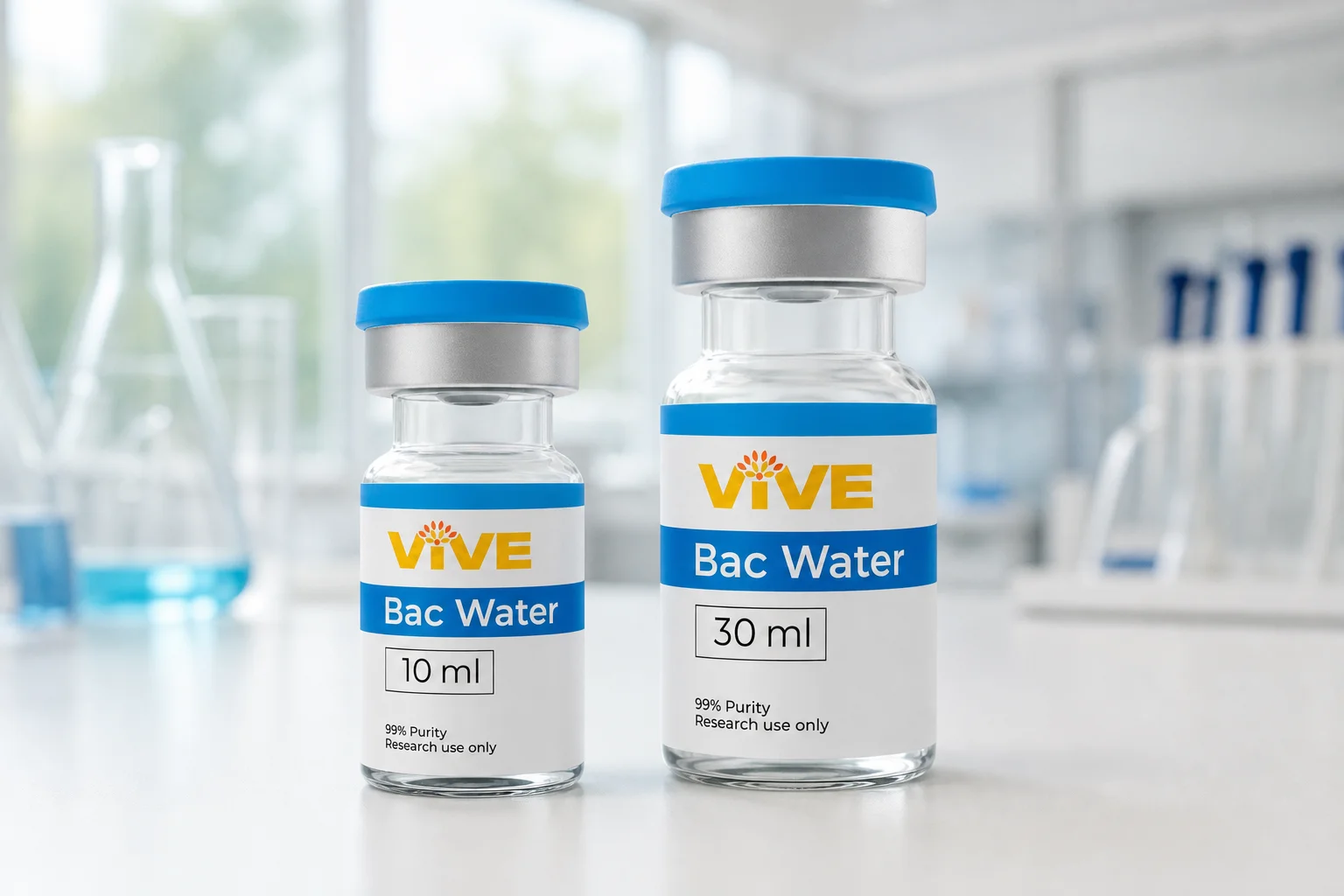
Most opened bacteriostatic water for peptide reconstitution stays usable for up to 28 days when stored at room temperature and handled with clean technique, though how long an opened bacteriostatic water bottle stays usable ultimately depends on the benzyl alcohol preservative concentration and how carefully each draw is performed.
By Vive Team
What Determines How Long an Opened Bacteriostatic Water Bottle Stays Usable?
The 28-day guideline comes from the benzyl alcohol preservative added to bacteriostatic water, typically at a concentration of about 0.9%. Benzyl alcohol inhibits bacterial growth each time the stopper is punctured, but it does not sterilize the vial indefinitely. A water preservative can only slow bacterial growth, not eliminate it entirely, which is why the 28-day window exists in the first place. Understanding bacteriostatic water shelf life starts with that 28-day window: once a vial is first opened, most manufacturer package inserts and research-use guidelines set the same generally accepted stopping point, regardless of how many draws have been taken from it. Several factors can shorten that window further: how often the stopper is punctured, whether the same needle is reused, and whether the bottle is exposed to heat or direct light between uses. This is also why manufacturer package inserts describe the water as intended for single-project use once opened, rather than being shared across multiple projects or shipped between locations after the seal is broken. Researchers sometimes shorten the name to bac water, but the underlying chemistry is identical no matter which name is used.
How Long Does Bacteriostatic Water Last Before It Is Opened?
An unopened, factory-sealed bottle has a much longer runway than one that has been punctured. Bacteriostatic water for injection sold in the United States is manufactured under USP standards and typically carries a printed expiration date two to three years out from the manufacture date, provided the seal stays intact and the bottle is kept at room temperature away from direct sunlight. Once that expiration date passes, the bottle should be discarded even if the seal was never broken, since the manufacturer can no longer guarantee sterility. Bacteriostatic water for sterile reconstitution work should never be substituted with tap water or water that has been sitting in an open container, since neither is preserved against bacterial growth the way a sealed vial is.
How to Store Bacteriostatic Water After Opening It
Once a bottle is opened, store it upright at room temperature, out of direct sunlight, and away from heat sources like a stove or a car dashboard. The rubber stopper should be wiped with an alcohol swab before every draw to keep the multi-dose vial free of surface contamination. A dedicated shelf or drawer away from other reagents also reduces the chance of grabbing an older bottle by mistake once several vials are in rotation at once.
Does It Need to Be Refrigerated?
No. Refrigeration is not required for bacteriostatic water, and the 28-day clock runs the same whether the bottle sits on a shelf or in a refrigerator door. Some researchers refrigerate anyway simply for consistency with other reagents stored nearby, and a cool, stable environment will not shorten shelf life. What does matter is avoiding temperature swings, since repeated warming and cooling can stress the rubber stopper and increase the odds of coring or leaking around the seal.
How Many Times Can You Draw From the Same Vial?
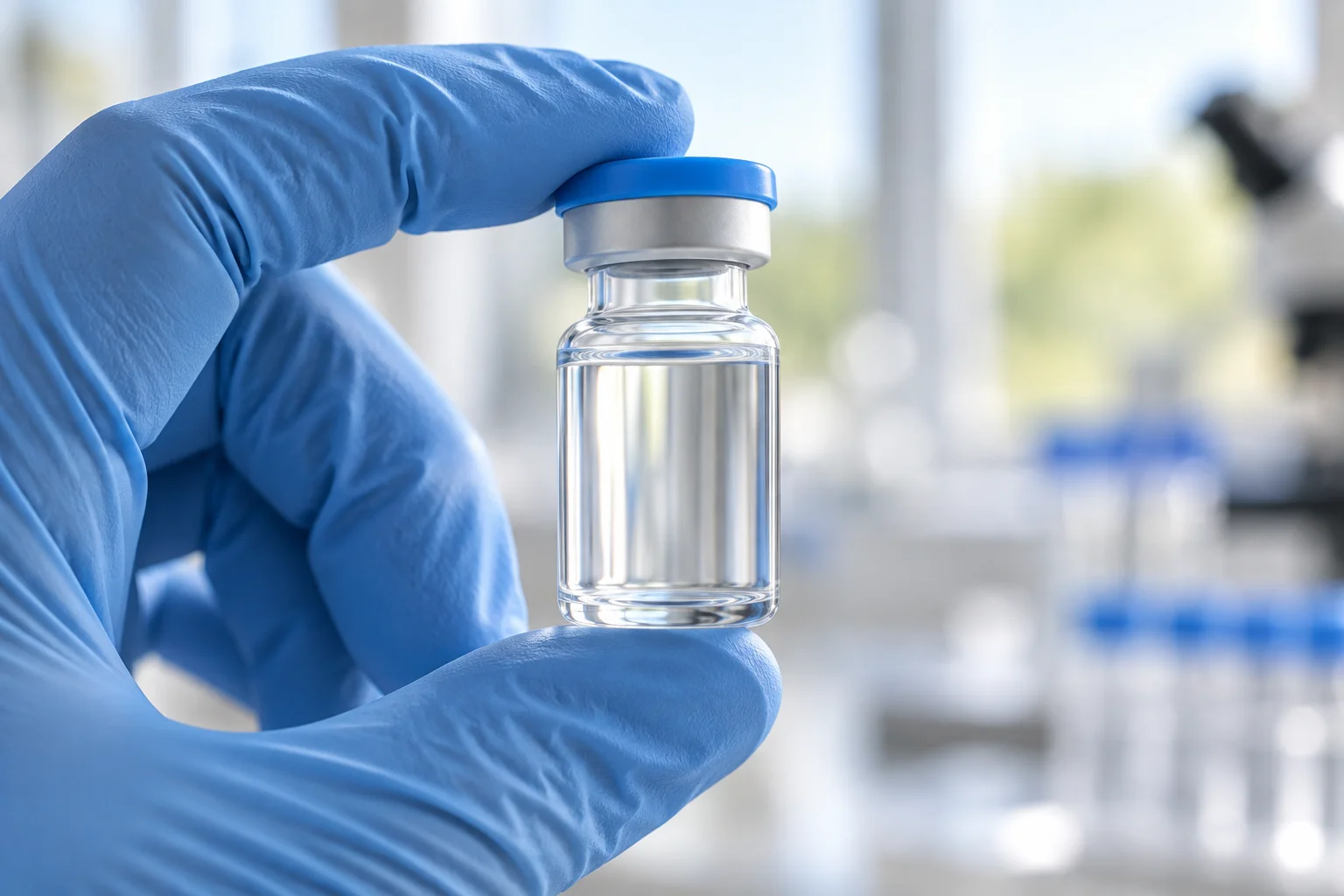
Bacteriostatic water ships in a multi-dose vial specifically because the benzyl alcohol preservative supports repeated use, not a single draw. Each bacteriostatic water vial is engineered for that kind of repeated access, not a single pull. There is no hard cap on the number of draws written into most package inserts. What matters more than a specific draw count is sterile technique: a fresh needle for every draw, an alcohol swab on the stopper each time, and never letting the needle tip touch anything other than the stopper and the receiving container. The volume drawn each time matters less than how it is drawn. A vial punctured a dozen times with careful technique will generally outperform one punctured twice carelessly, though the 28-day rule still applies regardless of draw count.
Signs That Opened Bacteriostatic Water Has Gone Bad
Before any draw, hold the vial up to good light and check for cloudiness, visible particles, or a color shift away from clear. Bacteriostatic water should look identical to the day it was opened; any haze or floating material means the bottle should be discarded regardless of how many days have passed since it was opened. Also check the stopper itself: visible coring (small rubber fragments), an enlarged puncture site, or a loose seal are signs the vial's protection against bacterial growth has been compromised, even if the water still looks clear.
Can Expired or Old Bacteriostatic Water Make You Sick?
Using water past its usable window is a research-safety issue, not a guaranteed reaction. Once the preservative can no longer reliably control bacterial growth, contamination risk rises, which is why CDC guidance and pharmacy compounding standards both treat a punctured multi-dose vial as having a finite window rather than an indefinite one. The safest approach for any research application is to treat the 28-day mark and any visible change in appearance as hard stopping points, and to replace the vial rather than evaluate it further. Pairing a fresh bacteriostatic water order with the full peptide library keeps replacement compounds and diluent arriving together, so a reconstitution session never stalls waiting on either one.
Bacteriostatic Water vs. Sterile Water: Which Has a Longer Shelf Life?
This comparison is often searched as bacteriostatic water vs sterile water, and the short answer comes down to one ingredient. Bacteriostatic water contains benzyl alcohol preservative, generally at about 0.9%, which is what separates it from plain sterile water for injection. Checking sterile water benzyl alcohol content confirms the two are not interchangeable: sterile water carries none, so once its seal is broken it is generally treated as single-use and discarded shortly after, often within the same session. Bacteriostatic water's benzyl alcohol is precisely what allows the longer, 28-day multi-dose window, since it actively works against bacterial growth between draws instead of relying on the seal alone. That shelf life difference is the main reason bacteriostatic water, not sterile water, is the standard diluent for repeated peptide reconstitution.
Does Freezing Extend Shelf Life?
No, and freezing can work against you. Freezing bacteriostatic water does not extend its usable window and can crack the glass bottle or compromise the rubber stopper's seal as the liquid expands. It may also affect how evenly the benzyl alcohol preservative is distributed once the water thaws. Store bottles at room temperature rather than in a freezer, and rely on the calendar, not the temperature, to determine when a bottle needs to be replaced.
Frequently Asked Questions
Can you still use bacteriostatic water after 28 days? Most guidance treats 28 days after first use as a hard stopping point, regardless of how the bottle looks or how many draws remain. The benzyl alcohol preservative is formulated to reliably control bacterial growth up to that point, not indefinitely. Using water past 28 days introduces contamination risk without a reliable way to confirm the water is still usable for research, so replacing the bottle is standard practice.
Is bacteriostatic water regulated in the United States? Yes. Bacteriostatic water for injection sold in the United States is manufactured under USP standards and distributed as an FDA-regulated pharmaceutical product, even though many buyers use it for non-clinical research purposes. That regulatory oversight is why printed expiration dates and preservative concentrations stay consistent from batch to batch.
What does benzyl alcohol do in bacteriostatic water? Benzyl alcohol is added as a preservative, generally around 0.9% concentration, and it works to inhibit bacterial growth each time the stopper is punctured. It is also what distinguishes bacteriostatic water from sterile water, which contains no preservative and is intended for single-use applications.
Can two opened bottles of bacteriostatic water be combined? No. Combining the contents of two separate opened vials mixes their individual contamination risk and draw histories into one container, which defeats the purpose of tracking a single 28-day window per bottle. Each opened bottle should be tracked and discarded on its own timeline.
Keep Your Reconstitution Supply Research-Grade
A fresh, properly stored bottle removes the guesswork around how long an opened bacteriostatic water bottle stays usable in the first place. Browse research-grade bacteriostatic water and pair each order with a new bottle so reconstituted compounds always start inside their full 28-day window.
Research Use Only
All information in this article is intended for educational and research purposes only. VivePeptides products are not intended for human or veterinary use.