Research Article
How to Order a Stack So Every Vial Ships in One Box

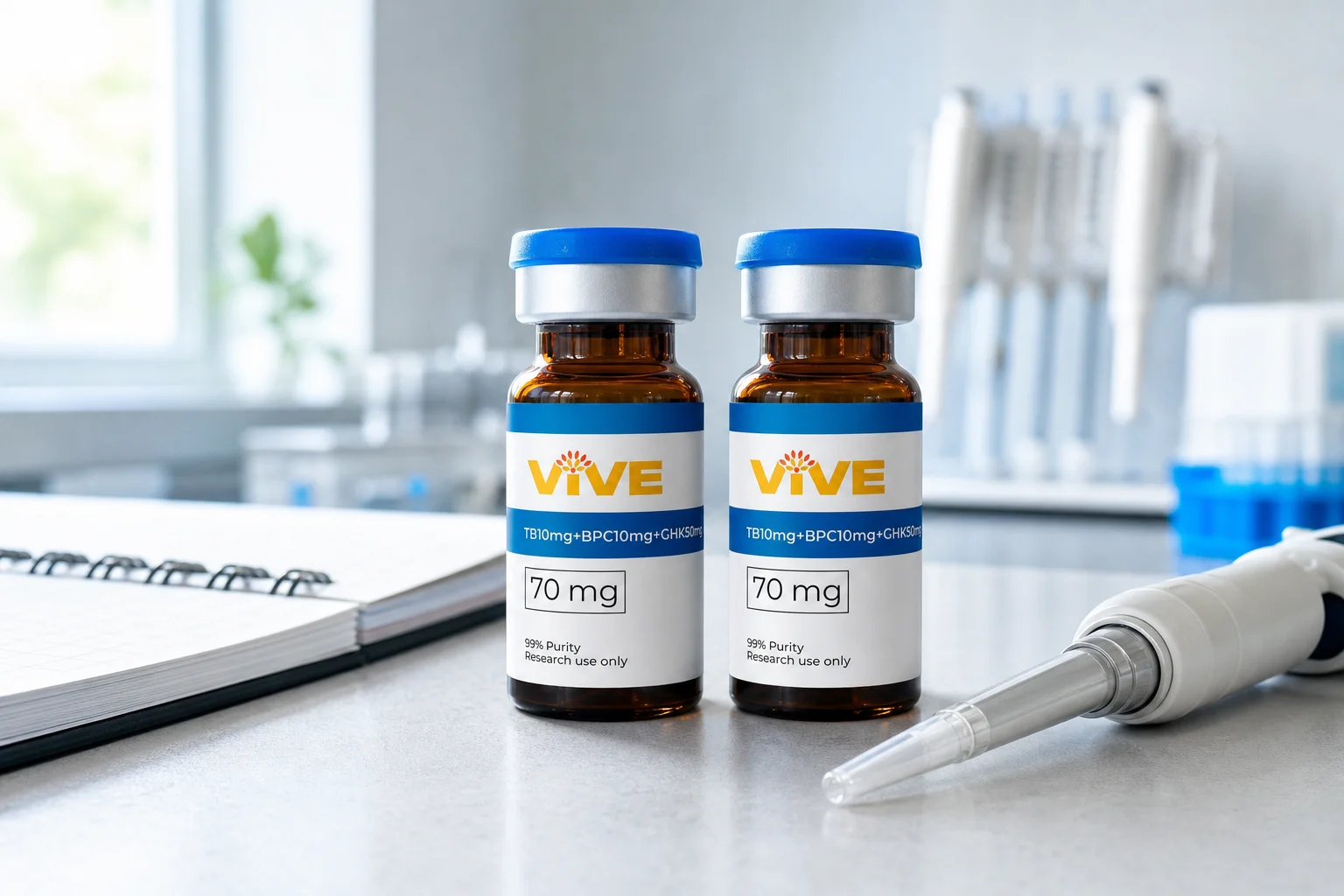
Shipping a peptide stack as one cold-chain package instead of several loose orders comes down to timing and cart structure. This guide explains how to order a stack so every vial ships in one box, whether you are combining two compounds or building a full protocol from the full peptide library.
By Vive Team
What Counts as a Peptide Stack, and Why Does Shipping Change With Multiple Vials?
A peptide stack is simply an order that combines more than one research peptide into a single purchase rather than several separate transactions. That distinction matters for shipping because most research peptides travel through a cold chain (the unbroken chain of refrigeration that keeps a lyophilized vial stable from the lab to your door), and a single-vial order is packed with just enough insulation and ice for one item. Add a second or third vial to that same order, and the warehouse needs to plan for more mass, more surface area, and a longer window before the ice packs lose their charge.
Researchers rarely stack peptides at random. Many combine a recovery-focused compound with a growth-hormone secretagogue or a mitochondrial peptide because certain synergistic peptide combinations are studied together far more often than any single compound is studied alone, a pattern covered in more detail in Vive's own research on synergistic peptide combinations. Ordering those vials together, in the same checkout, is what keeps them in the same box.
How to Order a Stack So Every Vial Ships in One Box
Here's how to order a stack so every vial ships in one box, from cart to delivery: add every peptide you want for this round to the same cart before you check out, complete payment once, and avoid opening a second order for a compound you thought of after checkout. The simplest way to order a peptide stack in one shipment is to treat the cart as the entire protocol, not a single item, and add blends, reconstitution supplies, or standalone vials to it in one pass.
Multi-item carts are read by fulfillment as one packing job. A single label, a single insulated liner sized for the full stack, and one set of ice packs get assigned to that job. Split the same peptides across two orders, even placed minutes apart, and the warehouse treats them as two packing jobs with two separate cold-chain builds, because the system has no way to know you intended them to travel together.
Why Do Some Multi-Vial Orders Arrive in Separate Shipments Instead of One?
A combined order still splits into two shipments for a few common reasons. The most frequent is timing: an item added after the original order already moved to packing gets queued as its own fulfillment job rather than reopening a sealed box. The second is inventory, when one vial in the stack is briefly out of stock and the rest of the order is not held back to wait for it. The third is checkout behavior, specifically placing two separate orders back to back instead of adding every vial to one cart, which fulfillment has no way to merge after the fact.
None of these are cold-chain failures. They are logistics decisions made before a box is ever packed, which is why cart structure and order timing matter more than anything that happens after checkout.
How Many Vials Fit in One Box With the Same Ice Packs and Insulation?
Capacity depends on the insulated liner and the number of gel ice packs assigned to that shipment, and it typically scales with the size of the stack rather than staying fixed. A two or three-vial stack usually ships in the same footprint as a single-vial order with one extra ice pack, since small glass vials take up very little volume on their own. Larger stacks, four or more vials plus mixing supplies, generally move into a bigger insulated mailer so every vial stays within the same temperature range for the full trip instead of crowding the coldest pocket of the box.
If your protocol calls for a multi-vial stack, adding bacteriostatic water for peptide reconstitution to the same cart keeps your mixing supplies packed into that same insulated box instead of arriving on a separate delivery.

Does Ordering a Full Stack at Once Cost Less on Shipping Than Ordering Each Peptide Separately?
In most cases, yes, because cold-chain packaging is priced per shipment rather than per vial. One insulated box, one set of ice packs, and one shipping label cost less in total than paying for that same packaging three separate times across three separate orders. Splitting a stack into individual orders multiplies the fixed cost of insulation and expedited shipping even though the peptides themselves are priced the same either way.
The exact shipping charge on any order depends on destination, weight, and the shipping method selected at checkout, so treat this as a general pattern rather than a guaranteed discount. The reliable way to see the difference is to build the full stack in one cart and compare the shipping line at checkout against what the same vials would cost across separate orders.
How Do You Time Reorders or Add-Ons So They Still Ship in the Same Box as Your Original Order?
An add-on stays in the same box only if it reaches the order before fulfillment starts packing it, which is typically a narrow window right after checkout. Once an order is marked as packed or labeled, adding a vial creates a new, separate shipment rather than reopening the sealed one, even if the original order has not left the warehouse yet.
If you realize you need one more peptide in the stack, the fastest path is to contact VivePeptides support immediately rather than placing a brand-new order and hoping the two merge. Support can often add the item to the existing order while it is still in the queue, but that window closes as soon as packing begins, so speed matters more than anything else here.
How Should You Store Multiple Peptide Vials Once They Arrive Together in One Box?
Once a combined stack arrives, unpack it the same way you would a single vial, just multiplied across every item in the box. Most reconstituted research peptides are stored refrigerated, and many ship in a lyophilized (freeze-dried) state that is more temperature-stable before mixing than after. If you cannot unpack and refrigerate the full stack right away, leave the vials in the insulated liner with any remaining ice packs rather than setting them out on a counter, since the packaging is still doing useful work in the first hour or two after delivery.
Because storage requirements can vary slightly by peptide, check the specific product page for each vial in your stack rather than assuming one storage rule covers every compound.
Frequently Asked Questions
Can you combine different peptides in the same order and have them ship together? Yes. Adding multiple different peptides to a single cart before checkout is the standard way to build a stack, and fulfillment packs everything in that cart into one shipment. The peptides do not need to be related compounds. What matters is that every vial is part of the same order, not separate purchases placed close together in time.
Will all the vials in a combined stack order stay cold for the full transit time? Cold-chain packaging is sized to the number of vials in the order, so a larger stack ships with more ice and a bigger insulated liner rather than the packaging used for a single vial. That said, transit time, weather, and destination all affect how much cooling capacity is left on arrival, which is why prompt unpacking once a package arrives is still the safest habit.
Is it cheaper to order a peptide stack in one order instead of multiple separate orders? Generally, yes, because the fixed costs of cold-chain packaging, insulation, and a shipping label are paid once per order rather than once per vial. Three separate orders for three peptides usually means paying for that packaging three times. The exact savings depend on your cart total, destination, and the shipping method chosen at checkout.
Can you add a peptide to an order after checkout and still get it shipped in the same box? Sometimes, if the order has not yet reached the packing stage. Contacting support right after checkout gives the best chance of an add-on reaching the same box. Once an order is packed and labeled, an added item ships as its own separate order instead, since a sealed, cold-chain package cannot be reopened for a late addition.
What packaging keeps multiple vials cold and safe together in a single shipment? A stack typically ships in an insulated liner sized to the number of vials, with gel ice packs distributed to keep temperature consistent across the box rather than concentrated in one spot. Individual vials are usually cushioned or separated within the box so they do not contact each other directly during transit.
Build Your Next Research Stack in One Order
Add every vial for your next protocol to one cart and checkout once, since that is how to order a stack so every vial ships in one box instead of arriving in pieces. Start building it now from the research-grade peptide catalog.
Research Use Only
All information in this article is intended for educational and research purposes only. VivePeptides products are not intended for human or veterinary use.