Research Article
Do Peptides Need to Be Shipped Cold? Transit Time Guide
Do peptides need to be shipped cold? For lyophilized (freeze-dried) powder, usually not: it tolerates short periods at ambient temperature, so transit time and heat exposure matter more than ice. Reconstituted solutions are a different case. This guide explains the storage logic labs apply when ordering from a research-grade peptide catalog.
By Vive Peptides Team
Do peptides need to be shipped cold?
Not always. Lyophilized peptides (peptides freeze-dried into a dry powder) are the standard form for shipping because removing water slows the reactions that break peptides apart. Sealed in a vial, the powder has little moisture available for hydrolysis (water splitting a peptide bond) or oxidation (a reaction with oxygen).
Peptides are chains of amino acids, and different sequences tolerate heat differently. Supplier guidance and published stability notes generally describe lyophilized powder as tolerating short periods at ambient temperature, often days to a few weeks. So do peptides need to be shipped cold? For dry powder in moderate weather, cold packaging is a precaution rather than a requirement.
At what temperature do peptides go bad? No single threshold exists. Degradation speeds up as temperature rises, and a common rule of thumb says many chemical reactions roughly double in rate for each 10 °C increase. Sequences with methionine, cysteine or tryptophan residues oxidize more readily, and asparagine or glutamine residues are prone to deamidation (loss of an amine group). Sequences without those residues are more stable.
All Vive products are sold for research use only, and this guide describes general laboratory handling, not use in people.
Do lyophilized peptides need to be refrigerated?
Do lyophilized peptides need to be refrigerated? For a few days in transit, usually no. For long-term storage, cold is the standard. Many labs keep lyophilized powder in a lab fridge for near-term use and move it to a freezer, commonly around minus 20 °C, for long-term storage. Colder and drier conditions slow degradation, which is why supplier shelf life statements assume cold, dry, dark peptide storage.
What destroys peptides?
Five things do most of the damage:
- Moisture. Powder pulls water from humid air, and a cold vial opened too soon collects condensation. Letting it reach room temperature first keeps the powder dry.
- Heat. Higher temperature speeds hydrolysis and every other breakdown route.
- Oxidation. Oxygen and light attack the vulnerable residues above, which is why tight vial seals matter.
- Freeze-thaw swings. Repeated freezing and thawing of a solution can aggregate or fragment the chains.
- Microbes. A reconstituted solution can grow bacteria without sterile technique and a preservative diluent.
How long do peptides last at room temperature?
Lyophilized peptides held at room temperature, roughly 20 to 25 °C, commonly keep for days to a few weeks with little measurable loss, though the range varies by sequence. Read that as short periods of exposure, not a storage plan. Supplier shelf life statements assume cold storage, so each week at ambient temperature uses up margin before long-term storage even begins.
Loss compounds. A week in a hot carrier truck followed by months on a shelf shortens shelf life more than either alone, and a sequence rich in vulnerable residues may lose purity sooner than a short, simple one.
How long does BPC-157 last at room temperature?
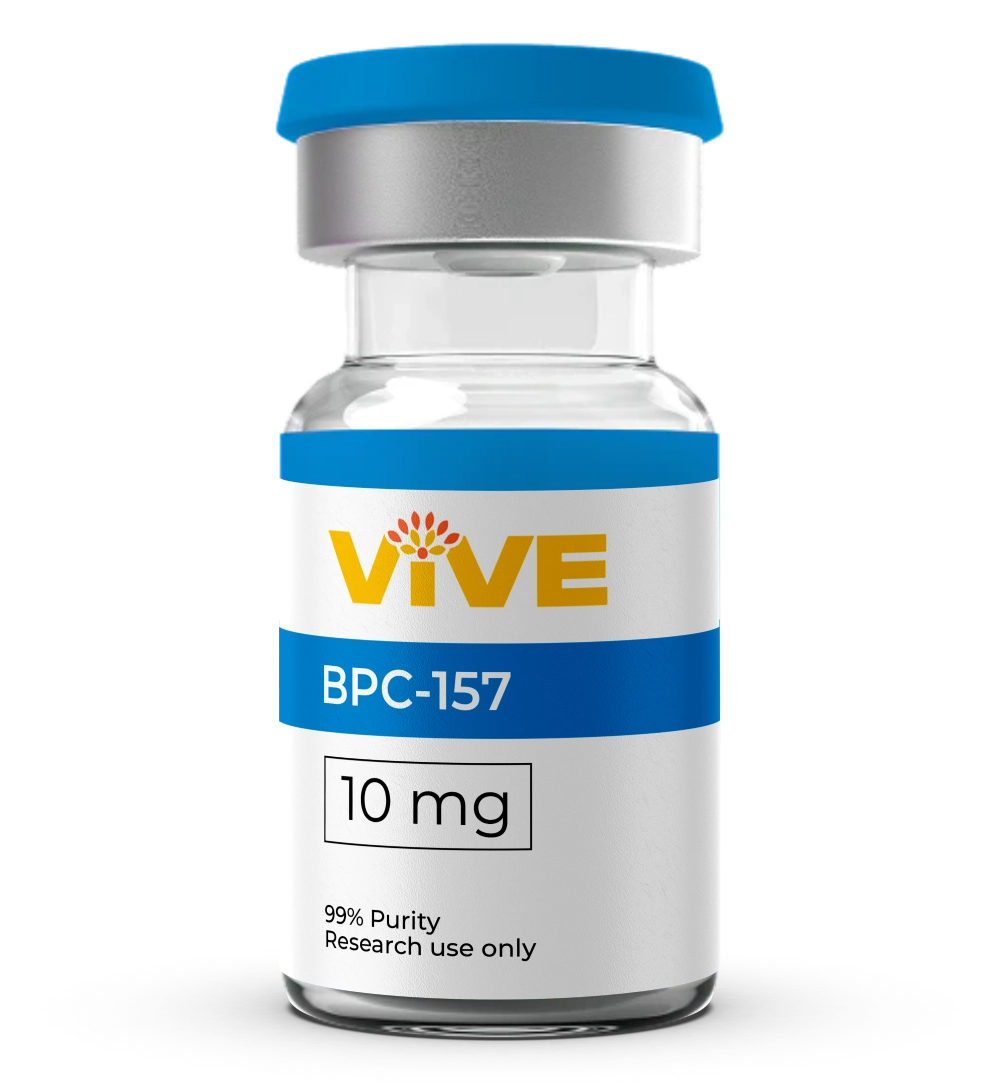
No single published figure covers every vial or lot. BPC-157 is a 15-amino-acid peptide, and the lyophilized form follows the general pattern: short periods at room temperature are usually tolerated, while refrigeration or a freezer is preferred for long-term storage. Do labs refrigerate BPC-157? Most do, and a reconstituted vial always goes in the refrigerator because stability drops sharply in solution. The storage line in the spec block on the BPC-157 product overview page gives the supplier's own guidance.
How long do peptides last before reconstitution?
Before reconstitution (adding a solvent such as bacteriostatic water to the powder), lyophilized peptides kept cold, dry and dark commonly last a year or more, and supplier stability statements for freezer storage often run to several years. The documentation for the specific lot is the authority, because shelf life depends on the sequence, the fill and the vial seals. Opening a vial, or storing it warm, starts a shorter clock.
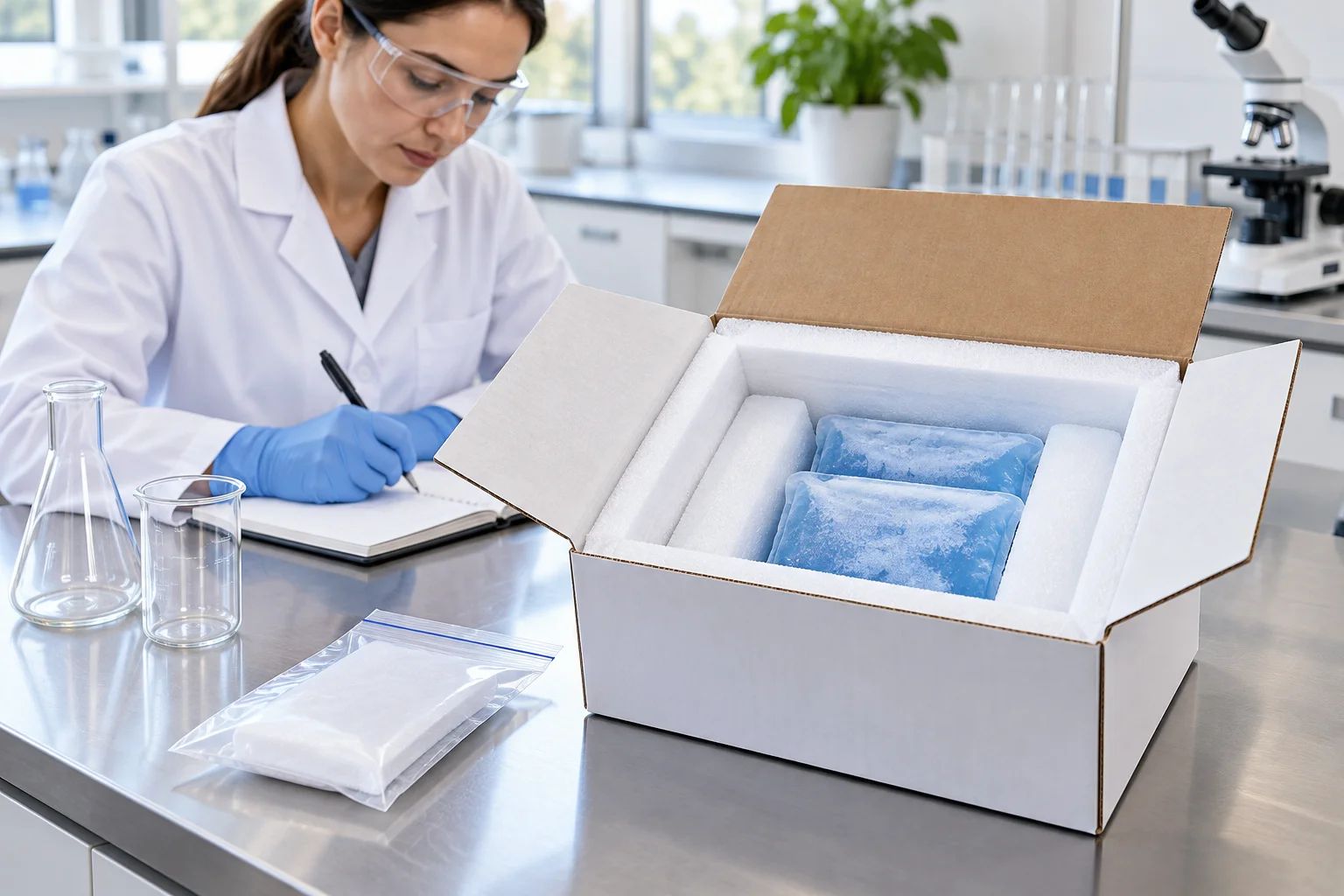
Do ice packs help when shipping peptides, and how much transit time is too much?
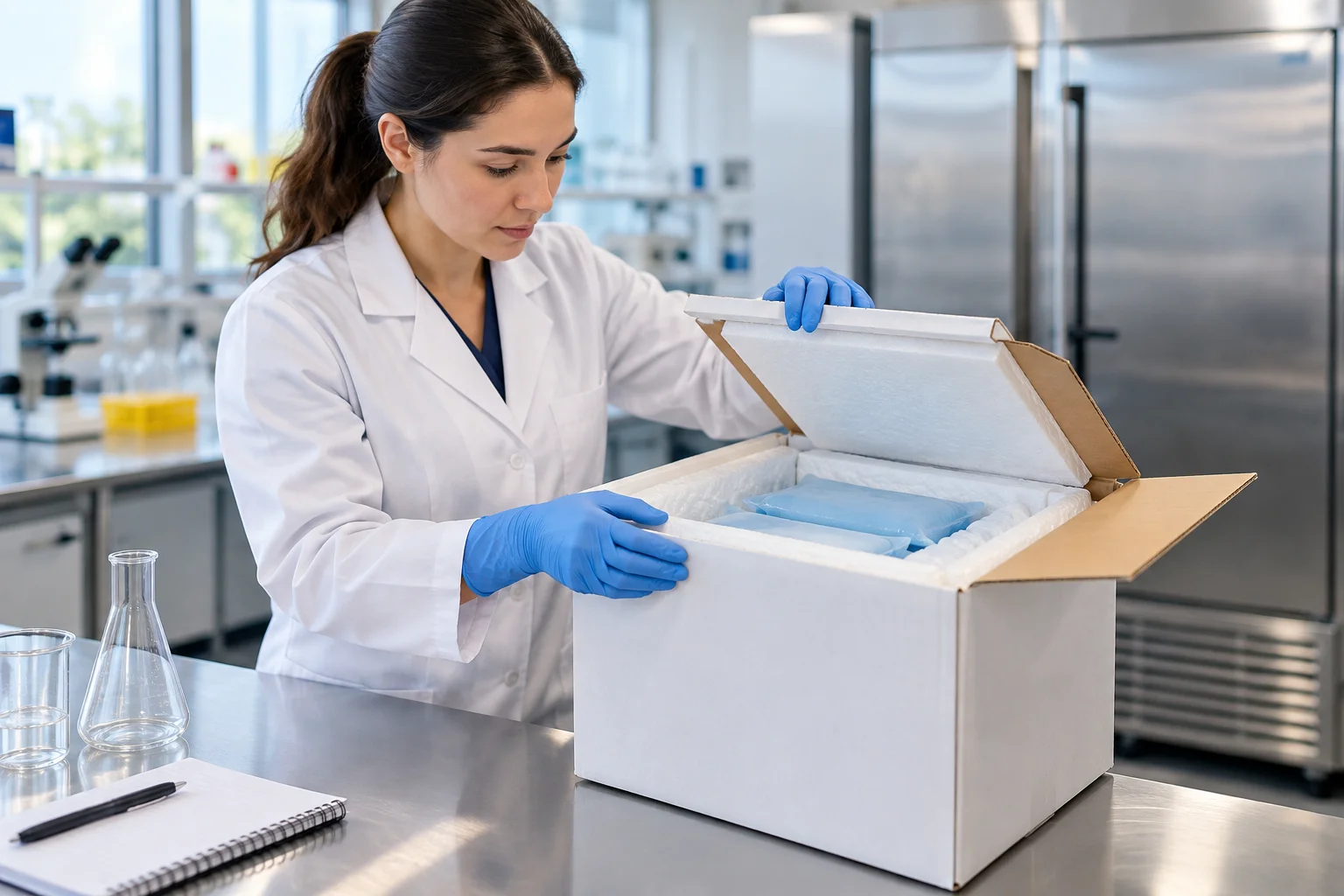
Ice packs help most when transit is long or the weather is hot. Gel packs inside an insulated carton can hold the interior cooler than outside air for roughly a day or two, depending on wall thickness, pack count and outdoor temperature. After that the packs warm, and some thaw into wet material that raises moisture inside the carton. Sealing each vial in a bag keeps condensation off labels and caps.
Transit time is the bigger lever. Vive offers free shipping and describes its delivery as fast, discreet and securely packaged, so a lab should confirm current transit times with Vive before ordering if its protocol is sensitive to time in transit. For dry powder in mild weather, ordinary packaging keeps exposure within the short periods lyophilized peptides tolerate. A lab worried about heat can pick a faster tier.
How much transit time is too much? No universal cutoff exists. A few days is routine for dry powder, while a week or more in heat is where labs start questioning the material, and fragile sequences reach that point sooner.
Can peptides be shipped without ice packs?
Yes, in many cases. Lyophilized powder commonly travels at ambient temperature when weather is moderate and transit is short, and packs add weight, bulk and condensation. Reconstituted solutions are the exception: a reconstituted peptide belongs in a refrigerator, so labs move solutions only in proper cold packaging, lab to lab.
Do peptides survive summer heat in transit?
Summer changes the answer. Tempe regularly sees highs above 100 °F, and a parked delivery vehicle or a porch can run far hotter than the forecast. Do peptides need to be shipped cold in July? More often than in April, yes, or at least shipped fast. Labs can cut exposure by choosing a faster service, ordering early in the week so cartons skip a weekend in a depot, and having someone ready to receive the package.
How much does a cold chain cost for shipping peptides?
Shipping peptides cold costs more than shipping them at ambient temperature, but the total depends on a handful of line items, so a useful estimate starts with structure rather than a number. Here is what makes up the bill and what moves each line:
- Insulated packaging. Thicker liners and larger cartons hold temperature longer and cost more, roughly in proportion to wall thickness and volume.
- Coolant. Gel packs usually cost the least and hold the shortest; phase-change packs and dry ice hold longer. Dry ice adds carrier labeling and handling rules, which adds labor.
- Service speed. Cold packaging usually pairs with a faster service, and next-day delivery commonly costs a multiple of ground for the same parcel.
- Dimensional weight. Carriers bill by volume as well as mass, so bulky insulation can push the billed weight above the actual weight.
- Zone and season. Longer distances and summer routes call for more coolant or a faster service.
- Extras. Temperature loggers, signature requirements and weekend delivery are often billed separately.
- Failure risk. A warm arrival can mean a replacement shipment, which can cost more than the packaging that would have protected against it.
Questions that get an accurate quote: What temperature range must the carton hold, and for how many hours? What are the ship date and destination zone? How many vials per parcel? Is a logger or signature required? Who receives the package, and when? A lab with special handling needs should raise them with the seller before ordering.
What should a lab do if peptides arrive warm?
A warm carton is not automatically a failed shipment, because lyophilized powder tolerates short periods of warmth. The response is to document, inspect and ask, in that order.
- Record the time, the outdoor conditions and whether any gel packs thawed.
- Photograph the carton, the packaging and each vial before opening anything else.
- Inspect each vial for intact seals, no leaks, no moisture inside and powder that looks like the supplier's usual appearance.
- Move sealed vials to a refrigerator promptly. Do not reconstitute one to test it.
- Send the order number and photos to the seller and ask what the lot's stability data show.
A collapsed powder cake, discoloration, a sticky residue or moisture inside a vial are reasons to hold material back from experiments until the seller responds.
Should peptides be refrigerated or frozen after they arrive?
Best practices upon arrival follow one ladder. Lyophilized powder goes in a refrigerator for near-term peptide storage and in a freezer for long-term storage, sealed, dry and out of light. Before opening a vial, a lab lets it reach room temperature so moisture in the air does not condense on the powder.
Reconstituted peptide solutions are handled differently. Labs reconstitute with bacteriostatic water (sterile water with 0.9 percent benzyl alcohol, which limits bacterial growth), keep the solution in the refrigerator, and freeze only aliquots (small portions) so no portion has to thaw more than once. One bottle of BAC Water 10ml is included free with any peptide order.
FAQ
Do peptides really go bad after 30 days?
Not as a rule. The 30-day figure is usually quoted for reconstituted peptide kept in a refrigerator, where degradation and bacterial growth limit the window. Lyophilized powder stored cold, dry and sealed commonly lasts far longer, often a year or more, depending on the sequence. A supplier's lot documentation is a better guide than any forum number.
How long do peptides last once reconstituted?
It depends on the sequence, the diluent, the pH and the temperature, so forum answers vary widely. In general, a reconstituted peptide is kept in a refrigerator and used within weeks, not months, because hydrolysis, oxidation and microbial growth all proceed faster in solution than in dry powder. Sterile technique and bacteriostatic water slow contamination but do not stop chemical breakdown.
What happens if peptides are left out of the fridge?
For lyophilized powder, a short stay at room temperature typically causes little measurable loss, though the effect varies by sequence. Longer or hotter exposure speeds degradation, and a reconstituted solution left out degrades and can grow bacteria much faster. Labs usually note the time and temperature, return the material to cold storage, and check the lot's stability data before further experiments.
Does KLOW need to be refrigerated?
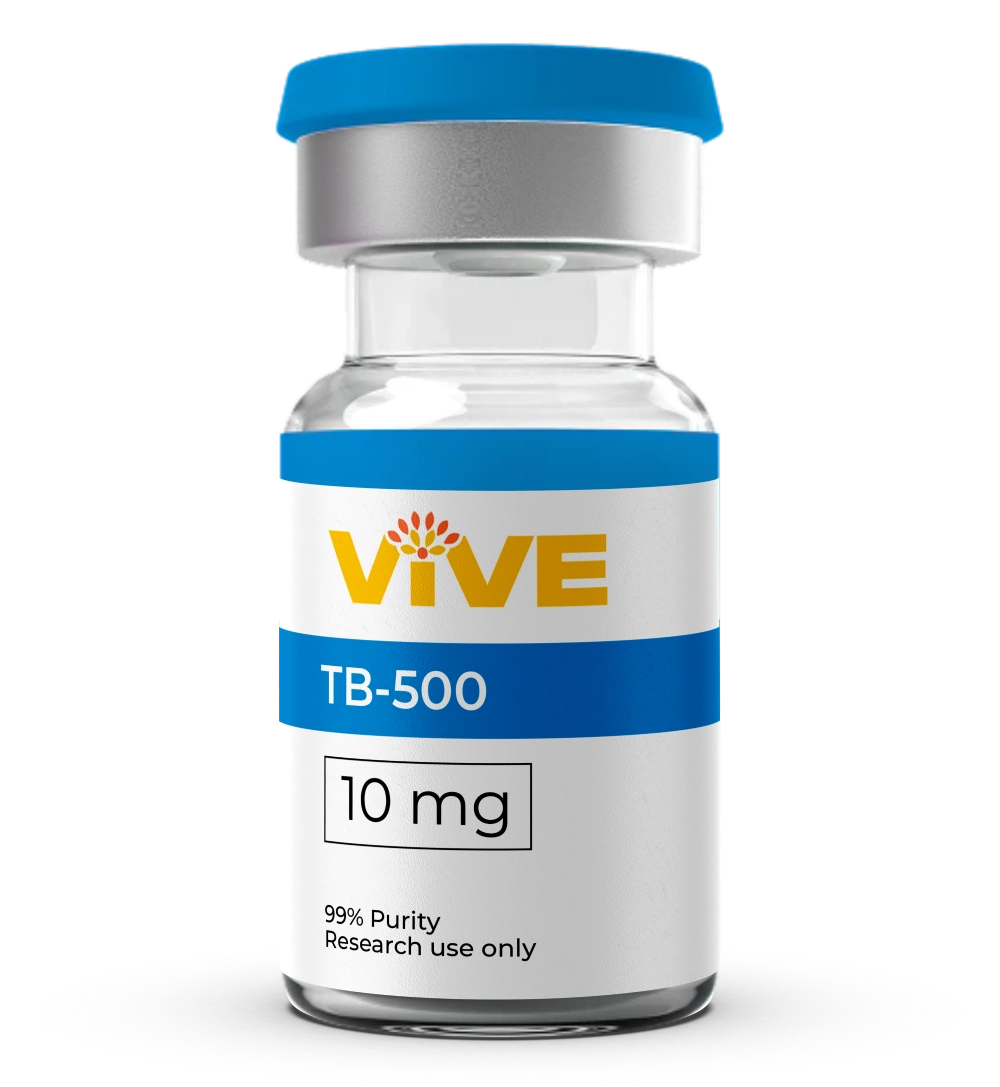
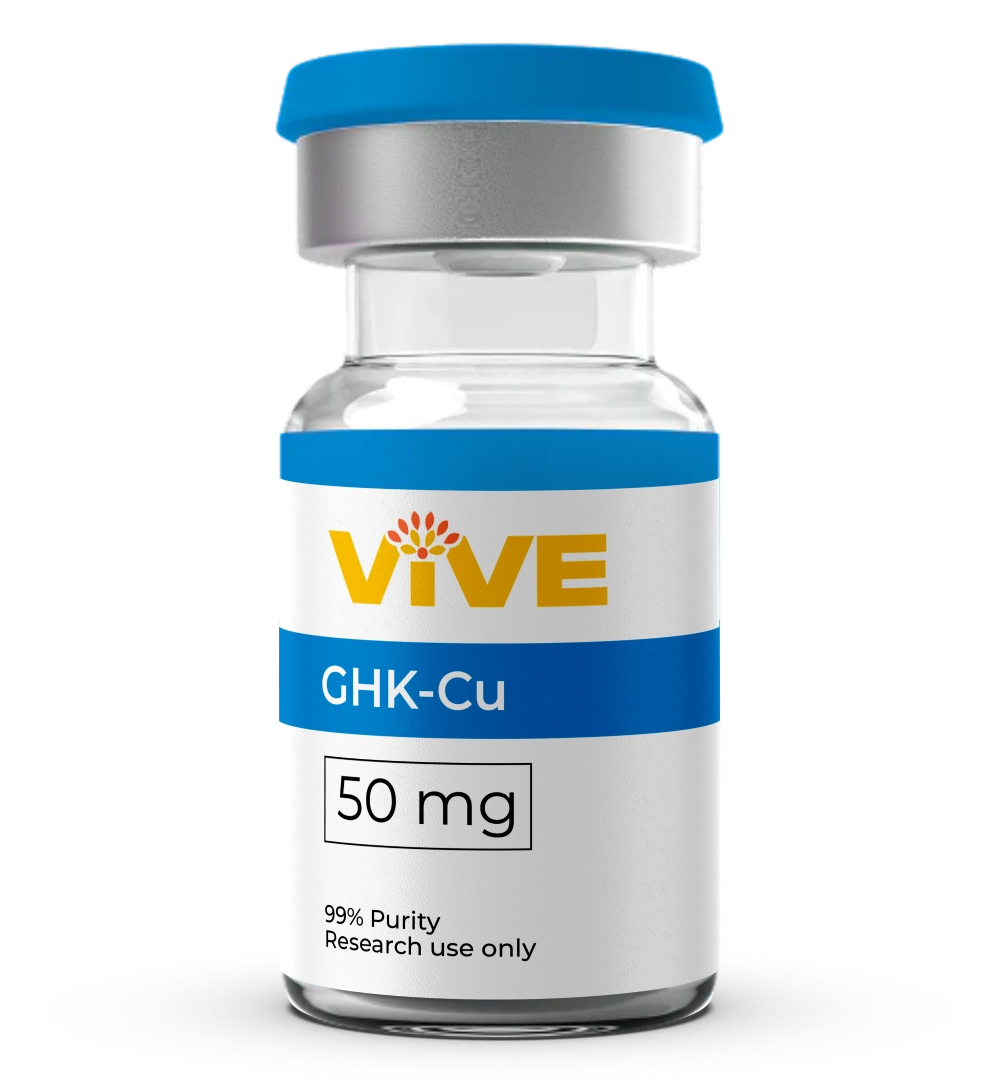
KLOW Blend combines GHK-Cu, BPC-157, KPV and TB-500 and is sold for research use only. The spec block on its product page lists the storage requirement, and that line governs. As a general rule for peptide blends, labs keep unopened material cold and dry and keep any reconstituted solution in a refrigerator.
Match Transit Time to the Material Before Ordering
Each product page lists storage guidance in its spec block, so a lab can pair the shipping speed with the material before checking out at the VivePeptides shop.
Research Use Only
All information in this article is intended for educational and research purposes only. VivePeptides products are not intended for human or veterinary use.