Research Article
Transporting Reconstituted Peptides Between Lab Sites

Transporting reconstituted peptides well means keeping the vial cold, dark, upright and still for as short a time as possible. Labs typically hold 2 to 8 °C in transit. Moving lyophilized powder and reconstituting at the destination is usually better. Every item in the research-grade peptide catalog is sold for research use only.
By VivePeptides Team
What Happens to Reconstituted Peptides During Transport?
A lyophilized (freeze-dried) peptide is a dry powder with little water to drive chemistry. Peptide reconstitution changes that. Once a peptide vial is filled with bacteriostatic water or sterile water, the molecule sits in solution, where degradation (chemical breakdown that lowers the amount of intact peptide) runs faster.
Four stresses matter in transit. Heat speeds hydrolysis (cleavage by water) and oxidation. Hard shaking foams the liquid and can cause aggregation, where peptide chains clump together. Strong light can damage sensitive residues. Each stopper puncture gives microbes a path in. Bacteriostatic water typically contains 0.9% benzyl alcohol, a preservative that slows bacterial growth but not chemical breakdown. Sterile water carries no preservative, so reconstituted peptides made with it tolerate delays less well.
Time and Temperature Limits for Reconstituted Peptides in Transit
How long can reconstituted peptides be kept out of the fridge while moving between sites?
No single number fits every sequence. Stability depends on the peptide, its concentration and the diluent, so the product spec sheet and its storage guidelines come first. As a conservative convention, labs plan a move so the vial spends hours, not days, away from refrigeration, and they log every hour at room temperature (about 20 to 25 °C). A vial that rode three hours in a cooler is a different case from one left on a dock overnight.
What temperature should reconstituted peptides stay at in transit?
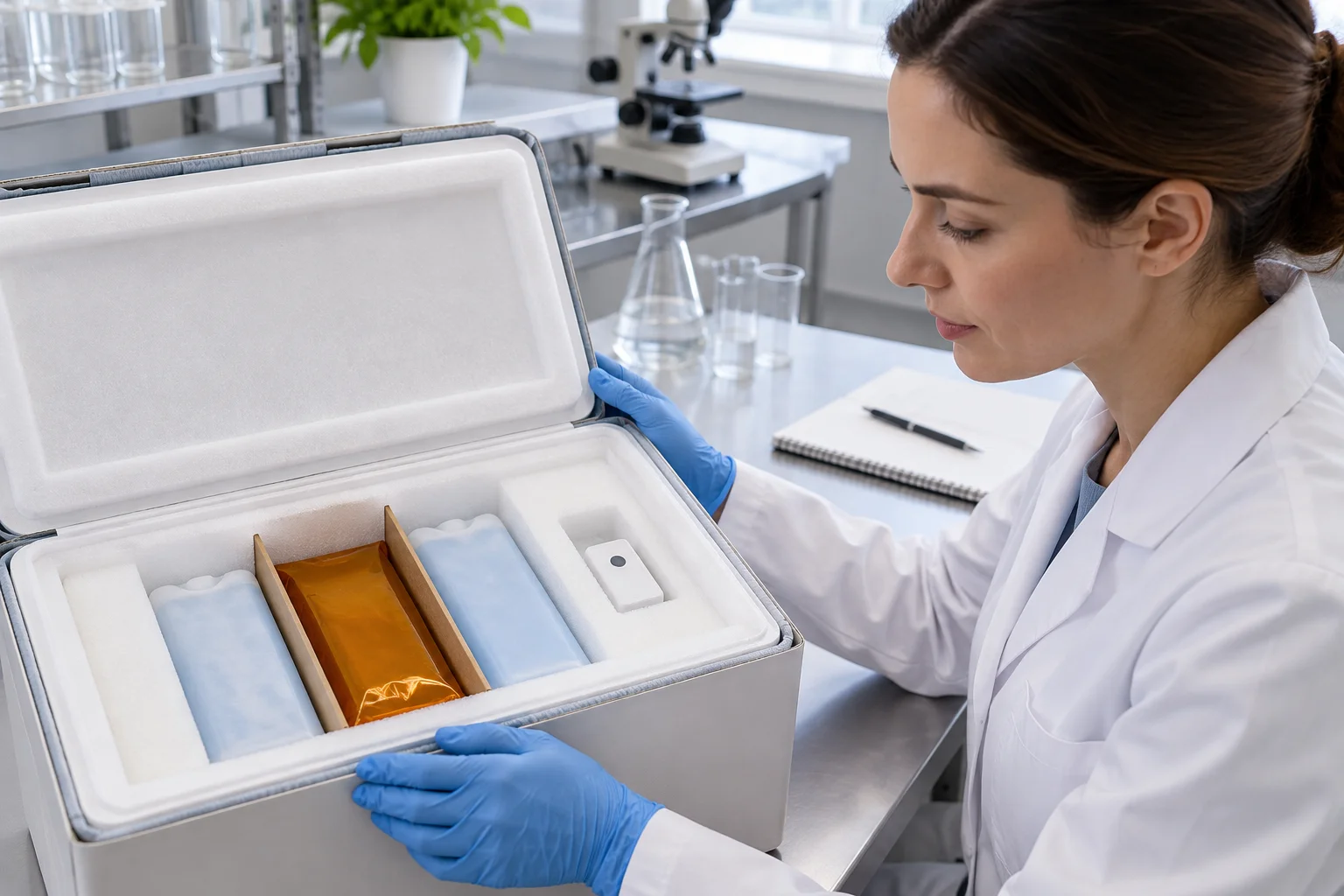
The standard target is 2 to 8 °C, the range the United States Pharmacopeia defines as refrigerated. Conditioned ice packs hold that range inside an insulated shipper. Frozen packs touching glass can freeze the solution, so a foam divider separates packs from vials. A small data logger in the box records the real temperature profile.
Do reconstituted peptides lose potency if they warm up during transport?
They can. Loss builds with both temperature and time. Sequences with oxidation-prone residues such as methionine or cysteine usually change faster, while others tolerate a short excursion. A clear solution proves nothing, because degraded peptide is often invisible. Only an assay such as HPLC (high-performance liquid chromatography) confirms what remains. A release purity figure describes the powder as made, not a vial after a warm trip.
Can reconstituted peptides be frozen for transport?
Sometimes, but rarely as a first choice. Repeated freezing and thawing can drive aggregation, and expanding ice can stress glass. Labs that freeze use single-use aliquots (small portions) so nothing thaws twice. Dry ice adds another layer, since carriers regulate it as a hazardous material and the shipping lab must follow their packaging rules. For most inter-site moves, a refrigerated pack-out is simpler.
Transporting Reconstituted Peptides Between Locations: A Checklist
Transporting reconstituted peptides well is mostly preparation. Before a vial leaves the sending lab, the team works through this checklist:
- Confirm the receiving window with the destination lab so the package never waits on a dock or in a vehicle.
- Keep the manufacturer's original label on each vial and add a secondary label with the reconstitution date, diluent and concentration. Labels stay dry and legible.
- Tighten the cap, check the stopper and wrap the closure. Do not insert a needle to check volume in transit, because each puncture invites contamination.
- Stand vials upright in a rigid container inside cushioned secondary packaging.
- Use an insulated shipper with conditioned ice packs and a data logger, and keep packs off the glass.
- Ship syringes and needles separately in sealed, sharps-appropriate packaging.
- Include documentation: a packing list, a chain-of-custody record and the material's hazard sheet.
- Ship early in the week so weekend holds do not stretch the transit.
How to Protect Reconstituted Peptide Vials From Light, Shaking and Heat When Shipping
Light is the easiest to control. Amber vials, an opaque wrap or a lidded box keep it off the solution. For shaking, foam inserts that grip the vial body damp vibration, and a this-side-up label tells handlers to keep the container upright. For heat, pre-chill the shipper, keep it out of direct sun and out of parked vehicles. A pack-out that avoids rattling, avoids sun and avoids packs touching glass protects the vial from all three stresses. Record any damages with photographs.
Can Reconstituted Peptides Travel by Air or Car Between Lab Sites?
By car, the courier keeps the cooler in the climate-controlled cabin rather than the trunk, and the cooler never waits in a parked vehicle. Heat builds fast inside a closed car.
By air, two routes exist. Courier shipment is the usual one for research material. The carrier's rules for liquids, sharps and temperature-controlled cargo apply, so the shipping lab confirms them and the required documentation before booking. The second route is hand-carry by lab staff between sites, and TSA rules apply there. TSA caps liquids and gels in carry-on bags at 3.4 ounces (100 ml) per container, and lets passengers bring medication in reasonable quantity and frozen ice packs through with extra screening. Partly melted gel packs are screened as liquids or gels. Those exemptions were written for prescription medication. A research peptide is not medication and has no prescription label, so labs should not assume the exemption covers it. The airline, TSA and the institution's compliance office settle the question first.
TSA rules govern screening, not temperature. Checked luggage is a poor fit for reconstituted peptides: cargo-hold temperatures swing, ice packs thaw, and nobody can monitor the vial. Syringes and needles draw their own screening questions, which is one reason labs ship them separately by courier with documentation.
Vive ships within the United States only. A cross-border move adds customs review, import permits and transit measured in days, which strains any cold chain. Those shipments go through the institution's compliance office and the courier's customs broker.
Lyophilized or Reconstituted: What to Ship and How to Check Arrival
Lyophilized peptides are the better default. Powder holds up through short room temperature excursions better than a solution, weighs less, and sidesteps most liquids rules. The receiving lab then reconstitutes at the destination, records the date and starts the stability clock itself. A reconstitution kit for peptides, with its diluent and supplies, can travel in separate packaging from the powder so the lab has everything on hand at arrival. Transporting reconstituted peptides makes sense mainly when two sites must test the same stock solution. Storage details sit in each product's technical profile, so a lab can plan its cold chain from the GHK-Cu product overview before an order ships. The frequently asked questions below cover unrefrigerated limits, shipping and the 30-day rule.
How can a lab tell if a reconstituted peptide vial was damaged in transit?
Inspect it on arrival, before it enters the fridge. Look for cracked glass, a loose or deformed stopper, residue at the crimp, cloudiness, particles, color change, foam that will not settle and smeared labels. Check the data logger for readings outside 2 to 8 °C. A normal appearance does not prove the peptide is intact. Quarantine any suspect vial, photograph it, notify the sender and confirm purity by HPLC.
FAQ
How long will reconstituted peptides last unrefrigerated?
There is no universal limit. Stability depends on the sequence, concentration and diluent, so the product spec sheet governs. As a conservative convention, labs keep a reconstituted peptide at room temperature for hours rather than days and log the exposure. A vial that looks clear can still have lost intact peptide, so any unlogged excursion calls for an assay.
Can labs ship reconstituted peptides?
Yes, by courier, though lyophilized powder travels better. A sound shipment uses an insulated shipper at 2 to 8 °C, conditioned ice packs, a data logger, accurate labels and documentation. The carrier's rules for liquids and syringes apply, so the shipping lab confirms acceptance before booking. Vive sells every product for research use only and ships within the United States only.
Do peptides really go bad after 30 days?
Thirty days is a widely repeated lab convention for reconstituted peptides stored in bacteriostatic water at 2 to 8 °C, not a universal expiry date. Some sequences hold up longer, and oxidation-prone ones degrade sooner. Concentration, handling, stopper punctures and storage temperature all shift the timeline. HPLC testing is the only way to confirm remaining purity.
How long will reconstituted GHK-Cu last in the fridge?
It depends on concentration, diluent, handling and the number of stopper punctures, so no single figure fits every vial. Labs follow the storage guidance in the product's spec block, assign a conservative beyond-use date to the reconstituted peptide, and confirm remaining purity by HPLC when the data matters. Refrigeration slows degradation but does not stop it.
Can a lab fly with peptides and needles between sites?
Carriers and TSA decide at screening, and their rules were written for passengers. Syringes and needles are screened as sharps, and research material is not prescription medication, so medication exemptions may not apply. Labs usually ship vials and syringes separately by courier with full documentation, and they confirm requirements with the airline and their compliance office first.
Plan the Cold Chain Before the Order Ships
Shop research peptides with purity and storage details listed on every product page, all sold for research use only.
Research Use Only
All information in this article is intended for educational and research purposes only. VivePeptides products are not intended for human or veterinary use.