
Research Use Only
Tanning Peptides
Melanocortin-receptor research peptides studied in the context of melanogenesis and pigmentation pathways.
Tanning peptides are research compounds studied for their interactions with melanocortin receptor systems, particularly in the context of pigmentation biology. This category features Melanotan 1 and Melanotan 2, both synthetic analogs of alpha-melanocyte-stimulating hormone that engage MC1R and related receptor subtypes. All compounds are supplied for in vitro and preclinical research use only.
Reviewed by the VivePeptides Research DeskLast reviewed
Research Overview
Tanning Peptides: A Research Category Overview
Tanning peptides represent a research category centered on synthetic analogs of alpha-melanocyte-stimulating hormone (alpha-MSH), a neuropeptide that regulates pigmentation through melanocortin receptor engagement. Preclinical investigation in this area has grown substantially as researchers examine the downstream effects of selective and non-selective melanocortin agonism on melanogenesis pathways.
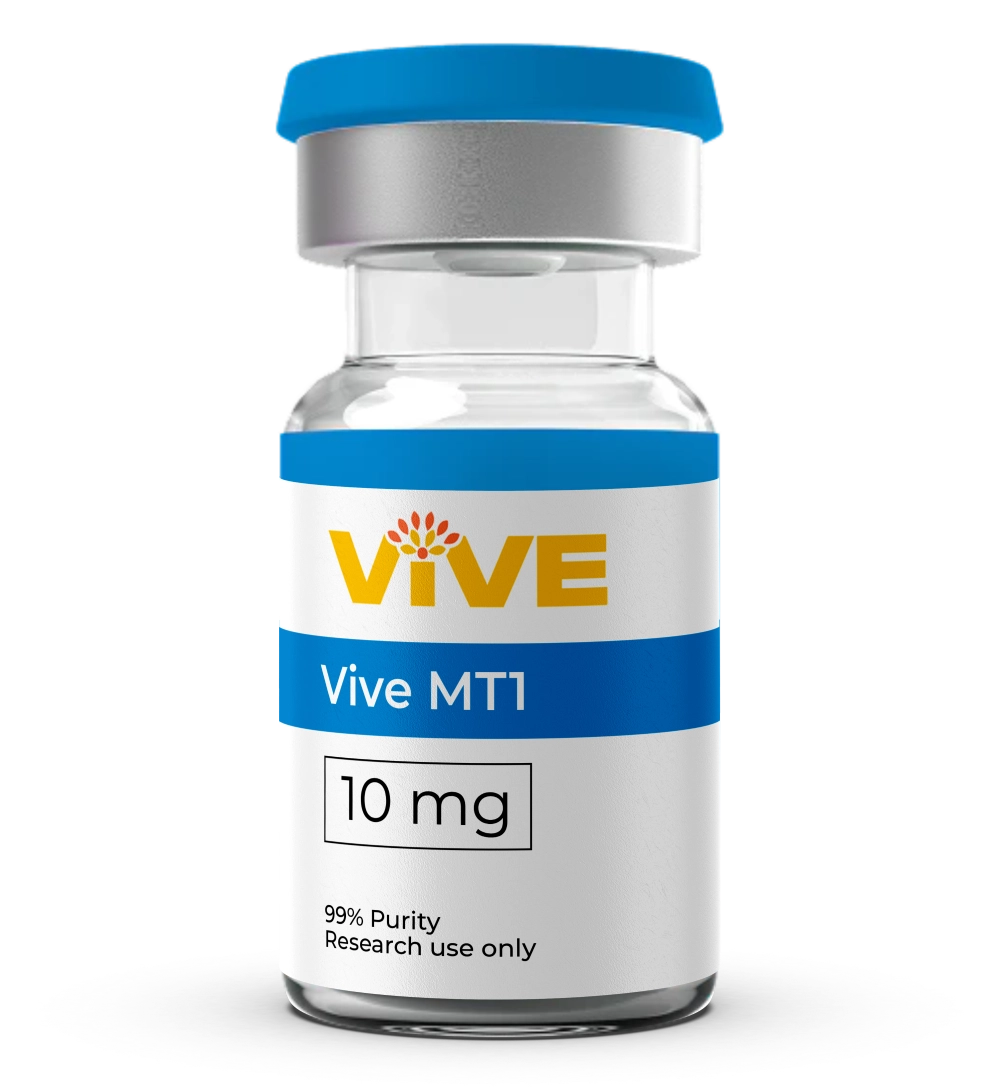
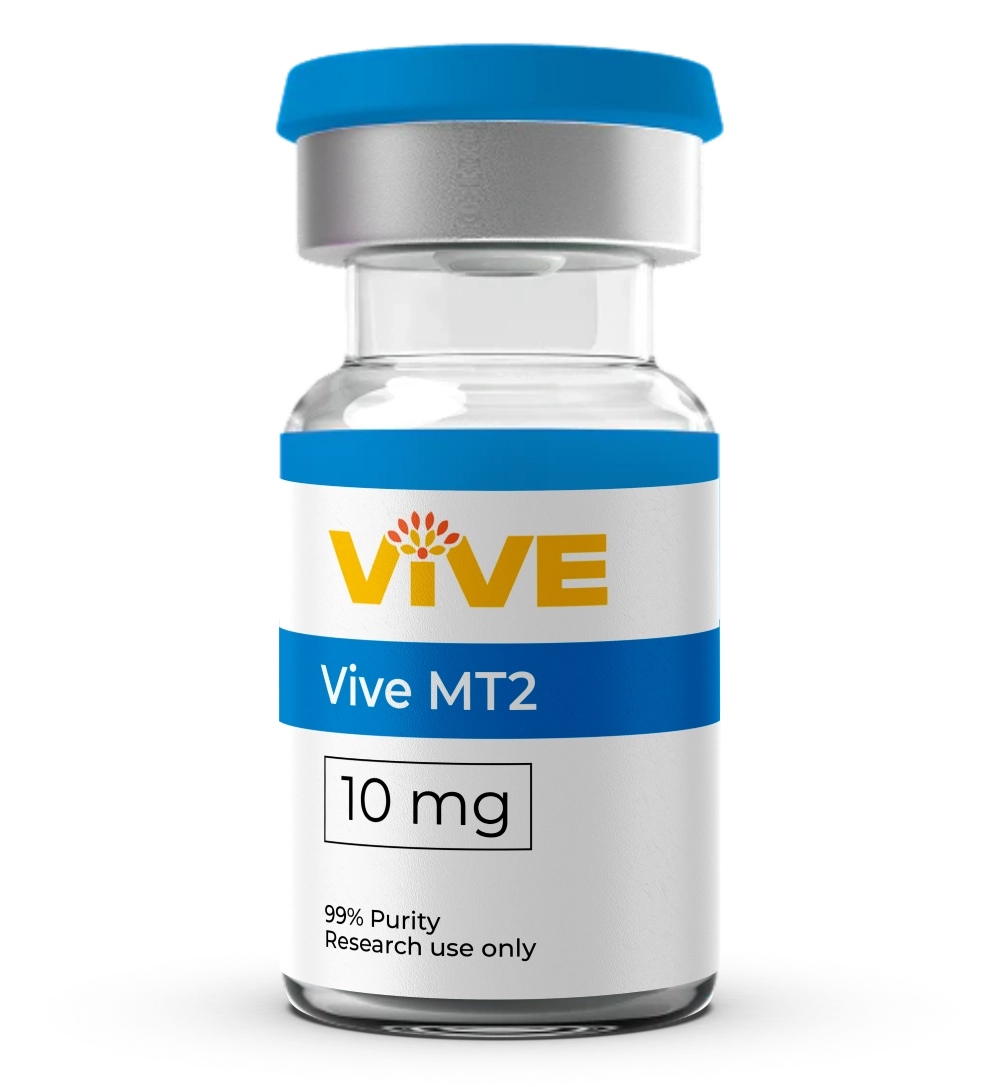
The collection at VivePeptides features two structurally distinct compounds: Melanotan 1 (MT1), a linear alpha-MSH analog with selective affinity for the MC1R subtype, and Melanotan 2 (MT2), a cyclic lactam analog with broader melanocortin receptor activity spanning MC1R, MC3R, MC4R, and MC5R. Each compound occupies a distinct position in the receptor pharmacology literature, giving researchers the ability to design studies around receptor selectivity.
VivePeptides supplies both peptides at documented purity levels with certificates of analysis, supporting the reproducibility standards expected in peer-reviewed preclinical research.
Distinct Melanocortin Receptor Profiles
MT1 favors MC1R engagement while MT2 extends activity across MC1R, MC3R, MC4R, and MC5R, a pharmacological distinction that is a primary variable in preclinical study design. Selecting the appropriate compound requires matching receptor selectivity to the biological question under investigation.
Purity Documentation for Reproducible Research
Each tanning peptide at VivePeptides is accompanied by a certificate of analysis confirming identity and purity at the lot level. Documented quality data supports the reproducibility standards required in peer-reviewed preclinical research.
Storage and Reconstitution Requirements
Melanotan 1 and Melanotan 2 are supplied as lyophilized powders and should be stored at or below minus 20 degrees Celsius to preserve structural integrity. Reconstituted solutions should be aliquoted promptly and freeze-thaw cycles minimized to maintain research-grade quality.
Mechanism & Research Context
Mechanism Classes and Preclinical Research Context
What distinguishes the compounds in this collection is the degree of melanocortin receptor selectivity each analog exhibits, a variable with significant implications for study design. Melanotan 1 is a linear peptide with documented preferential binding at MC1R, making it the subject of preclinical research focused on pigmentation signaling with a narrower receptor engagement profile.
Melanotan 2, by contrast, is a cyclic lactam analog whose activity extends across multiple melanocortin receptor subtypes, and it has been investigated in preclinical models examining a broader range of melanocortin-mediated physiological pathways. Researchers selecting between the two compounds typically anchor that choice on the receptor specificity required by their experimental model.
Both peptides require careful reconstitution and cold-chain storage to maintain structural integrity across study timelines. VivePeptides provides handling and storage documentation alongside each compound to support protocol standardization across laboratory settings.
Research FAQ
Frequently asked questions
What are tanning peptides in a research context?
What is the difference between Melanotan 1 and Melanotan 2?
How do researchers select between MT1 and MT2 for a preclinical study?
What receptor mechanisms are investigated with tanning peptides?
How should Melanotan peptides be stored and handled in a laboratory?
Are tanning peptides classified as melanocortin peptides?
Related Research Collections
Continue exploring
All products are sold strictly for laboratory and scientific research use only. Not for human or animal consumption, diagnostic, or therapeutic use. Nothing on this page constitutes medical advice or a health claim.