Research Article
BPC-157 Dosing for Research: Protocols and Best Practices
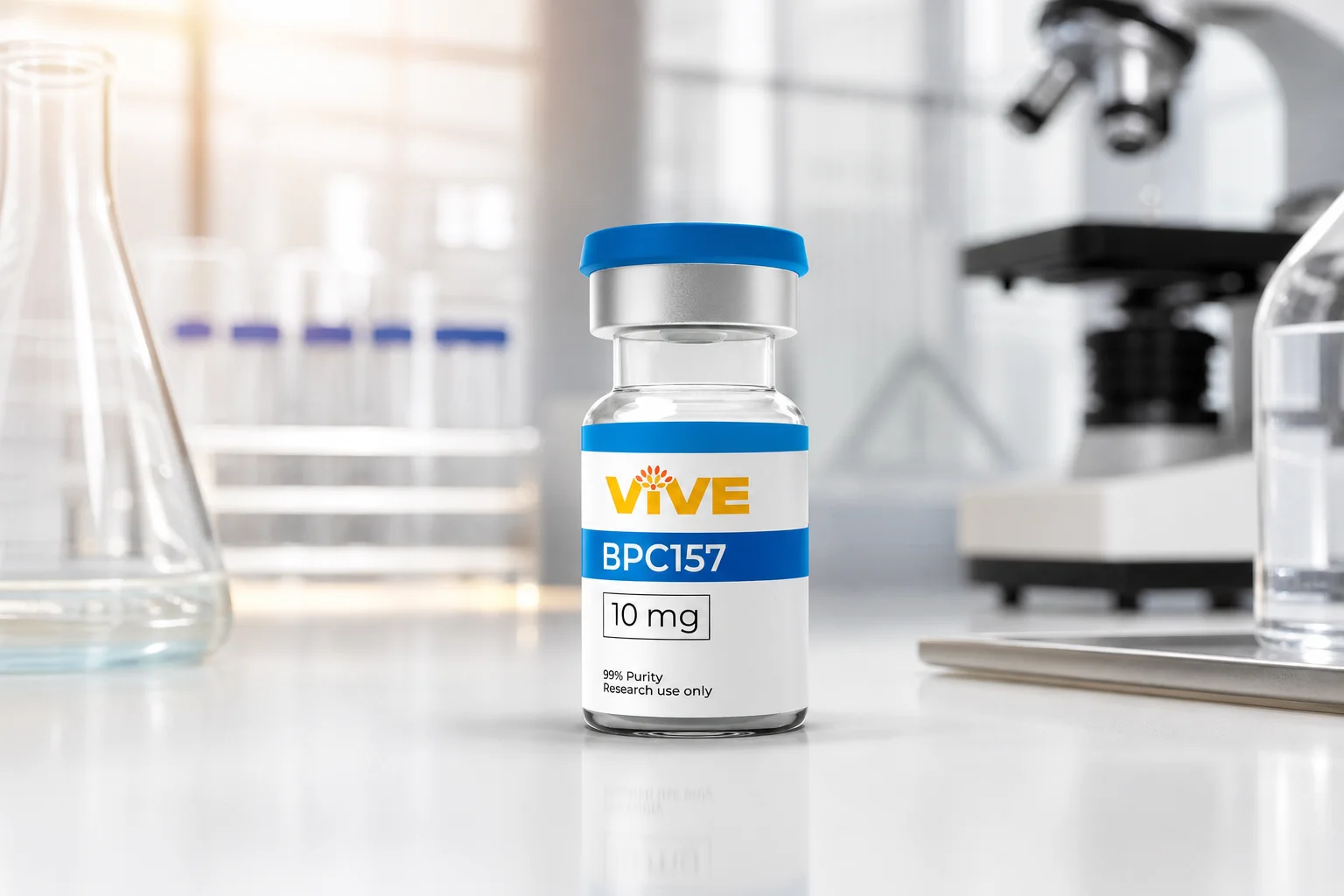
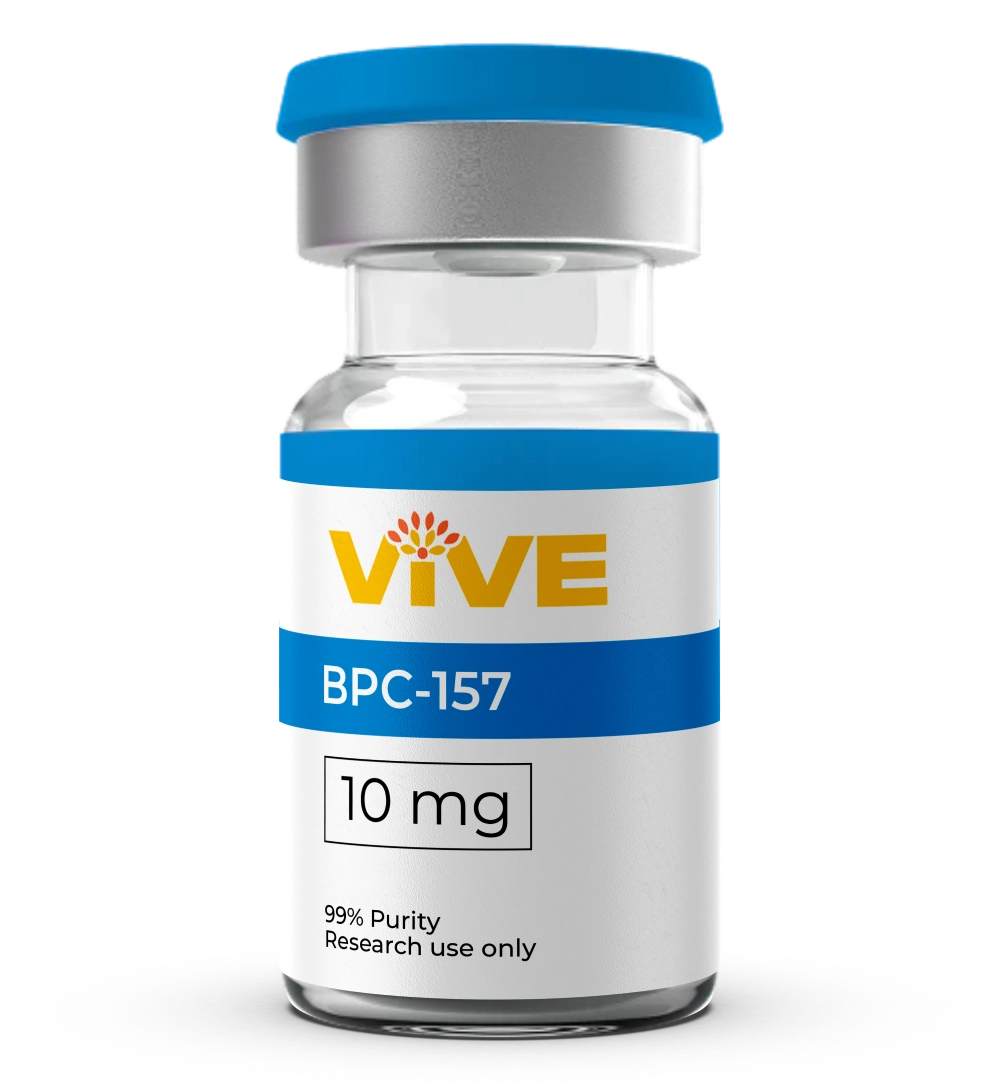
BPC-157 dosing for research in published animal studies ranges from 1 mcg/kg to 10 mcg/kg per day, administered subcutaneously or intraperitoneally in rodent models. This BPC-157 peptide, a 15-amino-acid synthetic peptide derived from gastric protein, exhibits notable stability across routes and has supported a broad range of tissue repair and gut health studies.
By Vive Team
What Is BPC-157?
BPC-157 (Body Protection Compound 157) is a synthetic peptide composed of 15 amino acids. Researchers originally identified the sequence as a partial fragment of a protein found in human gastric juice. The phrase body protection compound reflects early research into its cytoprotective properties in gastrointestinal tissue.
Sikiric et al. have characterized BPC-157 across dozens of publications in Regulatory Peptides, Current Pharmaceutical Design, and Journal of Physiology (Paris), documenting its interactions with nitric oxide pathways, growth factor signaling, and tendon healing cascades in rodent models. Unlike most peptides, BPC-157 demonstrates stability under acidic conditions, which makes gut health research a particularly tractable application area.
The peptide is not approved for human clinical use. All published data originates from animal studies, primarily in rodents, and researchers must contextualize findings accordingly.
BPC-157 Dosing for Research: Ranges from Published Animal Studies
The most frequently cited BPC-157 dosage in peer-reviewed rodent studies falls between 1 mcg/kg and 10 mcg/kg per day. At 10 mcg/kg, tissue repair outcomes in tendon transection models were reported consistently by Sikiric et al. (Current Pharmaceutical Design, 2018). Lower dosage ranges of 1 to 2 mcg/kg appear in gut health and mucosal integrity studies.
Some protocols divide the daily total and administer the compound twice daily rather than in a single injection. Twice daily administration appears in studies targeting mucosal tissue repair, where researchers hypothesize that more stable circulating concentration influences healing outcomes. Single daily dosing remains common in tendon and ligament studies.
No established BPC-157 dosing for research in human populations exists. Researchers should apply appropriate scaling conventions from animal data and consult applicable regulatory and ethical frameworks before designing any protocol. For a structured comparison of dosage data across study types, see our deep dive on BPC-157 Dosage in Research.
Routes of Administration in BPC-157 Research Protocols
Subcutaneous Injection
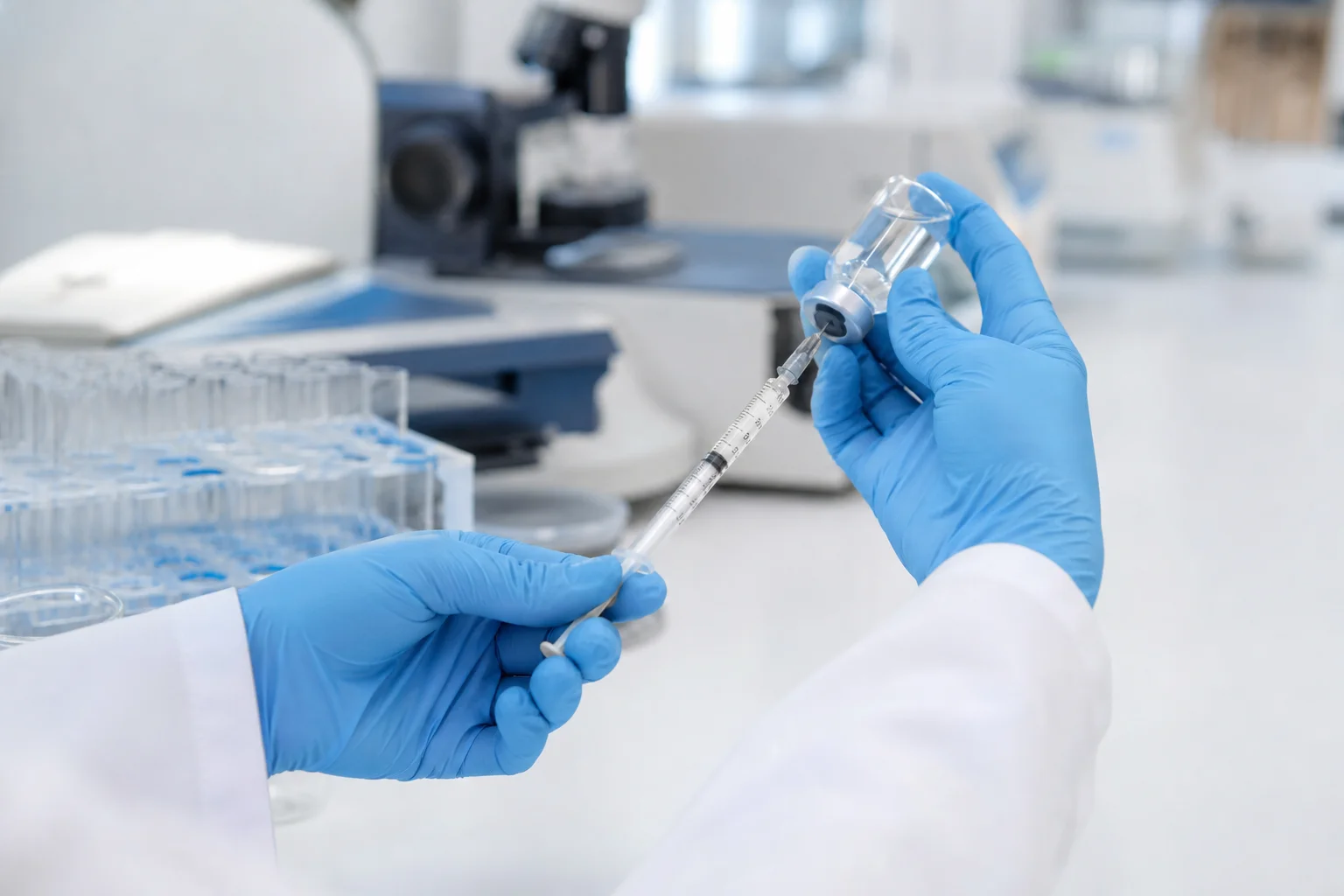
Subcutaneous injection is the most common administration route across published BPC-157 animal studies. Reconstituted peptide is drawn into an insulin syringe and administered into the subcutaneous tissue of the dorsal region in rodents. This route provides reliable systemic absorption with minimal procedural complexity.
Researchers reconstitute lyophilized BPC-157 using bacteriostatic water for peptide reconstitution. Bacteriostatic water contains 0.9% benzyl alcohol, which inhibits microbial growth and extends multi-use stability of the reconstituted solution across the research window.
Intraperitoneal Injection
Intraperitoneal (IP) administration appears in multiple early gut health studies. Szabo et al. (Journal of Pharmacology, 1994) used IP delivery in cytoprotection models examining gastric mucosal tissue response. IP injection allows rapid systemic distribution and is technically manageable in small animal research settings.
Oral Administration
BPC-157 research is notable among synthetic peptide literature for including oral administration models. Most peptides degrade under acidic gastric conditions before reaching systemic circulation. Published rodent studies have reported BPC-157 activity following oral dosing, making it an unusual candidate for gut health research designs where local gastrointestinal tissue effects are of primary interest.
Reconstitution, Stability, and Storage for BPC-157 Research
Correct reconstitution is essential to producing reliable BPC-157 research data. Improper handling degrades the synthetic peptide chain before administration, introducing an uncontrolled variable into experimental results.
Before reconstitution: Store lyophilized BPC-157 at -20°C in a sealed, desiccated container away from light and moisture.
Reconstitution solvent: Bacteriostatic water is the standard choice for injectable research preparations. Add solvent slowly along the inner wall of the vial to minimize foaming and prevent peptide degradation from mechanical agitation.
Concentration example: Dissolving 5 mg (5,000 mcg) in 5 mL of bacteriostatic water produces a 1,000 mcg/mL solution. A 10 mcg/kg dose for a 250g rat requires 0.0025 mL, typically drawn with a calibrated insulin syringe for precision.
Post-reconstitution storage: Refrigerate at 4°C and use within 4 weeks. Avoid repeated freeze-thaw cycles, which reduce peptide activity significantly. Amber vials limit photodegradation for extended storage windows.
These stability considerations apply across peptide therapy research broadly. Researchers working with multi-peptide protocols may find the BPC-157 vs TB-500 research breakdown useful for understanding how reconstitution and administration variables interact across compound combinations.
Side Effects and Safety Data from Animal Studies
Published animal studies have not identified significant organ-level toxicity at pharmacological BPC-157 dosage ranges. Sikiric et al. have reported the peptide as well-tolerated in rodent models at doses substantially above typical study concentrations, with no carcinogenic or genotoxic signals observed in published data.
Side effects observed at high experimental doses include transient injection-site reactions and behavioral changes consistent with subcutaneous peptide administration protocols. These findings are typical of the safety profile observed for other research-grade peptides at equivalent dose multiples.
Researchers evaluating side effects in peptide therapy studies must account for batch purity, reconstitution integrity, and administration technique as potential confounders. All animal studies should occur under applicable institutional oversight.
BPC-157 is not approved for human use by the FDA or equivalent regulatory bodies. For comparative context on tissue repair peptide research mechanisms, the BPC-157 vs GHK-Cu research breakdown examines two of the most studied compounds in this space side by side.
Frequently Asked Questions
What BPC-157 dosage do most animal studies use?
Most peer-reviewed rodent studies use BPC-157 dosage of 10 mcg/kg per day, administered subcutaneously or intraperitoneally. Lower ranges of 1 to 2 mcg/kg appear in gut health and mucosal studies. There is no established human clinical dosage. All BPC-157 dosing for research is derived from preclinical animal data, and researchers should apply species-appropriate scaling before drawing protocol conclusions.
Is twice daily dosing used in BPC-157 animal studies?
Yes. Twice daily administration divides the total daily dose into two injections. This approach appears in tissue repair and gut health studies where researchers aim for more stable peptide exposure across the dosing interval. Single daily administration is also widely used, particularly in tendon and ligament healing models where less frequent injection is operationally practical.
What is the correct reconstitution solvent for BPC-157?
Bacteriostatic water is the standard reconstitution solvent for injectable BPC-157 research preparations. Its 0.9% benzyl alcohol content inhibits microbial growth and extends multi-use stability to approximately 4 weeks when refrigerated at 4°C. Sterile water without preservative is appropriate for single-use preparations but does not provide equivalent shelf life.
Does BPC-157 research cover gut health specifically?
Yes. Gut health and gastrointestinal tissue repair are among the most extensively published application areas for BPC-157. The peptide's stability under acidic conditions allows oral administration models in rodents, and multiple research groups have examined mucosal integrity, ulcer models, and inflammatory marker expression in gut tissue following BPC-157 administration.
How does BPC-157 compare to other tissue repair peptides in research?
BPC-157 research focuses primarily on gut health, tendon, and ligament tissue repair, while compounds such as TB-500 (thymosin beta-4) are studied more extensively in systemic healing and angiogenesis models. Stacking research examines whether distinct mechanisms produce additive effects. For a comparative view, see the research data on Best Peptide Stacks for Research.
Access Research-Grade BPC-157 at VivePeptides
VivePeptides supplies research-grade BPC-157 with certificates of analysis for researchers building structured peptide therapy protocols. Browse the VivePeptides catalog to review available compounds and supporting reconstitution materials.
Research Use Only
All information in this article is intended for educational and research purposes only. VivePeptides products are not intended for human or veterinary use.