
Research Use Only
Peptides for Immune Support
Peptides investigated in the context of immunomodulation, T-cell signaling, and host-defense pathways.
Peptides for Immune Support are research compounds studied for their roles in immunomodulation and innate host defense, representing two structurally distinct mechanism classes. This category features thymic peptides investigated for T-cell maturation and adaptive immune signaling, alongside cathelicidin-class host defense peptides examined in preclinical models of innate immunity. All compounds are provided for laboratory research use only.
Reviewed by the VivePeptides Research DeskLast reviewed
Research Overview
Immune System Peptides for Preclinical Research: What This Category Encompasses
Peptides for immune system research encompass compounds that interact with adaptive and innate immune signaling pathways in laboratory models. This is an active area of investigation because researchers are working to characterize how specific peptide sequences influence immune cell populations, cytokine environments, and host defense responses at the molecular level. VivePeptides supplies two mechanism classes within this category.
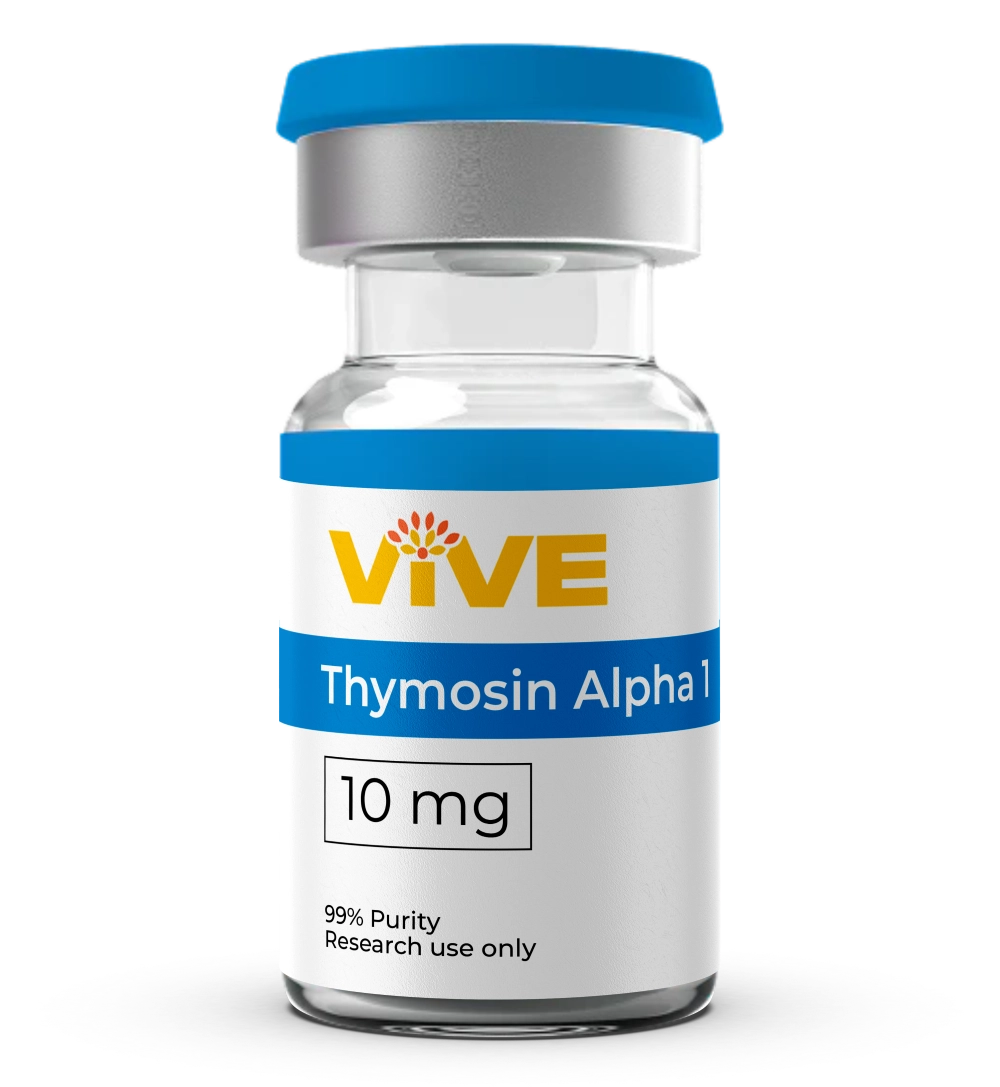
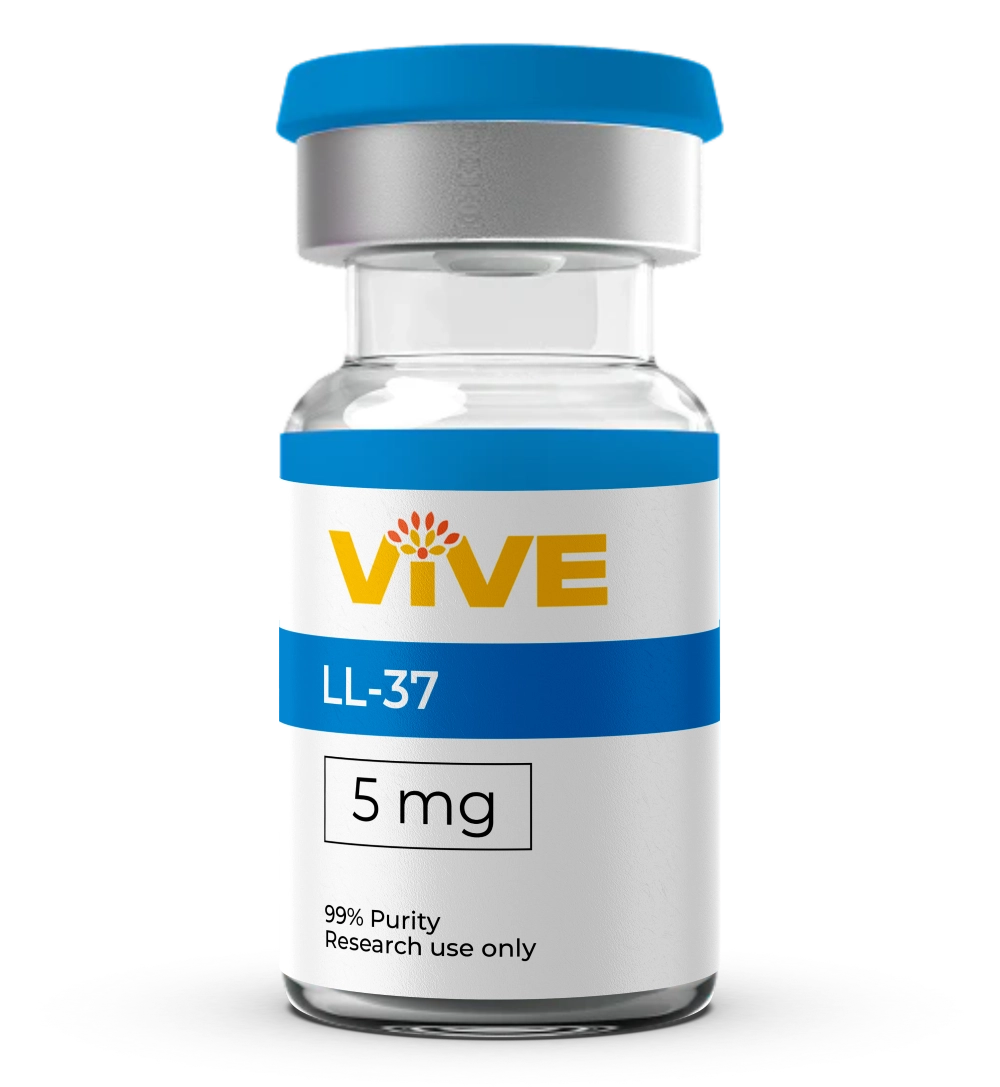
Thymosin Alpha 1 is a thymic peptide studied for its role in T-cell differentiation and adaptive immune signaling in preclinical settings. LL-37 is a cathelicidin-class host defense peptide investigated in models of innate immunity and epithelial defense responses. VivePeptides provides both compounds at research-grade purity with full analytical documentation, including HPLC and mass spectrometry data, supporting rigorous experimental design.
All materials are intended exclusively for in vitro and preclinical laboratory research use.
Adaptive and Innate Classes Represented
This collection pairs a thymic immunomodulatory peptide (Thymosin Alpha 1) with a cathelicidin host defense peptide (LL-37), giving researchers access to two mechanistically distinct research paradigms within a single immune-focused category. Each compound addresses a separate branch of the immune signaling literature.
HPLC and MS Documentation Included
Both Thymosin Alpha 1 and LL-37 are supplied with HPLC purity data and mass spectrometry confirmation, meeting the documentation standards required for reproducible preclinical immune research. Compound identity and purity can be independently verified prior to experimental use.
Matching Compound to Study Endpoint
Thymosin Alpha 1 is the appropriate selection for studies targeting T-cell populations and adaptive immune signaling, while LL-37 is suited to innate immunity models, antimicrobial membrane interaction assays, and epithelial defense studies. Selecting based on endpoint rather than general immune relevance is the approach reflected in the published preclinical literature.
Mechanism & Research Context
Mechanism Classes and Research Context: Thymosin Alpha 1 and LL-37
The two mechanism classes in this collection, thymic peptide immunomodulators and cathelicidin host defense peptides, are structurally and functionally distinct, which directly affects how researchers design experiments and select between compounds. Thymosin Alpha 1 has been examined in preclinical literature for its interactions with T-cell receptor signaling pathways and dendritic cell activation, with research focusing on how it may influence adaptive immune responses in cell culture and animal model systems.
LL-37, as a cathelicidin, has been studied for its interactions with microbial membranes, pattern recognition receptors, and innate immune cell recruitment in model systems. Researchers typically select Thymosin Alpha 1 when investigating adaptive immunity endpoints and LL-37 when examining innate defense or epithelial barrier contexts.
Practical study design considerations include peptide solubility conditions, working concentrations derived from published preclinical ranges, and appropriate negative and positive controls matched to each mechanism class.
Research FAQ
Frequently asked questions
What are peptides for immune support in a research context?
What is Thymosin Alpha 1 and what mechanism class does it represent?
What is LL-37 and how is it classified as an immunity peptide?
How do researchers choose between Thymosin Alpha 1 and LL-37 for an immune-focused study?
What purity and documentation standards apply to VivePeptides immune system peptides?
Are immunity peptides like Thymosin Alpha 1 and LL-37 studied in human clinical settings?
Related Research Collections
Continue exploring
All products are sold strictly for laboratory and scientific research use only. Not for human or animal consumption, diagnostic, or therapeutic use. Nothing on this page constitutes medical advice or a health claim.