Research Article
Peptide Reconstitution Calculator: Dose Accuracy Guide

A peptide reconstitution calculator converts a lyophilized peptide mass and a target concentration into the exact volume of bacteriostatic water for peptide reconstitution needed, then outputs the syringe units required for each intended dose. Every step in this guide is structured for researchers who need reproducible, documented results from every peptide vial.
By Vive Team
Why Peptide Reconstitution Accuracy Matters
Lyophilized peptides arrive as a dry powder sealed inside a glass peptide vial. Before any in vitro or in vivo research protocol can proceed, that powder must be dissolved in a measured volume of solvent at a precisely calculated concentration. A small error at this step compounds downstream: adding 20% more solvent than intended reduces every subsequent dose by the same proportion, undermining the entire data set.
A peptide calculator removes that variable. Researchers enter total peptide mass in milligrams, the desired concentration in mcg/mL, and the number of required doses. The calculator returns the precise volume of bacteriostatic water to add and the syringe units for each desired dose mcg value. According to Bhatt et al. writing in the Journal of Pharmaceutical Sciences (2011), solvent composition and volume accuracy are among the primary variables affecting peptide stability in reconstituted solutions, reinforcing why a calculator-based approach is preferable to estimation.
The Three Variables Every Peptide Calculator Requires
Peptide Mass (mg)
This is the total mass of lyophilized powder in the vial. Values of 2 mg, 5 mg, and 10 mg are common in research settings. Always confirm mass from the certificate of analysis: the volume of powder inside a vial has no reliable relationship to its actual mass.
Target Concentration (mcg/mL)
Target concentration determines how much active compound is present per milliliter of reconstituted solution. Research protocols commonly specify values between 500 mcg/mL and 2,000 mcg/mL. Choosing 1,000 mcg/mL (1 mg/mL) keeps syringe math straightforward: each 0.10 mL drawn equals exactly 100 mcg. For a 5 mg vial, this follows the 1 mL per mg bacteriostatic water rule, requiring 5 mL of solvent for 5 mg of peptide.
Solvent Volume (mL)
Solvent volume is derived from the first two values:
Solvent volume (mL) = total mass (mcg) / concentration (mcg/mL)
For a 5 mg vial at 1,000 mcg/mL: 5,000 mcg / 1,000 mcg/mL = 5.0 mL of bac water
This is the only figure that changes when you adjust target concentration. Once calculated, add water in this exact volume to the vial and all downstream syringe calculations follow automatically.
Step-by-Step: Using the Peptide Reconstitution Calculator
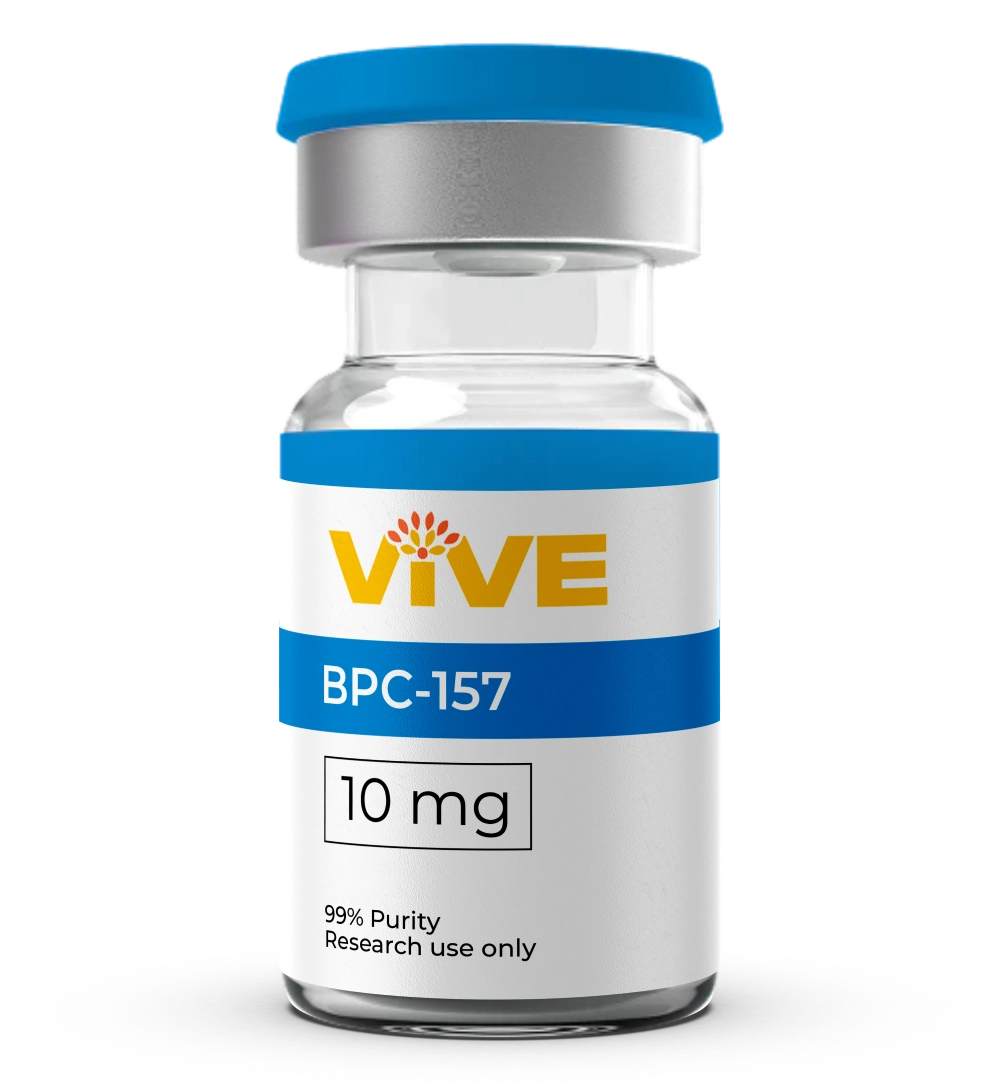
The following example uses BPC-157 reconstitution protocols as a reference. BPC-157 is a 15-amino-acid peptide derived from gastric juice proteins and is among the most studied compounds in gastrointestinal and connective tissue research (Sikiric et al., Current Pharmaceutical Design, 2018). Researchers already comfortable with basic dilution math can skip content on steps one through three and proceed directly to the syringe unit conversion section.
Step 1: Confirm vial contents Record that the peptide vial holds 5 mg (5,000 mcg) of lyophilized BPC-157 powder.
Step 2: Set the desired dose The research protocol specifies a desired dose of 250 mcg per injection.
Step 3: Select a target concentration Choose 1,000 mcg/mL. This requires 5.0 mL of solvent and yields exactly 20 doses at 250 mcg each.
Step 4: Calculate solvent volume 5,000 mcg / 1,000 mcg/mL = 5.0 mL of bacteriostatic water.
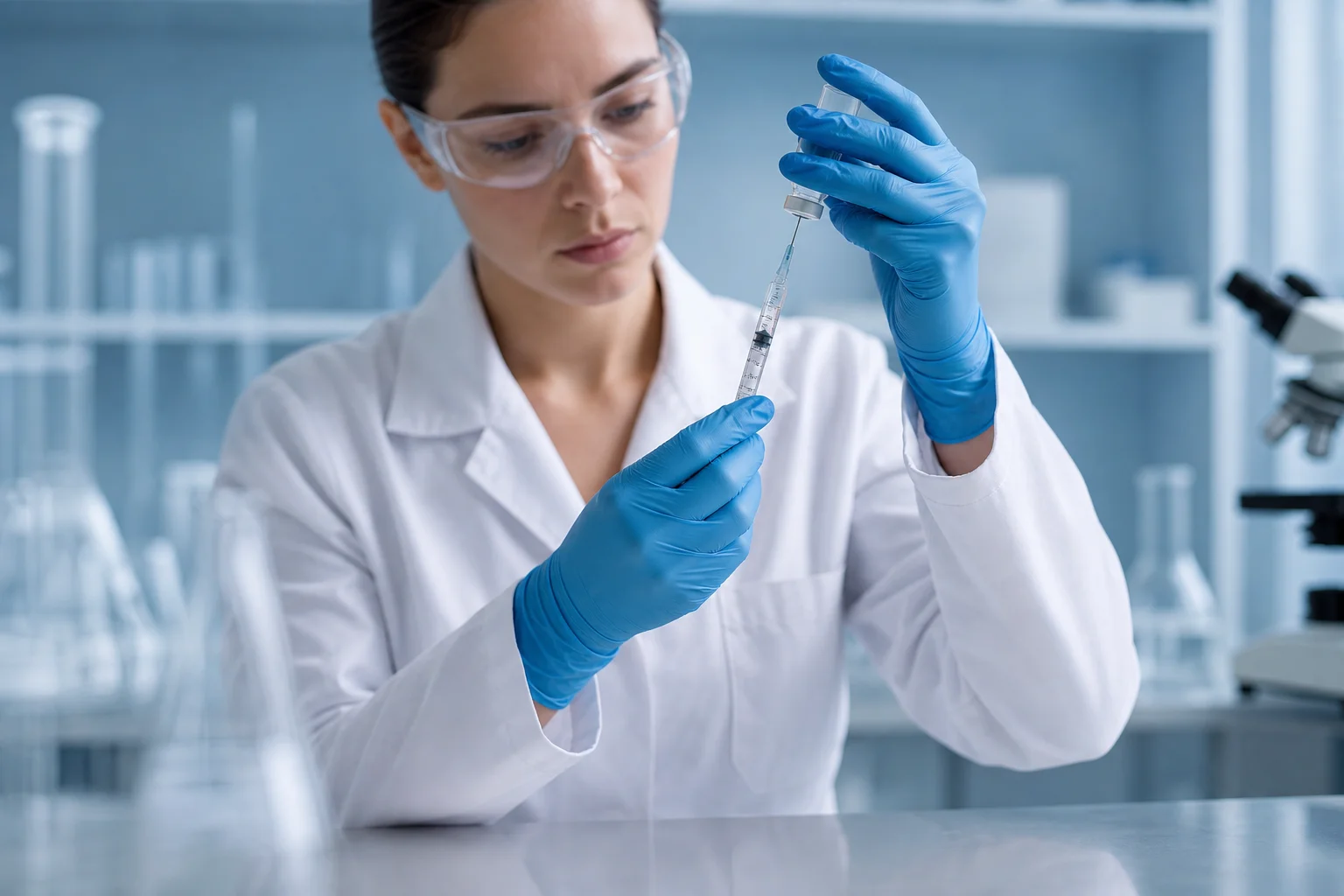
Step 5: Add water to the vial Draw 5.0 mL of bacteriostatic water into an insulin syringe. Insert the needle through the rubber stopper at an angle so the stream runs down the inner vial wall rather than directly onto the powder, reducing mechanical stress on peptide bonds during dissolution. Allow the solution to rest for one to two minutes, then swirl gently. Never shake or vortex.
Step 6: Log the concentration mg ml At 1,000 mcg/mL, the concentration mg ml ratio is 1 mg per mL. Label the vial with the compound name, concentration, reconstitution date, and total volume.
Converting Concentration to Syringe Units for Each Injection
Insulin syringes calibrated for U-100 insulin contain 100 units per mL, meaning each unit equals 0.01 mL. This fixed units ml relationship converts any desired dose mcg value into a concrete number of units to draw.
Injection volume formula: Injection volume (mL) = desired dose (mcg) / concentration (mcg/mL)
Syringe units formula: Syringe units = injection volume (mL) x 100
Applied to the BPC-157 example: Desired dose mcg: 250 mcg Concentration: 1,000 mcg/mL Injection volume: 250 / 1,000 = 0.25 mL Syringe units: 0.25 x 100 = 25 units
Draw to the 25-unit mark on a standard insulin syringe for a 250 mcg dose. A 500 mcg dose draws to 50 units; a 125 mcg dose draws to 12.5 units. Insulin syringes with half-unit graduations reduce rounding error for sub-100-unit draws.
The ml concentration principle scales predictably. Halving the solvent volume doubles the concentration and halves the injection volume per dose. Doubling the solvent volume does the inverse. The peptide reconstitution calculator adjusts all three outputs instantly when any input changes, making it the most reliable tool for modifying protocols mid-study without manual recalculation. The concentration mcg per mL value and the corresponding syringe draw volume remain consistent as long as the reconstituted peptide vial is stored correctly between injections.
Reconstitution Errors That Compromise Research Data
Using plain sterile water instead of bacteriostatic water Plain water lacks the 0.9% benzyl alcohol preservative. Without it, a reconstituted solution can support microbial growth within 24 hours at room temperature. Bac water extends viable storage to approximately 28 days under refrigeration at 2 to 8 degrees Celsius, covering the multi-week dosing windows common in peptide research.
Measuring solvent without a calibrated instrument A 0.2 mL measurement error in a 2.0 mL total volume produces a 10% concentration deviation. Use calibrated insulin syringes for small volumes. For volumes above 2 mL, a sterile 3 mL or 5 mL luer-lock syringe improves measurement accuracy.
Directing solvent onto the powder Aiming the stream at lyophilized powder causes foaming and may accelerate peptide degradation. Always angle the needle so liquid runs along the inner vial wall and wets the powder gradually.
Skipping labeled storage logs Each reconstituted peptide vial should carry a label listing compound name, concentration mcg per mL, reconstitution date, and researcher initials. Multi-compound research panels without labeled records are a documented source of transcription and misidentification errors in published laboratory incident reports.
Frequently Asked Questions
What solvent is standard for peptide reconstitution? Bacteriostatic water is the standard solvent for peptide reconstitution in research settings. It contains 0.9% benzyl alcohol, which inhibits microbial growth in multi-use vials for up to 28 days under refrigeration. The benzyl alcohol concentration is compatible with the vast majority of research peptides. For hydrophobic sequences, a pre-dissolve step in dilute acetic acid or DMSO may be needed before adding bac water.
How do I convert a desired dose mcg to syringe units? Divide the desired dose in mcg by the concentration in mcg/mL to get injection volume in mL. Multiply that result by 100 to get units on a U-100 insulin syringe. A peptide reconstitution calculator automates this conversion and eliminates transcription errors across multi-point protocols where doses vary by subject weight or time point.
What concentration should I target for a 5 mg peptide vial? A target of 1,000 mcg/mL (1 mg/mL) is a practical starting point. It requires 5.0 mL of bacteriostatic water and produces doses where each 0.10 mL drawn contains exactly 100 mcg. Researchers needing smaller injection volumes per dose can target 2,000 mcg/mL using 2.5 mL of solvent, which halves the per-dose draw volume.
Why are insulin syringes preferred for subcutaneous peptide injection? Insulin syringes feature fine-gauge needles (28 to 31 gauge) that minimize tissue trauma at the injection site. Their unit-based graduations map directly to the syringe units formula, and their minimal dead-space volume reduces material waste from residual solution in the hub, which matters when working with high-cost research compounds.
How long does a reconstituted peptide remain stable? Reconstituted peptides stored in bacteriostatic water at 2 to 8 degrees Celsius are generally considered stable for 28 days. Lyophilized powder retains activity for considerably longer when stored sealed at or below room temperature. Reconstitute only the volume expected to be used within the projected research window to minimize degradation.
Source Your Research Compounds with Confidence
Reproducible research begins with accurate peptide reconstitution and reliable source materials. Apply the peptide reconstitution calculator framework outlined above for any compound in your protocol, then browse the research-grade peptide catalog for peptides and bacteriostatic water sourced to documented quality standards.
Research Use Only
All information in this article is intended for educational and research purposes only. VivePeptides products are not intended for human or veterinary use.