Research Article
Tesamorelin vs Sermorelin: GHRH Peptide Comparison
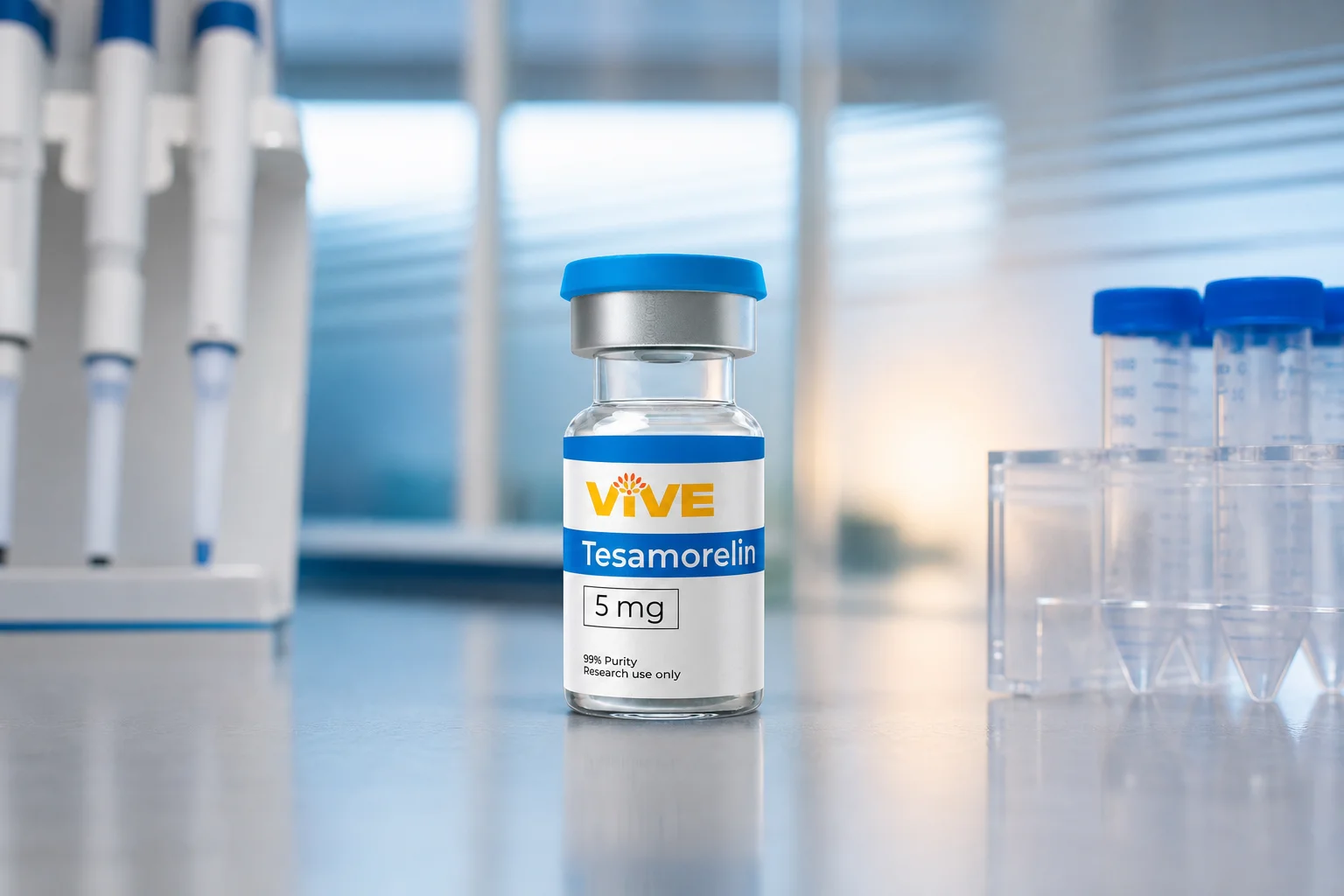
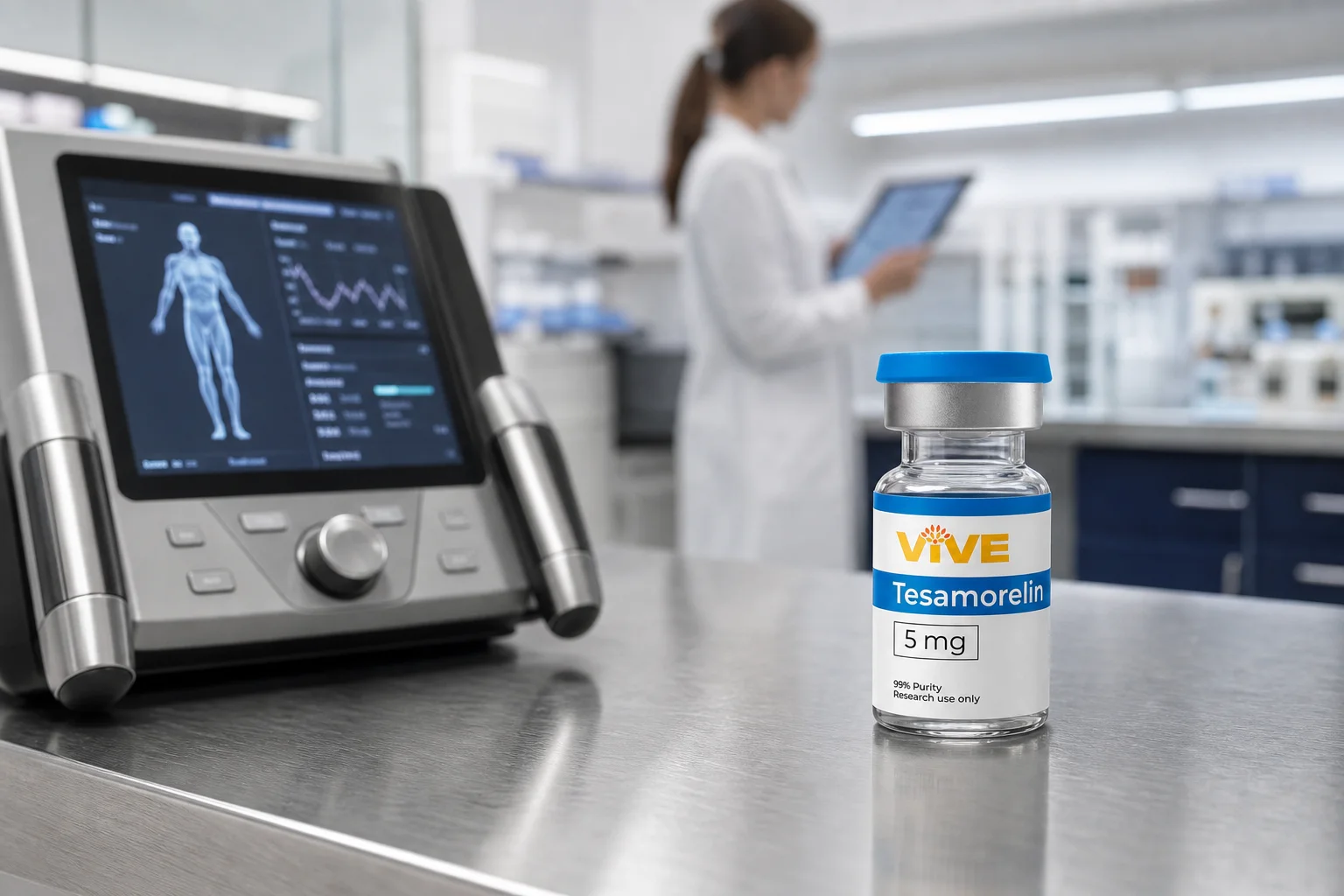
The tesamorelin vs sermorelin distinction comes down to structural modifications and clinical scope: both are synthetic GHRH analogs that prompt the pituitary gland to release growth hormone in pulsatile bursts, but tesamorelin carries an N-terminal modification that extends its half-life and concentrates its published data on visceral fat and body composition outcomes. Researchers evaluating Tesamorelin GHRH peptide alongside sermorelin will find meaningful pharmacological and evidentiary differences at every level of the research literature.
By Vive Team
GHRH Receptor Binding: How Both Peptides Stimulate Growth Hormone
Both tesamorelin and sermorelin act as agonists at the GHRH receptor on somatotroph cells in the anterior pituitary gland. Binding triggers intracellular cyclic AMP accumulation, activation of protein kinase A, and the downstream phosphorylation cascade that produces pulsatile growth hormone secretion. Because both peptides work through this endogenous axis, they preserve the hypothalamic-pituitary-liver feedback loop mediated by IGF-1, which distinguishes GHRH analog-based peptide therapy research from direct exogenous GH administration.
Structurally, the two peptides share the same N-terminal pharmacophore: the first 29 amino acids of native GHRH provide full GHRH receptor activation. Tesamorelin extends that sequence to 44 amino acids and adds a trans-3-hexenoic acid group at the N-terminus, increasing resistance to plasma dipeptidyl peptidase IV (DPP-IV) and extending functional half-life to approximately 26 minutes (Falutz et al., New England Journal of Medicine, 2010). Sermorelin, as GHRH(1-29)-NH2, lacks that modification, giving it a half-life of roughly 10 to 12 minutes under research conditions (Walker et al., Journal of Clinical Endocrinology and Metabolism, 1990).
Tesamorelin: Structure and Clinical Research
Tesamorelin received FDA approval under the brand name Egrifta for HIV-associated lipodystrophy, making it one of the few GHRH peptides with regulatory-grade phase III evidence. The pivotal Falutz et al. (2010) randomized controlled trial enrolled 412 subjects with HIV-associated abdominal lipodystrophy. After 26 weeks of 2 mg daily subcutaneous tesamorelin, the treatment arm showed a mean 15.2% reduction in visceral fat by CT measurement, statistically significant IGF-1 elevation, and improved lean muscle to trunk fat ratios compared with placebo.
Stanley et al. (Journal of Clinical Endocrinology and Metabolism, 2012) extended the dataset to 52 weeks and confirmed that fat metabolism changes and visceral fat reduction persisted with continued dosing. Lean muscle preservation and favorable body composition outcomes were maintained throughout, with fat loss localized predominantly to the abdominal visceral depot rather than peripheral subcutaneous tissue.
The trans-3-hexenoic acid modification that defines tesamorelin also contributes to a wider growth hormone pulse window per injection. Tesamorelin hormone levels peak approximately 20 to 30 minutes post-injection and return to baseline within 2 to 4 hours, preserving the pulsatile pattern that supports normal IGF-1 feedback dynamics.
Sermorelin: Structure and Endocrine Research
Sermorelin is GHRH(1-29)-NH2, the shortest active fragment of endogenous GHRH. Walker et al. (1990) confirmed full GHRH receptor activation at doses as low as 0.5 mcg/kg in adult subjects, establishing sermorelin as an effective, concentration-efficient growth hormone secretagogue. Corpas et al. (Journal of Clinical Endocrinology and Metabolism, 1992) showed that nightly sermorelin administration for 6 months in older male subjects normalized hormone levels toward younger-adult reference ranges, with statistically significant increases in IGF-1 and growth hormone pulse amplitude.
Sermorelin's shorter half-life of 10 to 12 minutes, compared with tesamorelin's 26 minutes, allows GHRH receptor recovery between doses when timed to endogenous GH pulse windows. This recovery interval is associated with reduced receptor downregulation risk and supports sustained pituitary gland responsiveness across extended research protocols. Cordido et al. (Journal of Clinical Endocrinology and Metabolism, 1993) confirmed that GHRH analog administration can restore blunted GH secretion in subjects with documented GH-axis decline.
Sermorelin research spans a broader endocrine range than tesamorelin, covering GH deficiency restoration, sleep architecture, bone mineral density, and GH axis recovery in aging models. For researchers comparing growth hormone secretagogue classes, the Ipamorelin vs Sermorelin: Growth Hormone Secretagogue Research Comparison adds ipamorelin's GHRP-class mechanism as a third comparison variable with side-by-side pulse amplitude data.

Tesamorelin vs Sermorelin: Body Composition and Fat Metabolism
The most differentiated research domain across tesamorelin sermorelin studies is fat metabolism. Tesamorelin carries concentrated phase III data targeting visceral fat as a primary endpoint. The Falutz and Stanley datasets together establish a consistent pattern: daily subcutaneous tesamorelin reduces visceral fat volume, improves body composition ratios, and preserves lean muscle over 26 to 52 weeks, with the fat loss effect localized predominantly to the abdominal visceral depot.
Sermorelin fat loss and body composition data come primarily from GH-deficient and aging research populations. Corpas et al. (1992) reported modest reductions in adipose tissue alongside lean muscle preservation over 6 months, consistent with the broader metabolic effects of restoring growth hormone to low-normal physiologic ranges. Sermorelin lacks tesamorelin's targeted visceral fat dataset, but its fat metabolism findings remain relevant to researchers studying GH-axis restoration as a lever for whole-body energy homeostasis.
Researchers designing multi-peptide protocols will find that research data on Best Peptide Stacks for Research covers GHRH analog and GHRP combination approaches relevant to body composition and growth hormone optimization endpoints.
Growth Hormone Pulse Dynamics and Protocol Considerations
Both tesamorelin and sermorelin produce pulsatile growth hormone secretion that aligns with the physiologic GH rhythm regulated by the hypothalamic-pituitary axis. This pulsatility matters for IGF-1 production, tissue signaling specificity, and pituitary gland sensitivity over extended research timelines.
Tesamorelin's longer half-life generates a wider pulse window and higher peak GH concentrations per injection compared with sermorelin at equivalent peptide doses across pharmacokinetic analyses (Falutz et al., 2007). Direct head-to-head pharmacokinetic data for tesamorelin and sermorelin in the same cohort remain sparse in the published literature, so cross-study comparisons carry inherent limitations that researchers should account for in protocol design.
Sermorelin dosed nightly achieves cumulative normalization of hormone levels over weeks to months. Monitoring serum IGF-1 every 4 to 8 weeks is standard across published sermorelin protocols for assessing pituitary responsiveness without receptor fatigue. Sermorelin growth-hormone peptide research protocols typically specify pre-sleep dosing to align with the endogenous GH surge that accompanies slow-wave sleep, maximizing pulse amplification per injection.
Both peptides require subcutaneous reconstituted injection and adhere to the same amino acids stability requirements for lyophilized GHRH analogs. Researchers should verify purity via HPLC and mass spectrometry before initiating any protocol. The How to Verify Peptide Quality research breakdown outlines the five verification criteria applicable to both GHRH analogs, including certificate of analysis requirements and endotoxin testing thresholds.
Frequently Asked Questions
What is the primary structural difference between tesamorelin and sermorelin?
Tesamorelin is a 44-amino-acid GHRH analog with a trans-3-hexenoic acid N-terminal modification that resists DPP-IV degradation, extending its half-life to approximately 26 minutes. Sermorelin is GHRH(1-29)-NH2, a 29-amino-acid fragment without that stabilization, giving it a half-life of 10 to 12 minutes. This structural gap explains tesamorelin's wider GH pulse window and its concentrated visceral fat research profile.
Do both peptides act on the pituitary gland?
Yes. Both peptides bind the GHRH receptor on somatotroph cells in the anterior pituitary gland, triggering cAMP-mediated signaling and pulsatile growth hormone release. Neither introduces exogenous growth hormone directly. Both amplify the pituitary's endogenous secretory output while preserving intact IGF-1 feedback sensitivity, distinguishing them from direct GH injection protocols in preclinical and clinical research settings.
Which peptide has stronger visceral fat reduction evidence?
Tesamorelin carries stronger and more specific visceral fat evidence. Falutz et al. (2010) documented a mean 15.2% CT-verified visceral fat reduction over 26 weeks in a phase III trial. Sermorelin research shows general fat metabolism improvements and body composition changes in GH-deficient populations, but no targeted visceral fat dataset with equivalent trial scale exists in the published sermorelin literature.
How does sermorelin affect hormone levels in research models?
Corpas et al. (1992) demonstrated that nightly sermorelin administration over 6 months significantly elevated serum IGF-1 and GH pulse amplitude in older male subjects, normalizing hormone levels toward younger-adult reference ranges. These changes correlated with modest improvements in body composition and lean muscle preservation, consistent with the downstream anabolic effects of restored growth hormone secretion from the pituitary gland.
In peptide therapy research, is tesamorelin vs sermorelin protocol selection interchangeable?
No. Although both act through the GHRH receptor pathway, their evidence bases differ substantially in scope and endpoint. Tesamorelin research centers on lipodystrophy and visceral fat reduction with phase III confirmation. Sermorelin covers GH deficiency restoration, aging, bone metabolism, and sleep architecture. Peptide therapy protocol selection should be driven by the specific research question and the primary literature for the target population.
Access Research-Grade GHRH Peptides at VivePeptides
Both tesamorelin and sermorelin offer distinct, well-characterized pathways for studying growth hormone, visceral fat, and body composition through GHRH receptor activation. Researchers can browse the VivePeptides catalog for research-grade GHRH peptides, reconstitution supplies, and full documentation for study design.
Research Use Only
All information in this article is intended for educational and research purposes only. VivePeptides products are not intended for human or veterinary use.