Research Article
Ipamorelin vs Sermorelin: Growth Hormone Secretagogue Research Comparison
Ipamorelin vs sermorelin represents one of the most studied pairings among growth hormone secretagogues in current peptide research. Both compounds target the pituitary gland to stimulate growth hormone release through receptor-level mechanisms, yet they differ in pathway, half-life, and selectivity, producing distinct research profiles relevant to body composition, fat loss, and lean muscle outcomes.
How Each Peptide Activates Growth Hormone Release
Sermorelin: A GHRH Receptor Agonist
Sermorelin is a 29-amino acid synthetic analog of endogenous growth hormone-releasing hormone (GHRH). As a growth hormone-releasing hormone GHRH analog, it binds the GHRH receptor expressed on somatotroph cells within the pituitary gland, directly triggering growth hormone release in a pattern that closely mirrors natural pulsatile secretion. The hormone GHRH pathway gives sermorelin a well-mapped mechanism inside the somatotropic axis, and researchers regard this signaling route as a reference standard for physiological GH stimulation.
Walker et al. (Endocrinology, 1991) demonstrated that sermorelin dose-dependently stimulates GH release in human subjects, with effects mediated through GHRH receptor binding on anterior pituitary somatotroph cells.
Ipamorelin: A Selective GHS-R1a Agonist
Ipamorelin operates through a distinct mechanism. It belongs to the class of synthetic growth hormone secretagogues and functions as a selective GHS-R1a agonist, engaging the ghrelin receptor rather than the hormone GHRH receptor. Bowers et al. (Journal of Medicinal Chemistry, 1998) classified ipamorelin as a next-generation secretagogue notable for its receptor selectivity and its capacity to stimulate GH release without activating other pituitary hormone axes at research doses. Unlike earlier-generation secretagogues, ipamorelin produces GH pulses that researchers characterize as physiologically coherent and receptor-specific.
Mechanism of Action and Receptor Selectivity
The mechanism action comparison between ipamorelin vs sermorelin centers on which receptor each compound engages and how broadly that engagement affects anterior pituitary output.
Sermorelin binds the GHRH receptor (GHRHR), a class B G-protein-coupled receptor on anterior pituitary somatotrophs. Ipamorelin binds GHS-R1a, the ghrelin receptor, through a structurally distinct binding site. In published research, ipamorelin stimulates GH release without producing marked elevations in cortisol, prolactin, or ACTH at standard study concentrations. Raun et al. (Journal of Endocrinology, 1998) documented that ipamorelin does not significantly raise cortisol prolactin levels, a finding that distinguishes it from earlier-generation growth hormone secretagogues.
This selectivity profile is central to the ipamorelin vs sermorelin research conversation. Studies comparing sermorelin ipamorelin frequently highlight the clean GH pulse produced by ipamorelin alongside the well-characterized GHRH-pathway stimulation produced by sermorelin as complementary rather than competing mechanisms.
Pharmacokinetics: Half-Life and Pulse Duration
Half-life differences between sermorelin ipamorelin have direct implications for research protocol design.
Sermorelin carries an estimated half-life of approximately 10 to 12 minutes in circulation. Its rapid degradation by circulating proteases produces a short, discrete stimulus to the pituitary gland that closely mirrors endogenous growth hormone-releasing hormone GHRH pulsatility. Researchers using sermorelin in protocol design often treat this brevity as an advantage in studies modeling natural GH axis dynamics.
Ipamorelin has a longer half-life, estimated at approximately 2 hours in preclinical models, allowing a more sustained stimulus at the GHS-R1a receptor before clearance. Researchers studying sustained GH elevation or extended pulse windows frequently select ipamorelin when the protocol objective requires a longer receptor engagement window.

The kinetic profiles of ipamorelin sermorelin complement each other mechanistically. When combined in dual-pathway protocols, sermorelin drives an early GHRH-pathway pulse while ipamorelin extends the stimulatory window through the ghrelin receptor, an approach examined in combined GH secretagogue research literature.
Body Composition, Fat Loss, and Metabolic Research
Research on growth hormone secretagogues has examined effects on body composition, fat loss, fat reduction, lean muscle retention, bone density, and broader metabolic parameters across multiple published studies.
Merriam et al. (Growth Hormone and IGF Research, 2003) reviewed peptide therapy approaches targeting the somatotropic axis and documented measurable shifts in body composition in subjects with growth hormone deficiency, including reductions in adipose tissue, improvements in lean muscle mass, positive changes in bone mineral parameters, and favorable metabolic marker changes. The benefits observed across this class of research compounds are consistent with the known anabolic and lipolytic properties of elevated GH output, including clinically meaningful fat reduction and lean muscle preservation.
Raun et al. (1998) reported that ipamorelin stimulates GH release with metabolic effects consistent with growth hormone secretagogue class activity, including associations with fat loss and lean muscle outcomes in animal models. Sermorelin's effects on body composition in subjects with deficiency have been similarly characterized in clinical research, with fat loss and lean mass as primary endpoints across multiple published trials.
All findings referenced here originate from controlled research settings. VivePeptides products are intended strictly for research purposes and are not approved for human therapeutic use.
Side Effects Profile in Research Models
Both peptides carry documented side effects profiles from preclinical and early clinical research that inform protocol construction.
Sermorelin's side effects in research settings include transient injection site reactions and occasional flushing, consistent with a growth hormone-releasing hormone pathway mechanism. Its tolerability is regarded as well-characterized in the published literature, with no significant off-target hormonal stimulation reported at standard study doses.
Ipamorelin's side effects profile is shaped by its receptor selectivity. At research concentrations, it does not produce the significant cortisol prolactin elevations associated with earlier GHS compounds. Raun et al. explicitly documented the absence of ACTH and cortisol stimulation at effective ipamorelin doses as a distinguishing feature relative to GHRP-2 and GHRP-6. Transient headache and mild facial flushing have been noted in some protocols. Researchers should consult the primary published literature on dose ranges and observed side effects before constructing any experimental protocol.
Combining Ipamorelin Sermorelin: Dual-Pathway Research Rationale
A well-documented area of GH research involves the combined use of ipamorelin sermorelin to simultaneously engage both the GHRH receptor and the GHS-R1a receptor.
Walker et al. (Journal of Clinical Endocrinology and Metabolism, 1997) demonstrated that concurrent GHRH and GHS stimulation of the pituitary gland produces additive GH output exceeding what either compound achieves alone. The rationale is that sermorelin ipamorelin engage complementary, non-competing receptor systems, producing a broader and more sustained stimulation of growth hormone release without redundant receptor saturation.
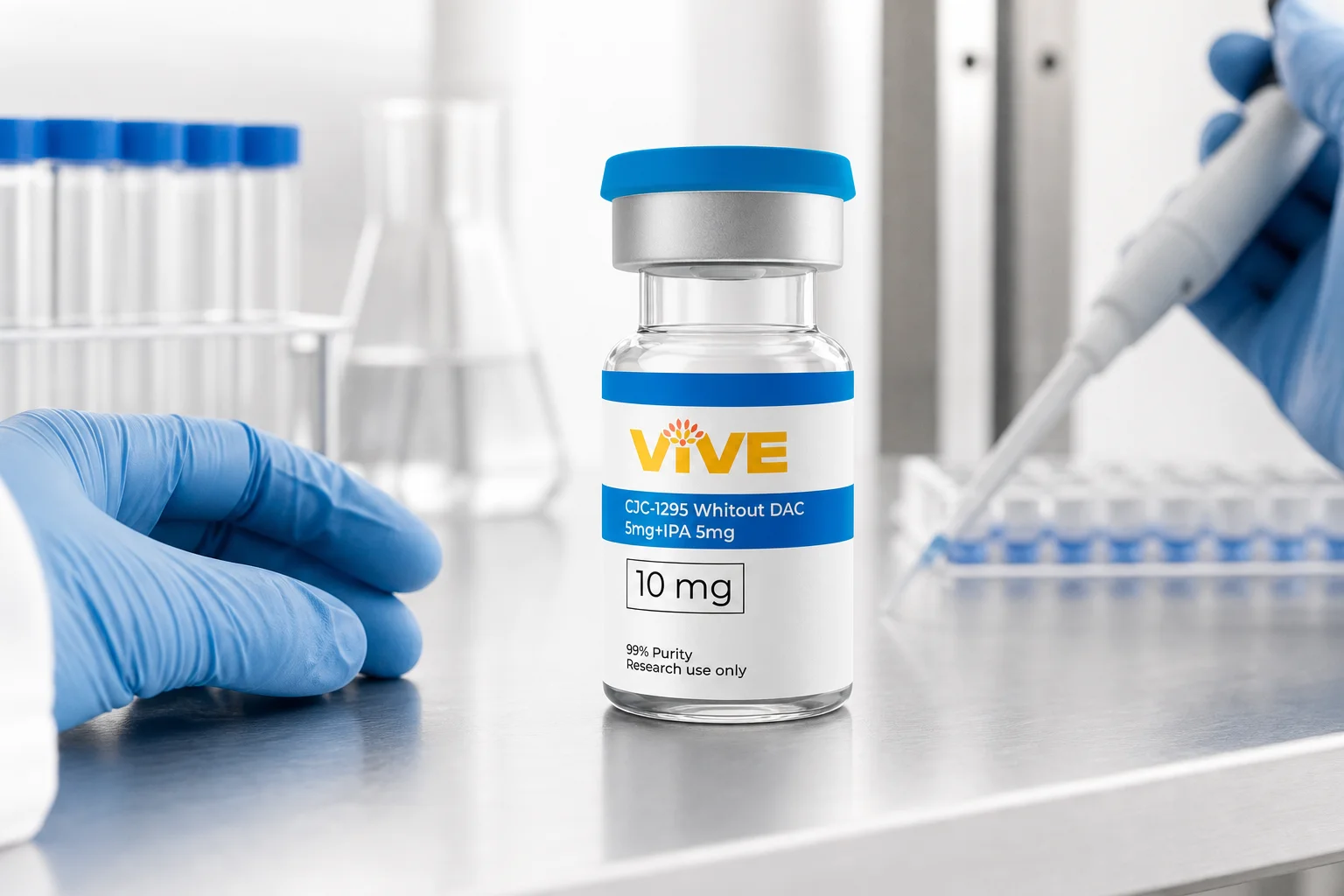
This dual-pathway approach is the mechanistic basis for combination research formulations pairing a GHRH-family analog with a GHS-R1a agonist. Researchers interested in this protocol design can review the CJC-1295 No DAC + Ipamorelin Blend, which pairs a GHRH-family analog with ipamorelin for study of sustained growth hormone release and body composition endpoints.
Frequently Asked Questions
What is the primary receptor difference between ipamorelin and sermorelin?
Sermorelin binds the GHRH receptor on pituitary somatotrophs, mimicking endogenous growth hormone-releasing hormone GHRH. Ipamorelin binds GHS-R1a, the ghrelin receptor, through a separate binding site. Both stimulate GH release, but through distinct pathways. This receptor-level difference underpins the pharmacological distinctions observed between ipamorelin vs sermorelin in published preclinical and clinical research.
Does ipamorelin affect cortisol or prolactin in research models?
Raun et al. (Journal of Endocrinology, 1998) reported that ipamorelin stimulates GH release without significantly elevating cortisol, prolactin, or ACTH at research doses. This selective profile distinguishes ipamorelin from earlier-generation growth hormone secretagogues that produced broader pituitary activation, including cortisol prolactin stimulation, at equivalent GH-releasing concentrations.
How do the half-lives of sermorelin and ipamorelin compare?
Sermorelin has an estimated half-life of 10 to 12 minutes, producing a short, acute stimulus to the pituitary gland consistent with natural GHRH dynamics. Ipamorelin carries a longer half-life of approximately 2 hours in preclinical models, providing a more sustained period of GHS-R1a receptor engagement. Researchers select between them based on whether acute pulsatile or longer-duration GH stimulation matches the protocol objective.
What body composition effects have been studied with growth hormone secretagogues?
Merriam et al. (Growth Hormone and IGF Research, 2003) documented that peptide therapy targeting the somatotropic axis in subjects with growth hormone deficiency produced measurable fat reduction, lean muscle preservation, and improvements in bone mineral parameters. These are findings from controlled clinical settings and do not constitute approved therapeutic claims for any compound.
Are ipamorelin and sermorelin approved for human therapeutic use?
Both ipamorelin and sermorelin, as supplied through research peptide channels, are intended for laboratory and preclinical research use only. They are not FDA-approved for general human therapeutic application. Researchers and study coordinators should review applicable regulatory frameworks and published safety data before initiating any experimental protocol.
Researchers studying growth hormone secretagogues, body composition mechanisms, or peptide therapy pathways can source research-grade Sermorelin and a full catalog of characterized compounds through the VivePeptides shop.
Research Use Only
All information in this article is intended for educational and research purposes only. VivePeptides products are not intended for human or veterinary use.