Research Article
5 Best Peptides for Weight Loss Research: GLP-1 Agonists and Beyond
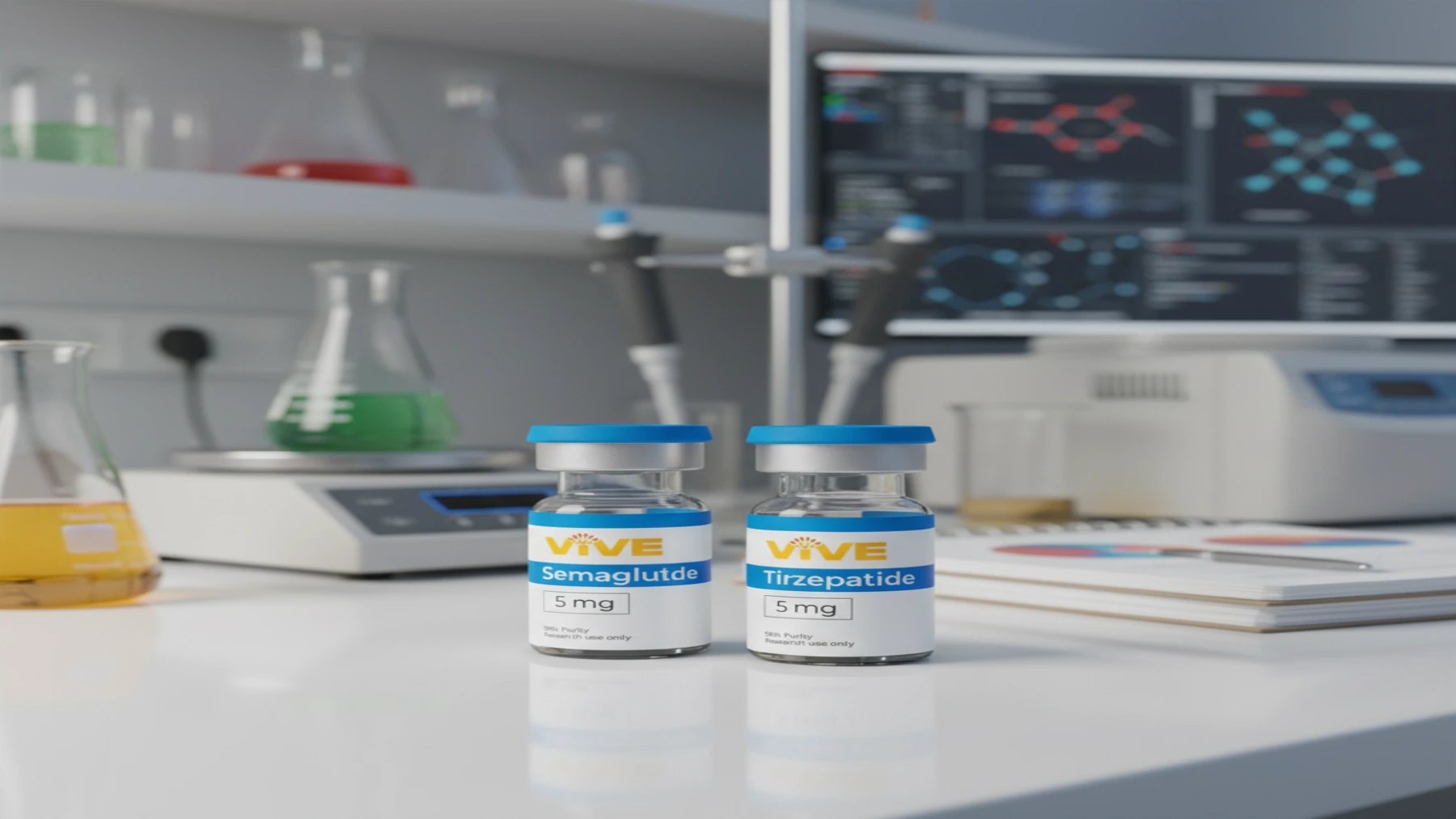
Among the most actively studied compounds in metabolic research today, peptides that modulate appetite, fat oxidation, and energy homeostasis have produced some of the most compelling weight-related data in decades. This guide examines five peptides currently under investigation for weight management outcomes, organized by mechanism of action, trial data, and research relevance for scientists working in metabolic biology.
Research Use Notice: All content on this page is intended strictly for informational and scientific reference purposes. The peptides discussed are for in-vitro laboratory research only and are not intended for human or veterinary use. VivePeptides supplies research-grade compounds to qualified researchers and institutions.
What Makes a Peptide Relevant to Weight Loss Research?
Weight regulation involves a complex interplay of hormonal signaling, receptor binding, and downstream metabolic cascades. Peptides are particularly interesting research targets because they mimic or modulate endogenous signaling molecules that govern appetite, insulin secretion, energy expenditure, and adipose tissue dynamics.
The peptides generating the most scientific interest fall into several mechanistic categories: GLP-1 receptor agonists that suppress appetite via central and peripheral pathways, dual and triple hormone receptor agonists that combine metabolic signals for compounded effect, growth hormone secretagogues that influence visceral fat independently of caloric restriction, and mitochondria-derived peptides that regulate energy metabolism at the cellular level.
Research output in this space has accelerated dramatically. A systematic meta-analysis published in 2025 in BMC Pharmacology and Toxicology reviewed randomized controlled trial data across the major GLP-1 and triple-agonist compounds, finding average body weight reductions of 14.9% to 28.7% depending on compound and duration. These figures represent the upper bound of what peptide research has demonstrated in controlled human trials to date.

1. Semaglutide: The GLP-1 Benchmark
Semaglutide is a 31-amino-acid GLP-1 receptor agonist structurally derived from native glucagon-like peptide-1, modified with a C18 fatty acid chain to extend its half-life to approximately seven days. Its mechanism centers on GLP-1 receptor activation in the hypothalamus, brainstem, and peripheral gastrointestinal tissues, producing satiety signaling, delayed gastric emptying, and suppression of glucagon release.
14.9%
Average body weight reduction in the STEP-1 trial over 68 weeks (semaglutide 2.4 mg weekly vs. 2.4% placebo)
The STEP program (Semaglutide Treatment Effect in People with Obesity) represents the largest body of controlled evidence for any single GLP-1 peptide. In STEP-1, led by Dr. John Wilding and colleagues and published in the New England Journal of Medicine in 2021, participants receiving once-weekly subcutaneous semaglutide at 2.4 mg lost an average of 14.9% of baseline body weight over 68 weeks, compared to 2.4% in the placebo arm. Subsequent STEP trials extended these findings across populations with comorbidities including type 2 diabetes (STEP-2) and cardiovascular risk factors.
For researchers studying GLP-1 receptor pharmacology, semaglutide remains the primary reference compound due to the depth and breadth of its published trial data. Its structural modifications, receptor binding kinetics, and downstream metabolic effects are among the most documented of any research-grade peptide.
Researchers can access semaglutide through VivePeptides with batch-specific Certificate of Analysis and HPLC/MS verification confirming 99%+ purity.
2. Tirzepatide: Dual Agonism and Superior Weight Reduction Data
Tirzepatide advances beyond single-receptor targeting by functioning as a dual GIP (glucose-dependent insulinotropic polypeptide) and GLP-1 receptor agonist. This dual-mechanism design recruits complementary hormonal pathways, with GIP receptor activation independently modulating adipocyte lipid metabolism and enhancing the insulinotropic response in a glucose-dependent manner.
22.5%
Mean body weight loss at highest dose (15 mg) in the SURMOUNT-1 trial over 72 weeks (Jastreboff et al., NEJM 2022)
The SURMOUNT-1 trial, authored by Dr. Ania M. Jastreboff and collaborators and published in the New England Journal of Medicine in 2022, enrolled 2,539 adults with obesity or overweight plus at least one weight-related comorbidity. At the 15 mg dose, participants achieved a mean body weight reduction of 22.5% over 72 weeks. The 5 mg and 10 mg arms produced reductions of 15.0% and 19.5%, respectively, all statistically superior to placebo.
The head-to-head SURMOUNT-5 trial, published in 2025, directly compared tirzepatide against semaglutide in a non-diabetic obesity population over 72 weeks. Tirzepatide produced a mean weight reduction of 20.2% versus 13.7% for semaglutide, representing a 47% relative advantage. This is the first large-scale randomized trial to directly compare the two leading GLP-1 class compounds, and the results have substantially influenced current research prioritization in obesity pharmacology.
VivePeptides offers research-grade tirzepatide, independently tested for purity and identity, available for qualified laboratory use.
3. Retatrutide: Triple Agonism and the Next Research Frontier
Retatrutide represents a structural and mechanistic step beyond tirzepatide, functioning as a simultaneous agonist at three hormone receptors: GLP-1, GIP, and glucagon. The addition of glucagon receptor agonism is significant because glucagon directly stimulates hepatic glucose production and energy expenditure through thermogenic mechanisms in brown adipose tissue. Combining all three pathways creates a compound metabolic effect that exceeds what either GLP-1 or dual agonism produces alone.
28.7%
Mean body weight reduction reported in Phase 3 TRIUMPH-4 trial data (retatrutide, highest dose cohort, 2025)
Retatrutide's Phase 2 trial, published in the New England Journal of Medicine, demonstrated a 24.2% average body weight reduction over 48 weeks at the 12 mg dose, already exceeding the Phase 2 benchmark set by either predecessor compound. The Phase 3 TRIUMPH-4 trial data, released in December 2025 by Eli Lilly, extended this to 28.7% mean body weight reduction in a 68-week enrollment in adults with obesity and knee osteoarthritis, with a corresponding average absolute weight loss of 71.2 lbs in the highest dose cohort.
Mechanistically, retatrutide's glucagon receptor component introduces a thermogenic dimension absent from GLP-1 monotherapy. Glucagon receptor agonism upregulates uncoupling protein-1 (UCP-1) expression in brown adipose tissue, increasing basal metabolic rate independent of appetite suppression. Researchers studying the additive or synergistic effects of multi-receptor agonism in metabolic disease models find retatrutide an exceptionally useful compound for dissecting these pathways.
VivePeptides supplies research-grade retatrutide with batch-specific COA documentation and temperature-controlled shipping to ensure compound integrity.
4. Tesamorelin: Growth Hormone Axis and Visceral Adiposity
Tesamorelin occupies a distinct mechanistic category from GLP-1 class peptides. It is a synthetic analogue of growth hormone-releasing hormone (GHRH), designed to stimulate the pituitary gland's endogenous growth hormone secretion in a pulsatile, physiologic pattern rather than delivering exogenous GH directly. The resulting elevation in GH and downstream IGF-1 has selective effects on visceral adipose tissue that differ meaningfully from subcutaneous fat depots.
Clinical research on tesamorelin is anchored in two pivotal randomized, placebo-controlled trials that supported its regulatory clearance in 2010 for HIV-associated lipodystrophy (marketed as Egrifta). In those trials, participants receiving tesamorelin experienced visceral adipose tissue reductions of 15-20% over 26 weeks, with subcutaneous fat largely unaffected. A subsequent randomized trial published in JAMA Internal Medicine found that tesamorelin reduced hepatic fat by an average of 37% in participants with HIV-associated nonalcoholic fatty liver disease, with favorable shifts in liver inflammation and fibrosis markers.
From a research design perspective, tesamorelin is valuable for investigating the GH/IGF-1 axis's role in metabolic compartmentalization. The selectivity of its effect on visceral versus subcutaneous fat makes it a useful tool for researchers modeling abdominal obesity, hepatic steatosis, and the relationship between growth hormone pulsatility and fat depot distribution. Skeletal muscle density and cross-sectional area also showed favorable changes in participants achieving significant VAT reduction, pointing to potential applications in body composition research beyond fat mass alone.
Researchers can acquire tesamorelin through VivePeptides, HPLC/MS verified at 99%+ purity.
5. MOTS-c: Mitochondria-Derived Metabolic Regulation
MOTS-c (Mitochondrial-derived peptide, 16 amino acids) is structurally and conceptually unlike any GLP-1 class compound. It is encoded within the mitochondrial 12S ribosomal RNA and released in response to cellular metabolic stress, making it an endogenous regulator of energy homeostasis rather than an exogenous receptor agonist.
Its primary mechanism involves inhibition of the folate cycle and tethered de novo purine biosynthesis, which leads to AMPK activation and downstream effects on insulin sensitivity, glucose uptake, and fat oxidation. Published research in Cell Metabolism (Lee et al., 2015) demonstrated that MOTS-c treatment in high-fat diet mouse models prevented diet-induced obesity and insulin resistance, with effects concentrated in skeletal muscle metabolism rather than adipose tissue directly.
Exercise studies have documented an approximately 11.9-fold increase in endogenous MOTS-c levels in skeletal muscle following acute exercise, suggesting that the peptide may mediate some of the metabolic benefits associated with physical activity. This exercise-mimetic dimension makes MOTS-c an active area of interest for researchers studying aging-related metabolic decline, as circulating MOTS-c levels decrease with age in a pattern that mirrors the age-associated reduction in metabolic flexibility.
Researchers interested in mitochondrial biology, AMPK signaling, and the intersection of exercise physiology and metabolic disease will find MOTS-c a distinctive research target compared to receptor-mediated GLP-1 approaches. VivePeptides carries research-grade MOTS-c for qualified laboratory researchers.
Comparative Overview: Mechanisms and Trial Data
Peptide | Mechanism | Key Trial | Weight Outcome | Research Stage
---|---|---|---|---
Semaglutide | GLP-1 receptor agonist | STEP-1 (Wilding et al., 2021) | -14.9% over 68 weeks | Extensive Phase 3 data
Tirzepatide | Dual GIP + GLP-1 agonist | SURMOUNT-1 (Jastreboff et al., 2022) | -22.5% over 72 weeks (15 mg) | Extensive Phase 3 data
Retatrutide | Triple GLP-1 + GIP + Glucagon agonist | TRIUMPH-4 Phase 3 (2025) | -28.7% over 68 weeks | Phase 3 complete, NDA pending
Tesamorelin | GHRH analogue, GH/IGF-1 axis | Pivotal RCTs (2010) | -15 to -20% VAT over 26 weeks | Regulatory clearance (HIV lipodystrophy, 2010)
MOTS-c | Mitochondrial peptide, AMPK activation | Lee et al., Cell Metabolism (2015) | Obesity prevention in HFD models | Preclinical / early investigation
The KLOW Blend: Combination Research Approach
Beyond individual peptides, researchers investigating multi-compound synergism may find combination formulations worth examining. VivePeptides offers the KLOW Blend, a proprietary weight management blend designed for researchers studying combined metabolic signaling pathways. The combination approach reflects the broader trend in metabolic pharmacology toward multi-receptor targeting, as evidenced by the progression from single GLP-1 agonism through dual and triple receptor engagement.
Research Note: The scientific literature consistently shows that mechanistic diversity in metabolic targeting produces compounded weight-related outcomes in controlled models. Whether examining receptor-level pharmacology or cellular energy regulation, the peptides above represent the current breadth of active metabolic research inquiry.
Peptide Cards: Quick Reference for Researchers
GLP-1 Agonist
Semaglutide
31-amino-acid GLP-1 receptor agonist with 7-day half-life. STEP trial benchmark: 14.9% weight reduction over 68 weeks. Reference compound for single-receptor GLP-1 research.
Dual Agonist
Tirzepatide
GIP + GLP-1 dual receptor agonist. SURMOUNT-1: 22.5% weight reduction at 15 mg over 72 weeks. Superior to semaglutide in direct head-to-head SURMOUNT-5 comparison.
Triple Agonist
Retatrutide
GLP-1 + GIP + Glucagon triple receptor agonist. Phase 3 TRIUMPH-4: 28.7% weight reduction. Includes thermogenic component via glucagon receptor and brown adipose tissue activation.
GHRH Analogue
Tesamorelin
Growth hormone-releasing hormone analogue. Selective visceral adipose tissue reduction (15-20% over 26 weeks). Distinct from GLP-1 class; targets GH/IGF-1 axis. Regulatory clearance established for HIV lipodystrophy indication (2010).
Mitochondrial
MOTS-c
Endogenous 16-amino-acid mitochondrial peptide. AMPK activation via folate cycle inhibition. Exercise-mimetic properties; 11.9-fold elevation in skeletal muscle post-exercise. Preclinical obesity prevention data.
Combination
KLOW Blend
Proprietary weight management combination blend. Designed for researchers studying multi-pathway metabolic signaling. Reflects the mechanistic diversification trend in current obesity pharmacology research.
Sourcing Research-Grade Peptides for Metabolic Studies
The integrity of any metabolic research depends on compound purity and documentation. A study examining GLP-1 receptor binding kinetics or AMPK activation yields no reliable data if the research compound contains impurities that introduce confounding variables. This is why batch-specific Certificates of Analysis, independent HPLC verification, and mass spectrometry identity confirmation are not optional extras but fundamental research requirements.
VivePeptides holds every compound in its catalog to a 99%+ purity standard verified by independent U.S. laboratories, with batch-specific COAs available for each order. Temperature-controlled shipping preserves peptide stability from fulfillment to receipt, maintaining the structural integrity that accurate research demands.
For researchers building metabolic research protocols around the compounds discussed in this guide, the full catalog is available at VivePeptides' peptide shop. All purchases are for in-vitro laboratory research purposes only.
Frequently Asked Questions
What is the difference between GLP-1 agonists and dual or triple hormone agonists in weight research?
GLP-1 receptor agonists, like semaglutide, activate a single receptor pathway that controls appetite and gastric motility. Dual agonists like tirzepatide add GIP receptor engagement, which independently modulates adipocyte lipid metabolism and enhances the insulinotropic response. Triple agonists like retatrutide further incorporate glucagon receptor activation, which stimulates thermogenesis in brown adipose tissue and increases basal energy expenditure. Research data to date shows a consistent dose-response relationship between the number of receptor targets engaged and the magnitude of weight-related outcomes in controlled trials.
How does tesamorelin differ mechanistically from GLP-1 class peptides?
Tesamorelin does not engage GLP-1 receptors at all. It acts on GHRH receptors in the anterior pituitary to stimulate endogenous growth hormone release in a pulsatile pattern. Elevated GH then drives IGF-1 production, and this GH/IGF-1 axis exerts preferential lipolytic activity on visceral adipose tissue. The mechanism is entirely distinct from appetite suppression or gastric motility modification, making tesamorelin a useful research tool for experiments that require isolating visceral fat dynamics without altering the GLP-1 signaling pathway.
What is MOTS-c's connection to exercise-induced metabolic effects?
MOTS-c is an endogenous mitochondrial peptide whose circulating levels increase substantially following exercise, with research documenting approximately an 11.9-fold elevation in skeletal muscle tissue post-exercise. This suggests MOTS-c may mediate some of the metabolic adaptations associated with physical activity, including improved insulin sensitivity and enhanced fat oxidation via AMPK activation. Researchers studying the molecular mechanisms underlying exercise physiology or age-related metabolic decline will find MOTS-c a compelling investigational target, as endogenous levels decline with aging in parallel with broader metabolic deterioration.
What does "research-grade" mean in the context of peptide purity?
Research-grade designates a purity standard verified by independent analytical methods, specifically HPLC (high-performance liquid chromatography) and mass spectrometry, that confirm both the percentage purity and the identity of the compound. A 99%+ purity standard means that less than 1% of the material in a given batch consists of impurities, related peptides, or residual synthesis byproducts. Batch-specific Certificates of Analysis document this verification for each production run, allowing researchers to cite documented purity data when designing and reporting experiments.
Which weight loss peptides have the most substantial human trial data?
Semaglutide and tirzepatide have the most extensive human trial datasets, anchored by the STEP and SURMOUNT trial programs respectively, each encompassing multiple Phase 3 studies across diverse populations. Retatrutide has now completed its first Phase 3 trial (TRIUMPH-4, 2025) with six additional Phase 3 trials expected to report in 2026. Tesamorelin's human data is specific to HIV-associated lipodystrophy but represents rigorous controlled evidence for its visceral fat mechanism. MOTS-c remains primarily in preclinical stages, with the bulk of existing data derived from animal and in-vitro models.
Research Use Only
All information in this article is intended for educational and research purposes only. VivePeptides products are not intended for human or veterinary use.