Research Article
CJC-1295 with DAC vs without DAC: Understanding the Critical Difference
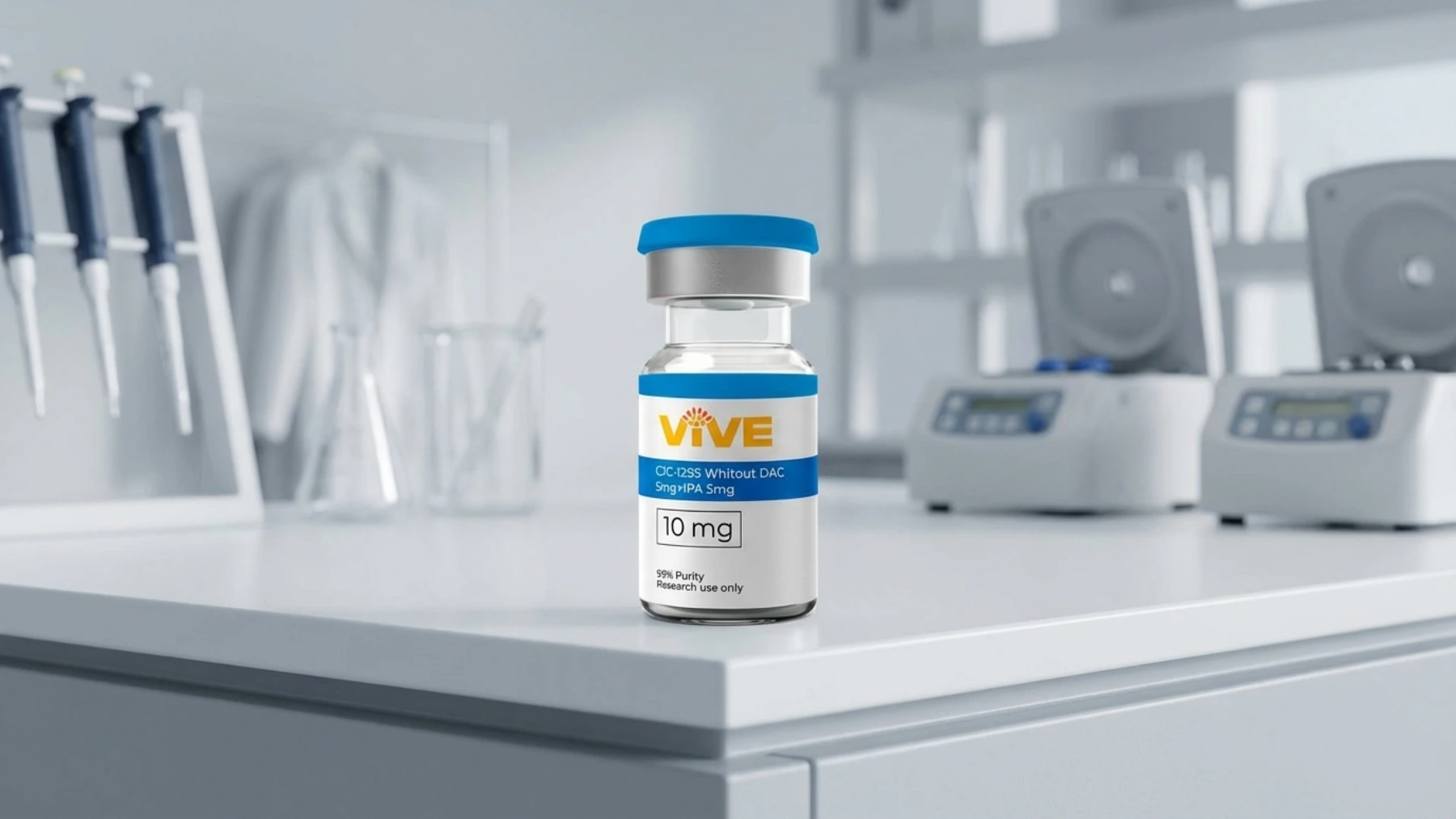
CJC-1295 with DAC and CJC-1295 without DAC are structurally related but functionally distinct peptides. The presence or absence of a Drug Affinity Complex changes the half-life from approximately 30 minutes to 6-8 days, producing entirely different GH release profiles and making the selection between variants a foundational decision in any GHRH-axis research protocol.
Both compounds are synthetic analogs of growth hormone-releasing hormone (GHRH) and are available for research purposes only. Understanding their structural and pharmacokinetic differences is essential for designing reproducible, hypothesis-driven experiments.
Research Use Only: All content on this page describes peptides intended strictly for in vitro and preclinical research purposes. Neither CJC-1295 with DAC nor CJC-1295 without DAC is approved by the FDA for human use. This material is not medical advice.
What Is CJC-1295? The Shared Foundation
CJC-1295 originated from research conducted at ConjuChem Biotechnologies. At its core, it is a 29-amino acid synthetic analog of endogenous human GHRH(1-29), engineered with four strategic amino acid substitutions that render it resistant to proteolytic cleavage by dipeptidyl peptidase IV (DPP-IV). These substitutions replace amino acids at positions 2, 8, 15, and 27, significantly extending biological activity relative to native GHRH while preserving receptor binding affinity at the pituitary GHRH receptor.
The GHRH receptor is expressed primarily on somatotroph cells of the anterior pituitary gland. When activated, this receptor couples to the Gs-protein pathway, stimulating adenylate cyclase, elevating intracellular cAMP, and ultimately triggering growth hormone (GH) release into systemic circulation. Both CJC-1295 variants act through this identical receptor pathway. What differs is how long they remain active in the biological system under study.
The DAC Modification: What It Is and What It Does
The Drug Affinity Complex (DAC) is a maleimidoproprionic acid moiety covalently attached to lysine at position 30 of the peptide chain (extending the sequence beyond the standard 29-residue GHRH analog). Once introduced into an aqueous biological system, the maleimide group undergoes a Michael addition reaction with the free thiol group on cysteine-34 of endogenous serum albumin. This reaction is irreversible under physiological conditions.
The result: CJC-1295 with DAC becomes covalently tethered to albumin. Albumin has a circulating half-life of approximately 19 days in humans, and by extension, the conjugated peptide inherits this prolonged systemic residence. The DAC-bound peptide is shielded from renal filtration (albumin is too large to pass through the glomerular filtration barrier) and protected from enzymatic degradation by DPP-IV.
6-8 Days
Estimated half-life of CJC-1295 with DAC in human research subjects
A landmark study published in the Journal of Clinical Endocrinology and Metabolism by Teichman et al. (2006) documented that a single injection of CJC-1295 with DAC elevated mean plasma GH levels by 2- to 10-fold for 6 days or more, and elevated plasma IGF-1 levels by 0.5- to 3-fold for 9 to 11 days. These figures represent the defining pharmacokinetic signature of the DAC-containing variant.
CJC-1295 Without DAC: The Mod GRF(1-29) Profile
CJC-1295 without DAC retains the four amino acid substitutions that protect against DPP-IV cleavage but lacks the albumin-binding moiety. In the research literature, this compound is frequently termed Modified GRF(1-29) or Mod GRF(1-29). It is functionally equivalent to a stabilized but non-albumin-binding GHRH analog.
Without albumin conjugation, the peptide is subject to standard renal clearance and residual protease activity. Its half-life in biological systems is approximately 30 minutes, which mirrors the short window of action seen with natural endogenous GHRH pulses. Each administration produces a discrete, time-limited activation of the pituitary GHRH receptor, triggering a GH pulse that peaks rapidly and returns to baseline within 2-3 hours in most research models.
This pulsatile profile is not a limitation -- it is a distinct and highly relevant research property. Natural GH secretion in mammals is pulsatile, governed by alternating GHRH and somatostatin release from the hypothalamus. CJC-1295 without DAC preserves this episodic signaling character in a research context, making it the preferred compound when investigators want to study GH axis dynamics without disrupting the endogenous rhythm of somatotroph activity.
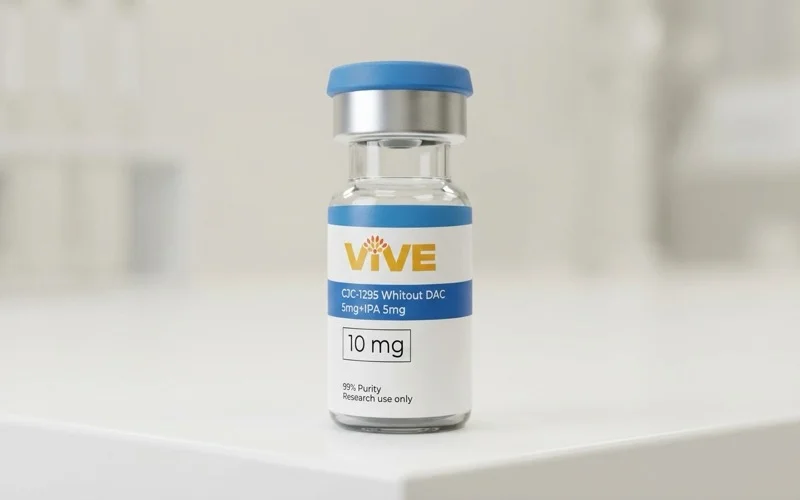
Side-by-Side Comparison: DAC vs No DAC
Parameter | CJC-1295 with DAC | CJC-1295 without DAC (Mod GRF 1-29)
---|---|---
Mechanism of extended action | Covalent albumin binding via maleimide-thiol reaction | DPP-IV resistance only; no albumin binding
Estimated half-life | 6-8 days | ~30 minutes
GH release pattern | Sustained, continuous elevation | Discrete, pulsatile spikes
IGF-1 elevation duration | 9-11 days per dose (Teichman et al., 2006) | Hours; returns to baseline between administrations
Dosing frequency in research protocols | Once weekly or biweekly | Daily or multiple times per day
Receptor desensitization potential | Higher -- continuous stimulation may downregulate GHRH receptor | Lower -- intermittent activation preserves receptor sensitivity
Physiological mimicry | Supraphysiological sustained state | Closer to endogenous GHRH pulsatility
Common research pairing | Standalone or with GHRP-2 | Ipamorelin, GHRP-6, or other GH secretagogues
Literature designation | CJC-1295, CJC-1295 DAC | Mod GRF(1-29), CJC-1295 No DAC, Modified GRF
GH Release Profiles: Sustained vs Pulsatile
The difference in GH release profile is not merely a matter of convenience -- it fundamentally changes what can be studied and what conclusions can be drawn.
With DAC: The sustained elevation of GH and IGF-1 creates a model analogous to states of prolonged GH exposure. Research using this compound tends to examine downstream anabolic signaling (mTOR, PI3K-Akt pathways), sustained IGF-1 production in hepatic models, or long-duration intervention effects where constant GH background is the independent variable. The tradeoff is that continuous GHRH receptor stimulation carries documented risk of receptor internalization and downregulation over time, a phenomenon well-characterized in G-protein coupled receptor biology. Studies examining GHRH receptor biology -- including work by Bhatt and colleagues -- confirm that somatotroph GHRH receptors undergo desensitization under prolonged agonist exposure, a critical variable to control for in longitudinal protocols.
Without DAC: The discrete, pulse-matched release profile generated by Mod GRF(1-29) preserves inter-pulse intervals during which somatostatin tone can re-establish itself, receptor sensitivity can recover, and the hypothalamic-pituitary axis can operate closer to its endogenous dynamic range. This makes the no-DAC variant more suitable for research examining GH pulse frequency, amplitude, and neuroendocrine feedback mechanisms. It is also the preferred backbone when co-administering a GHRP such as ipamorelin, because the two compounds act synergistically at the moment of co-administration, and their individual GH-stimulating properties are additive or supra-additive within that narrow window.
Key Research Distinction: CJC-1295 with DAC is appropriate for research models requiring sustained GH/IGF-1 elevation. CJC-1295 without DAC is the compound of choice when pulsatile GH dynamics, receptor sensitivity studies, or combination secretagogue protocols are the focus of the investigation.
Receptor Desensitization: A Critical Consideration for Protocol Design
One of the most significant factors separating the two variants in long-term research contexts is the question of GHRH receptor downregulation.
The GHRH receptor belongs to the class B family of G-protein coupled receptors (GPCRs). Like most GPCRs, it is subject to agonist-induced internalization: sustained occupation by a ligand triggers receptor phosphorylation by G-protein receptor kinases (GRKs), recruitment of beta-arrestin, and subsequent endocytosis. The internalized receptor may be recycled back to the cell surface or targeted for lysosomal degradation, depending on the duration and intensity of stimulation.
CJC-1295 with DAC, by maintaining agonist presence for 6-8 days per dose, creates conditions highly favorable to receptor downregulation. This is not a theoretical concern -- diminished GH response over extended DAC protocols has been observed in preclinical models and is consistent with established GPCR pharmacology. Researchers designing longitudinal studies must account for this variable when interpreting GH output data.
CJC-1295 without DAC, with its 30-minute half-life, provides discrete stimulation windows separated by receptor recovery intervals. This significantly reduces the risk of GHRH receptor desensitization and makes it the more appropriate tool for studies where reproducible receptor responsiveness across multiple time points is required.
Combination Research Protocols: Where No DAC Dominates
The CJC-1295 without DAC plus ipamorelin pairing is one of the most extensively characterized GHRH-GHRP combinations in the peptide research literature. Ipamorelin is a selective agonist at the growth hormone secretagogue receptor (GHSR-1a) -- the ghrelin receptor -- and acts through a mechanism entirely separate from GHRH signaling. The dual-pathway stimulation produces synergistic GH output: studies in rats, dogs, and swine have demonstrated peak GH levels 2- to 5-fold higher than predicted from additive individual responses when both agents are co-administered.
The mechanistic logic is straightforward. GHRH (via CJC-1295 No DAC) increases intracellular cAMP and the pool of releasable GH within somatotrophs. GHRPs like ipamorelin simultaneously suppress somatostatin release from the hypothalamus while stimulating GH release at the pituitary level. The two mechanisms amplify each other within the same secretion event. Because this synergy depends on temporal co-incidence -- both compounds present at the GHRH receptor and GHSR-1a simultaneously -- the short-acting No DAC variant is the appropriate GHRH component for this application. Its sharp peak aligns precisely with ipamorelin's own brief window of activity.
CJC-1295 with DAC, by contrast, maintains GHRH receptor occupancy continuously and does not produce the discrete GH pulse events that make the ipamorelin pairing mechanistically meaningful.
For researchers exploring this combination, VivePeptides offers the CJC-1295 No DAC + Ipamorelin Blend for streamlined co-administration in research settings.
Comparisons with Related GHRH-Axis Peptides
Understanding where CJC-1295 variants sit within the broader family of GHRH-axis research compounds clarifies their appropriate applications.
Sermorelin
GHRH(1-29) Native Sequence
Sermorelin is the unmodified 29-amino acid GHRH analog without DPP-IV stabilization. It has an even shorter half-life than CJC-1295 No DAC (under 10 minutes) and is fully susceptible to enzymatic degradation. Used in research models where minimal pharmacokinetic modification is required. Available at VivePeptides: Sermorelin.
Tesamorelin
GHRH Analog with Trans-3-Hexenoic Acid
Tesamorelin is GHRH(1-44) conjugated to a trans-3-hexenoic acid group, stabilizing the full-length hormone sequence. It has a half-life of approximately 26-38 minutes and produces robust GH and IGF-1 responses. The full-length sequence differentiates it structurally from both CJC-1295 variants. Available at VivePeptides: Tesamorelin.
IGF-1 LR3
Downstream Effector Research
IGF-1 LR3 acts downstream of GH secretion, binding the IGF-1 receptor directly without requiring pituitary intermediary steps. Research using IGF-1 LR3 complements CJC-1295 studies by isolating receptor-level IGF-1 signaling from GH-dependent IGF-1 production. Available at VivePeptides: IGF-1 LR3.
CJC-1295 with DAC
Sustained Axis Stimulation
The DAC-containing variant occupies a unique position: the only GHRH analog that achieves multi-day GH and IGF-1 elevation from a single administration. Appropriate for research models requiring prolonged anabolic signaling states rather than pulsatile dynamic studies.
Selecting the Appropriate Variant for Your Research Model
The selection between CJC-1295 with DAC and without DAC should be driven entirely by the research question, not by dosing convenience.
CJC-1295 with DAC: Best When…
- Research requires sustained, multi-day GH/IGF-1 elevation
- Longitudinal models where once-weekly dosing supports study design
- Investigating downstream effects of continuous GH axis activation
- Studying albumin-binding drug delivery systems as a research model
- Protocol demands minimal dosing frequency without compromising GH exposure
CJC-1295 without DAC: Best When…
- Research examines pulsatile GH secretion and neuroendocrine rhythms
- Co-administration with ipamorelin or other GHRPs is planned
- Long-duration studies require preserved GHRH receptor sensitivity
- Physiological mimicry of endogenous GHRH dynamics is the priority
- Studying GH pulse amplitude, frequency, or inter-pulse trough values
Researchers seeking the full spectrum of GHRH-axis research compounds can explore the complete catalog at VivePeptides Shop All Peptides, where all products are manufactured under rigorous quality standards for research-grade use.
Frequently Asked Questions
Is CJC-1295 with DAC the same molecule as CJC-1295 without DAC?
They share the same 29-amino acid GHRH analog backbone with identical DPP-IV-resistant substitutions at positions 2, 8, 15, and 27. The difference is the addition of a Drug Affinity Complex (DAC) -- a maleimidoproprionic acid group -- that enables covalent binding to serum albumin. This structural addition fundamentally changes the pharmacokinetics: half-life extends from approximately 30 minutes to 6-8 days. They are related compounds with distinct research profiles, not interchangeable reagents.
Why is CJC-1295 without DAC called Mod GRF(1-29)?
The designation Modified GRF(1-29) -- or Mod GRF(1-29) -- reflects that the compound is a modified form of growth hormone-releasing factor consisting of the first 29 amino acids of the full GHRH sequence. The "modified" refers specifically to the four amino acid substitutions that confer DPP-IV resistance. This nomenclature is used to distinguish the no-DAC variant from the albumin-binding DAC version in the research literature and supplier catalogs, though both may be generically labeled "CJC-1295" in informal contexts.
Why does the no-DAC variant pair better with ipamorelin in research protocols?
The synergy between CJC-1295 No DAC and ipamorelin depends on temporal co-administration. Ipamorelin acts through the GHSR-1a ghrelin receptor, producing a brief but potent GH pulse that coincides with the GHRH receptor activation provided by the no-DAC variant. Both compounds have short windows of peak activity, and their simultaneous presence at the pituitary produces supra-additive GH output -- documented at 2- to 5-fold above additive predictions in animal models. CJC-1295 with DAC maintains continuous GHRH receptor occupancy, which blunts the discrete pulse event that makes the ipamorelin pairing mechanistically effective.
Does the sustained stimulation from CJC-1295 with DAC cause receptor desensitization in research models?
This is a documented concern supported by established G-protein coupled receptor pharmacology. The GHRH receptor -- a class B GPCR -- undergoes agonist-induced internalization when exposed to prolonged ligand presence. Continuous DAC-mediated GHRH receptor occupation promotes GRK-mediated phosphorylation, beta-arrestin recruitment, and endocytosis of the receptor complex. Longitudinal research protocols using the DAC variant must account for progressive reduction in GHRH receptor density as a potential confounding variable. CJC-1295 without DAC, with its discrete stimulation intervals, allows receptor recycling between administrations and presents a lower desensitization risk in extended protocols.
What did the Teichman et al. (2006) study establish about CJC-1295 with DAC?
The Teichman et al. study, published in the Journal of Clinical Endocrinology and Metabolism (2006), remains the primary clinical reference for CJC-1295 with DAC pharmacokinetics. It demonstrated that a single dose produced a 2- to 10-fold increase in mean plasma GH levels sustained for 6 days or longer, and a 0.5- to 3-fold increase in plasma IGF-1 levels persisting for 9 to 11 days. The study also confirmed dose-dependent responses across multiple dosing cohorts. These findings established the half-life and GH/IGF-1 elevation parameters that define the DAC compound's research profile and distinguish it from all shorter-acting GHRH analogs.
All peptides described on this page are intended for research use only. VivePeptides compounds are not approved for human use, are not dietary supplements, and are not intended to diagnose, treat, cure, or prevent any condition. Researchers should consult applicable institutional guidelines and regulatory frameworks before use.
Research Use Only
All information in this article is intended for educational and research purposes only. VivePeptides products are not intended for human or veterinary use.