Research Article
CJC-1295 No DAC vs DAC: Understanding the Difference
CJC-1295 No DAC vs DAC: Understanding the Difference

CJC-1295 No DAC vs DAC: Comprehensive Analysis of Molecular Differences, Research Benefits, and Usage Guidelines
CJC-1295 is a synthetic peptide under investigation for its capacity to augment growth hormone (GH) secretion. Accurate differentiation between the No DAC and DAC variants is essential for appropriate experimental design. This document examines molecular structure, pharmacokinetic behavior, comparative benefits, and practical handling considerations. It addresses common selection challenges and summarizes implications for experimental outcomes, including structural determinants, half-life differentials, and associated safety considerations.
Existing literature characterizes CJC-1295 as a synthetic analogue of growth hormone–releasing hormone (GHRH) engineered to facilitate sustained GH release.
CJC-1295: Synthetic GHRH Analog for Sustained GH Release
CJC-1295 is a synthetic analogue of growth hormone–releasing hormone (GHRH) that has been modified to prolong plasma half-life. Its interaction with pituitary GHRH receptors can produce sustained GH secretion, supporting its utility in research on growth-regulatory mechanisms. The extended half-life is attributable to targeted molecular modifications that reduce rapid clearance.
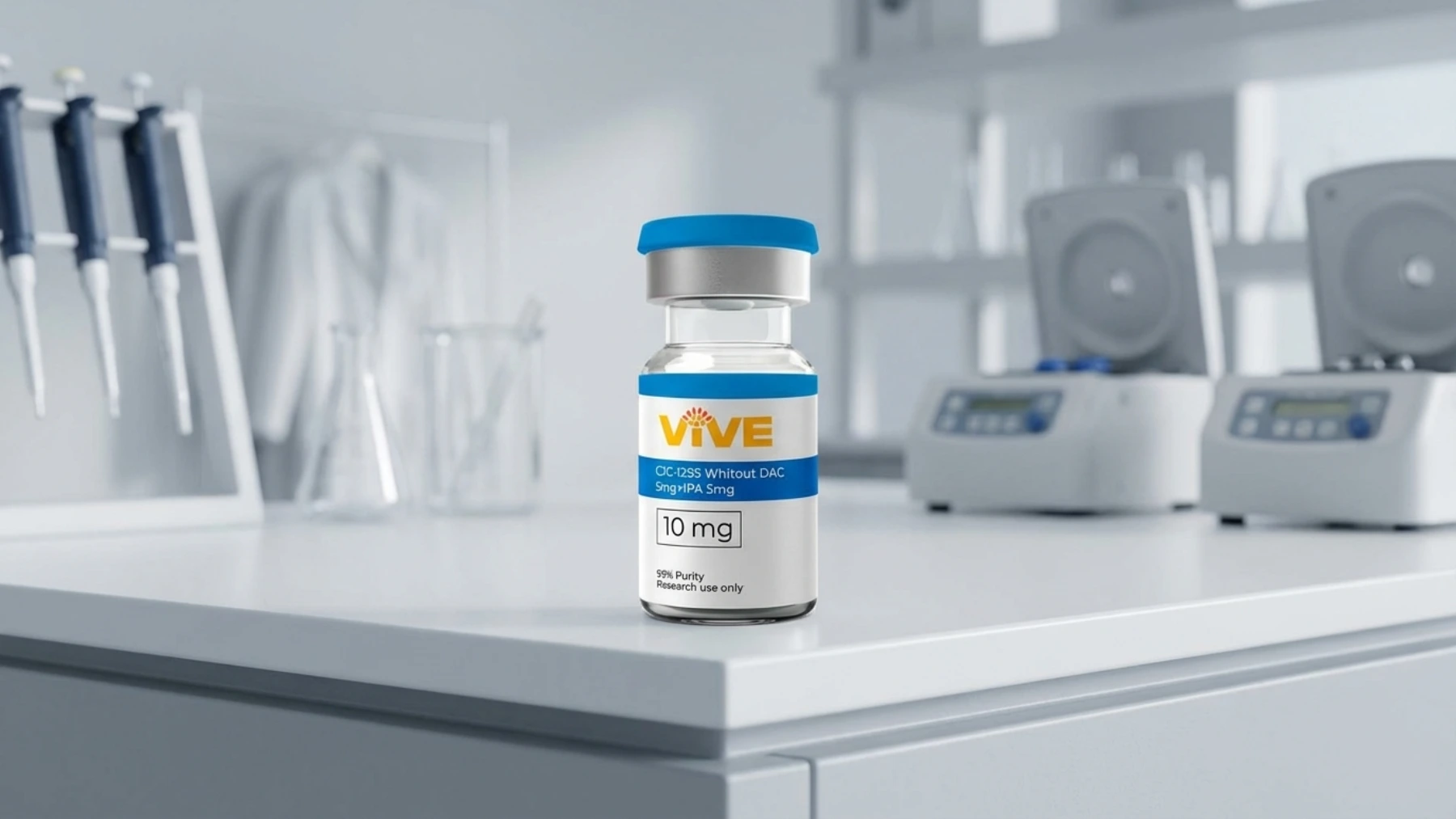
CJC-1295 and Ipamorelin Blend: A Speculative Approach to Peptide Research
What are the molecular and pharmacokinetic differences between CJC-1295 No DAC and DAC peptides?
CJC-1295 No DAC and CJC-1295 DAC are distinguished by specific molecular modifications that alter pharmacokinetics. The DAC form contains a maleimidopropionic acid linker that promotes reversible binding to serum albumin, thereby extending systemic half-life. The No DAC variant lacks this linker, resulting in more rapid clearance and a shorter duration of action. These pharmacokinetic differences inform experimental selection: the DAC form supports prolonged GH exposure, whereas the No DAC form facilitates more physiological, transient GH profiles.
Peer-reviewed studies corroborate that the DAC-modified CJC-1295 attains protracted action principally via binding to endogenous albumin, producing a markedly extended half-life.
CJC-1295: Long-Acting GHRH Analog & Albumin Binding
A DAC-modified GHRH analogue (CJC-1295) binds to endogenous serum albumin after administration (reported half-life ≈ 8 days), thereby stimulating GH and IGF‑I secretion across multiple species and in human subjects. This albumin interaction underlies the compound’s prolonged pharmacodynamic profile.
Pulsatile secretion of growth hormone (GH) persists during continuous stimulation by CJC-1295, a long-acting GH-releasing hormone analog, 2006
How does the half-life of CJC-1295 No DAC compare to the DAC variant?
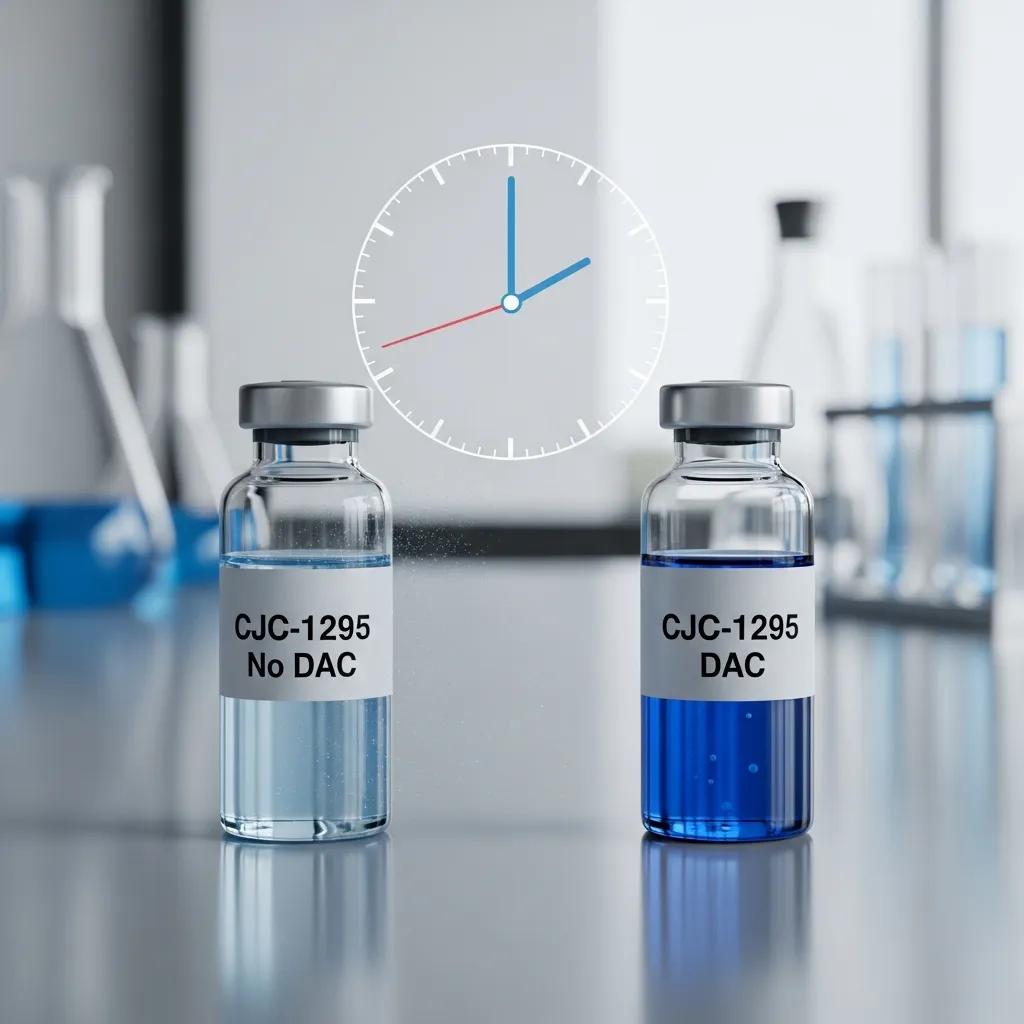
The DAC-modified CJC-1295 exhibits a substantially longer half-life than the No DAC form. This extended duration permits less frequent dosing and produces a more sustained GH release. By contrast, CJC-1295 No DAC demonstrates a shorter half-life and may require more frequent administration to maintain target GH levels, a feature that can be advantageous when experimental protocols demand rapid or pulsatile GH fluctuations to emulate physiological conditions.
What structural features distinguish CJC-1295 No DAC from DAC?
The primary structural distinction is the presence of a maleimidopropionic acid linkage in the DAC variant, which enables albumin association and increases molecular stability. The No DAC variant omits this linker, yielding a simpler molecular architecture and a shorter systemic residence time. Recognition of these structural differences is critical for selecting the peptide most appropriate to specific experimental objectives.
Mechanistic studies of albumin bioconjugation—frequently employing maleimido derivatives—demonstrate that such modifications effectively extend peptide plasma half-life by protecting against rapid proteolytic degradation.
Albumin Bioconjugation for Extended Peptide Half-Life and GH Secretion
In vivo conjugation to the free thiol on Cys34 of serum albumin via a reactive group introduced on a bioactive peptide is an established strategy to extend plasma half-life. Maleimido derivatives of human GH‑releasing factor (hGRF)1–29 have been conjugated to serum albumin ex vivo, producing conjugates with enhanced stability against dipeptidylpeptidase‑IV and retained bioactivity in GH secretion assays using cultured rat anterior pituitary cells.
… Hormone-Releasing Factor (hGRF)1–29-Albumin Bioconjugates Activate the GRF Receptor on the Anterior Pituitary in Rats: Identification of CJC-1295 as a Long …, 2005
What are the research applications and benefits of using CJC-1295 No DAC peptides?
CJC-1295 No DAC provides several advantages for experimental investigation of GH physiology. Principal applications include targeted modulation of GH dynamics where transient or pulsatile secretion is required, investigation of direct and indirect GH axis pathways, and studies that benefit from a peptide with reduced systemic persistence relative to albumin‑bound variants.
- Dual-pathway GH Axis Activation : CJC-1295 No DAC can activate both the direct and indirect pathways of GH release, providing a comprehensive approach to studying GH dynamics.
- Pulsatile GH Secretion : The absence of the DAC linker allows for more physiological patterns of GH release, which can be crucial in studies examining the effects of GH on various biological processes.
- High Purity Verified by Third-Party Testing : Research-grade CJC-1295 No DAC peptides are often subjected to rigorous testing, ensuring high purity and reliability for experimental use.
For investigators requiring validated research materials, VivePeptides supplies research‑grade CJC-1295 No DAC and DAC variants and provides supporting documentation to facilitate experimental reproducibility.
How does CJC-1295 No DAC enhance peptide stability and receptor specificity in studies?
CJC-1295 No DAC incorporates defined amino acid substitutions that increase resistance to proteolytic degradation, thereby improving in‑experiment stability. The molecule retains specificity for the GHRH receptor, directing GH release through canonical receptor-mediated signaling pathways. This receptor specificity permits focused interrogation of GH‑mediated physiological effects.
What advantages does the Ipamorelin and CJC-1295 No DAC stack offer in research?
The combined use of Ipamorelin and CJC-1295 No DAC offers methodological advantages for studies of GH regulation by engaging complementary pathways and simplifying administration when provided as a validated pre-mixed preparation.
- Synergistic GH Release : The two peptides work together to enhance GH release more effectively than either peptide alone.
- Dual-pathway Activation : This stack activates both the GHRH and ghrelin pathways, providing a comprehensive approach to GH modulation.
- Convenience of Pre-blended Formulation : Using a pre-blended formulation simplifies dosing and administration, making it easier for researchers to implement in studies. For those seeking a convenient option, consider the CJC-1295 No DAC Ipamorelin blend.
How do the side effects and safety profiles of CJC-1295 DAC compare to No DAC variants?
CJC-1295 No DAC may be associated with a lower incidence of prolonged adverse effects owing to its shorter systemic half-life and more rapid clearance. Both variants have been tolerated in controlled research contexts when administered within established dosing parameters; nevertheless, investigators should evaluate safety endpoints and adhere to institutional and regulatory requirements when employing these compounds.
What are the recommended dosages and handling protocols for CJC-1295 No DAC in laboratory research?
Reported experimental dosing for CJC-1295 No DAC commonly falls within the 200–500 microgram per day range; investigators should determine dose and schedule according to protocol objectives and ethical approval. Lyophilized peptide should be stored at −20 °C and reconstituted material maintained under refrigerated conditions to preserve stability. Compliance with validated handling procedures supports reproducible results.
What are the best practices for purchasing and storing research-grade CJC-1295 No DAC peptides?
Procurement and storage best practices include sourcing from reputable suppliers that provide independent analytical data, maintaining lyophilized peptides at −20 °C, and verifying a certificate of analysis that documents purity and concentration. Use of sterile, appropriate diluents such as bacteriostatic water for reconstitution is recommended to maintain sample integrity.
How does peptide purity and synthesis method impact the quality of CJC-1295 No DAC products?

Peptide purity directly influences experimental validity. Research‑grade CJC-1295 No DAC with purity ≥95% reduces the risk of confounding effects from impurities. The selected synthesis methodology affects impurity profiles, yield, and molecular stability; therefore, methods that minimize degradation and by‑product formation are preferable for producing consistent, high‑quality materials.
What purity standards are essential for research-grade CJC-1295 No DAC peptides?
Essential standards for research-grade CJC-1295 No DAC include manufacture to ≥95% purity, independent verification via third‑party analytical testing, and adherence to established research quality standards. These criteria support reproducible experimental outcomes. For complementary research into tissue recovery, BPC-157 is commonly investigated for regenerative properties.
How do synthesis methods affect peptide stability and research outcomes?
Synthesis strategies that prioritize high coupling efficiency, rigorous purification, and conditions that minimize side‑reactions yield peptides with superior stability and predictable performance. Conducting stability assays under relevant experimental conditions is necessary to assess how synthesis parameters influence peptide behavior and to ensure that experimental conclusions are based on reliable material quality.
For researchers evaluating additional investigational peptides, ARA-290 is cited in the literature as a candidate for further study.
Research Use Only
All information in this article is intended for educational and research purposes only. VivePeptides products are not intended for human or veterinary use.