Research Article
The Complete Guide to Reconstituting Peptides with Bacteriostatic Water
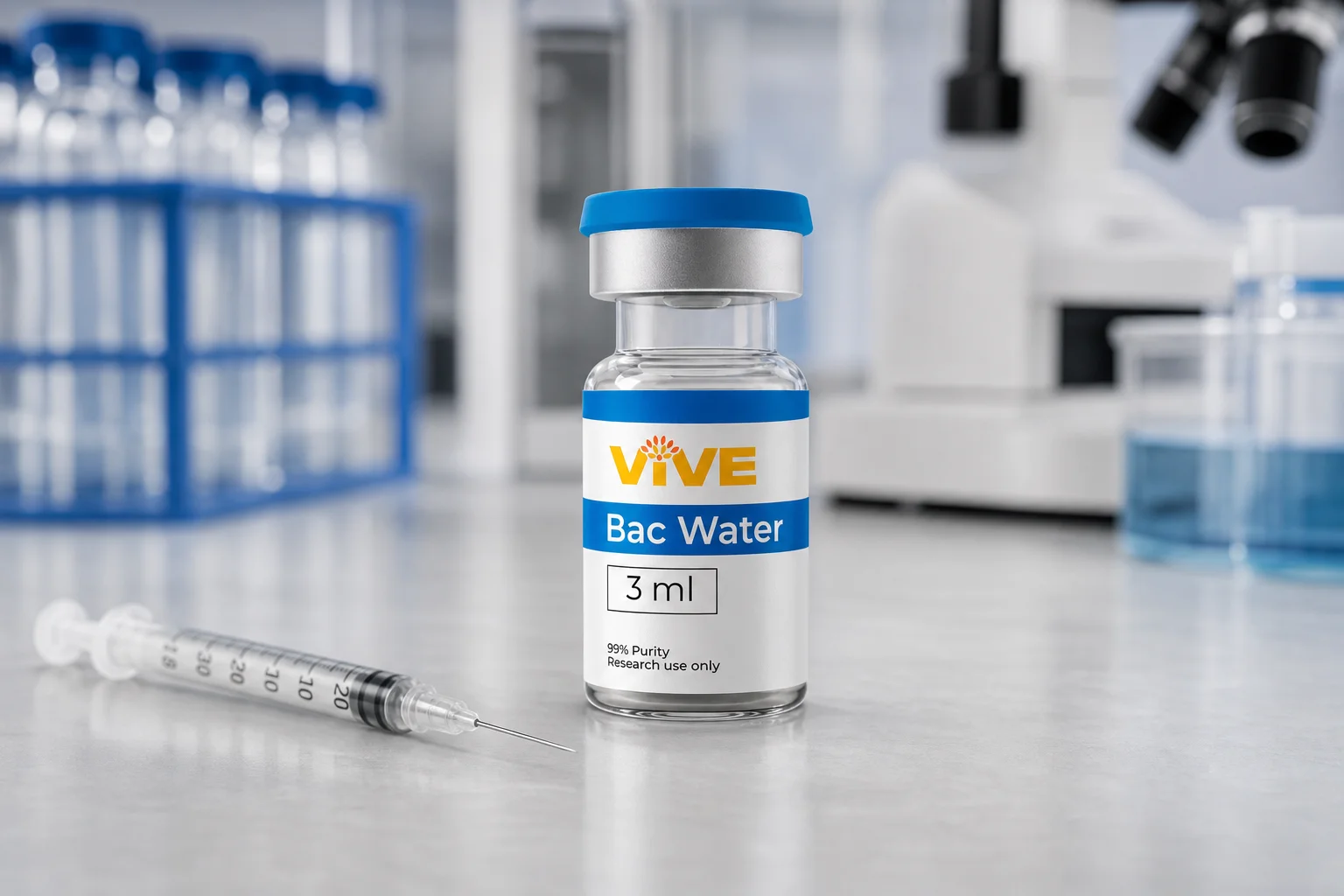
Reconstituting peptides with bacteriostatic water is a precise, multi-step process that preserves peptide integrity and extends usable shelf life for research purposes. This complete guide to reconstituting peptides with bacteriostatic water covers every stage, from selecting the correct diluent to proper storage, so researchers handle lyophilized compounds with accuracy and consistency.
Why Bacteriostatic Water Is the Standard Diluent
Not all water is appropriate for dissolving lyophilized peptides. Bacteriostatic water (bac water) contains 0.9% benzyl alcohol, a preservative that inhibits microbial growth and allows a single vial to be used across multiple draws without sterility loss. This property makes bac water the preferred diluent for research applications requiring repeated access over several days or weeks.
Standard sterile water lacks a preservative and becomes a contamination risk after the first puncture into the rubber stopper. Research published by Chen et al. in the Journal of Pharmaceutical Sciences (2018) confirmed that benzyl alcohol at 0.9% effectively suppresses bacterial proliferation in aqueous peptide solutions without measurable impact on peptide structure at standard research concentrations.
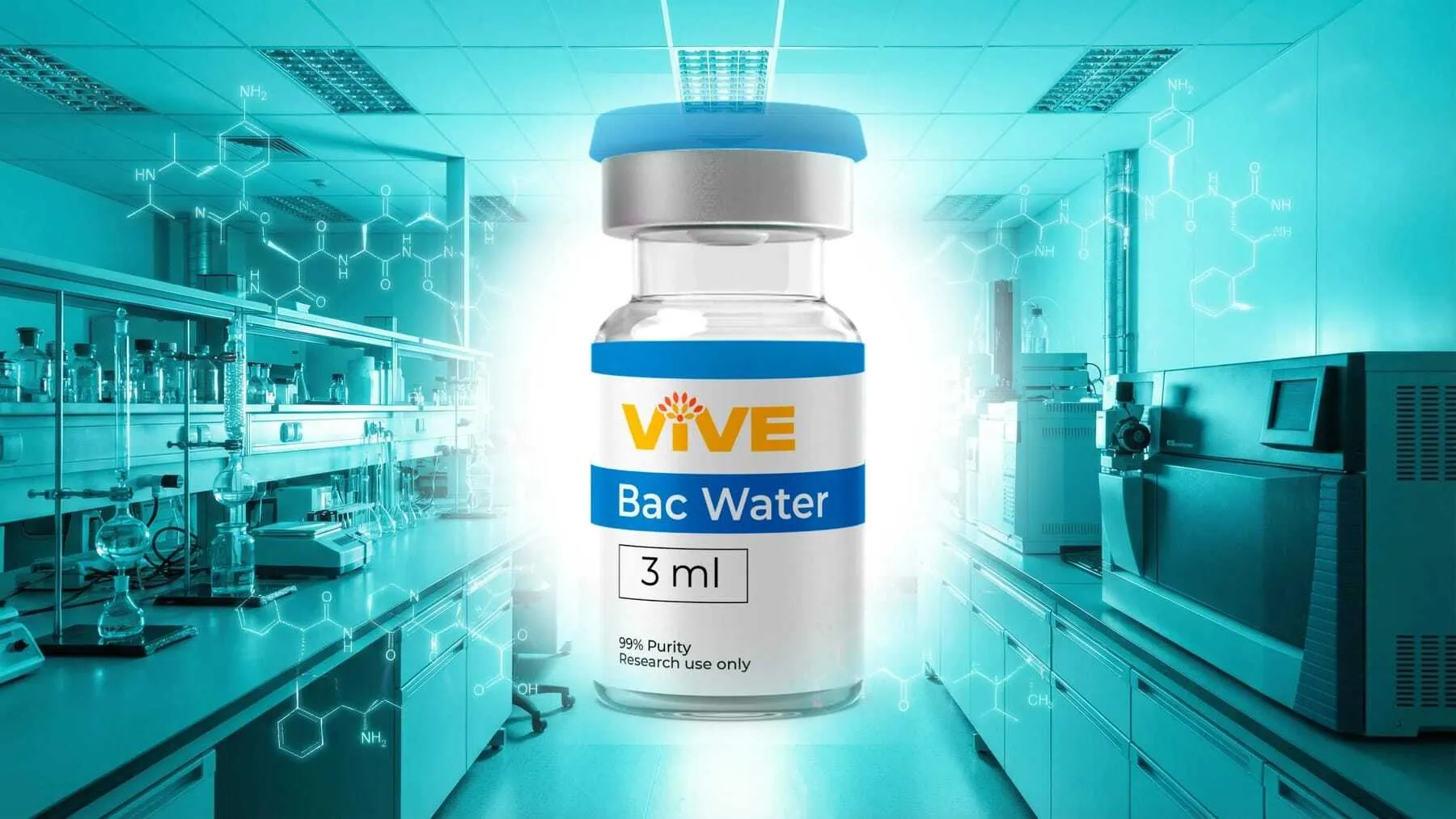
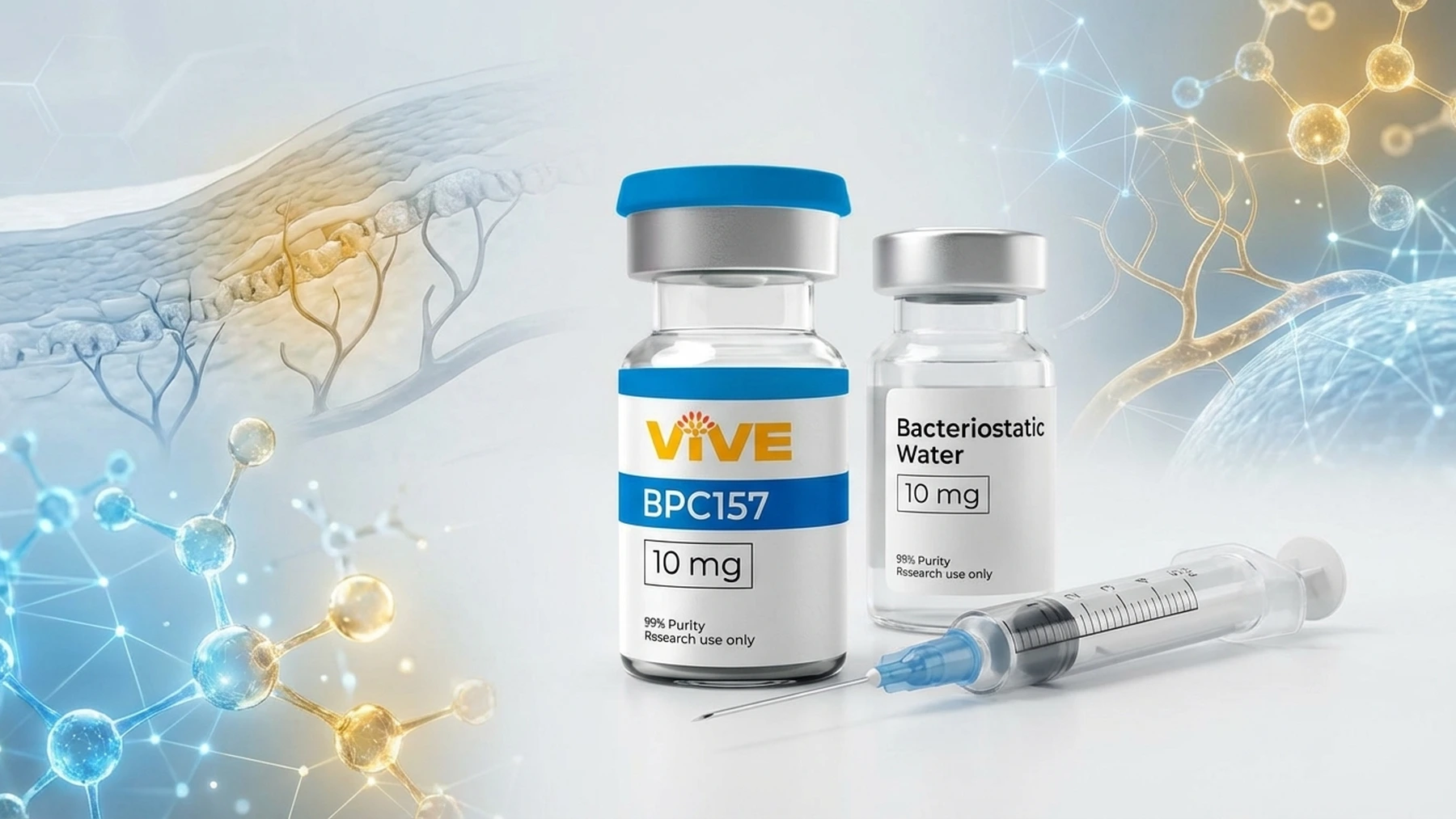
For researchers sourcing diluent, VivePeptides offers pharmaceutical-grade BAC Water formulated specifically for peptide reconstitution work.
Equipment Checklist Before You Begin
Preparing properly before handling a peptide vial reduces errors and contamination risk. Assemble the following before starting:
- Bacteriostatic water (bac water), 10 mL or 30 mL vial
- Lyophilized peptide vial
- Insulin syringe (1 mL, 28-31 gauge recommended for precision dosing)
- Alcohol swabs (70% isopropyl)
- Clean, flat work surface
- Nitrile gloves
Swab the rubber stopper on both vials thoroughly before needle insertion. Allow the alcohol to fully evaporate before puncturing, as trace solvent carried into the solution can interfere with peptide stability.
Step-by-Step Reconstitution Protocol
Step 1: Calculate Target Concentration
Before drawing any liquid, determine the total volume of bacteriostatic water needed to reach the required concentration. A standard reference point: adding 1 mL of bac water to a 5 mg peptide vial yields 5,000 mcg/mL. Adjust the volume based on the specific protocol concentration your research requires.
Step 2: Draw the Bacteriostatic Water
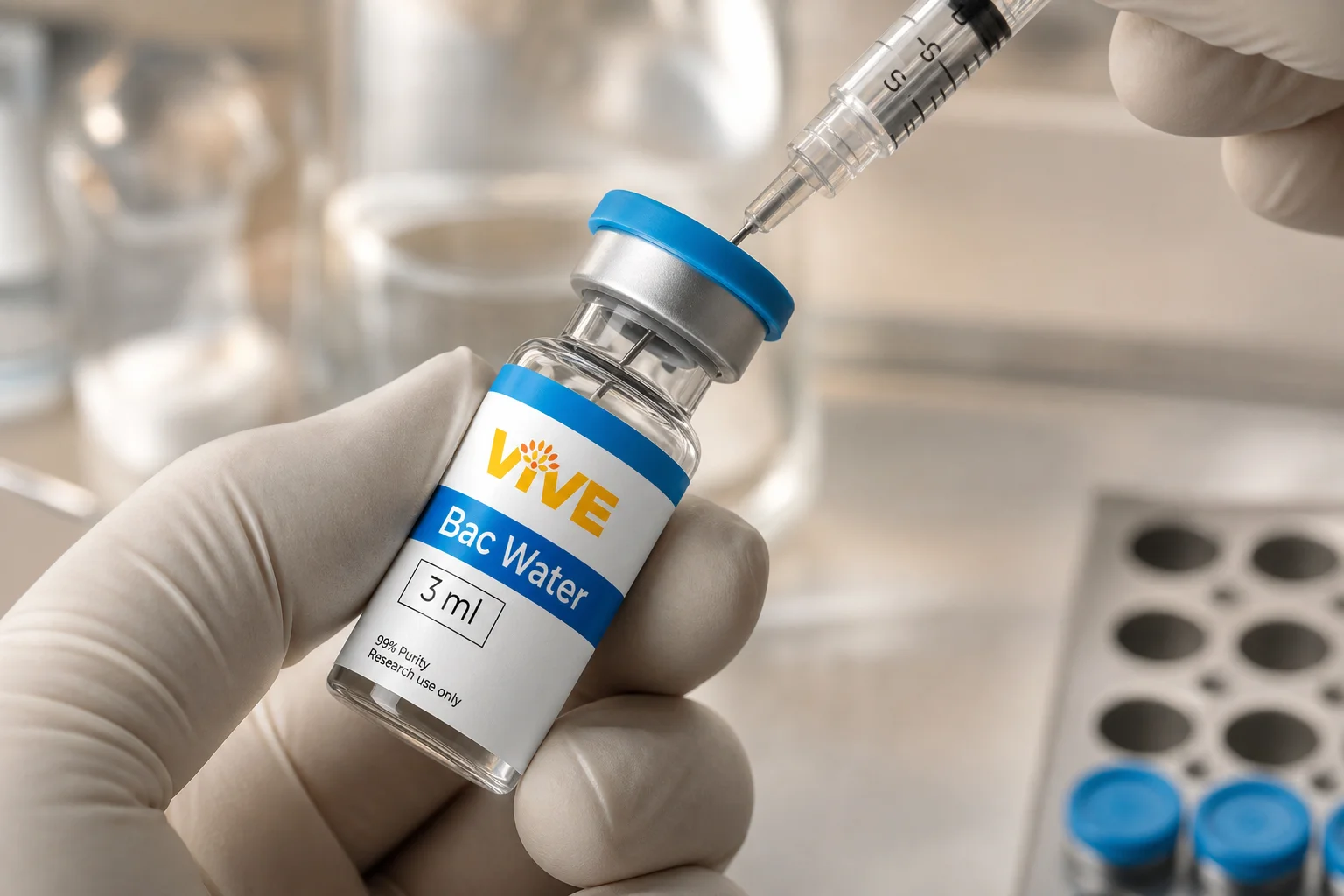
Insert the insulin syringe needle through the rubber stopper of the bac water vial at a slight angle to reduce coring. Withdraw the calculated volume slowly and steadily. Avoid introducing air bubbles into the syringe barrel.
Step 3: Inject Into the Peptide Vial
Tilt the peptide vial so the needle tip contacts the glass wall rather than the lyophilized powder directly. Allow the liquid to run slowly down the inside wall of the vial. Injecting directly onto the powder can disrupt fragile peptide bonds, particularly in growth hormone-releasing peptides and amino acid chains containing disulfide bridges.
Step 4: Gently Swirl to Dissolve
After injection, gently swirl the vial in slow, circular motions. Do not shake. Vigorous agitation generates foam and can compromise peptide structure through mechanical shear. Continue to gently swirl until the powder dissolves completely and the solution appears clear.
Step 5: Inspect the Reconstituted Peptide
Hold the peptide vial against a light source. A properly reconstituted peptide solution should be clear and free of visible particulate matter. Discard any vial where the solution remains cloudy after thorough swirling.
Dilution Ratios and Dosing Calculations
Accurate dosing in research protocols depends on accurate dilution math. The core formula:
Concentration (mcg/mL) = Peptide mass (mcg) / Total volume of bac water added (mL)
Example: a 10 mg peptide vial reconstituted with 2 mL of bacteriostatic water bac water yields 5 mg/mL (5,000 mcg/mL). Each 0.1 mL draw from an insulin syringe then delivers 500 mcg. Doubling the total volume of bac water halves the concentration and doubles the injection volume per equivalent dose.
Researchers working with lower-dose compounds such as BPC-157 often prefer higher-volume reconstitution (2-3 mL per 5 mg vial) for finer dose control per draw. The same dilution principles apply across all peptides available at VivePeptides.
Storage Conditions for Reconstituted Peptides
Refrigeration Is Required
Once reconstituted, all peptides require refrigeration at 2-8 degrees Celsius. Room temperature storage is not appropriate for reconstituted peptides beyond the brief handling period around preparation. Extended room temperature exposure accelerates hydrolysis and oxidative degradation, shortening the viable research window considerably.
Shelf Life After Reconstitution
Reconstituted peptides dissolved in bacteriostatic water typically remain stable for 28-30 days when stored at proper refrigeration temperatures. Lyophilized peptides, by contrast, can maintain stability for 12-24 months when frozen and unexposed to moisture. The benzyl alcohol in bac water extends this reconstituted shelf life by suppressing microbial activity that would otherwise degrade the compound during storage.
Light Exposure and Freeze-Thaw Cycles
Store reconstituted peptides away from direct light, preferably in an amber or opaque vial. Avoid repeated freeze-thaw cycles after reconstitution, as each cycle introduces mechanical stress to peptide structure. If long-term storage is required, aliquot the solution into single-use volumes before freezing to limit the number of cycles each portion undergoes.
Frequently Asked Questions
Can I substitute sterile water for bacteriostatic water in reconstitution?
The bac water, sterile water distinction matters significantly for multi-draw protocols. Sterile water is acceptable only where the complete vial will be used in a single draw. When a protocol specifies bacteriostatic water, sterile water should not substitute for multi-draw use. The bac water sterile water difference is benzyl alcohol: bac water contains it as a preservative, sterile water does not. Contamination risk rises sharply after the first puncture into a preservative-free vial.
How do I confirm a reconstituted peptide is fully dissolved?
The solution should be completely clear with no visible powder or particles remaining. If cloudiness persists after several minutes of gentle swirling, place the peptide vial in the refrigerator for 15-30 minutes, then gently swirl again. Persistent turbidity may indicate peptide degradation, an incompatible diluent, or insufficient mixing time.
Why is shaking the peptide vial harmful to the compound?
Shaking introduces high-energy mechanical forces that can disrupt peptide bonds and cause aggregation of fragile sequences. Always gently swirl using slow, circular motions and allow adequate time for complete dissolution rather than attempting to accelerate the process through vigorous agitation. Foam formation during shaking is a visible sign of structural disruption.
How long does a reconstituted peptide remain viable for research use?
Most reconstituted peptides dissolved in bacteriostatic water remain stable for 28-30 days at 2-8 degrees Celsius. Always label each vial with the reconstitution date and discard any solution past its window to protect research integrity and prevent use of degraded material in experimental protocols.
What is the difference between bacteriostatic water and bacteriostatic saline?
Bacteriostatic water contains only water and 0.9% benzyl alcohol. Bacteriostatic saline adds sodium chloride, increasing the osmolality of the final solution. For standard peptide reconstitution protocols, bac water is the default choice unless a specific protocol requires the ionic composition of saline for injection-site tolerance or formulation reasons.
VivePeptides supplies research-grade peptides and pharmaceutical-quality bacteriostatic water formulated for precision reconstitution. Browse the full catalog at VivePeptides Shop to source the peptides and diluents your research requires.
Research Use Only
All information in this article is intended for educational and research purposes only. VivePeptides products are not intended for human or veterinary use.