US 3rd Party Tested          Free BAC Water on All Orders          Free Shipping          For Lab Use          Secure Checkout          US 3rd Party Tested          Free BAC Water on All Orders          Free Shipping          Trusted By Pharmacies          Secure Checkout
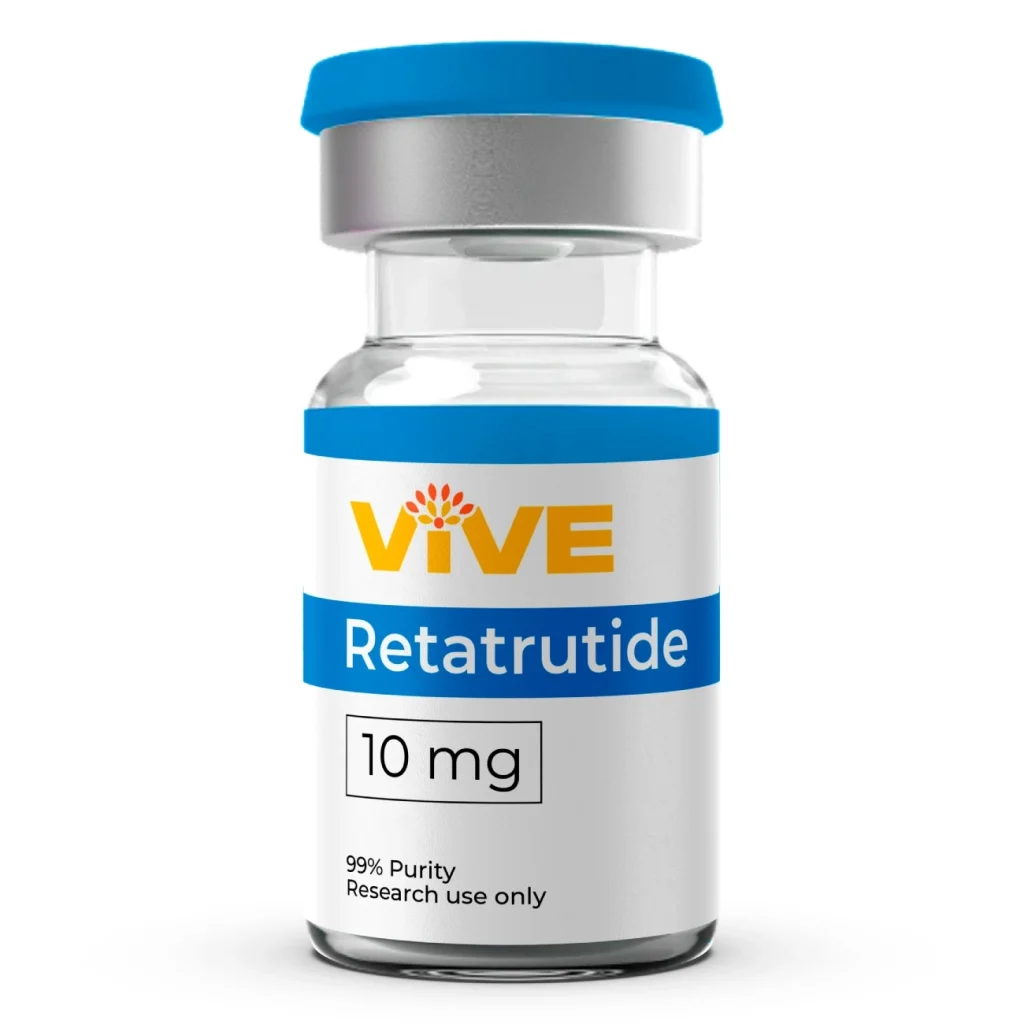
VivePeptides Retatrutide 10 mg vial, featuring blue cap, white label, and text indicating 99% purity, for research use only.

Retatrutide

99%+ Purity USA Tested

Research Use Only. Not for Human or Veterinary Use

Retatrutide: Tri-receptor agonist peptide, CAS 2381089-83-2, MW ~4605.5 g/mol, ≥99% purity. Lyophilized powder for laboratory use.

Price range: $90.00 through $155.00

Peptide Name Retatrutide (LY-3437943)
CAS Number 2381089-83-2
Molecular Formula C₂₀₅H₃₀₆N₅₂O₆₃
Molecular Weight ~4605.5 g/mol
Mechanism Class Tri-receptor agonist (GLP-1R/GIPR/GCGR)
Appearance White lyophilized powder
Purity ≥99% (HPLC)
Storage -20°C, desiccated, protected from light
Solubility Soluble in sterile water or DMSO

This product is not intended for human or animal use. For scientific research only.

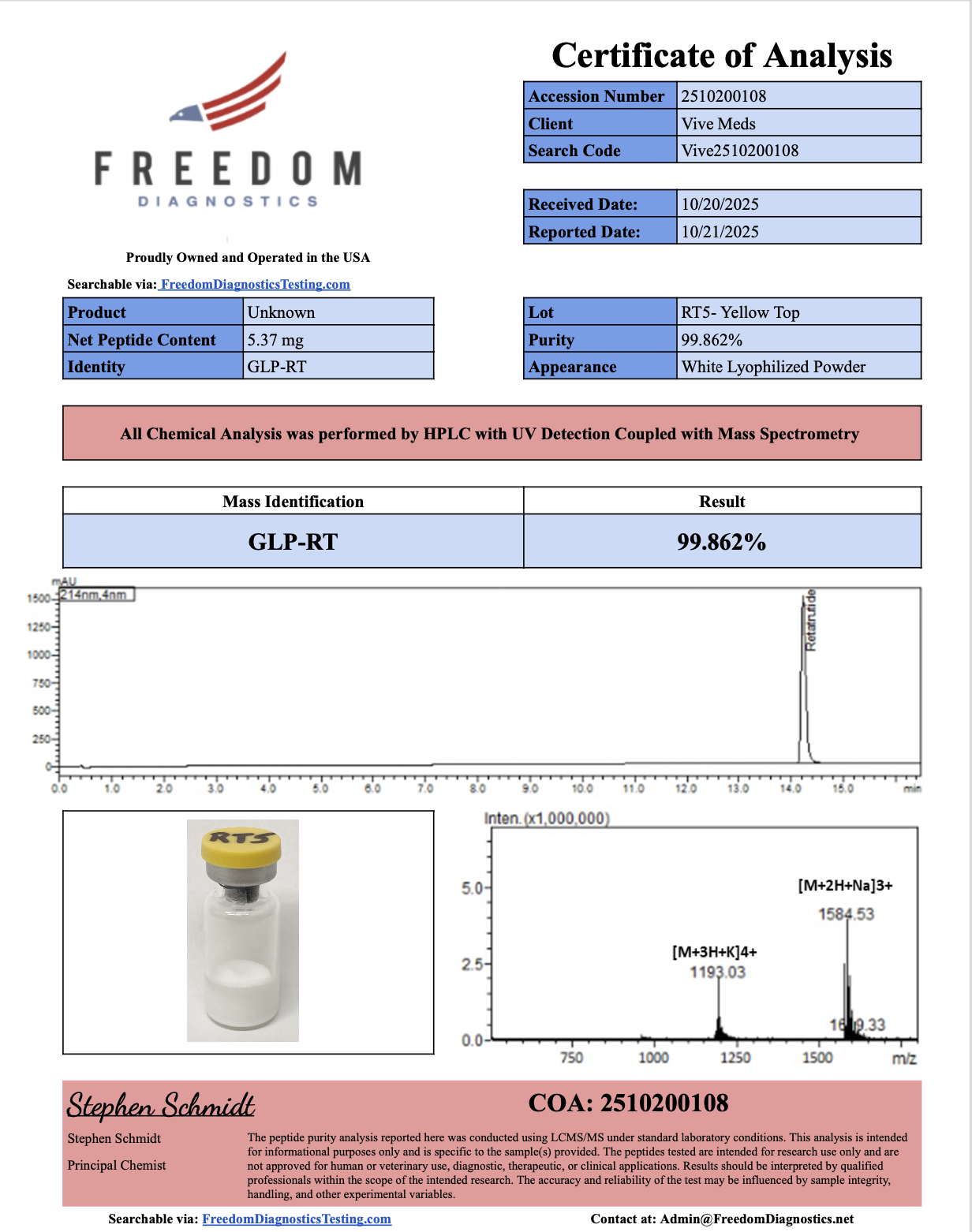
VivePeptides provides detailed analytical results including High-Performance Liquid Chromatography (HPLC) and mass spectrometry data for all peptides. These reports confirm peptide purity, composition, and molecular accuracy, giving researchers full transparency and confidence in the materials used for their studies.

VIEW COA

VivePeptides peptides should be stored in a cool, dry environment and protected from light and moisture. Lyophilized peptides are best kept refrigerated or frozen until use to maintain stability. Once reconstituted for research purposes, peptides should be stored according to standard laboratory protocols, typically under refrigeration, and handled using proper aseptic techniques to preserve integrity throughout the study period.

OVERVIEW

What Is Retatrutide Peptide?

Retatrutide (also known by its research designation LY3437943) is a synthetic 39-amino acid peptide that functions as a triple agonist, simultaneously activating the glucose-dependent insulinotropic polypeptide (GIP), glucagon-like peptide-1 (GLP-1), and glucagon receptors. This retatrutide triple agonist profile makes it the first peptide of its class to engage all three of these metabolically relevant receptor systems, positioning it as a groundbreaking tool in metabolic research.
As a retatrutide peptide for research, the compound builds on the dual-agonist approach of tirzepatide by adding glucagon receptor activity. The inclusion of glucagon receptor agonism introduces an additional dimension of metabolic signaling — glucagon is known to influence hepatic glucose output, lipid oxidation, and energy expenditure in preclinical models. Retatrutide research represents the cutting edge of multi-receptor agonist peptide biology, and buying retatrutide online from a trusted USA supplier like VivePeptides ensures researchers access the highest quality compound available.

Triple Receptor Agonist

First-in-class peptide targeting GIP, GLP-1, and glucagon receptors simultaneously

≥99% HPLC Purity

Every batch verified via high-performance liquid chromatography

USA Tested & Verified

Third-party analytical testing performed in USA laboratories

RESEARCH

Retatrutide Mechanism of Action in Research

The retatrutide mechanism of action is uniquely complex, involving simultaneous engagement of three G-protein coupled receptors that regulate distinct but interconnected metabolic pathways. Retatrutide research has begun to elucidate how triple receptor agonism may produce effects distinct from single or dual agonist approaches.

GIP and GLP-1 Receptor Co-Agonism

Like tirzepatide, retatrutide activates both GIP and GLP-1 receptors. Research indicates that dual incretin receptor activation triggers complementary intracellular signaling cascades — including cAMP-mediated pathways in pancreatic beta cells, enteroendocrine cells, and central nervous system neurons. Published data suggest retatrutide demonstrates meaningful agonist activity at both receptors, contributing to its multifaceted research profile (Coskun et al., Cell Metabolism, 2022).

Glucagon Receptor Agonism

The defining feature of retatrutide research is its glucagon receptor agonist activity. Glucagon receptor activation in hepatocytes has been shown to stimulate glycogenolysis, gluconeogenesis, and lipid oxidation pathways in preclinical models. Studies suggest that the addition of glucagon receptor agonism may influence energy expenditure and hepatic lipid metabolism in ways not achievable through GIP/GLP-1 agonism alone, making retatrutide a unique research tool.

Integrated Metabolic Signaling

Emerging retatrutide research explores how the three receptor signals integrate at the cellular and systemic level. The interplay between incretin-mediated insulin signaling and glucagon-mediated counter-regulatory responses creates a complex pharmacological landscape that researchers are actively investigating in multiple preclinical model systems. —

COMPARISON

Retatrutide vs Semaglutide: Research Peptide Comparison

Comparing retatrutide and semaglutide illustrates the evolution from selective single-receptor agonism to multi-receptor strategies in metabolic peptide research.
FeatureRetatrutideSemaglutide
Receptor TargetsGIP + GLP-1 + Glucagon (triple agonist)GLP-1 (selective agonist)
CAS Number2381089-83-2910463-68-2
Molecular Weight~4803.75 Da4113.58 Da
Amino Acids3931
Receptor Count31
Glucagon ActivityYesNo
GIP ActivityYesNo
Research StageEmerging compound with growing literatureExtensively published, well-characterized
Researchers studying the contribution of glucagon receptor signaling to metabolic regulation may prefer retatrutide for sale from VivePeptides, while those requiring a well-characterized single-receptor agonist may choose semaglutide. Both are available at retatrutide 99% purity and semaglutide 99% purity from our USA-based facility.

RESEARCH STUDIES

Retatrutide Research Applications & Published Studies

Retatrutide research is a rapidly expanding field, with foundational studies establishing its pharmacological profile and in vivo characteristics in animal models.

Triple Agonist Characterization

The foundational retatrutide research publication by Coskun et al. (Cell Metabolism, 2022) characterized retatrutide’s activity at all three target receptors using in vitro binding and signaling assays. This study established the receptor potency profile and demonstrated that retatrutide produces dose-dependent activation of GIP, GLP-1, and glucagon receptor-mediated signaling pathways.

Metabolic Research in Animal Models

Published retatrutide research in rodent and non-human primate models has documented effects on body weight, food intake, glucose tolerance, and energy expenditure parameters. Studies indicate that triple receptor agonism may produce distinct metabolic effects compared to dual or single agonist compounds, though the relative contribution of each receptor pathway remains an active area of investigation.

Hepatic Lipid Metabolism

Emerging retatrutide research has highlighted its effects on hepatic lipid metabolism in animal models, potentially related to its glucagon receptor agonist activity. Published data suggest that glucagon receptor activation may promote hepatic fatty acid oxidation and reduce lipid accumulation, providing a mechanistic rationale for the unique profile of triple agonist peptides.

QUALITY ASSURANCE

Quality & Testing Standards

HPLC & Mass Spectrometry

Every retatrutide batch is analyzed by HPLC and mass spectrometry to verify identity, purity, and molecular weight accuracy.

Third-Party Verified

All retatrutide is independently tested at third-party USA-based analytical laboratories. Testing documentation available for each lot.

≥99% Purity Standard

VivePeptides retatrutide consistently meets or exceeds ≥99% purity for dependable research outcomes.

FAQ

Frequently Asked Questions About Retatrutide

What is retatrutide used for in research?

Retatrutide is used in preclinical research to study triple receptor agonism at GIP, GLP-1, and glucagon receptors. It is a research compound for investigating multi-pathway metabolic signaling. Retatrutide is sold for research use only.

What purity is VivePeptides retatrutide?

VivePeptides retatrutide is manufactured to ≥99% purity as verified by HPLC. Each batch undergoes independent testing at USA-based analytical laboratories.

How should retatrutide be stored?

Lyophilized retatrutide should be stored at -20°C, protected from light and moisture. Reconstituted solutions should be stored at 2–8°C and used within 7 days.

What distinguishes retatrutide from dual agonists like tirzepatide?

Retatrutide adds glucagon receptor agonist activity to the GIP/GLP-1 dual agonism found in tirzepatide. This triple agonist approach engages hepatic glucagon signaling pathways not accessed by dual agonists, providing researchers with a unique tool for studying integrated metabolic regulation.

Is VivePeptides retatrutide third-party tested?

Yes. Every lot of VivePeptides retatrutide undergoes independent third-party testing at USA-based laboratories, including HPLC and mass spectrometry analysis. Results are available for qualified researchers.

RELATED PRODUCTS

Related Research Peptides

Explore other research-grade peptides available from VivePeptides. Each product meets the same rigorous purity and testing standards.

Tirzepatide

Dual GIP/GLP-1 receptor agonist for incretin research

Semaglutide

Selective GLP-1 receptor agonist peptide

KLOW Blend

Weight management peptide blend for metabolic research

Tesamorelin

GHRH analog for growth hormone research

Explore More Research Peptides