
US 3rd Party Tested          Free BAC Water on All Orders          Free Shipping          For Lab Use          Secure Checkout          US 3rd Party Tested          Free BAC Water on All Orders          Free Shipping          Trusted By Pharmacies          Secure Checkout
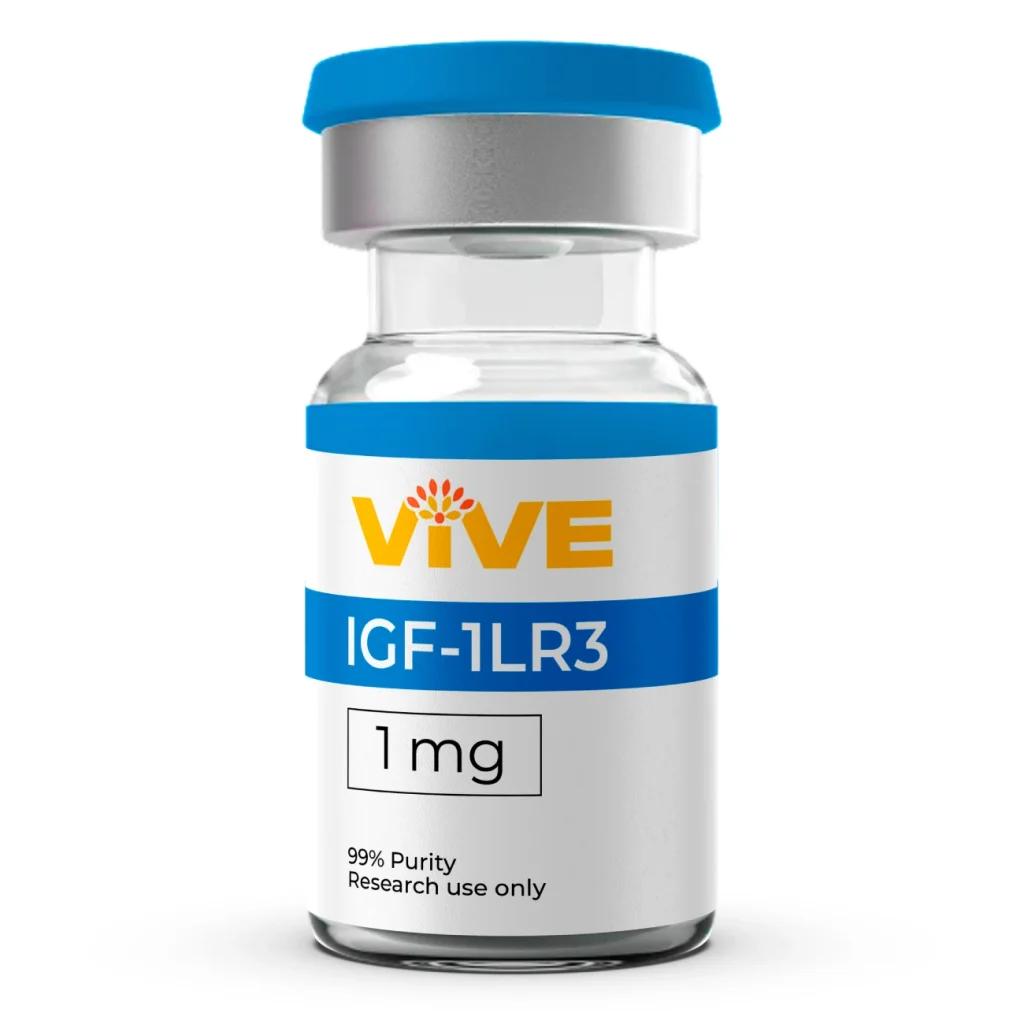
IGF-1LR3 peptide vial from VivePeptides, labeled with 99% purity and research use only, showcasing 1 mg dosage.

IGF-1LR3

99%+ Purity USA Tested

Research Use Only. Not for Human or Veterinary Use

IGF-1 LR3: Extended half-life IGF-1 receptor agonist peptide, CAS 946870-92-4, MW 9117.5 g/mol, ≥99% purity. Lyophilized powder for laboratory use.

$100.00

Peptide Name IGF-1 LR3 (Insulin-like Growth Factor 1 Long R3)
CAS Number 946870-92-4
Molecular Formula C₄₀₀H₆₂₅N₁₁₁O₁₁₅S₉
Molecular Weight 9117.5 g/mol
Mechanism Class IGF-1 receptor agonist (extended half-life analog)
Appearance White lyophilized powder
Purity ≥99% (HPLC)
Storage -20°C, desiccated, protected from light
Solubility Soluble in sterile water and 10mM HCl

This product is not intended for human or animal use. For scientific research only.

VivePeptides provides detailed analytical results including High-Performance Liquid Chromatography (HPLC) and mass spectrometry data for all peptides. These reports confirm peptide purity, composition, and molecular accuracy, giving researchers full transparency and confidence in the materials used for their studies.

VIEW COA

VivePeptides peptides should be stored in a cool, dry environment and protected from light and moisture. Lyophilized peptides are best kept refrigerated or frozen until use to maintain stability. Once reconstituted for research purposes, peptides should be stored according to standard laboratory protocols, typically under refrigeration, and handled using proper aseptic techniques to preserve integrity throughout the study period.

OVERVIEW

What Is IGF-1 LR3 Peptide?

IGF-1 LR3 (Insulin-like Growth Factor 1 Long R3) is an 83-amino-acid synthetic variant of human IGF-1, engineered with two key structural modifications: a glutamic acid substitution for arginine at position 3 (R3) and a 13-amino-acid N-terminal extension peptide. These modifications were designed to reduce binding affinity for IGF binding proteins (IGFBPs), which normally sequester circulating IGF-1 and limit its bioavailability. As a result, IGF-1 LR3 exhibits a significantly extended functional half-life compared to native IGF-1 in research systems.
IGF-1 LR3 peptide is one of the most widely used growth factor analogs in cell biology and tissue culture research. Its reduced IGFBP binding means that a greater proportion of the peptide remains free to interact with the IGF-1 receptor (IGF-1R), making it a more potent and predictable tool for in vitro research. Published studies utilizing IGF-1 LR3 span cell proliferation, differentiation, survival signaling, and metabolic research, reflecting the peptide’s broad utility in growth factor biology.

Modified IGF-1 Analog

83-amino-acid variant with reduced IGFBP binding and extended functional half-life

≥99% HPLC Purity

Every batch verified via high-performance liquid chromatography

USA Tested & Verified

Third-party analytical testing performed in USA laboratories

RESEARCH

IGF-1 LR3 Mechanism of Action in Research

The IGF-1 LR3 mechanism of action parallels that of native IGF-1 but with enhanced potency due to its reduced IGFBP sequestration. Published research has extensively characterized IGF-1 LR3’s interaction with the IGF-1 receptor and its downstream signaling cascades. IGF-1 LR3 research provides valuable data on growth factor signaling in contexts where extended receptor activation is experimentally desirable.

IGF-1 Receptor (IGF-1R) Activation

IGF-1 LR3 binds to and activates the IGF-1 receptor (IGF-1R), a receptor tyrosine kinase expressed on virtually all mammalian cell types. Upon binding, IGF-1R undergoes autophosphorylation, recruiting insulin receptor substrate (IRS) proteins and Shc adaptor molecules. Research demonstrates that IGF-1 LR3 activates the same downstream pathways as native IGF-1 — primarily the PI3K/Akt/mTOR and Ras/MAPK/ERK cascades — but with greater potency due to its prolonged receptor availability. Francis et al. (1992) characterized the binding kinetics of Long R3 IGF-1, establishing its reduced IGFBP affinity profile.

PI3K/Akt/mTOR Signaling Cascade

A primary downstream pathway of IGF-1R activation is the PI3K/Akt/mTOR cascade, which regulates cell survival, protein synthesis, and metabolic homeostasis. Research indicates that IGF-1 LR3’s sustained receptor activation leads to prolonged Akt phosphorylation and enhanced mTOR-mediated translation initiation in cell culture systems. Studies by Coolican et al. (1997) demonstrated that IGF-1-mediated PI3K/Akt signaling plays essential roles in myoblast differentiation models, with IGF-1 LR3 serving as the preferred growth factor due to its predictable dose-response characteristics.

MAPK/ERK Proliferation Pathway

IGF-1 LR3 also activates the mitogen-activated protein kinase (MAPK/ERK) signaling pathway through Ras-Raf-MEK-ERK activation. This pathway drives cell cycle progression and proliferation responses. Research by Duan et al. (2010) utilized IGF-1 and its analogs to investigate the relative contributions of PI3K/Akt versus MAPK/ERK signaling in IGF-1R-mediated cellular responses, demonstrating context-dependent pathway utilization across different cell types. —

COMPARISON

IGF-1 LR3 vs Standard IGF-1: Research Peptide Comparison

IGF-1 LR3 and standard (native) IGF-1 share the same receptor target but differ significantly in their pharmacokinetic profiles and research utility. Understanding these differences is essential for researchers selecting the appropriate growth factor for their experimental systems.
FeatureIGF-1 LR3Standard IGF-1
Amino Acids8370
Molecular Weight9117.5 Da7649 Da
Key ModificationR3E substitution + 13-aa N-terminal extensionNative human sequence
IGFBP BindingDramatically reducedHigh affinity for 6 IGFBPs
Effective Half-LifeExtended (20–30 hours in vitro)Short (~10 min in serum)
Relative Potency2–3× more potent in cell cultureBaseline reference
Primary Research UseCell culture, in vitro growth factor studiesIn vivo models, binding protein studies
Cost EfficiencyHigher due to extended activityLower per µg, but shorter duration
Research VolumeWidely used in cell culture protocolsGold standard in vivo
IGF-1 LR3’s reduced IGFBP binding makes it the preferred choice for in vitro research where consistent, predictable growth factor exposure is required. Standard IGF-1 remains important for in vivo studies where IGFBP interactions are part of the biological system under investigation. VivePeptides offers research grade IGF-1 LR3 for sale at ≥99% purity from our USA-based facility.

RESEARCH STUDIES

IGF-1 LR3 Research Applications & Published Studies

IGF-1 LR3 research is deeply integrated into cell biology, tissue engineering, and growth factor signaling literature. The following areas represent the most actively investigated applications. All references are to research contexts only.

Cell Proliferation and Culture Media Research

IGF-1 LR3 is a standard component in serum-free and reduced-serum cell culture media formulations. Francis et al. (1992) published foundational work in the Journal of Molecular Endocrinology characterizing Long R3 IGF-1’s enhanced potency in cell proliferation assays compared to native IGF-1. The peptide’s predictable dose-response and extended stability in culture media have made it a preferred growth factor supplement in CHO cell culture, stem cell expansion, and primary cell isolation protocols across hundreds of published studies.

Myogenesis and Muscle Biology Research

Research has extensively used IGF-1 LR3 in myoblast differentiation and muscle biology studies. Coolican et al. (1997) published findings in the Journal of Biological Chemistry demonstrating that IGF-1-mediated signaling through PI3K is essential for myoblast differentiation. Subsequent studies by Rommel et al. (2001) used IGF-1 and its analogs to map the Akt/mTOR pathway’s role in muscle hypertrophy models, with IGF-1 LR3 providing sustained pathway activation in cell culture experiments.

Stem Cell and Tissue Engineering Applications

IGF-1 LR3 has been incorporated into numerous stem cell research and tissue engineering protocols. Published studies by Blum & Bhatt (2003) and others have utilized IGF-1 LR3 as a critical component in defined media for embryonic stem cell and induced pluripotent stem cell (iPSC) maintenance. The peptide’s role in promoting cell survival and proliferation without batch-to-batch variation of serum makes it invaluable in reproducible stem cell research protocols.

QUALITY ASSURANCE

Quality & Testing Standards

VivePeptides maintains rigorous quality control for every batch of IGF-1 LR3 peptide. Our commitment to research-grade purity ensures that laboratories receive consistent, reliable compounds for their investigations.

HPLC & Mass Spectrometry

Every batch of IGF-1 LR3 undergoes high-performance liquid chromatography (HPLC) and mass spectrometry analysis to confirm identity, purity, and molecular weight.

Third-Party Verified

All VivePeptides IGF-1 LR3 is independently verified through third-party analytical laboratories based in the USA. Testing documentation is available for every lot.

≥99% Purity Standard

Our IGF-1 LR3 consistently meets or exceeds ≥99% purity as determined by HPLC analysis, ensuring research-grade quality for laboratory applications.

FAQ

Frequently Asked Questions About IGF-1 LR3

What is IGF-1 LR3 used for in research?

IGF-1 LR3 is used in cell biology, tissue engineering, and growth factor signaling research. It is a standard supplement in serum-free cell culture media and is used to study IGF-1R signaling, cell proliferation, myogenesis, and stem cell biology. Its extended half-life makes it preferred over native IGF-1 for in vitro applications. IGF-1 LR3 is sold for research use only.

What purity is VivePeptides IGF-1 LR3?

VivePeptides IGF-1 LR3 is manufactured to ≥99% purity as verified by HPLC analysis. Every batch is tested and verified through independent third-party USA-based laboratories to ensure consistent research-grade quality.

How should IGF-1 LR3 be stored?

Lyophilized IGF-1 LR3 should be stored at -20°C, protected from light and moisture. Once reconstituted, the solution should be stored at 2–8°C and used within 7 days. For longer storage, aliquot and freeze at -20°C. Avoid repeated freeze-thaw cycles.

What is the difference between IGF-1 LR3 and standard IGF-1?

IGF-1 LR3 has two key modifications: an Arg3→Glu substitution and a 13-amino-acid N-terminal extension. These changes dramatically reduce binding to IGF binding proteins (IGFBPs), resulting in a 2–3× increase in potency and a significantly extended half-life in cell culture compared to native IGF-1.

Is VivePeptides IGF-1 LR3 third-party tested?

Yes. Every lot of VivePeptides IGF-1 LR3 undergoes independent third-party testing at USA-based analytical laboratories. Testing includes HPLC purity analysis and mass spectrometry identity confirmation. Results are available upon request for qualified researchers.

RELATED PRODUCTS

Related Research Peptides

Explore other research-grade peptides available from VivePeptides. Each product meets the same rigorous purity and testing standards.

BPC-157

Research grade gastric pentadecapeptide for tissue biology studies

TB-500

Thymosin Beta-4 fragment for tissue repair and cell migration research

CJC-1295 No DAC + Ipamorelin Blend

Growth hormone secretagogue research blend

Tesamorelin

GHRH analog for growth hormone research

Explore More Research Peptides